A four leaf clover necklace is more than just jewelry—it’s a symbol of luck, love, and lasting sentiment. Whether passed down through generations or gifted to mark a special occasion, these delicate pieces deserve thoughtful care. But like all fine accessories, they’re vulnerable to tarnish, especially if made from silver or base metals. Tarnishing dulls the shine, weakens structural integrity, and can diminish emotional value. The good news? With the right knowledge and habits, you can preserve your necklace’s brilliance for years. This comprehensive guide walks you through science-backed strategies, daily precautions, and long-term maintenance routines to keep your four leaf clover necklace radiant and resilient.
Understanding Tarnish: Why It Happens
Tarnish is a chemical reaction that occurs when metal—especially silver, copper, or alloys—reacts with sulfur compounds in the air, moisture, or skin oils. The result is a darkened, cloudy layer that forms over time. While not harmful, it detracts from the piece’s aesthetic and can accelerate wear if left untreated.
Silver is particularly prone due to its high reactivity. Even sterling silver (92.5% silver, 7.5% other metals) will tarnish under certain conditions. Humidity, exposure to cosmetics, perspiration, and pollutants like chlorine or hydrogen sulfide speed up the process. A four leaf clover necklace, often worn close to the skin and exposed to daily environmental stressors, is at higher risk.
“Tarnish isn’t inevitable—it’s manageable. Most damage comes from consistent, small exposures we don’t notice until it’s too late.” — Dr. Lena Torres, Materials Conservation Specialist, Metropolitan Jewelry Archive
Step-by-Step Guide to Daily Prevention
Preventing tarnish starts with mindful wearing and removal habits. Follow this five-step routine every time you handle your necklace:
- Put it on last, take it off first: Apply makeup, perfume, hairspray, and lotions before putting on your necklace. These products contain chemicals that accelerate oxidation.
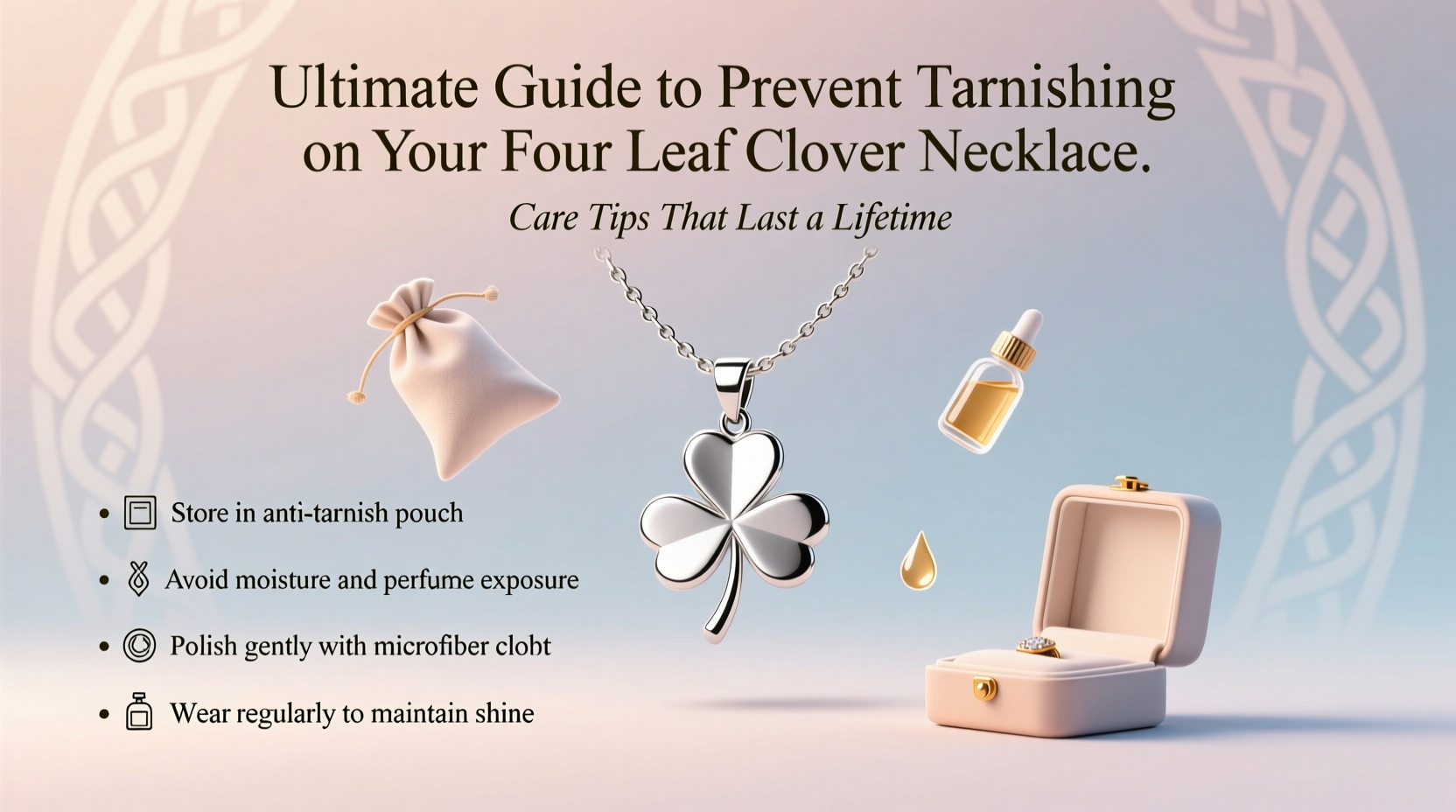
- Wipe after wear: Use a soft, lint-free microfiber cloth to gently wipe the chain and pendant. This removes oils, sweat, and residue.
- Remove during high-risk activities: Take it off before showering, swimming, exercising, or cleaning. Water and sweat are primary culprits in tarnish formation.
- Avoid friction: Don’t wear the necklace with rough fabrics or layered chains that rub against it. Scratches expose fresh metal to air, increasing tarnish risk.
- Inspect regularly: Once a week, examine the clasp, links, and clover details for early signs of discoloration or buildup.
Optimal Storage: How to Store Your Necklace Long-Term
Where and how you store your necklace between wears is critical. Improper storage accounts for over 60% of premature tarnishing cases, according to a 2023 survey by the American Jewelry Preservation Society.
The ideal environment is cool, dry, and airtight. Avoid humid areas like bathrooms or near windows. Instead, use one of these proven methods:
- Anti-tarnish pouches lined with activated carbon or silver-reactive inhibitors.
- Small ziplock bags with anti-tarnish strips (available at craft or jewelry supply stores).
- Jewelry boxes with individual compartments and soft linings.
- Plastic containers with silica gel packets to absorb moisture.
“Never store silver jewelry in regular plastic bags. Polyvinyl chloride (PVC) emits gases that cause rapid tarnishing.” — James Holloway, Master Goldsmith, Boston Guild of Jewelers
Cleaning Methods That Work—And Which to Avoid
When tarnish appears, act quickly—but carefully. Aggressive cleaning can scratch soft metals or damage intricate clover detailing.
| Method | Do | Don’t |
|---|---|---|
| Polishing Cloth | Use a treated silver polishing cloth in gentle, straight motions along the chain. | Don’t rub in circles—this spreads tarnish particles. |
| Baking Soda Paste | Mix with water into a paste; apply lightly with cotton swab on stubborn spots. | Don’t soak the entire piece—abrasiveness can erode fine engravings. |
| Commercial Dip Solutions | Use only for severe tarnish; follow instructions precisely. | Never use on plated or antique pieces—they strip protective layers. |
| Ultrasonic Cleaners | Safe for solid sterling silver with no gemstones or soldered joints. | Not recommended for vintage or delicate designs—vibrations may weaken clasps. |
For best results, clean no more than once every 4–6 weeks unless visibly tarnished. Over-cleaning wears down metal surfaces over time.
Real-Life Example: How One Collector Preserved a Heirloom
Sarah M., a jewelry historian from Portland, inherited a 1940s sterling silver four leaf clover pendant from her grandmother. Though cherished, it had begun to darken within two years of regular wear. After consulting a conservator, she implemented a strict regimen: wearing gloves when handling, storing in an oxygen-free case with humidity control, and using a specialized tarnish inhibitor cloth.
Five years later, the necklace remains in near-original condition. “It’s not about never wearing it,” she says. “It’s about respecting the metal. I wear it on special occasions, always remove it before any activity, and clean it immediately after. That balance keeps it alive.”
Essential Care Checklist
Follow this monthly checklist to ensure your necklace stays protected:
- ☑ Inspect for early tarnish or clasp weakness
- ☑ Wipe with a microfiber cloth
- ☑ Confirm storage bag is sealed and dry
- ☑ Replace silica gel or anti-tarnish strip if expired
- ☑ Rotate wear schedule—limit consecutive days to three or fewer
- ☑ Deep clean only if necessary, using safe methods above
Frequently Asked Questions
Can I wear my four leaf clover necklace every day?
You can, but daily wear increases exposure to moisture, oils, and pollutants. For longevity, reserve it for meaningful occasions and alternate with other necklaces to reduce strain and chemical contact.
Does gold plating prevent tarnishing?
Gold plating offers temporary protection, but it wears thin over time—especially on high-contact areas like clasps and pendants. Once the base metal (often brass or copper) is exposed, tarnishing resumes. Re-plating every few years may be necessary for heavily worn pieces.
Is tarnish permanent?
No. Surface tarnish can be safely removed with proper tools. However, deep corrosion or pitting caused by prolonged neglect may require professional restoration—or may be irreversible.
Final Thoughts: Honor the Symbol by Caring for the Object
A four leaf clover stands for rare fortune and enduring hope. When you invest time in preserving your necklace, you’re not just protecting metal—you’re honoring what it represents. Simple habits, informed choices, and respect for material science make all the difference. Tarnish doesn’t happen overnight, and neither does preservation. It’s the cumulative effect of mindful actions repeated consistently.
Start today. Pull out your necklace, inspect it, clean it gently, and store it properly. Set a reminder to repeat this every month. Small efforts compound into lasting beauty.
💬 Have a personal tip or story about caring for your four leaf clover necklace? Share it in the comments—your experience could help someone else protect their treasure.