Designer children's clothing combines craftsmanship, premium fabrics, and timeless style—often passed from sibling to sibling or even generation to generation. But kids are messy. From grass stains to spilled juice, delicate silks, fine knits, and embroidered details face daily challenges. Without proper care, these high-quality garments can fade, shrink, or deteriorate quickly. The key to extending their life lies not in avoiding wear, but in mastering gentle cleaning, smart storage, and preventative maintenance.
This guide provides actionable strategies for parents, guardians, and collectors who want to preserve the beauty and integrity of designer kids’ wear—without compromising hygiene or practicality.
Understanding Fabric Types and Care Labels
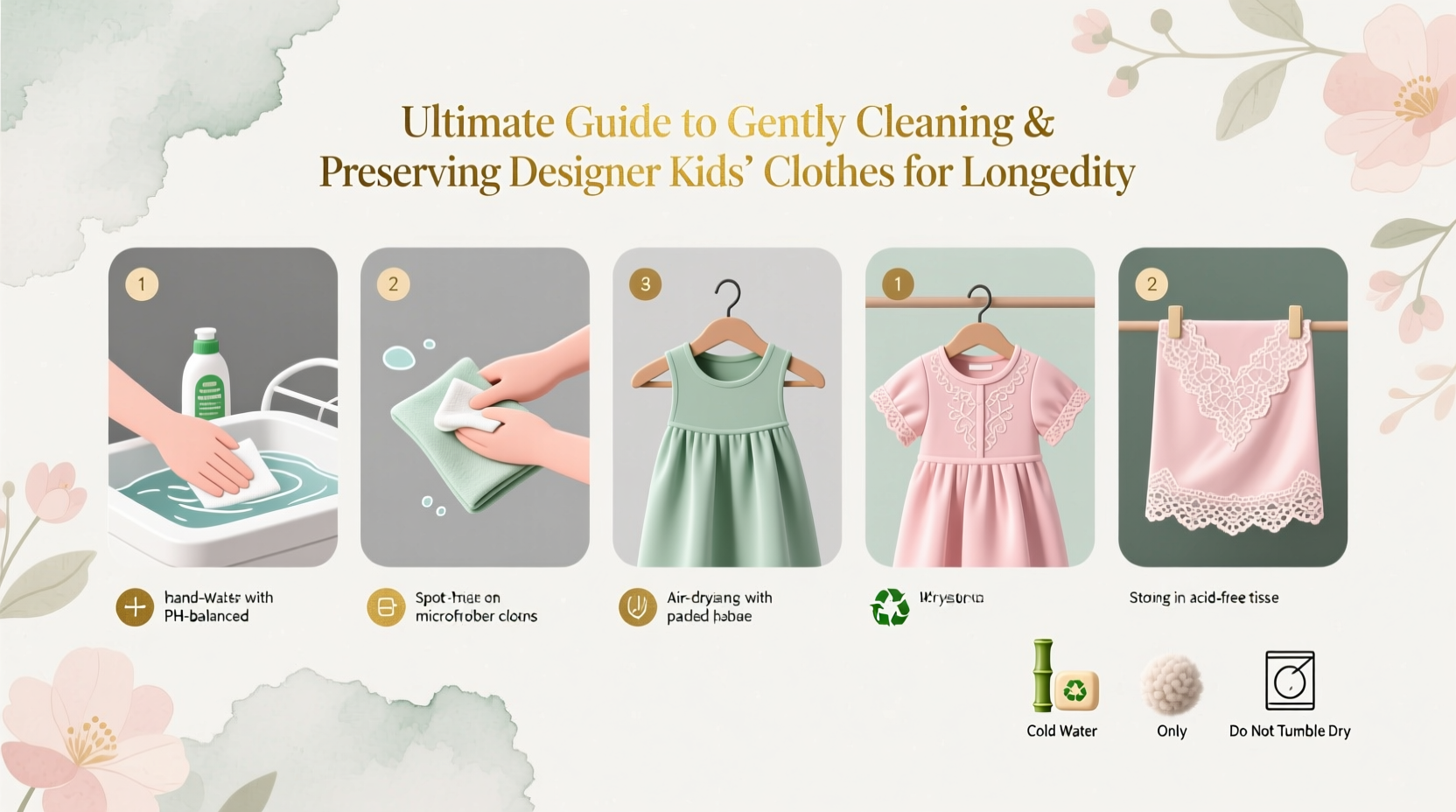
Before any cleaning begins, identifying the fabric is essential. Designer children’s clothing often uses materials like organic cotton, merino wool, silk, linen, cashmere, or blends with elastane for stretch. Each requires a different approach.
Care labels are your first line of defense. Look for symbols indicating washing temperature, drying methods, ironing limits, and dry-cleaning requirements. Misreading these can lead to irreversible damage—such as shrinking a wool cardigan in hot water or bleaching delicate embroidery.
Tip: When in doubt, opt for the most conservative method. If a garment says “dry clean only,” avoid machine washing even if it looks sturdy.| Fabric | Washing Method | Avoid |
|---|---|---|
| Silk & Satin | Hand wash in cool water with pH-neutral detergent | Machine agitation, wringing, direct sunlight |
| Wool & Cashmere | Lay flat to dry; use wool-specific detergent | Hot water, tumble drying, hanging when wet |
| Organic Cotton | Machine wash cold, gentle cycle | Bleach, high heat, over-drying |
| Linen | Hand or machine wash cold; low-heat iron | High dryer heat, folding while damp |
Step-by-Step Guide to Gentle Cleaning
Effective cleaning isn’t about scrubbing hard—it’s about removing soiling while minimizing stress on fibers. Follow this sequence for best results:
- Pre-Treat Stains Immediately: Blot (don’t rub) spills with a clean cloth. Use a small amount of enzyme-based stain remover on protein stains (milk, food), or a mild vinegar-water mix (1:3) for fruit or juice.
- Sort by Fabric and Color: Never mix delicates with heavy items like jeans. Wash whites, colors, and darks separately.
- Use a Mesh Laundry Bag: Place fragile items—lace dresses, knitwear, or anything with embellishments—in a fine mesh bag to reduce friction.
- Select Cold Water and Gentle Cycle: Heat breaks down fibers over time. Even machine-washable items fare better in cold water.
- Choose a Delicate Detergent: Use plant-based, fragrance-free detergents formulated for delicates. Avoid optical brighteners and enzymes unless necessary.
- Air Dry Flat or on Hangers: Lay knits and structured pieces flat on a towel to retain shape. Hang lightweight cotton or linen items to dry, but avoid direct sunlight.
“Preserving designer children’s clothing starts the moment it comes out of the package. Immediate spot treatment and correct washing can prevent long-term discoloration and fiber breakdown.” — Clara Mendez, Textile Conservator & Children’s Fashion Archivist
Smart Storage Solutions for Long-Term Preservation
How you store clothes between wears matters just as much as how you clean them. Poor storage leads to yellowing, moth damage, creasing, and moisture buildup.
For seasonal rotation or heirloom preservation, follow these practices:
- Always clean garments before storing—residual oils or food particles attract pests.
- Use breathable cotton garment bags instead of plastic, which traps moisture and promotes mildew.
- Fold knits and padded items (like christening gowns) to prevent stretching. Use acid-free tissue paper between layers to reduce friction.
- Store in a cool, dark closet away from attics or basements where humidity fluctuates.
- Place natural cedar blocks or lavender sachets nearby to deter moths—avoid synthetic mothballs, which leave strong odors and may damage fabrics.
Real Example: Preserving a Hand-Embroidered Christening Gown
When Sarah inherited her grandmother’s 1952 hand-embroidered linen christening gown, she wanted to use it for her daughter—but feared damage. Instead of sealing it in plastic, she took it to a textile conservator who recommended gentle surface cleaning with a soft brush and deionized water sponge. After airing and pressing with a press cloth, Sarah stored it in an archival box with acid-free paper, wrapped in unbleached muslin. She used it for two grandchildren and plans to pass it on again. The secret? Consistent, minimal intervention and climate-aware storage.
Essential Checklist for Parents of Designated Kids’ Wear
Follow this monthly routine to keep designer pieces in top condition:
- After Every Wear:
- Check for stains, loose buttons, or snags. Address immediately.
- Weekly:
- Spot-clean collars, cuffs, and hems. Air out garments overnight.
- Monthly:
- Inspect stored items for pests or moisture. Refold garments to shift stress points.
- Seasonally:
- Clean and re-store off-season clothes. Repair minor damages before moth season.
Frequently Asked Questions
Can I machine wash designer baby clothes labeled \"hand wash only\"?
It’s not recommended. Even on gentle cycles, machines create friction that can distort delicate trims, stretch elastic, or damage embroidery. Hand washing takes five minutes and significantly extends the garment’s life.
How do I remove set-in stains without damaging fabric?
Soak the area in cold water with a small amount of oxygen-based cleaner (like OxiClean Baby) for 30 minutes. Test on an inside seam first. For silk or wool, consult a professional cleaner—aggressive stain removal can weaken fibers.
Is it safe to use steamers on delicate children’s clothing?
Yes, but with caution. Hold the steamer 2–3 inches from the fabric and move continuously. Never press a hot iron directly onto embellished areas or synthetic linings, which can melt.
Conclusion: Care Today, Cherish Tomorrow
Designer kids' clothes are more than fashion—they’re keepsakes, investments, and sometimes, family heirlooms. With mindful cleaning, attentive storage, and regular maintenance, these garments can last through multiple children, maintaining their elegance and structural integrity. Every stain treated promptly, every fold adjusted, and every garment stored properly adds months—or years—to its usable life.
💬 Start today: Pull one special piece from your child’s wardrobe and give it a gentle refresh. Share your preservation journey or ask questions in the comments—let’s build a community that values quality, sustainability, and the stories woven into every stitch.