Iced out silver jewelry combines bold style with intricate craftsmanship, featuring silver settings encrusted with cubic zirconia, crystals, or even real diamonds. While dazzling, these pieces are vulnerable to tarnish, grime buildup, and stone loosening if not cleaned properly. Many people make the mistake of using harsh methods that dull the silver or dislodge stones. Cleaning iced out silver requires a balance between effectiveness and gentleness. This guide delivers proven, safe techniques to restore brilliance while preserving both metal integrity and stone security.
Understanding Iced Out Silver Jewelry
“Iced out” refers to jewelry heavily set with stones to mimic the look of being covered in ice. Most commonly crafted from sterling silver (92.5% pure silver), these pieces often feature micro-pave, channel, or prong settings. The stones are typically non-precious like cubic zirconia but can include genuine gems. Because silver naturally tarnishes when exposed to air, moisture, and sulfur, regular maintenance is essential. However, the presence of stones adds complexity—cleaning solutions must avoid penetrating beneath settings, which can loosen adhesives or cause clouding.
The key challenge lies in removing tarnish and dirt without compromising structural integrity. Aggressive scrubbing, ultrasonic cleaners on high settings, or chemical dips can erode silver plating or weaken prongs over time. Safe cleaning respects both the metal’s chemistry and the setting’s mechanics.
“Many clients bring in damaged iced out rings after using store-bought dip cleaners. Those products strip not just tarnish but also protective coatings and adhesive layers under stones.” — Jamal Reyes, Master Jeweler & Restoration Specialist
Step-by-Step Guide: Safe Cleaning at Home
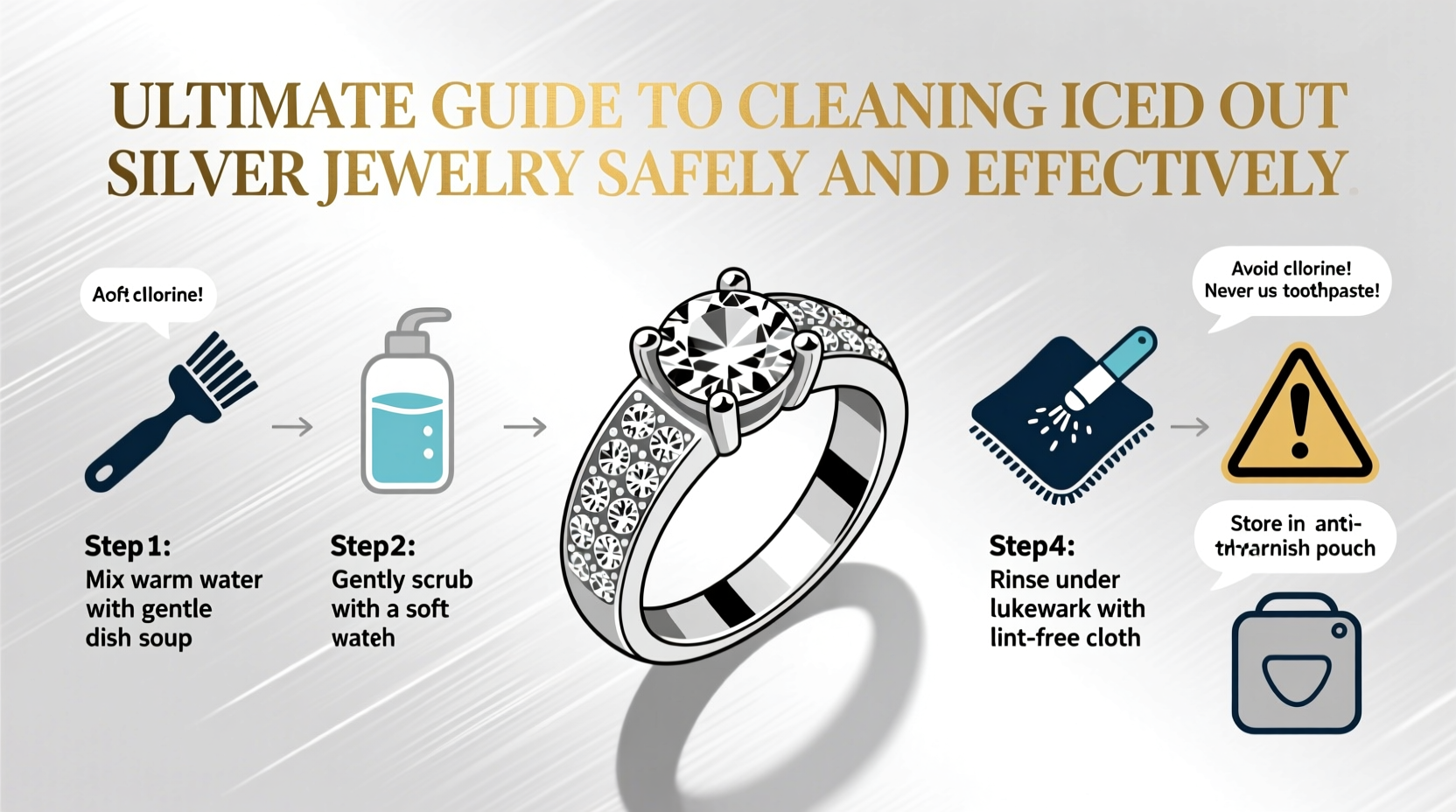
Cleaning iced out silver at home is entirely possible—if done correctly. Follow this detailed process to maintain luster without risk:
- Inspect the Piece First
Check for loose stones, cracks in the setting, or visible damage. If any stone wiggles when gently touched with a wooden toothpick, do not clean it until repaired by a professional. - Prepare a Gentle Cleaning Solution
Mix one tablespoon of mild dish soap (phosphate-free) into one cup of lukewarm distilled water. Avoid tap water due to chlorine and minerals that accelerate tarnish. - Soak for 10–15 Minutes
Place the jewelry in the solution. This softens surface grime and loosens oils without aggressive action. - Use a Soft-Bristled Brush
Take a clean, soft toothbrush or specialized jewelry brush. Gently brush around each stone and along crevices. Never press hard—let the bristles do the work. - Rinse Thoroughly
Hold under a gentle stream of cool distilled water. Tilt the piece to allow water to flush out debris from under stones. - Air-Dry on a Lint-Free Cloth
Lay flat and allow to dry completely. Do not rub, as wet silver is more prone to scratching. - Polish Lightly (If Needed)
Once dry, use a dedicated silver polishing cloth (not tissue or paper towel) to restore shine. Buff in straight strokes, not circles, to avoid catching stones.
Do’s and Don’ts: Best Practices Table
| Do’s | Don’ts |
|---|---|
| Use pH-neutral dish soap and distilled water | Use bleach, ammonia, or acetone-based cleaners |
| Clean every 2–3 weeks with light use | Soak for more than 20 minutes |
| Store in anti-tarnish pouches with silica gel | Store in humid environments or near rubber bands |
| Have pieces professionally inspected annually | Use ultrasonic cleaners unless approved by a jeweler |
| Dry completely before storing | Rub with abrasive cloths or paper towels |
When to Seek Professional Help
While routine maintenance can be handled at home, certain situations require expert intervention. Deep tarnish that has turned black or green may indicate oxidation beyond surface level. In such cases, electrochemical polishing or controlled buffing by a jeweler is safer than DIY attempts. Additionally, if multiple stones appear cloudy or hazy after cleaning, residue may have seeped beneath the settings—only a professional can disassemble and reseal them properly.
Ultrasonic cleaners, though effective for solid metals, pose risks for set jewelry. High-frequency vibrations can weaken aged prongs or dislodge stones held by adhesive. If you choose to use one, limit sessions to 30–60 seconds and only on pieces confirmed as structurally sound.
“Even high-quality iced out pieces need servicing. I recommend a professional deep clean and stone inspection every 6 to 12 months, especially for rings and bracelets exposed to daily wear.” — Lena Tran, Certified Gemologist
Real Example: Reviving a Heirloom Chain
Carlos inherited a thick silver Cuban link chain adorned with micro-pave CZ stones from his grandfather. After years in a drawer, it emerged darkened and dull, with some stones appearing foggy. He avoided commercial dips and instead followed the gentle wash method outlined here. After two rounds of soaking and careful brushing, most of the tarnish lifted. One section remained stubbornly dark, so he consulted a local jeweler. They used a low-voltage electrolytic bath to remove residual oxidation without touching the stones. The chain was then re-polished and sealed with a tarnish-resistant coating. Today, it’s worn weekly—proof that patience and proper care preserve both beauty and legacy.
Frequently Asked Questions
Can I use baking soda and aluminum foil to clean iced out silver?
This method works by transferring tarnish from silver to aluminum via an electrochemical reaction. While effective for plain silver items, it's risky for set jewelry. The reaction can penetrate under stones, causing discoloration or loosening. Reserve this technique for unadorned silver only.
Why does my iced out jewelry tarnish so quickly?
Tarnishing accelerates due to exposure to sweat, perfume, humidity, and pollutants. Skin acidity varies—some individuals naturally tarnish silver faster. To slow this, wipe jewelry after each wear and store in an airtight container with anti-tarnish strips.
How can I tell if the stones are cubic zirconia or real diamonds?
Most affordable iced out pieces use CZ. A quick test: breathe on the stone. CZ fogs up and stays foggy for a few seconds; diamonds disperse heat instantly and won’t fog. For certainty, a jeweler can test thermal conductivity.
Tip: Label your storage boxes. Keep iced out pieces separate from other jewelry to prevent scratches and cross-contamination from different metals.Final Checklist for Safe Maintenance
- ✔ Inspect for loose stones before every cleaning
- ✔ Use only mild soap and distilled water
- ✔ Brush gently with a soft-bristled tool
- ✔ Rinse thoroughly and air-dry completely
- ✔ Polish with a silver-specific cloth
- ✔ Store in anti-tarnish pouches away from light and moisture
- ✔ Schedule annual professional inspection
Keep Your Sparkle Intact
Your iced out silver jewelry reflects more than style—it represents investment, identity, and sometimes, memory. Treating it with informed care ensures it continues to turn heads for years. By avoiding shortcuts and respecting the delicacy of both metal and stones, you preserve not just appearance but value. Start today: pull out your favorite piece, inspect it closely, and apply the right method. Shine isn’t just about sparkle—it’s about smart stewardship.
💬 Have a cleaning success story or a tricky jewelry problem? Share your experience below and help build a community of informed collectors and wearers.