
Navigating airport security is one of the most predictable stress points in air travel. From removing shoes to managing electronics, every step requires attention — and your choice of handbag can make a big difference in how smoothly you move through the process. While both tote bags and crossbody bags are popular among travelers, they serve very different functions when it comes to security checkpoints. One offers capacity and versatility; the other, stability and accessibility. But which truly holds up under the pressure of TSA procedures, long queues, and constant handling?
This comparison isn’t about fashion alone — it’s about function, safety, and peace of mind. Whether you're a business traveler rushing to a meeting or a vacationer balancing kids and carry-ons, understanding how each bag performs at security can help you choose wisely and avoid unnecessary hassle.
How Airport Security Impacts Your Handbag Choice
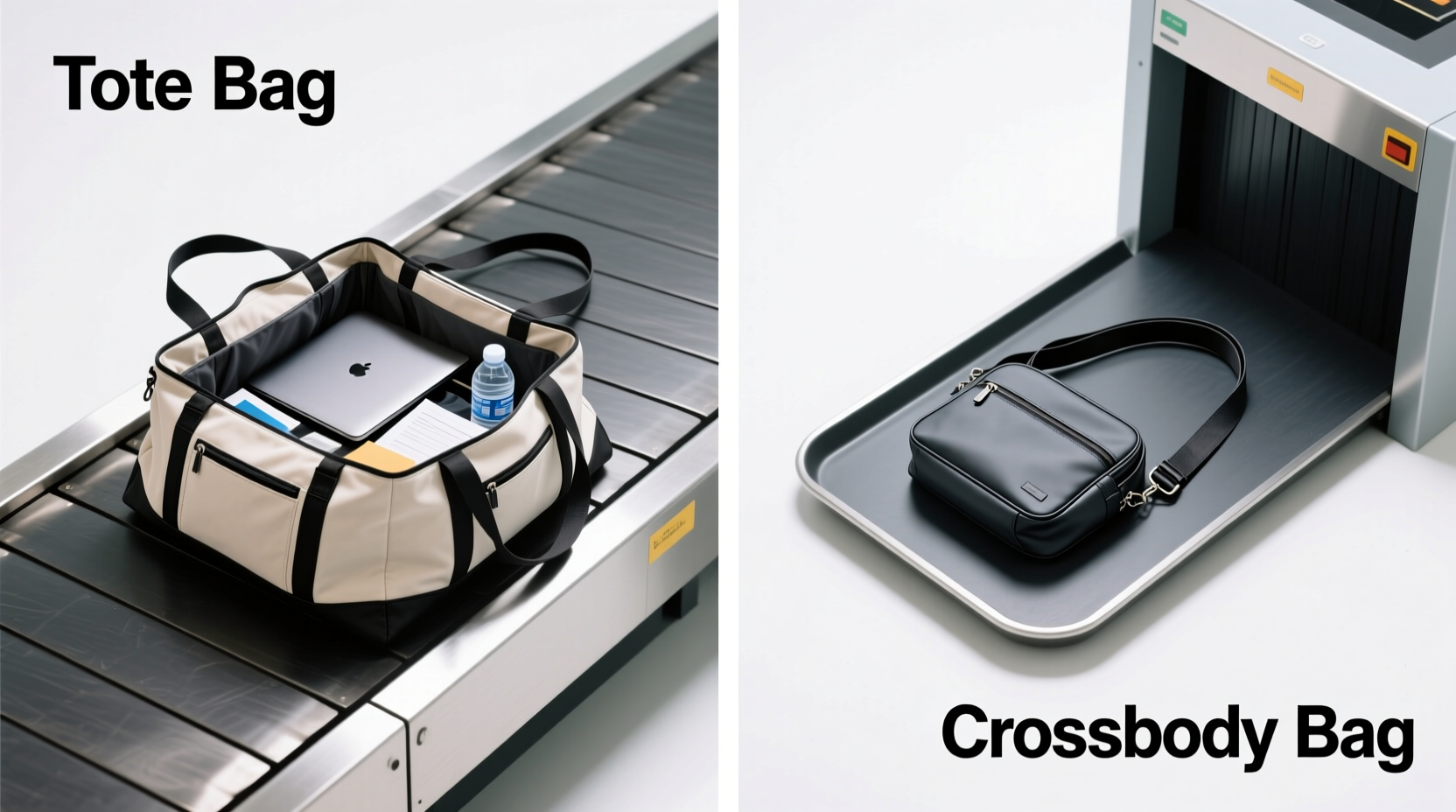
Airport security protocols, particularly those enforced by the TSA in the U.S. and similar agencies worldwide, require passengers to remove certain items from their person and place them in bins for X-ray screening. This includes laptops, liquids in clear bags, metal objects, and often, your handbag. The way your bag is structured, carried, and accessed directly influences how efficiently you can comply with these steps.
TSA agents recommend minimizing loose items and keeping essentials organized. A poorly designed or inconveniently worn bag forces you to juggle multiple items while standing in line, increasing the risk of dropped belongings, forgotten items, or even theft. The ideal handbag should allow quick access, stay secure on your body, and not add extra steps during screening.
“Passengers who use compact, wearable bags like crossbodies tend to move through security 30–40 seconds faster on average than those using large totes.” — Transportation Security Administration (TSA) Operational Review, 2023 Field Observations
Tote Bags: Pros and Cons at Security Checkpoints
Tote bags have long been a favorite for professionals and travelers due to their spacious interiors and minimalist aesthetic. They easily accommodate laptops, notebooks, water bottles, and personal items — making them ideal for day trips or work commutes. But do they perform well under the unique demands of airport security?
Advantages of Totes
- High capacity: Ideal for carrying multiple items, including 13–15” laptops, documents, and travel accessories.
- Easy visibility: Open-top designs allow you to quickly locate boarding passes, IDs, and clear plastic bags.
- No straps around the neck: Comfortable for short-term wear and easy to set down.
Drawbacks at Security
- Must be placed in bins: Unlike wearable crossbodies, totes must be removed and screened separately, adding an extra step.
- Unstable when set down: On crowded conveyor belts or floors, totes can tip over, spilling contents.
- Not hands-free: Once removed, you must hold it or find space to place it — difficult when also managing shoes, jackets, and electronics.
- Vulnerable to theft: In busy lines, unattended totes are common targets for opportunistic theft.
Crossbody Bags: Built for Efficiency and Security
Crossbody bags, characterized by their long, adjustable straps worn diagonally across the torso, have gained popularity for urban commuting and travel. Their design prioritizes security and accessibility — two qualities that shine at airport checkpoints.
Unlike totes, many crossbody bags can remain on your person during screening, provided they meet size requirements and don’t contain prohibited items like large liquid containers or laptops. This eliminates the need to remove, bin, and later retrieve the bag — a major advantage when time and focus are limited.
Why Crossbodies Excel at Security
- Stay on your body: Most small crossbodies (under 14” x 9”) are allowed through without removal, reducing clutter and risk.
- Hands-free convenience: You can manage shoes, electronics, and liquids while keeping your bag secure.
- Theft-resistant: Worn snugly across the chest, they’re harder to snatch and always within your peripheral vision.
- Quick-access pockets: Many models feature RFID-blocking slots, zippered fronts, and passport sleeves for seamless ID presentation.
Limits to Consider
- Limited capacity: Most crossbodies fit only essentials — phone, wallet, keys, small cosmetics, and maybe a slim tablet.
- Laptop constraints: Few crossbodies accommodate full-sized laptops, so you may still need a separate backpack or roller bag.
- Strap discomfort: Over long periods, especially with heavy loads, the strap can dig into the shoulder or collarbone.
Direct Comparison: Tote Bag vs Crossbody
| Feature | Tote Bag | Crossbody Bag |
|---|---|---|
| Security Screening | Must be removed and X-rayed | Often stays on body if small |
| Capacity | High (laptops, books, bottles) | Low to medium (essentials only) |
| Hands-Free Use | No – carried by hand or elbow | Yes – worn across body |
| Theft Risk at Checkpoints | Higher – left in bins or on floor | Lower – remains on person |
| Organization | Varies – often minimal internal structure | Typically multiple secure pockets |
| Comfort During Travel | Moderate – can be heavy on one shoulder | Good – weight distributed diagonally |
| Best For | Business trips, city sightseeing, day use | Short flights, light packing, high-security zones |
Real-World Scenario: A Frequent Flyer’s Experience
Sarah M., a marketing consultant based in Chicago, travels an average of 12 times per year for client meetings. For years, she relied on a leather tote to carry her laptop, portfolio, and personal items. But after missing a flight due to disorganization at security — where she misplaced her boarding pass inside her tote and fumbled retrieving her laptop — she decided to reevaluate her gear.
She switched to a slim crossbody with a dedicated tablet sleeve and external ID window. “The first time I walked through security without taking off my bag, I felt like I’d unlocked a travel hack,” she said. “I didn’t have to worry about someone grabbing my tote from the bin, and I could keep my boarding pass in hand the whole time.”
For longer trips, Sarah now uses a hybrid approach: a crossbody for essentials and a slim roller suitcase for her laptop and documents. “I still love my tote, but I save it for ground transportation or hotel use — not security lines.”
Smart Packing: A Step-by-Step Guide for Stress-Free Screening
Regardless of which bag you choose, preparation is key. Follow this sequence to streamline your checkpoint experience:
- Before approaching security: Remove your laptop and liquids from your bag and place them in a clear, quart-sized bag. Keep this ready in an outer pocket.
- Unzip all main compartments: Prevent delays by ensuring screeners can see inside without touching your belongings.
- Have ID and boarding pass accessible: Use a wallet with an ID window or a crossbody with a front-facing slot.
- Remove bulky outerwear: Jackets, scarves, and belts often need to go in bins — plan for this ahead of time.
- Position yourself strategically: Stand beside the conveyor belt, not directly in front, to create space for organizing bins.
- If using a tote: Place it gently in a bin, bottom side down, to prevent tipping. Keep it within eyesight.
- After screening: Double-check bins for all items before walking away. Many lost items are left behind at this stage.
Frequently Asked Questions
Can I bring a tote bag through airport security?
Yes, but it must be removed from your person and placed in a screening bin, just like larger carry-ons. If your tote contains a laptop or liquids over 3.4 oz, those items must also be removed and screened separately.
Are crossbody bags allowed through TSA without removal?
Generally, yes — as long as the bag is small (typically under 14” x 9”), doesn’t contain prohibited items, and can be easily inspected. TSA officers have discretion, so be prepared to remove it if requested.
Which bag reduces the risk of theft at security?
Crossbody bags are significantly safer. Since they remain on your body, they’re less likely to be stolen or accidentally left behind. Tote bags left in bins or on the floor are common targets in busy airports.
Expert Insight: What Travel Industry Professionals Recommend
“For business travelers, the crossbody isn’t just a trend — it’s a tactical tool. It keeps essentials secure, reduces physical strain, and cuts down on decision fatigue during transit.” — James R. Holloway, Travel Gear Analyst at JetLifestyle Magazine
“We always advise clients to treat airport security like a timed obstacle course. The fewer items you have to handle, the better. A compact crossbody eliminates one variable entirely.” — Lena Torres, Premium Travel Concierge, VoyageWell Advisors
Final Verdict: Which Bag Holds Up Better?
When evaluated strictly on performance through airport security lines, the crossbody bag emerges as the superior choice. Its ability to remain on your person, combined with hands-free convenience and reduced theft risk, gives it a functional edge that outweighs the tote’s greater storage capacity.
That said, the best solution may not be choosing one over the other — but combining them. Use a streamlined crossbody for essentials like ID, phone, wallet, and medications, and pair it with a tote or roller bag for larger items. This layered approach maximizes both security efficiency and packing flexibility.
If you’re a minimalist traveler or frequently take short domestic flights, a well-designed crossbody can serve as your sole carry bag. Look for models with padded tech sleeves, lockable zippers, and moisture-resistant linings. For business travelers or those carrying more gear, reserve the tote for post-security use — pulling it out only after you’ve cleared the checkpoint.
Conclusion: Make Smarter Choices Before You Fly
Your handbag shouldn’t slow you down at one of the most critical stages of air travel. While tote bags offer undeniable utility, their limitations at security checkpoints make them a liability in high-pressure environments. Crossbody bags, built for mobility and retention, consistently prove more reliable when every second counts.
Reevaluate your current travel setup. Could a switch to a crossbody — or a smarter combination of bags — reduce your stress and improve your efficiency? The next time you pack, consider not just what you’re bringing, but how you’ll manage it when the line starts moving.
💬 What’s your go-to bag for flying? Share your experience with tote vs. crossbody use at security — your insight could help fellow travelers make smarter choices.