Every morning, millions of people pick up a bag before heading out—whether it’s a sleek tote or a rugged backpack. But behind that routine decision lies a question few consider until discomfort sets in: which option truly protects your shoulders and spine over time? For daily commuters carrying laptops, notebooks, water bottles, and more, the difference between a tote and a backpack isn’t just aesthetic—it’s biomechanical. Poorly distributed weight can lead to chronic shoulder strain, neck pain, and even postural imbalances. This article compares tote bags and backpacks from an ergonomic standpoint, examining how each affects shoulder load, spinal alignment, and overall physical stress during daily commutes.
Ergonomic Principles Behind Shoulder Load Distribution
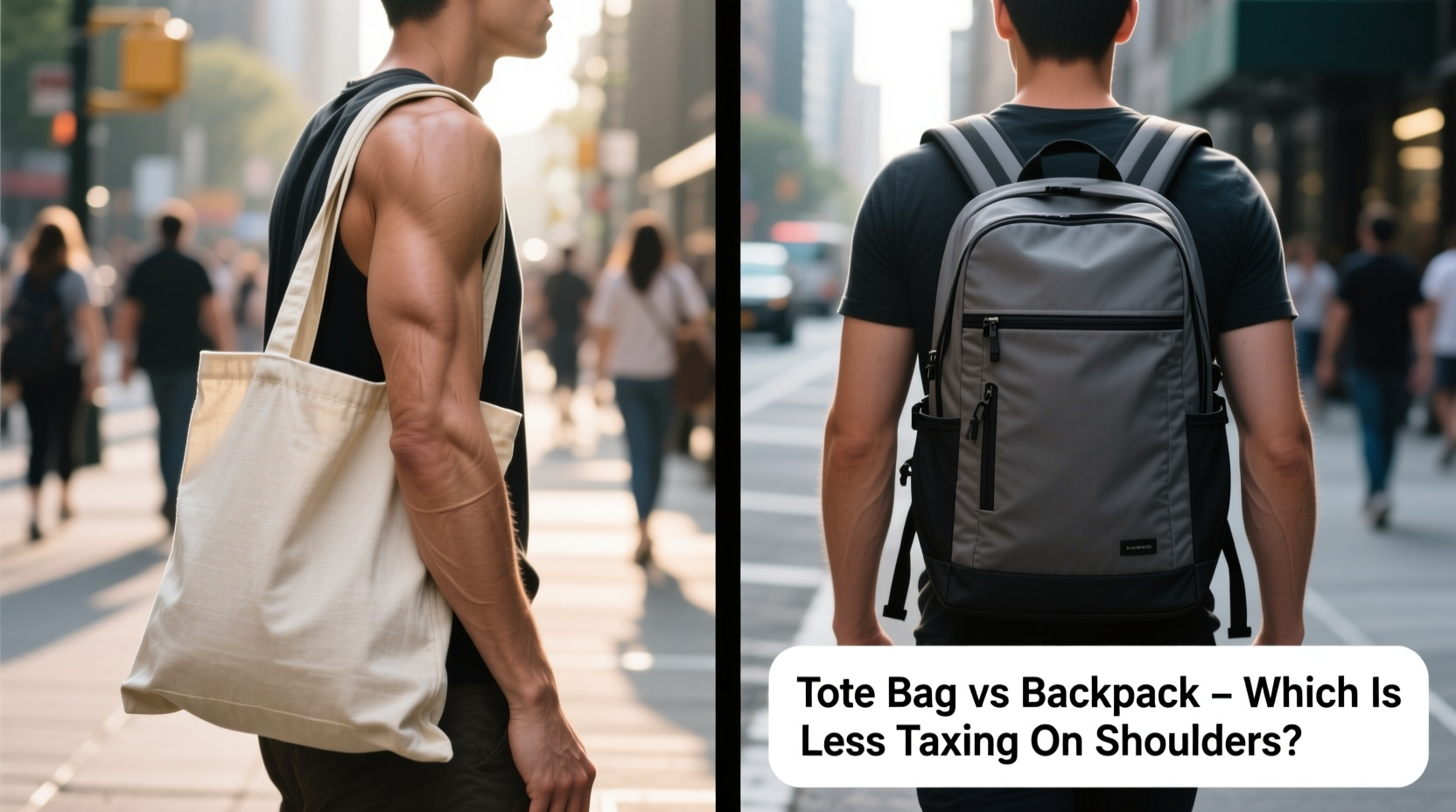
The human body wasn’t designed to carry heavy loads on one side for extended periods. When evaluating which bag type is gentler on the shoulders, three key factors come into play: weight distribution, center of gravity, and strap design. A well-distributed load minimizes muscle fatigue and reduces joint compression, especially in the trapezius muscles that run from the base of the skull to the shoulders and upper back.
Tote bags typically feature two short handles or a single shoulder strap, forcing users to carry weight asymmetrically. This shifts the center of gravity away from the body’s midline, requiring constant muscular engagement to prevent tipping or slipping. Over time, this uneven loading pattern leads to unilateral strain—especially when carried on the same side day after day.
Backpacks, by contrast, use dual straps across both shoulders, allowing weight to be shared symmetrically. High-quality models also include a chest or waist strap to stabilize the load further, keeping it close to the torso. According to Dr. Lena Torres, a physical therapist specializing in occupational musculoskeletal health:
“Even a moderate load—like a laptop, lunchbox, and water bottle—can create significant asymmetry if carried in a tote. The body compensates by tilting the pelvis and elevating one shoulder, which over weeks or months contributes to functional scoliosis and myofascial pain.”
The takeaway? Symmetry matters. How weight is placed relative to your spine determines not just immediate comfort but long-term structural integrity.
Comparing Tote Bags and Backpacks: A Structural Breakdown
To understand why one bag may be less taxing than the other, let’s examine their core designs and how those influence physical strain.
Tote Bag Design Limitations
Tote bags are prized for style and simplicity. Their open-top structure, flat base, and minimal hardware make them ideal for quick access and professional appearances. However, these features compromise ergonomics:
- Single-shoulder carry: Most totes rest on one shoulder, concentrating full weight on one side.
- Short handles: Force arm elevation, increasing trapezius activation.
- Lack of padding: Thin straps dig into soft tissue, reducing blood flow and accelerating fatigue.
- Poor back support: No contact with the upper back means no stabilization.
A study published in the *Journal of Applied Ergonomics* (2022) found that participants using tote bags reported 40% higher perceived exertion in the dominant shoulder compared to backpack users carrying the same load. Moreover, EMG readings showed sustained muscle contraction in the upper trapezius—a hallmark of repetitive strain.
Backpack Advantages in Load Management
Backpacks are engineered for balance. Even basic models distribute weight across both shoulders, while advanced versions incorporate features that enhance spinal alignment:
- Dual-padded straps: Spread pressure over a larger surface area, reducing peak force per square inch.
- Sternum and hip belts: Transfer up to 20% of load from shoulders to the ribcage or pelvis.
- Contoured back panels: Promote natural lumbar curve and prevent slouching.
- Compression straps: Stabilize contents and keep the load close to the body.
When properly adjusted, a backpack keeps the bulk of its weight between the shoulder blades and above the hips—aligning with the body’s center of mass. This reduces forward head posture and prevents excessive kyphosis (upper back rounding), common issues among urban commuters.
Tip: Always adjust backpack straps so the bottom sits no lower than two inches below your waistband—this maintains optimal weight positioning.Real-World Impact: A Day-in-the-Life Comparison
Consider two professionals making similar commutes—one using a tote, the other a backpack.
Mini Case Study: Sarah (Tote User) vs. James (Backpack User)
Sarah, a marketing manager, carries a structured canvas tote containing her 13-inch laptop, tablet, wallet, keys, reusable water bottle, and lunch container. Total weight: approximately 7.5 lbs. She wears it over her right shoulder throughout her 45-minute subway ride and 10-minute walk to work. By midday, she frequently massages her right shoulder and notices her posture has shifted—her right ear drifts forward, and her shirt collar rides higher on one side.
James, an IT consultant, uses a lightweight hiking-style backpack with padded shoulder straps and a sternum clip. His gear weighs about 8 lbs, including a larger laptop and external hard drive. He adjusts his pack each morning to ensure snug fit and balanced carry. After six months, he reports no shoulder discomfort and improved endurance during longer transit days.
At a follow-up assessment, Sarah’s physical therapist identifies mild scapular winging and unilateral trapezius hypertrophy—signs of chronic overuse. James shows symmetrical muscle development and neutral spinal alignment. While individual fitness levels play a role, the primary differentiator is load management strategy.
This scenario reflects a broader trend: style-driven choices often overlook long-term physical cost. As Dr. Anika Patel, an occupational medicine specialist, notes:
“We see increasing cases of ‘commuter syndrome’—not a formal diagnosis, but a cluster of symptoms linked to poor carrying habits. Tote bags, especially when overloaded, are a major contributor.”
Side-by-Side Feature Comparison
| Feature | Tote Bag | Backpack |
|---|---|---|
| Weight Distribution | Uneven (one shoulder) | Even (both shoulders) |
| Strap Padding | Rare or minimal | Standard on most models |
| Load Stability | Low (shifts with movement) | High (close to back, secured) |
| Postural Impact | High risk of imbalance | Minimal when properly fitted |
| Spinal Alignment | Frequently compromised | Maintained with correct use |
| Long-Term Shoulder Stress | Significant | Low to moderate |
| Style Flexibility | High (office-appropriate) | Moderate (varies by model) |
While tote bags win on aesthetics and ease of access, backpacks dominate in physiological safety. For anyone spending more than 30 minutes daily in transit, the data strongly favors backpacks as the healthier long-term option.
Smart Commuting: A Step-by-Step Guide to Reducing Shoulder Strain
You don’t need to abandon your tote entirely—but you should rethink how and when you use it. Follow this five-step process to minimize physical toll regardless of bag type.
- Assess Your Daily Load
Weigh your typical contents. Anything over 5–7 lbs significantly increases injury risk when carried asymmetrically. - Choose the Right Bag for the Task
Use a backpack for loads exceeding 5 lbs or commutes longer than 20 minutes. Reserve totes for light-duty days (e.g., notebook and phone only). - Optimize Fit and Position
For backpacks: tighten shoulder straps so the bag hugs your back; engage sternum clips. For totes: switch shoulders every 10–15 minutes to avoid unilateral strain. - Strengthen Supporting Muscles
Incorporate exercises like rows, shoulder blade squeezes, and neck retractions into your routine to improve postural resilience. - Limit Carry Time
If possible, transfer heavy items to rolling luggage or use lockers at transit hubs to reduce continuous load exposure.
Actionable Checklist: Choosing the Shoulder-Friendly Option
Use this checklist before purchasing or packing your daily bag:
- ☐ Is the total weight under 10% of my body weight?
- ☐ Does the bag allow for even weight distribution?
- ☐ Are straps padded and adjustable?
- ☐ Can I keep the load close to my torso?
- ☐ Am I switching sides regularly if using a tote?
- ☐ Do I experience numbness, tingling, or persistent soreness?
- ☐ Have I considered hybrid options (e.g., backpack-tote combos)?
If you answered “no” to any of the first five questions—or “yes” to the sixth—it’s time to reevaluate your carry strategy.
Frequently Asked Questions
Can a tote bag ever be safe for daily commuting?
Yes, but only under strict conditions: the load must be light (under 5 lbs), carried for short durations, and rotated between shoulders. Even then, prolonged use increases cumulative risk. Consider a tote with crossbody strap conversion for better stability.
Are all backpacks better than totes?
Not automatically. Poorly fitted backpacks—especially those worn with only one strap or allowed to sag low—can cause just as much harm. The benefit comes from proper use: both straps, correct adjustment, and load proximity to the spine.
What’s the best alternative for professionals who need a polished look?
Look for professional-grade backpacks made from water-resistant nylon, leather-trimmed fabrics, or minimalist designs in neutral tones. Brands like Aer, Tumi, and Bellroy offer sleek models indistinguishable from briefcases. Alternatively, use a foldable backpack inside your tote for heavier commute legs.
Final Thoughts: Prioritize Health Without Sacrificing Style
The debate between tote bags and backpacks isn’t about fashion versus function—it’s about recognizing that true functionality includes bodily well-being. A bag that looks sharp but causes daily pain isn’t serving you. Conversely, a backpack that supports your spine doesn’t have to resemble a hiking expedition kit.
Modern design has bridged the gap. Today’s best commuter bags combine ergonomic intelligence with refined aesthetics. Whether you choose a backpack, a tote, or a hybrid solution, let biomechanics guide your decision. Pay attention to how your body responds after a week of consistent use. Discomfort is not normal—it’s feedback.
Your shoulders carry enough already. Don’t make them bear the burden of poor design choices.
💬 Have you switched from tote to backpack—or vice versa—based on shoulder comfort? Share your experience and help others find a healthier commute.