Fashion brooches are more than accessories—they're statements of style, sentiment, and sometimes, heirloom value. Whether passed down through generations or recently acquired from a vintage boutique, a well-maintained brooch enhances any outfit and retains its worth over time. However, improper cleaning or storage can lead to tarnish, discoloration, broken settings, or irreversible damage. Understanding how to clean and restore your brooch safely ensures it remains a radiant part of your collection for years to come.
Understanding Your Brooch: Materials Matter
Before attempting any cleaning, identify what your brooch is made of. Different materials require different care approaches. Common components include:
- Base metals (e.g., brass, copper, nickel) – Prone to tarnishing but often used in vintage and costume pieces.
- Silver or gold-plated metal – Thin layers over base metal; aggressive cleaning can strip the plating.
- Precious metals (solid silver, gold) – More durable but still susceptible to scratches and chemical reactions.
- Stones and embellishments – Rhinestones, glass, pearls, enamel, or semi-precious gems may loosen or cloud if exposed to moisture or abrasives.
- Plastic or celluloid – Found in mid-century designs; these degrade with heat and certain solvents.
Misidentifying the material can result in permanent damage. For example, soaking a rhinestone brooch in ammonia might dull the stones’ foil backing, while using polishing cloths on enamel can scratch the surface.
“Many collectors underestimate how fragile vintage finishes are. A gentle touch preserves both appearance and historical integrity.” — Lila Montgomery, Vintage Jewelry ConservatorTip: Use a magnifying glass and natural light to inspect hallmarks, stone settings, and construction details before cleaning.
Step-by-Step Guide to Safe Cleaning
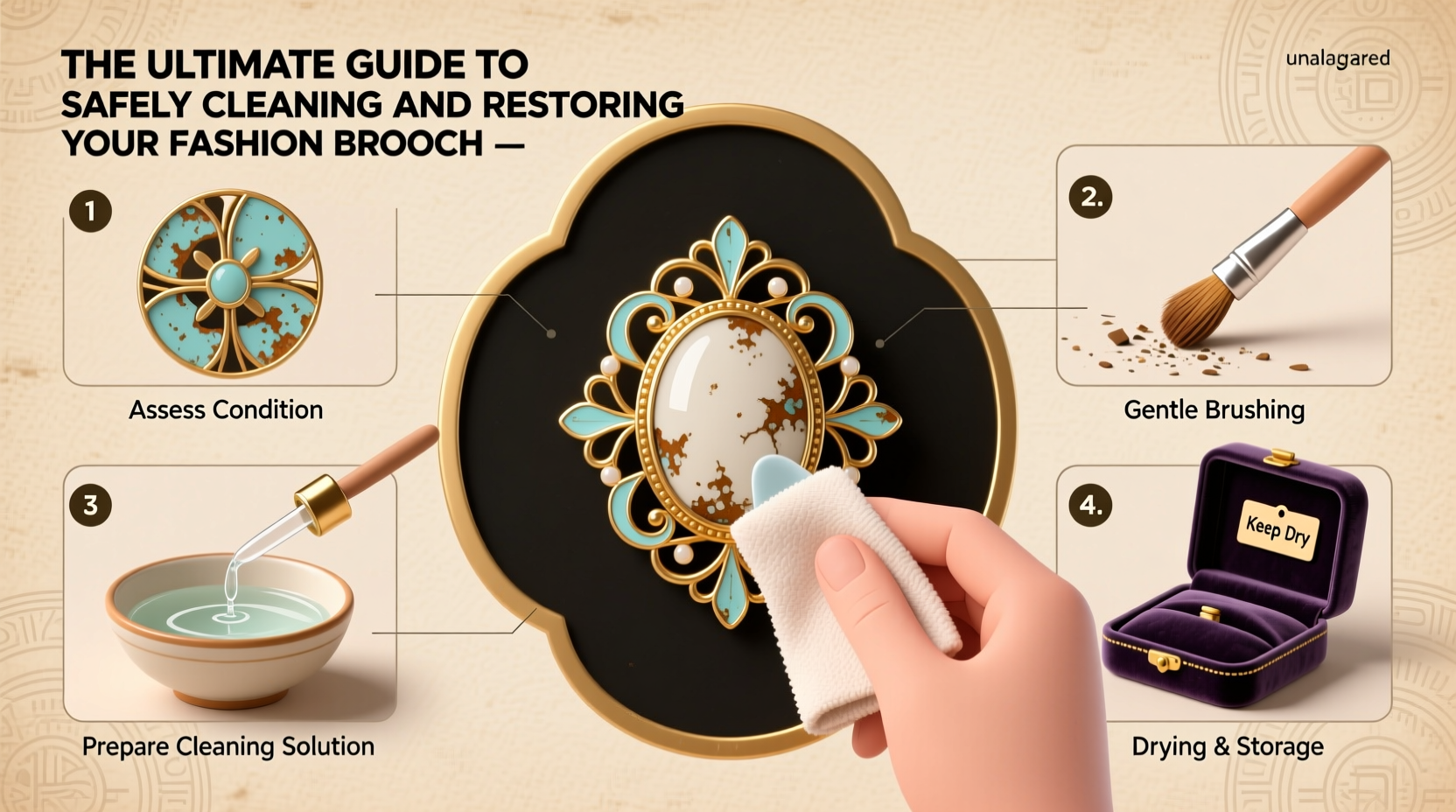
Cleaning should be approached methodically. Rushing or skipping steps increases the risk of damage. Follow this timeline-based process:
- Inspect the brooch under bright light. Look for loose stones, cracked enamel, corrosion, or worn plating.
- Dust gently with a soft makeup brush or microfiber cloth to remove surface debris.
- Prepare a cleaning solution: Mix one cup of lukewarm water with one drop of pH-neutral dish soap (avoid lemon-scented or degreasers).
- Use a cotton swab or soft toothbrush dipped in the solution to lightly clean crevices. Never submerge brooches with glued-in stones or porous materials like pearls.
- Rinse by dampening a clean cloth with distilled water and wiping away soapy residue.
- Air-dry flat on a lint-free towel, away from direct sunlight or heat sources.
- Polish only if appropriate: Use a jewelry polishing cloth for metal areas—never on stones or painted surfaces.
For heavily tarnished base-metal brooches without delicate components, a paste of baking soda and water (two parts soda to one part water) can be applied with a cotton swab, then rinsed carefully. Avoid vinegar or lemon juice, which are acidic and may corrode metal or weaken adhesives.
Do’s and Don’ts: Quick Reference Table
| Do | Don’t |
|---|---|
| Use distilled water to prevent mineral deposits | Soak brooches with glued elements |
| Test cleaners on an inconspicuous area first | Use ultrasonic cleaners on vintage or delicate pieces |
| Store in acid-free tissue paper inside a soft pouch | Wear while applying perfume, lotion, or hairspray |
| Clean every 3–6 months depending on wear | Scrub aggressively or use abrasive pads |
Restoration: When to DIY and When to Call a Professional
Minor issues like light tarnish or dust accumulation can be handled at home. But restoration involving structural repairs should be left to experts. Consider professional help if:
- Stones are loose or missing.
- The pin mechanism is bent or non-functional.
- There is visible corrosion beneath stones or under plating.
- The brooch has significant monetary or sentimental value.
A qualified jeweler specializing in vintage or costume jewelry can re-plate worn surfaces, reset stones, and repair clasps without compromising original craftsmanship.
Tip: Take clear photos and note all imperfections before sending a piece to a restorer. This helps track changes and ensures accountability.Real Example: Reviving a 1950s Rhinestone Brooch
Sophia inherited a gold-tone floral brooch from her grandmother, but decades in a cedar chest had left it dull and sticky. She began by dry-brushing with a clean mascara wand to remove dust. Suspecting residue from old fabric or polish, she tested a cotton swab dampened with diluted dish soap on the back metal—no adverse reaction. Using the swab, she gently cleaned around each rhinestone, avoiding direct contact with the stones. After air-drying, the brooch regained its luster. The pin clasp, however, was stiff. Instead of forcing it, she took it to a local vintage jewelry specialist who lubricated the hinge and tightened the catch. The result? A fully functional, sparkling heirloom ready for special occasions.
Essential Care Checklist
To keep your brooch collection in top condition, follow this monthly maintenance checklist:
- ✔ Inspect for loose stones or damaged pins
- ✔ Wipe with a dry microfiber cloth after wearing
- ✔ Store individually in soft pouches or divided boxes
- ✔ Clean gently with mild soap and water as needed
- ✔ Rotate wear to minimize exposure to oils and chemicals
- ✔ Schedule professional inspection every 2–3 years for valuable pieces
Frequently Asked Questions
Can I use silver dip on my tarnished brooch?
No. Silver dip solutions are highly corrosive and can damage stones, plating, and delicate metalwork. They often strip away intentional patina on vintage pieces. Stick to gentle wiping with a treated silver cloth instead.
How do I clean a brooch with pearls or opals?
Never immerse them. These stones are porous and sensitive to chemicals. Dampen a corner of a microfiber cloth with distilled water and lightly dab around the setting. Dry immediately. Avoid commercial jewelry cleaners entirely.
Is it safe to wear my brooch daily?
Occasional wear is fine, but daily use accelerates wear on the pin mechanism and exposes the piece to sweat, lotions, and friction. Reserve your most delicate or valuable brooches for special events, and always fasten them securely to avoid drops or snags.
Preserve Beauty, Honor Craftsmanship
A fashion brooch carries stories—of eras past, personal milestones, or bold self-expression. Treating it with care honors not just its aesthetic value, but the craftsmanship behind it. By understanding materials, following safe cleaning practices, and knowing when to seek expert help, you protect both the physical object and the memories it holds. Start today: pull out your favorite piece, inspect it closely, and give it the attention it deserves. A little effort now ensures brilliance for decades to come.
💬 Have a brooch you’ve successfully restored? Share your story in the comments and inspire others to cherish their timeless accessories.








