
Finding the perfect pair of jeans shouldn’t be a guessing game. Too often, men settle for ill-fitting denim—pants that gap at the waist, bunch at the ankles, or restrict movement. The solution lies not in trial and error, but in precision. Measuring your jeans correctly—both on your body and on existing pairs you love—is the key to consistent, comfortable fit across brands and styles. This guide walks you through every step, from choosing the right tools to interpreting measurements like rise and inseam, so you can shop with confidence and wear with pride.
Why Accurate Measurements Matter
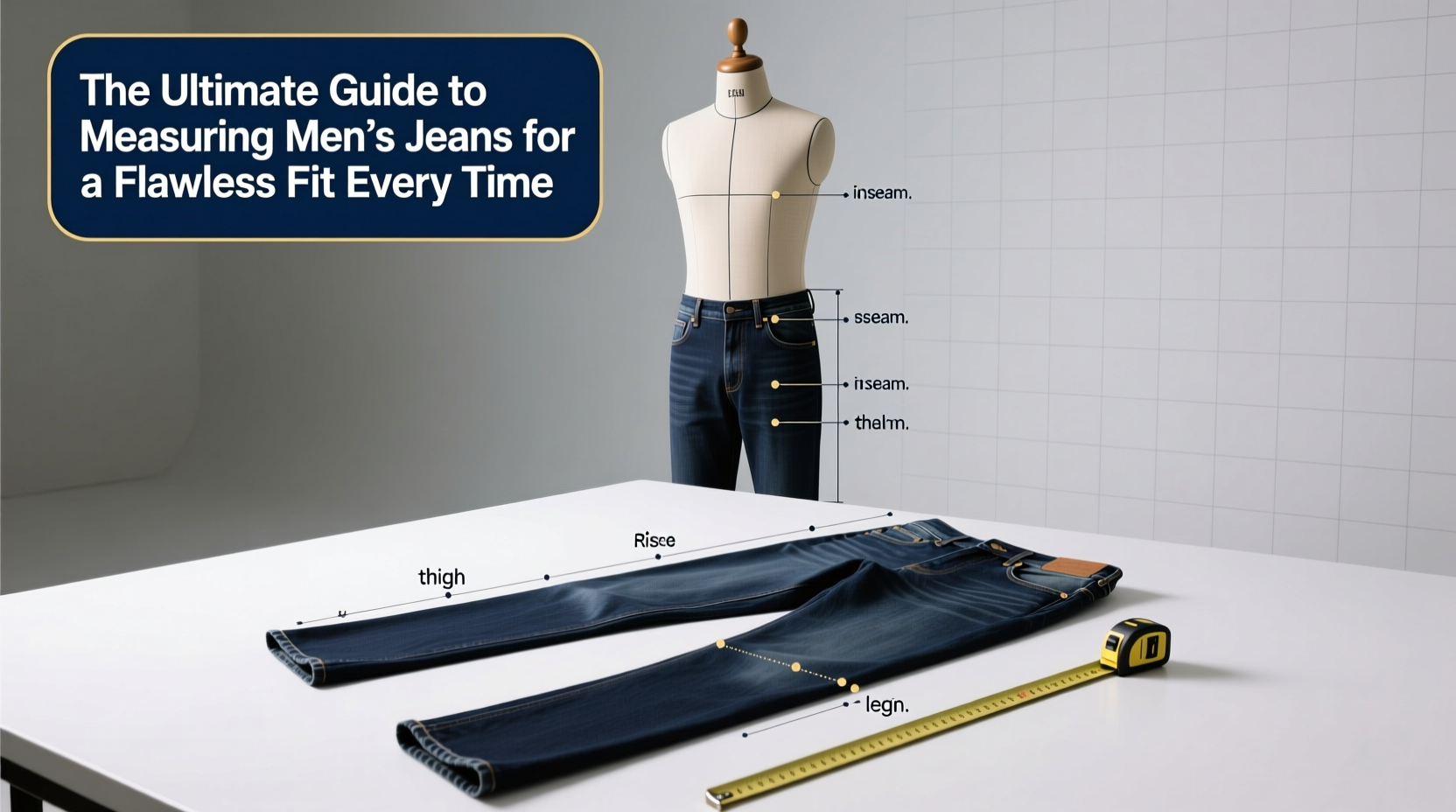
Jeans sizing is notoriously inconsistent. A 32-inch waist from one brand may fit more like a 30 or 34 in another. Labels are unreliable; what matters is how the garment fits your body. Taking accurate measurements removes guesswork and empowers informed decisions whether shopping online, in-store, or ordering custom denim.
Properly measured jeans enhance both comfort and appearance. They sit naturally on the hips, allow free movement, and create clean lines from waist to hem. Over time, knowing your exact dimensions helps identify patterns—such as preferring a higher rise or tapered leg—and streamlines future purchases.
“Fit is the foundation of style. No matter the fabric or finish, if the cut doesn’t align with your proportions, the result will always fall short.” — Marcus Reed, Menswear Tailor & Fit Consultant
The Essential Tools You Need
Before taking any measurements, gather the right tools. Using improper instruments leads to inaccurate results and poor fit outcomes.
- Tailor’s tape measure: Flexible and marked in both inches and centimeters, this is essential for contouring around the body.
- Mirror: Helps ensure the tape sits level and parallel to the floor during measurement.
- Fitting pants (your best-fitting jeans): Use these as a reference when measuring garments flat.
- Pencil and notebook: Record each number immediately to avoid confusion.
- Flat surface: For laying jeans out straight when measuring them off-body.
How to Measure Your Body Correctly
These five core body measurements form the baseline for selecting or comparing jeans:
- Waist: Wrap the tape around your natural waistline—the narrowest part of your torso, usually just above the hip bones. Keep the tape horizontal and breathe normally. Don’t cinch it down.
- Hips: Measure around the fullest part of your seat, typically 7–9 inches below the waist. Ensure the tape passes over both hip bones evenly.
- Inseam: Start at the crotch seam and run the tape down the inside of your leg to the desired ankle length. Alternatively, use a well-fitting pair of jeans and measure from crotch to hem along the inner seam.
- Outseam (Total Length): From the top of the waistband, follow the outer leg seam down to the bottom of the cuff. This determines overall pant length.
- Rise: From the front center of the waistband, measure straight down through the crotch to the back center of the waistband. This reveals whether a jean has a short, medium, or long rise.
For best results, wear slim-fitting underwear or lightweight pants during measurement. Avoid bulky clothing that distorts dimensions.
Measuring Jeans When Laid Flat
Once you have a favorite pair of jeans, measuring them flat provides a reliable template for future buys. Lay the jeans face-down on a hard, flat surface. Smooth out wrinkles and align seams.
| Measurement | How to Take It | What It Tells You |
|---|---|---|
| Waist (laid flat) | Measure across the top edge of the waistband from side to side, then double it. | Matches your body waist size; critical for avoiding gapping or tightness. |
| Front Rise | From top center of front waistband to crotch intersection. | Determines how high the jean rides on your torso—shorter = modern/slim, longer = classic/comfy. |
| Back Rise | Same as front rise but on the back panel. | Affects rear coverage and comfort when sitting. |
| Thigh Width | Across the upper leg seam, about 1 inch below the crotch. | Indicates roominess through the seat and thigh—key for mobility. |
| Knee & Leg Opening | Measure width across knee and bottom cuff, then double each. | Reveals taper degree and break style (stacked, slight, none). |
Real-World Example: Finding Consistency Across Brands
James, a 35-year-old professional based in Chicago, struggled for years with inconsistent denim fits. His go-to brand discontinued his preferred slim-taper cut, forcing him to explore alternatives. Frustrated by returns and wasted money, he decided to measure his favorite old pair meticulously.
He recorded: 32\" waist, 30\" inseam, 8\" front rise, 14\" thigh, and 15\" leg opening. Armed with these numbers, he began filtering online options using size charts. Within weeks, he identified two new brands offering nearly identical specs. He ordered one pair, confirmed the fit, and now uses those measurements as his standard reference—saving time, money, and frustration.
This approach transforms shopping from random selection into targeted decision-making.
Do’s and Don’ts of Measuring Men’s Jeans
| Action | Do | Don't |
|---|---|---|
| Using the tape measure | Keep it snug but not tight; parallel to the floor. | Pull excessively or angle upward/downward. |
| Recording measurements | Write them down immediately with date and jean model. | Trust memory or rely on vague descriptions like “skinny” or “slim.” |
| Trying on jeans | Move around—sit, walk, squat—to test real-life stretch and recovery. | Evaluate fit only while standing still. |
| Comparing sizes | Use actual measurements, not tag sizes. | Assume all 32x32s are created equal. |
Step-by-Step: Build Your Personal Denim Profile
Create a reusable reference system for seamless future purchases:
- Gather tools: Tape measure, notebook, mirror, and one perfectly fitting pair of jeans.
- Take body measurements: Waist, hips, inseam, outseam, and rise.
- Lay jeans flat: Smooth and align seams without stretching.
- Record garment specs: Waist (doubled), front/back rise, thigh, knee, leg opening, and outseam.
- Label and store: Note the brand, model, fabric content, and wash. Save this data digitally or physically.
- Repeat annually: Bodies change; update your profile to reflect current dimensions.
“Your best-fitting jeans are your most valuable styling tool. Treat them like a blueprint.” — Lena Tran, Denim Stylist & Retail Advisor
Frequently Asked Questions
Should I size up if I like a relaxed fit?
Not necessarily. Sizing up increases the waist and seat, which may lead to excess fabric in unwanted areas. Instead, look for cuts labeled “regular,” “loose,” or “straight” in your true waist size. These offer room through the leg without compromising waist fit.
How much shrinkage should I expect?
Raw or unsanforized denim can shrink 3–7% after the first wash. Pre-shrunk or sanforized denim shrinks less than 1%. If buying raw, consider going up one size in waist and inseam, or choose a looser cut to accommodate shrinkage.
Can I trust online size charts?
Most reputable brands provide detailed flat measurements per size. Always check these against your own data before purchasing. When in doubt, contact customer service or request measurements from a recent batch.
Final Thoughts: Fit Is Freedom
Knowing how to measure men’s jeans transforms the way you shop, dress, and feel. It replaces uncertainty with confidence, and inconsistency with control. Whether you're building a capsule wardrobe, investing in premium denim, or simply tired of endless returns, precise measurement is your most powerful tool.
💬 Start today: Pull out your favorite pair of jeans, grab a tape measure, and build your personal fit profile. Share your experience or ask questions in the comments—help others master their denim destiny.