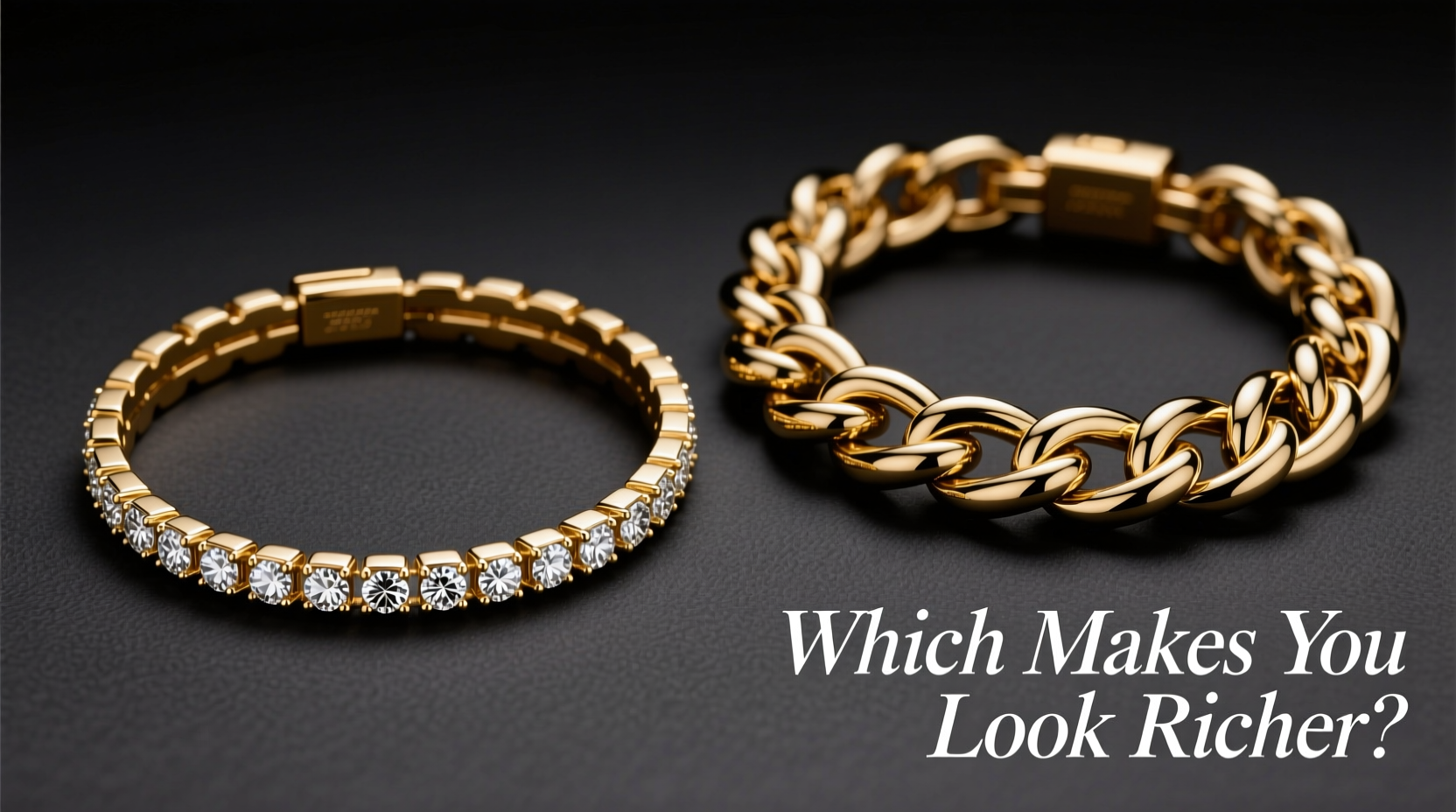
When it comes to jewelry that signals status, wealth, and confidence, few accessories spark debate like the tennis bracelet and the Cuban link. Both are iconic in their own right—one rooted in classic luxury, the other born from streetwear bravado. But if your goal is to project affluence, which of these two styles actually makes you look richer? The answer isn’t just about price tags or carats—it’s about context, craftsmanship, cultural associations, and how each piece aligns with modern perceptions of wealth.
This isn’t a contest of which chain or bracelet costs more at retail. It’s about presence—the subtle cues people pick up when they see you wearing one over the other. Whether you're dressing for a gala, stepping into a boardroom, or walking into a high-end club, your jewelry sends a message. Let’s dissect both pieces beyond aesthetics and explore what truly conveys richness in today’s world.
The Symbolism Behind the Shine
Jewelry has long been a silent language of power. From royal crowns to diamond-encrusted watches, adornments have served as markers of influence and success. Today, even in casual settings, a single well-chosen piece can elevate an outfit—and your perceived net worth.
The **tennis bracelet**, traditionally a flexible band set with a continuous line of diamonds, emerged into mainstream awareness during the 1987 US Open when tennis player Chris Evert dropped hers mid-match. Its elegance and understated sparkle made it synonymous with refined taste. Worn by celebrities at red carpets and charity galas, it's often associated with old money, discretion, and timeless luxury.
In contrast, the **Cuban link chain**—a thick, twisted rope-style chain usually crafted in gold or platinum—originated in Latin American communities and gained global prominence through hip-hop culture. Artists like Jay-Z, Puff Daddy, and more recently, Drake and Kanye West, turned the Cuban link into a symbol of hard-earned success, boldness, and unapologetic visibility.
“Luxury isn’t always quiet. Sometimes, the loudest statement is the most respected one.” — Marcus Delgado, Jewelry Historian & Curator at the Metropolitan Design Archive
So which looks richer? One whispers; the other announces. And depending on who’s watching, either could win.
Design, Craftsmanship, and Perceived Value
To understand how each piece reads socially, we need to examine not just appearance but construction and material integrity.
| Feature | Tennis Bracelet | Cuban Link Chain |
|---|---|---|
| Primary Material | Diamonds + precious metal (white/yellow gold, platinum) | Solid gold or platinum (often 14k–18k) |
| Weight & Presence | Lightweight, delicate | Heavy, substantial feel |
| Visibility | Subtle shimmer, best in formal light | High shine, catches attention instantly |
| Authenticity Signal | Relies on gem quality certification | Weight and thickness indicate real gold |
| Wear Context | Cocktail events, business dinners | Nightlife, public appearances, urban settings |
A tennis bracelet may cost tens of thousands due to its diamonds, yet go unnoticed unless closely observed. A Cuban link, meanwhile, can weigh several ounces and reflect light across a room—even without stones. Its mass alone communicates investment. In environments where wealth is expected to be seen, this visibility becomes currency.
Tip: When choosing between subtlety and statement, consider your audience. Boardrooms may appreciate discretion; social scenes reward impact.Real-World Perception: Who Looks Richer?
Let’s look at a real-world scenario.
Mini Case Study: Two Executives, Two Styles
James and Amir are both successful entrepreneurs in their late 30s. James wears a $25,000 platinum tennis bracelet under his cuff at investor meetings. Amir wears a 22-inch 18k gold Cuban link daily, paired with a minimalist watch.
At a private wine tasting, James receives compliments on his suit—but no one notices his bracelet until he gestures while speaking. At a rooftop lounge event, Amir walks in and immediately draws eyes. People assume he’s a music executive or athlete. Strangers ask where he shops. His chain does the talking before he says a word.
Who looks richer? To the elite crowd valuing restraint, James. To the broader public and younger demographics, Amir.
The lesson: Perceived wealth depends on environment. Quiet luxury dominates certain circles, but in many others, especially those influenced by pop culture and digital visibility, boldness equals prosperity.
How to Choose Based on Your Lifestyle
Instead of asking which accessory universally makes you look richer, ask: “Which makes *me* look richer *in my world*?” Here’s a practical checklist to guide your decision.
💎 Jewelry Selection Checklist
- Do I operate in conservative professional spaces? → Lean toward tennis bracelet.
- Am I often photographed or seen in public? → Cuban link amplifies presence.
- Do I value understatement or impact? → Match jewelry to personality.
- Is durability important? → Cuban links are sturdier for daily wear.
- Can I verify authenticity (certs for diamonds, karat stamp for gold)? → Critical for credibility.
- Will it complement my other pieces? → Tennis bracelets pair well with watches; Cuban links stand alone.
If you lead a hybrid life—corporate by day, influencer or social figure by night—consider owning both. Rotate based on occasion, much like you’d switch from oxfords to designer sneakers.
Common Misconceptions About Wealth Signaling
Many believe that expensive = rich-looking. Not always true. A poorly styled $30,000 bracelet can appear gaudy or insecure. Conversely, a perfectly proportioned Cuban link in brushed gold can suggest effortless access to luxury.
Another myth: Only diamonds convey real wealth. While diamonds are timeless, solid-gold craftsmanship is harder to fake. A thick, heavy Cuban link requires significant material investment—something counterfeiters struggle to replicate convincingly. This inherent difficulty in faking adds to its legitimacy as a wealth marker.
Also, remember that fit matters. A too-thin Cuban link loses authority. An oversized tennis bracelet can seem desperate. Proportionality is key. For men, a 10–14mm Cuban link is commanding without being excessive. For women, a 6–8mm width strikes balance. Tennis bracelets should follow wrist size—typically 7 to 7.5 inches for comfort and elegance.
FAQ: Quick Answers to Common Questions
Does a diamond tennis bracelet always look more luxurious than a Cuban link?
Not necessarily. In traditional or formal settings, yes. But in contemporary culture, especially among younger audiences, a substantial Cuban link in high-karat gold can project greater financial freedom because of its undeniable physical presence and cultural weight.
Can you wear both at the same time?
You can, but do so carefully. Pairing a slim tennis bracelet with a watch and a modest Cuban link works in layered luxury styling. However, stacking flashy pieces risks appearing flashy rather than affluent. Less is often more when combining high-value items.
Which holds value better over time?
Diamond tennis bracelets with certified stones tend to retain or increase value, especially if designed by top jewelers like Cartier or Harry Winston. Solid gold Cuban links also hold intrinsic melt value and remain in demand. Both are sound investments—if authentic and well-maintained.
Final Verdict: It Depends on Your Definition of \"Rich\"
If “looking rich” means blending in with old-money circles, attending art auctions, and sipping vintage Bordeaux in quiet lounges, the tennis bracelet wins. It’s the hallmark of discreet opulence—a detail noticed only by those who know.
But if “looking rich” means turning heads, commanding respect in urban environments, and embodying the energy of self-made success, the Cuban link takes the crown. It doesn’t hide. It declares.
In 2024, wealth is no longer defined by silence alone. Confidence, visibility, and cultural relevance matter. That’s why, in many real-world contexts—from Miami beaches to Beverly Hills parties to Instagram feeds—the Cuban link often reads as richer, simply because it cannot be ignored.
💬 What’s your go-to statement piece? Do you lean toward timeless elegance or bold presence? Share your thoughts and style philosophy with our community.