When it comes to statement earrings, few debates spark as much interest in fashion circles as the comparison between tassel and chandelier styles. Both command attention, evoke elegance, and elevate any outfit—but they do so in fundamentally different ways. Tassel earrings sway with movement, offering fluidity and bohemian flair, while chandelier earrings dazzle with intricate structure, often resembling miniature works of art. But beyond aesthetics, a deeper question lingers: are tassel earrings merely riding a passing trend wave, or do they hold their own as a genuinely stylish alternative to the time-honored chandelier?
This article dissects the design philosophy, cultural significance, styling potential, and longevity of both earring types—not to declare a winner, but to empower wearers with insight into which choice aligns best with personal style, occasion, and long-term wardrobe value.
The Anatomy of Movement: How Design Defines Personality
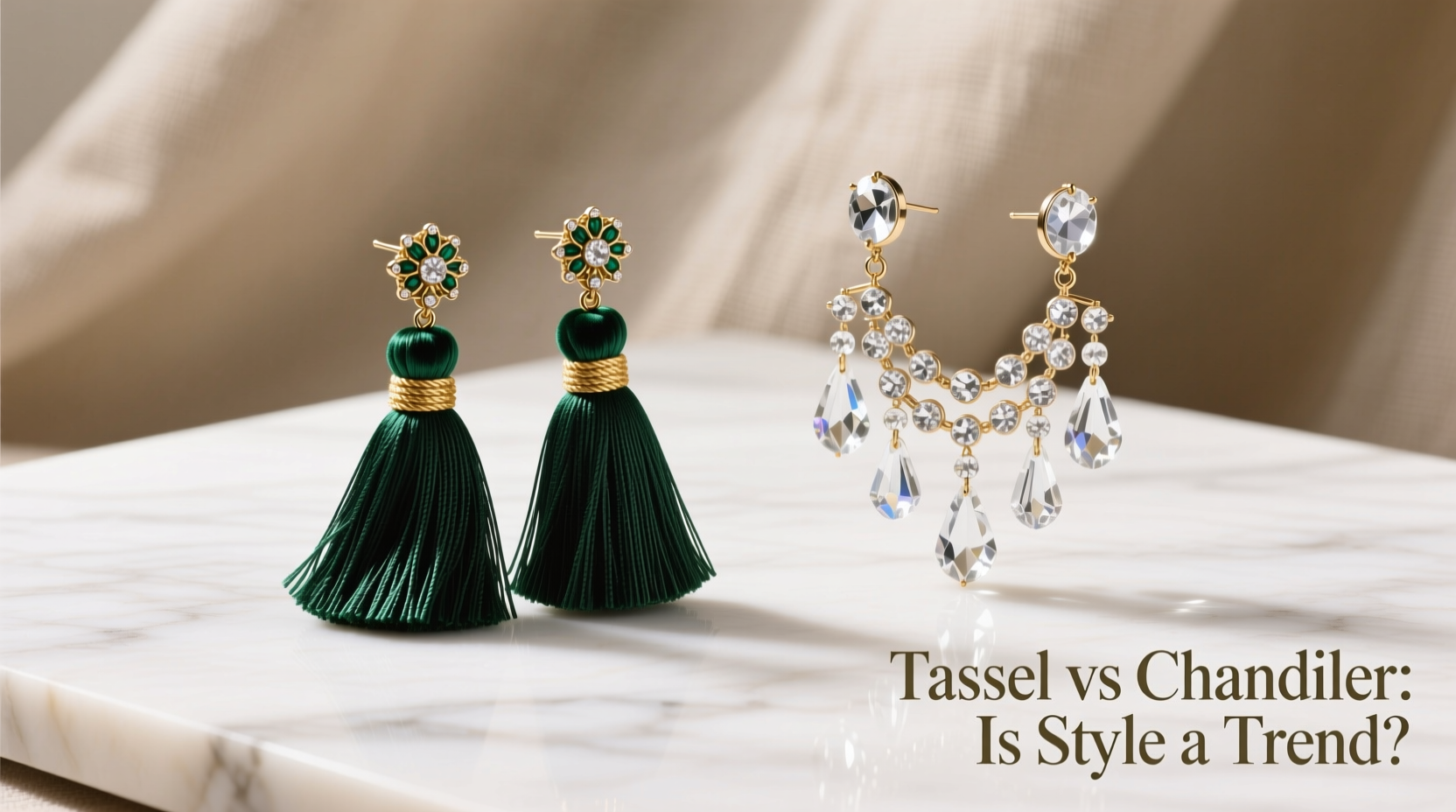
Tassel earrings derive their identity from motion. Composed of dangling threads, chains, beads, or fabric strips suspended from a central point, their charm lies in kinetic elegance. Each step or turn produces a subtle swing, drawing the eye not just to the ear but along the line of movement down the jawline and neck. This dynamic quality makes them ideal for casual sophistication, beach weddings, or artistic ensembles where softness and rhythm matter.
In contrast, chandelier earrings are architectural. Built with layered drops, gemstones, filigree metalwork, and sometimes multiple tiers, they remain relatively static. Their impact is visual rather than kinetic—bold, symmetrical, and often formal. Think red-carpet events, gala dinners, or vintage-inspired looks where opulence takes center stage.
Tip: Choose tassels for daytime drama with flow; reserve chandeliers for evening glamour that commands stillness.Historical Roots and Cultural Evolution
Both styles have deep historical roots, though in different corners of the world. Tassel earrings trace back to ancient Mesopotamia and Egypt, where fringed adornments symbolized status and spiritual protection. In India, jhumka earrings often feature small tassels (called jhalar) to enhance sound and movement during dance. Across North Africa and the Middle East, tassels were incorporated into bridal jewelry for their auspicious symbolism—each thread representing a wish or blessing.
Chandelier earrings emerged in 18th-century Europe, inspired by the elaborate lighting fixtures of aristocratic ballrooms. Designed to catch candlelight, early versions used reflective stones and mirrored surfaces. By the Victorian era, they became markers of wealth and refinement, evolving into today’s high-fashion interpretations seen on runways from Paris to Milan.
“Jewelry isn’t just decoration—it’s cultural memory made wearable. Tassels carry stories of ritual and motion; chandeliers echo grandeur and permanence.” — Dr. Lila Moreau, Curator of Fashion & Ornamentation at the Metropolitan Design Archive
Styling Versatility: When and Where Each Shines
One key factor in determining whether tassels are “just a trend” lies in adaptability. While chandelier earrings are inherently formal, tassel designs span a broader spectrum—from minimalist silk strands paired with linen dresses to bold, metallic fringe suitable for cocktail parties.
A cotton-tassel hoop can complement a summer festival look without overwhelming it, whereas even a modest chandelier might feel overdressed in such settings. Conversely, at black-tie affairs, chandeliers project polish and intentionality, while some tassel styles risk appearing too relaxed unless crafted in luxe materials like silk velvet or crystal-embellished chains.
Hair also plays a role. Updos highlight chandeliers’ complexity beautifully, framing the face with structured brilliance. Tassels, however, gain expressive power when worn with loose waves or half-up styles—their movement accentuated by flowing hair.
Comparison Table: Tassel vs Chandelier Earrings
| Feature | Tassel Earrings | Chandelier Earrings |
|---|---|---|
| Movement | High – dynamic sway | Low – static presence |
| Formality Level | Versatile – casual to semi-formal | Primarily formal |
| Best For | Boho, ethnic fusion, artistic looks | Cocktail events, galas, vintage themes |
| Material Range | Silk, leather, beads, chain, fabric | Metals, crystals, pearls, enamel |
| Lifespan Trend Cycle | Resurges every 5–7 years | Consistently present in haute couture |
| Comfort Over Time | Generally lightweight | Can be heavy due to structure |
Are Tassels Just a Trend?
The resurgence of tassel earrings since 2015—driven by bohemian revival, festival fashion, and influencer culture—has led some to label them fleeting. Yet trends that endure across decades with periodic comebacks suggest deeper staying power. Denim, oversized blazers, and hoop earrings all follow this pattern: cyclical visibility, but rooted in functional or expressive utility.
Tassels fall into this category. Their appeal isn't solely aesthetic; it's experiential. The gentle tap against the neck, the whisper of silk threads brushing the shoulder—these sensory details create emotional resonance beyond trend cycles. Moreover, designers like Isabel Marant, Stella Jean, and Bibi van der Velden continue integrating tassels into high-end collections not as novelties, but as signature elements.
What sets tassels apart from fads is their cross-cultural recognition and ease of reinvention. A single design principle—the suspended strand—can be executed in punk leather, Art Deco metal, or sustainable bamboo fiber, ensuring relevance across generations.
Tip: Invest in tassel earrings made from durable materials like braided nylon or gold-filled wire if you want longevity beyond seasonal style shifts.Real-World Example: Maya’s Wedding Jewelry Decision
Maya, a graphic designer based in Austin, faced a dilemma when planning her destination wedding in Tulum. She wanted jewelry that reflected her love for modern minimalism while honoring her Mexican heritage. After trying on several chandelier options—beautiful but overly ornate—she discovered handcrafted tassel earrings made by Oaxacan artisans using recycled glass beads and natural dyes.
They swayed gently in the ocean breeze, caught sunlight like prisms, and felt meaningful without being costumey. On her wedding day, guests repeatedly complimented how the earrings \"moved with her,\" enhancing her presence rather than overshadowing it. For Maya, the choice wasn’t about following a trend—it was about authenticity. Two years later, she still wears them to gallery openings and family gatherings, proving their staying power.
How to Choose What Works for You: A Styling Checklist
- ✅ Consider your most-worn necklines: V-necks pair well with longer tassels; high collars benefit from chandeliers’ upward focus.
- ✅ Assess your lifestyle: Frequent travelers may prefer lightweight tassels over heavy chandeliers.
- ✅ Match to your hair routine: If you rarely wear updos, tassels offer more consistent visibility.
- ✅ Evaluate comfort: Test weight by wearing sample pairs for an hour.
- ✅ Think long-term: Do you want a piece you’ll retire after one season, or pass down?
- ✅ Align with personal expression: Do you gravitate toward fluidity or structure in your overall style?
Frequently Asked Questions
Do tassel earrings work for professional settings?
Yes—if chosen thoughtfully. Opt for short, monochrome tassels in silk or fine metal. Avoid excessive length or loud colors. A navy-blue silk tassel on a gold stud can add quiet sophistication to a business suit.
Can I wear both styles in one outfit?
Rarely advisable. Both are statement pieces. Wearing both risks visual clutter. Instead, let one earring type lead, and balance with simpler accessories elsewhere—like studs in the second piercing or a delicate necklace.
Which style is better for round face shapes?
Longer tassel earrings can elongate the face beautifully. Chandeliers with vertical emphasis (narrow and tall) also help, but wide, circular chandeliers may emphasize roundness. Focus on downward lines regardless of type.
Final Thoughts: Style Beyond the Trend Cycle
The debate between tassel and chandelier earrings ultimately reveals a larger truth: style is not about choosing what’s trending, but what resonates. Tassels are not “just a trend”—they are a design language rooted in motion, culture, and tactile beauty. Chandeliers, meanwhile, represent craftsmanship, symmetry, and timeless grandeur.
Neither will vanish entirely. Trends amplify them at different times, but both persist because they fulfill distinct desires—one for grace in motion, the other for radiance in repose. The most stylish choice isn’t dictated by fashion magazines, but by how a piece makes you feel when you put it on: seen, confident, authentically yourself.
💬 Which earring style feels more like 'you'? Share your thoughts or styling tips in the comments—let’s build a conversation around what true style really means.