Loose-fitting dresses are a staple of effortless style—offering breathability, comfort, and movement. But when temperatures drop, many abandon them in favor of heavier garments. With thoughtful layering, the right fabrics, and strategic accessories, you can wear your favorite flowy dresses all winter long without sacrificing warmth or style. The key lies in balancing volume with insulation, choosing materials that complement cooler climates, and tailoring your silhouette to stay cozy while maintaining elegance.
Choose Cold-Weather Fabrics Wisely
The foundation of any successful cold-weather outfit starts with fabric. While cotton and linen excel in summer, they fall short in retaining heat during colder months. Opt instead for materials that offer both structure and insulation.
- Wool blends: Naturally warm, breathable, and moisture-wicking, wool-blend dresses provide excellent base layers without adding bulk.
- Thick knits: Cable-knit or ribbed knit maxi and midi dresses add texture and trap body heat effectively.
- Fleece-lined cotton: Some modern loose dresses come lined with soft fleece backing—ideal for transitional seasons.
- Terry cloth or French terry: Often used in loungewear, these fabrics are gaining traction in fashion-forward casual dresses due to their warmth and relaxed fit.
Master the Art of Layering
Layering transforms a breezy summer dress into a winter-ready ensemble. The trick is to build depth without overwhelming your frame. Begin with the innermost layer and work outward, ensuring each piece serves a purpose—warmth, shape, or style.
- Base layer: Wear thermal leggings or opaque tights (wool-blend or cashmere-lined) underneath. For added warmth, consider long-sleeve thermal tops in neutral tones.
- Mid layer: Add a fitted turtleneck or bodysuit beneath the dress. This creates insulation while subtly defining your waistline under voluminous fabric.
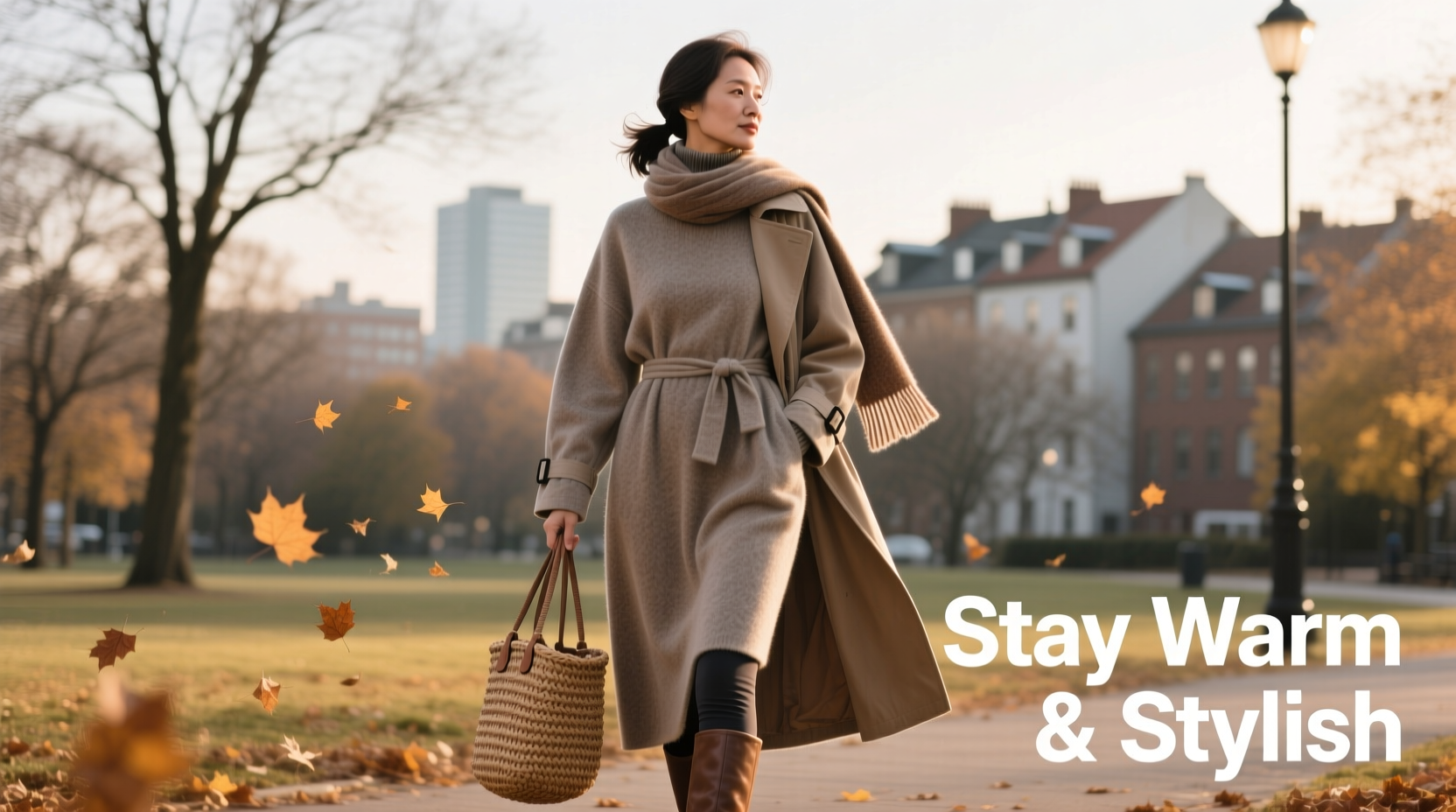
- Outer layer: Finish with a tailored coat, wool blazer, or oversized cardigan. Choose structured outerwear to contrast the looseness of the dress and maintain visual balance.
| Layer | Recommended Items | Avoid |
|---|---|---|
| Base | Thermal leggings, silk long johns, merino wool tights | Thin nylon tights, cotton-only underlayers |
| Mid | Fitted turtlenecks, seamless camisoles, bodysuits | Bulky sweaters that disrupt silhouette |
| Outer | Cashmere coats, belted trench, duster cardigans | Overly puffy jackets that hide the dress |
Real Example: Winter Walk in the City
Sophie, a graphic designer based in Montreal, loves wearing her oversized charcoal-gray jersey dress year-round. In December, she pairs it with black merino wool tights, a cream mock-neck thermal top tucked in neatly, and knee-high leather boots. Over this, she drapes a camel double-breasted wool coat cinched at the waist. A wide-brimmed felt hat and leather gloves complete the look. She stays warm even during snowy commutes and receives compliments on her polished yet relaxed aesthetic.
Define Your Silhouette with Strategic Accessories
One common concern with loose dresses in winter is looking shapeless. Accessories aren’t just decorative—they’re functional tools for shaping volume and enhancing comfort.
- Belts: Use wide fabric belts or leather sashes over coats or directly on the dress to emphasize the waist.
- Scarves: Drape a chunky knit scarf around your neck not only for warmth but also to draw attention upward, balancing the volume below.
- Boots: Ankle, knee-high, or over-the-knee styles anchor the outfit and prevent excess fabric from pooling awkwardly.
- Bags: Carry a structured crossbody or tote to add definition and break up vertical lines.
“Volume doesn’t have to mean vagueness. A single belt or a pair of sharp boots can redefine a loose silhouette instantly.” — Lena Park, Fashion Stylist & Wardrobe ConsultantTip: Try a corset-style belt over a coat for a dramatic yet wearable winter look—perfect for evenings out.
Create a Seasonal Styling Checklist
To ensure your loose-fitting dresses remain wearable and stylish through fall and winter, follow this seasonal checklist before heading out:
- ✅ Check if the dress is made from a warm fabric (wool, knit, flannel)
- ✅ Pair with thermal underlayers (top and bottom)
- ✅ Add a form-fitting mid-layer like a turtleneck
- ✅ Select closed-toe footwear (boots preferred)
- ✅ Use a waist-defining belt if needed
- ✅ Top with a warm, structured outer coat
- ✅ Include insulating accessories: scarf, gloves, beanie
- ✅ Test mobility and comfort indoors before stepping outside
Frequently Asked Questions
Can I wear a loose dress with a heavy coat without looking bulky?
Yes��choose a coat with clean lines and minimal padding. A belted wool coat or tailored pea jacket works better than an oversized puffer. Wearing a slim mid-layer underneath helps reduce overall bulk while preserving warmth.
Are leggings enough for warmth in freezing temperatures?
Standard leggings aren’t sufficient alone. Upgrade to thermal-lined leggings or wear them over heated long underwear. Fleece-lined tights or wool-blend pantyhose are superior options for extreme cold.
How do I avoid static cling when layering synthetic fabrics?
Static builds up easily between synthetic layers. Combat it by using a natural fiber base (like cotton or merino wool), applying anti-static spray, or carrying a small dryer sheet in your pocket to wipe down surfaces as needed.
Conclusion: Embrace Comfort and Style Year-Round
Wearing loose-fitting dresses in colder weather isn't about compromise—it's about creativity. By selecting appropriate fabrics, mastering layered dressing, and using accessories intentionally, you can enjoy the freedom and femininity of flowing silhouettes no matter the season. These strategies go beyond aesthetics; they enhance comfort, promote confidence, and extend the life of your wardrobe across multiple climates.
💬 What’s your go-to winter dress combo? Share your favorite styling hack or ask a question in the comments—let’s build a community of warm, stylish dress lovers!