
Choosing footwear for extended wear isn't just about style—it's about long-term comfort, foot health, and biomechanical support. Among the most debated summer and office shoe options are strappy sandals and block heels. Both offer aesthetic appeal, but when it comes to all-day wear, one may be significantly kinder to your feet than the other. Understanding the structural differences, pressure distribution, and real-world impact of each can help you make a smarter, more sustainable choice for your daily routine.
Anatomy of Foot Stress in Heeled and Open Shoes
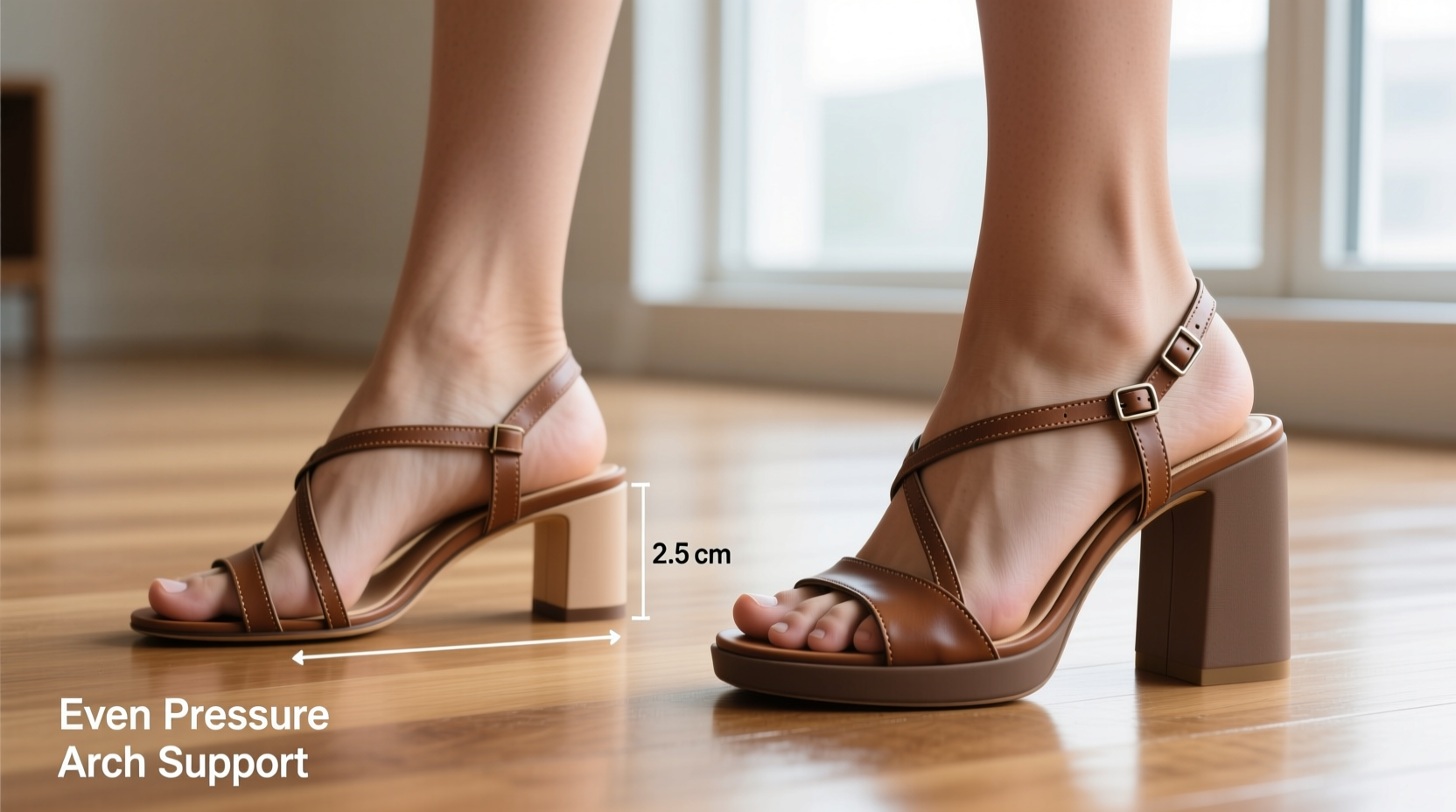
The human foot is designed for balance, shock absorption, and propulsion across varied surfaces. When elevated or confined in certain shoe types, this natural function is disrupted. High heels shift body weight forward, increasing pressure on the forefoot by up to 75% compared to flat shoes. This forces the toes into a compressed position and strains the plantar fascia, Achilles tendon, and metatarsal joints.
Strappy sandals—typically defined as open-toe styles with multiple thin straps securing the foot—can vary widely in heel height and support. Some are flat; others feature modest or high heels. Block heels, meanwhile, are characterized by a thick, chunky heel (usually between 2–4 inches), offering greater surface area and stability than stilettos.
Prolonged wear of poorly designed footwear leads to conditions like metatarsalgia, bunions, hammertoes, and neuromas. The key difference lies not only in heel type but in how well the shoe supports the arch, secures the heel, and allows natural toe splay.
How Pressure Is Distributed Across the Foot
In flat strappy sandals with minimal cushioning, the entire body weight rests directly on the sole without much shock absorption. If the foot isn’t properly cradled, micro-adjustments throughout the day cause fatigue in the small stabilizing muscles of the foot and ankle.
Block heels, due to their broader base, distribute weight more evenly across the heel and midfoot. While they still elevate the heel, reducing strain on the Achilles compared to sharper heels, they don’t eliminate forefoot pressure entirely. However, many modern block heel designs now incorporate contoured insoles, arch support, and padded footbeds—features rarely found in fashion-forward strappy sandals.
Tip: Look for shoes with cushioned footbeds and a heel height under 2 inches to minimize foot strain during long days.Strappy Sandals: Style Versus Structural Integrity
Strappy sandals have surged in popularity thanks to their versatility and fashion-forward appeal. From minimalist thong styles to crisscross gladiator designs, they're a staple in warm-weather wardrobes. But their open construction often sacrifices support for aesthetics.
The primary issue with most strappy sandals is inadequate arch support. Thin straps do little to stabilize the foot, especially on uneven terrain. Over time, the lack of containment causes the foot to work harder to maintain balance, leading to overuse of intrinsic foot muscles and eventual fatigue.
Additionally, narrow toe boxes and flimsy soles common in trendy strappy sandals increase the risk of blisters, calluses, and toe deformities. Without a back strap or secure heel cup, the toes must grip the ground to prevent slipping—a motion known as \"toe clenching\"—which contributes to muscle strain and even neuroma development.
When Strappy Sandals Work for All-Day Wear
Not all strappy sandals are inherently harmful. Certain models designed with orthopedic principles in mind can be suitable for extended wear. These include:
- Brands that integrate anatomical footbeds (e.g., Birkenstock, Ecco)
- Sandals with adjustable straps for customized fit
- Styles featuring full heel coverage and arch contouring
- Options made from flexible, breathable materials like cork or memory foam
For those who love the look of strappy sandals, opting for supportive versions with ergonomic design can bridge the gap between fashion and function.
“Many patients come in with foot pain after wearing ‘fashionable’ strappy sandals all day. The problem isn’t the sandal itself—it’s the lack of support and improper fit.” — Dr. Lena Torres, Podiatrist and Gait Specialist
Block Heels: Stability Meets Moderate Elevation
Block heels stand out as a more foot-friendly alternative to traditional high heels. Their wide base provides superior balance, reducing lateral instability and lowering the risk of ankle rolls. Unlike needle heels, which concentrate force on a tiny point, block heels disperse weight over a larger area, minimizing localized pressure.
Modern block heel designs often include features such as:
- Cushioned insoles with memory foam padding
- Subtle arch support or molded footbeds
- Heel heights between 1.5 and 3 inches—optimal for posture alignment
- Secure ankle straps or enclosed backs for added stability
These characteristics make block heels a preferred choice for professionals, travelers, and anyone spending hours on their feet in formal or semi-formal settings.
Postural Benefits of Moderate Heel Elevation
A moderate heel lift (around 1–2 inches) can actually improve posture for some individuals by aligning the spine and reducing excessive lumbar curvature. However, this benefit only applies when the heel is stable and the shoe fits properly. Unstable or overly high block heels negate these advantages and may contribute to lower back pain.
Podiatrists often recommend block heels over flats for people with mild posterior tibial tendon dysfunction because the slight elevation reduces strain on the tendon. Still, prolonged use without proper rest or rotation with flat shoes can lead to tightness in the calf muscles and Achilles tendon.
Comparative Analysis: Key Factors for All-Day Comfort
To determine which shoe type is kinder for all-day wear, several factors must be evaluated objectively. The table below compares strappy sandals and block heels across critical categories:
| Factor | Strappy Sandals | Block Heels |
|---|---|---|
| Arch Support | Limited in most styles; only premium brands offer contouring | Often includes molded or removable insoles with moderate support |
| Heel Stability | Poor—lack of enclosed heel increases slippage | High—broad base and secure fit reduce movement |
| Forefoot Pressure | High—especially in elevated or flat unsupportive models | Moderate—better weight distribution reduces peak pressure |
| Cushioning | Rarely present in fashion styles | Common in contemporary designs |
| Toe Room | Variable—some allow natural splay, others compress toes | Generally better, though narrow styles exist |
| Durability on Hard Surfaces | Low—thin soles wear quickly and transmit impact | High—thicker soles absorb shock effectively |
This comparison shows that while both shoe types have drawbacks, block heels generally offer more structural advantages for sustained wear—provided they are well-designed and appropriately fitted.
Real-World Scenario: A Day in the Life of Two Professionals
Consider two office workers attending a full-day conference involving walking, standing sessions, and networking events.
Case 1: Maria wears a pair of fashionable strappy sandals with a 1-inch heel and no arch support. By midday, she experiences sharp pain under her ball of the foot, develops blisters on her heel from strap friction, and finds herself limping by the final session. She attributes her fatigue not just to walking but to constantly adjusting her gait to keep her feet secure in the loose sandals.
Case 2: Jenna opts for low block heels (2.5 inches) with padded insoles and a secure ankle strap. Though slightly elevated, the shoes remain comfortable throughout the event. She reports minor calf tightness but no acute pain or instability. Post-event, she simply stretches her calves and feels recovered within hours.
This example illustrates how design elements—not just heel height—dictate comfort and foot health over time. Even a small heel, when supported correctly, can outperform a flat shoe lacking structure.
Expert Recommendations for Choosing Foot-Friendly Footwear
Podiatrists and footwear specialists emphasize fit, function, and material quality over trendiness when selecting shoes for all-day wear. Here are actionable guidelines to follow:
- Prioritize heel counter rigidity: A firm back stabilizes the heel bone and prevents excessive motion.
- Check for a shank (midsole support): Especially important in block heels to prevent sole flexing at the arch.
- Ensure adjustable straps: Allows customization for swelling or different sock thicknesses.
- Test walk on varied surfaces: Walk on tile, carpet, and inclines before committing to long-term wear.
- Avoid glued-only construction: Stitched or cemented soles last longer and provide better shock absorption.
Footwear Checklist Before Purchase
Use this checklist to evaluate any shoe—strappy sandal or block heel—for all-day suitability:
- ✅ Does the shoe have a cushioned, contoured footbed?
- ✅ Is there adequate arch support for your foot type?
- ✅ Can you wiggle your toes freely?
- ✅ Is the heel snug without slipping?
- ✅ Are the straps adjustable and non-abrasive?
- ✅ Does the sole provide grip and shock absorption?
- ✅ Can you stand comfortably for 10 minutes without pain?
Frequently Asked Questions
Can I wear strappy sandals all day if they’re flat?
Flat doesn’t always mean comfortable. Many flat strappy sandals lack arch support and cushioning, leading to plantar fasciitis or metatarsal stress over time. Only flat sandals with built-in support (like orthotic-friendly models) are safe for extended wear.
Are block heels bad for knees?
When worn moderately (under 3 inches) and with good alignment, block heels pose minimal risk to knee joints. However, excessively high or stiff-soled block heels can alter gait mechanics and increase patellofemoral pressure. Pair them with regular stretching and avoid wearing them daily without breaks.
Which shoe type causes more blisters?
Strappy sandals are more likely to cause blisters due to repeated friction from thin straps, especially around the ankle and toes. Block heels with smooth linings and secure fits typically produce fewer hot spots, though ill-fitting ones can still rub.
Conclusion: Making the Healthier Choice for Your Feet
When comparing strappy sandals and block heels for all-day wear, the evidence favors well-constructed block heels as the kinder option—assuming they are designed with comfort in mind. Their superior stability, better weight distribution, and inclusion of supportive features make them more sustainable for prolonged standing and walking.
That said, not all block heels are created equal. A poorly made, overly high pair can be just as damaging as an unsupportive sandal. Likewise, certain high-quality strappy sandals with ergonomic design can serve as viable alternatives, particularly in casual or warm-weather environments.
The ultimate goal should be prioritizing foot health without sacrificing personal style. Rotate your footwear, invest in quality over quantity, and listen to your body’s signals. Discomfort is not normal—it’s feedback.
💬 Your feet carry you through life—treat them with care. Share your go-to comfortable shoe brand or tip in the comments and help others find stylish yet supportive options!








