
Many people assume their electronic watch is fully waterproof simply because it says so on the box. However, misunderstanding water resistance ratings or improperly testing them can lead to costly internal damage. Water ingress is one of the leading causes of electronic watch failure—yet most incidents are preventable. Understanding how to safely verify your watch’s waterproof capabilities ensures reliability during swimming, diving, or even accidental splashes. This guide walks you through a responsible, methodical approach to testing without risking your device.
Understanding Water Resistance vs. Waterproof
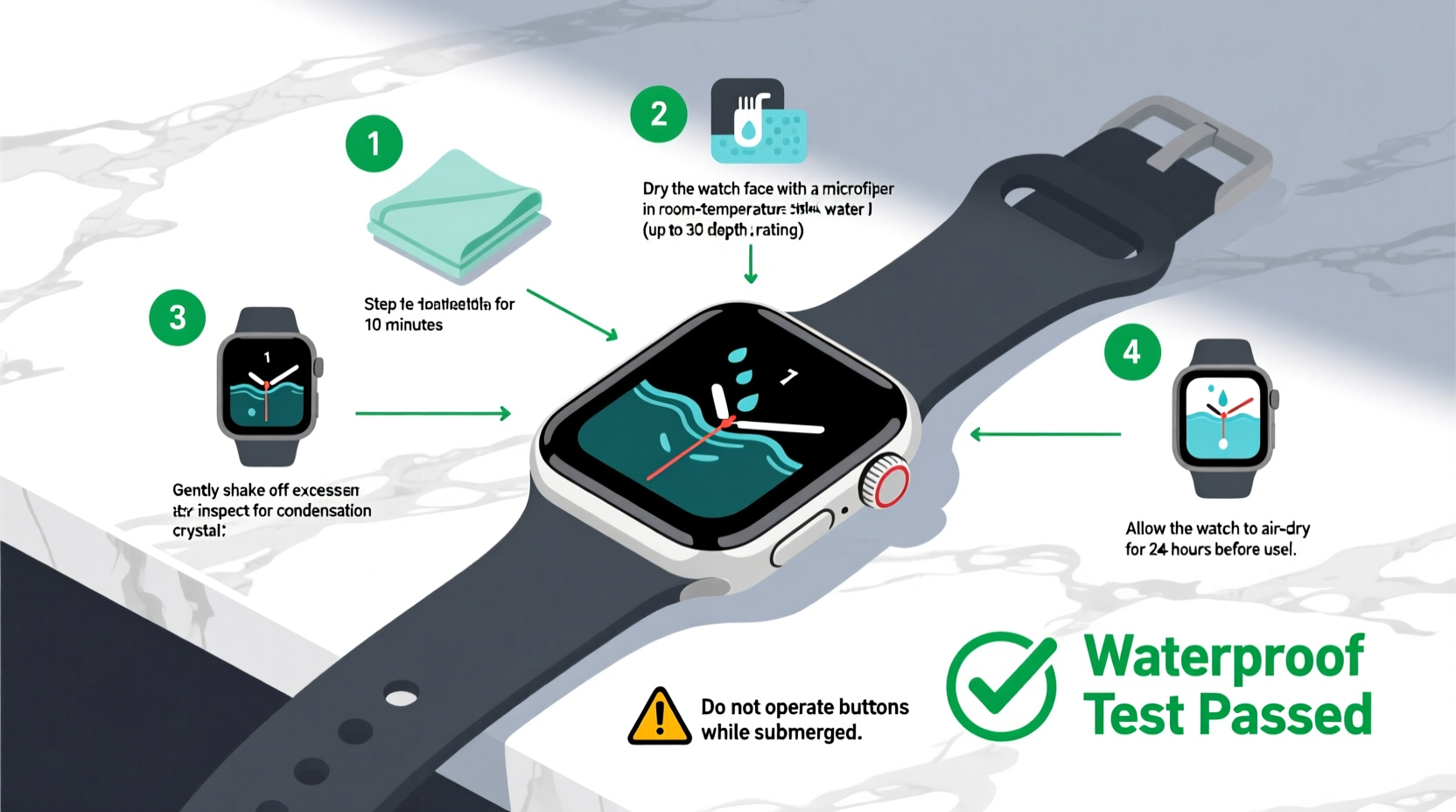
The term “waterproof” is largely outdated in horology. Modern standards use “water resistant” with specific depth ratings. No watch is truly impervious to water under all conditions. Seals degrade over time, buttons wear down, and temperature changes affect pressure tolerance. A watch labeled 50 meters water resistant isn’t designed for scuba diving—it’s typically safe for swimming, not prolonged submersion under high pressure.
Water resistance is measured in atmospheres (ATM), meters, or feet. These numbers reflect static pressure in controlled lab environments, not real-world dynamic stress like jumping into water or moving quickly underwater. Always interpret ratings conservatively.
“Water resistance is not a permanent condition. Gaskets age, cases corrode, and impacts compromise seals—even on high-end watches.” — Daniel Reeves, Watch Engineer & ISO 22810 Consultant
Essential Pre-Testing Checklist
Before exposing your watch to any moisture, verify its current condition and suitability for testing. Rushing this phase risks irreversible harm.
Tip: Never test a vintage or heavily used watch unless recently serviced. Aging gaskets lose elasticity and fail silently.- Check the manufacturer’s water resistance rating (e.g., 30m, 100m)
- Inspect the case for dents, cracks, or corrosion
- Ensure the crown is fully screwed down (if applicable)
- Verify pushers or buttons move smoothly and aren’t loose
- Confirm the crystal (glass) has no chips or separation from the case
- Avoid testing if the watch was recently opened or battery replaced more than 6 months ago
Step-by-Step Guide to Safely Test Water Resistance
Follow this five-phase process to assess your watch’s ability to withstand moisture exposure without damaging internal components.
- Phase 1: Visual Inspection (Dry Check)
Examine every part of the watch under bright light. Look for hairline fractures near the bezel, fogging under the crystal, or residue around the crown. Any sign of prior water intrusion invalidates further testing until serviced. - Phase 2: Condensation Test (Non-Invasive)
Place the watch in a sealed plastic bag with a damp cloth for 15 minutes. If moisture appears inside the crystal afterward, the seals are compromised. No external water needed—this detects existing leaks. - Phase 3: Static Pressure Simulation (Sink Test)
Fill a sink with room-temperature water deep enough to submerge the watch. Place it gently under water with the crown facing up to avoid pressure imbalance. Keep submerged for 5–10 minutes. Do not operate buttons underwater at this stage. - Phase 4: Function Check Under Water
If the watch passes Phase 3, repeat the submersion and press buttons (e.g., chronograph start) while underwater. Observe for bubbles escaping—this indicates seal failure. Immediately remove if bubbling occurs. - Phase 5: Post-Test Drying & Monitoring
Dry the watch thoroughly with a soft cloth. Leave it in a dry area for 24 hours. Check again for internal fogging or erratic behavior such as dimming display or sluggish response.
Do’s and Don’ts When Testing Waterproof Features
| Do’s | Don’ts |
|---|---|
| Test in still, clean water (tap water is fine) | Use saltwater, chlorinated pools, or hot tubs for initial tests |
| Submerge slowly and horizontally | Drop or plunge the watch rapidly into water |
| Wait at least 30 days between tests if issues arise | Repeatedly test weekly—this accelerates seal wear |
| Have professional pressure tested annually | Rely solely on home tests for dive-level activities |
| Dry the watch completely before charging (for smartwatches) | Charge a wet smartwatch—moisture near ports causes short circuits |
Real Example: The Misjudged Dive Watch
Mark, an amateur diver, bought a 200-meter rated digital watch and assumed it was ready for open-water dives. Without pre-testing, he wore it on a 45-foot reef dive. Afterward, he noticed slight fogging. Within days, the display flickered and failed. He sent it in for repair and learned the crown seal had degraded during shipping. The manufacturer noted it likely passed factory testing but wasn’t rechecked after transit. Mark now performs a sink test on every new water-capable device and schedules annual pressure checks with his local jeweler.
This scenario underscores that factory ratings don’t guarantee field readiness. Environmental stress, handling, and storage impact performance from day one.
When to Seek Professional Testing
Home methods are useful for preliminary checks, but they can't replicate industrial-grade diagnostics. Professional testers use vacuum and pressure chambers to simulate depth and detect micro-leaks invisible to the eye.
Consider professional evaluation if:
- You plan to use the watch for snorkeling or diving
- The watch has been dropped or exposed to chemicals
- It hasn’t been serviced in over a year
- You notice intermittent malfunctions after moisture exposure
Most jewelers or authorized service centers offer water resistance testing for $20–$50. It's a small investment compared to replacing a damaged smartwatch or dive computer.
Frequently Asked Questions
Can I swim with a 50-meter water-resistant watch?
Yes, but only for surface swimming or brief immersion. A 50-meter rating means it can handle static pressure equivalent to 50 meters, not dynamic movement at that depth. Avoid diving, jumping in, or prolonged soaking. Rinse with fresh water afterward if exposed to chlorine or salt.
Why did my watch fog up inside after a shower?
Steam penetrates seals more easily than liquid water due to smaller molecule size and thermal expansion. Even watches rated for 100 meters shouldn’t be worn in showers or saunas. Heat cycles weaken gaskets and promote condensation buildup.
How often should I replace the gaskets on my electronic watch?
Every 1–2 years, especially if frequently exposed to water. Gaskets made of rubber or silicone degrade from UV light, sweat, and ozone. Regular replacement maintains integrity and prevents silent leaks.
Final Recommendations for Long-Term Protection
Safely testing your electronic watch’s water resistance isn’t just about verifying a claim—it’s about building a habit of proactive maintenance. Most failures occur gradually, without obvious warning. By integrating regular inspections, conservative usage, and professional validation, you extend the life of your device and maintain confidence in its performance.
Remember: water resistance is temporary. Treat every watch as vulnerable, regardless of price or brand. Respect the limits, understand the risks, and never assume safety based on marketing labels alone.
💬 Have you ever damaged a watch by misjudging its water resistance? Share your experience below to help others learn from real-world mistakes.