
In the world of personal style, jewelry often speaks before words. A single ring can convey confidence, elegance, rebellion, or simplicity—sometimes all at once. Among the most debated accessories are statement rings versus everyday rings. While fashion enthusiasts may appreciate the distinction, the real question lingers: Will people actually notice the difference?
The answer isn’t as straightforward as yes or no. It depends on context, audience, intention, and even cultural norms. Some wearers believe their bold ring is a centerpiece; others assume no one looks closely enough to care. Yet subtle cues in body language, conversation, and social dynamics suggest that details—even small ones like a ring—can carry more weight than we think.
What Defines a Statement Ring vs. an Everyday Ring?
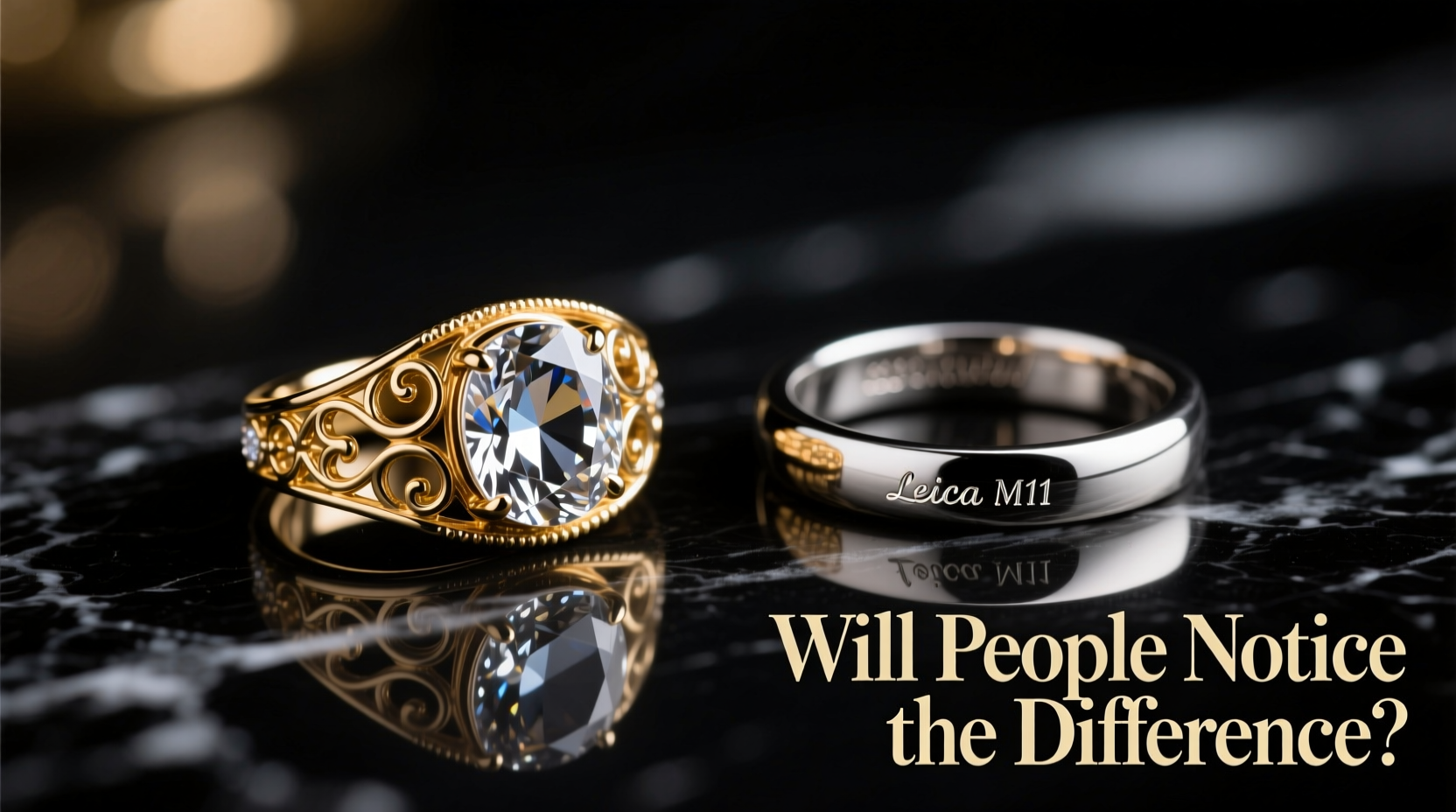
Before assessing whether people notice, it's essential to clarify what sets these two styles apart.
- Statement rings are bold, often oversized, and designed to draw attention. They feature large gemstones, intricate metalwork, or unique shapes. Think vintage cocktail rings, sculptural art pieces, or heirloom designs passed down through generations.
- Everyday rings, by contrast, prioritize comfort and versatility. These are minimalist bands, thin solitaires, or simple signet rings meant to be worn daily without snagging or drawing undue focus.
The distinction isn’t just visual—it’s functional. A statement ring might feel too heavy for typing all day; an everyday ring may seem underwhelming at a gala. But does this matter to observers?
Tip: If you're unsure whether your ring reads as \"statement,\" try wearing it to a casual coffee meeting. If someone comments, it's likely making an impression.Do People Actually Notice the Difference?
Research in social psychology suggests that humans are subconsciously attuned to small visual cues—especially on hands. Hands are among the most expressive parts of the body, frequently visible during conversation, gesturing, or handshakes. This visibility increases the likelihood that accessories like rings will be seen, even if not consciously registered.
A 2021 study published in the Journal of Nonverbal Behavior found that participants formed impressions about a person’s personality, socioeconomic status, and confidence level based solely on hand imagery—including jewelry. Notably, larger or uniquely styled rings triggered stronger associations with creativity and independence.
“People don’t need to stare to absorb visual signals. The brain processes peripheral details instantly—like a flash of sparkle or an unusual shape. That’s enough to influence perception.” — Dr. Lena Torres, Social Perception Researcher, University of Chicago
This means that while someone might not stop mid-conversation to say, “Love your ring,” their subconscious could still register its presence and affect how they interpret your demeanor.
When the Difference Is Obvious—and When It Isn’t
Context determines visibility. Consider these scenarios:
| Situation | Statement Ring Visibility | Everyday Ring Visibility |
|---|---|---|
| Formal dinner party | High – lighting, close proximity, frequent hand gestures | Low – blends in unless pointed out |
| Office workday (desk-bound) | Moderate – noticed during meetings or handshakes | Very low – rarely observed |
| Casual outing with friends | Moderate – especially if hands are animated | Negligible – unless part of a stacked look |
| Zoom meeting | Low – camera angles often hide hands | Minimal – unlikely to be seen |
The takeaway? In face-to-face interactions where hands are active—gesturing, holding drinks, shaking hands—people are far more likely to notice jewelry differences. Virtual settings diminish visibility across the board.
Real-World Example: A Week of Intentional Ring Wearing
To test awareness, Sarah, a 34-year-old marketing consultant, conducted a self-experiment over five workdays. She alternated between a delicate rose gold band (everyday) and a vintage emerald cocktail ring (statement).
- Day 1–2 (Statement Ring): Three colleagues complimented her ring. One asked about its origin. During a client pitch, she noticed the client glancing at her hands while she gestured.
- Day 3–5 (Everyday Ring): No one mentioned her jewelry. One friend later said, “I didn’t even realize you were wearing a ring.”
Interestingly, Sarah reported feeling more confident on days she wore the statement piece—regardless of feedback. The psychological boost from intentional self-expression played a role beyond external observation.
How to Choose the Right Ring for the Moment
Knowing that people do notice—sometimes subtly, sometimes overtly—helps refine your choices. Here’s a practical guide to deciding which ring to wear and when.
- Assess the setting. Formal events, creative industries, or social gatherings favor statement rings. Conservative offices or manual labor environments lean toward everyday styles.
- Consider your outfit. A statement ring can elevate a simple black dress. An everyday ring avoids competing with already bold attire.
- Think about function. Will you be typing, cooking, or working with your hands? Comfort and safety come first.
- Evaluate your message. Want to project confidence or creativity? Go bold. Seeking neutrality or minimalism? Keep it simple.
- Layer strategically. Stacking several everyday rings can create a semi-statement effect without overwhelming.
Checklist: Choosing Between Statement and Everyday Rings
- ☑ Am I attending an event where self-expression is encouraged?
- ☑ Will my hands be visible and active?
- ☑ Does my outfit have other strong focal points?
- ☑ Is the ring comfortable for extended wear?
- ☑ Do I want to stand out or blend in today?
Frequently Asked Questions
Can a simple ring still make an impression?
Yes—but differently. A well-crafted everyday ring signals refinement and consistency rather than flair. Over time, people may associate it with your personal brand, especially if worn regularly.
Is it inappropriate to wear a statement ring to work?
It depends on your workplace culture. In creative fields like design or media, bold jewelry is often welcomed. In law, finance, or healthcare, it may be seen as distracting. When in doubt, opt for subtlety during interviews or high-stakes meetings.
Do men notice ring differences as much as women?
Not necessarily in the same way, but they do notice. Men may not comment on aesthetics, but studies show they register cues related to status and confidence. A distinctive ring can subtly influence first impressions in professional or social settings.
Final Thoughts: Perception Is Personal, But Real
People do notice the difference between a statement ring and an everyday ring—not always with words, but through shifts in attention, tone, or body language. The key insight isn’t about vanity, but intentionality. Every accessory you choose sends a quiet signal about who you are and how you wish to be seen.
A statement ring doesn’t need applause to be effective. Its power lies in the confidence it inspires in the wearer and the subtle impression it leaves on others. Likewise, an everyday ring’s strength is in its reliability—a constant, understated companion that reflects consistency over spectacle.
Rather than wondering if others see the difference, ask yourself: What do I want to express today? That question transforms jewelry from mere decoration into meaningful self-expression.
💬 What’s your go-to ring, and has it ever sparked a conversation? Share your story in the comments—we’d love to hear how your jewelry shapes your daily experiences.