Smoked cocktails have moved beyond the realm of high-end bars and into home bars, patios, and even kitchen countertops. The allure is undeniable: a rich, aromatic veil of wood smoke that transforms a classic Old Fashioned or a bright Mezcal Sour into something layered, evocative, and deeply sensory. But building that experience at home raises an immediate, practical question—should you invest in a dedicated smoked cocktail DIY kit, or is it smarter to cobble together your own setup from hardware store parts and barbecue supplies? There’s no universal answer, but there *is* a clear framework for evaluating value—not just in dollars, but in time, repeatability, safety, and the quality of the final drink.
What Exactly Is a Smoked Cocktail Kit—and What Does It Include?
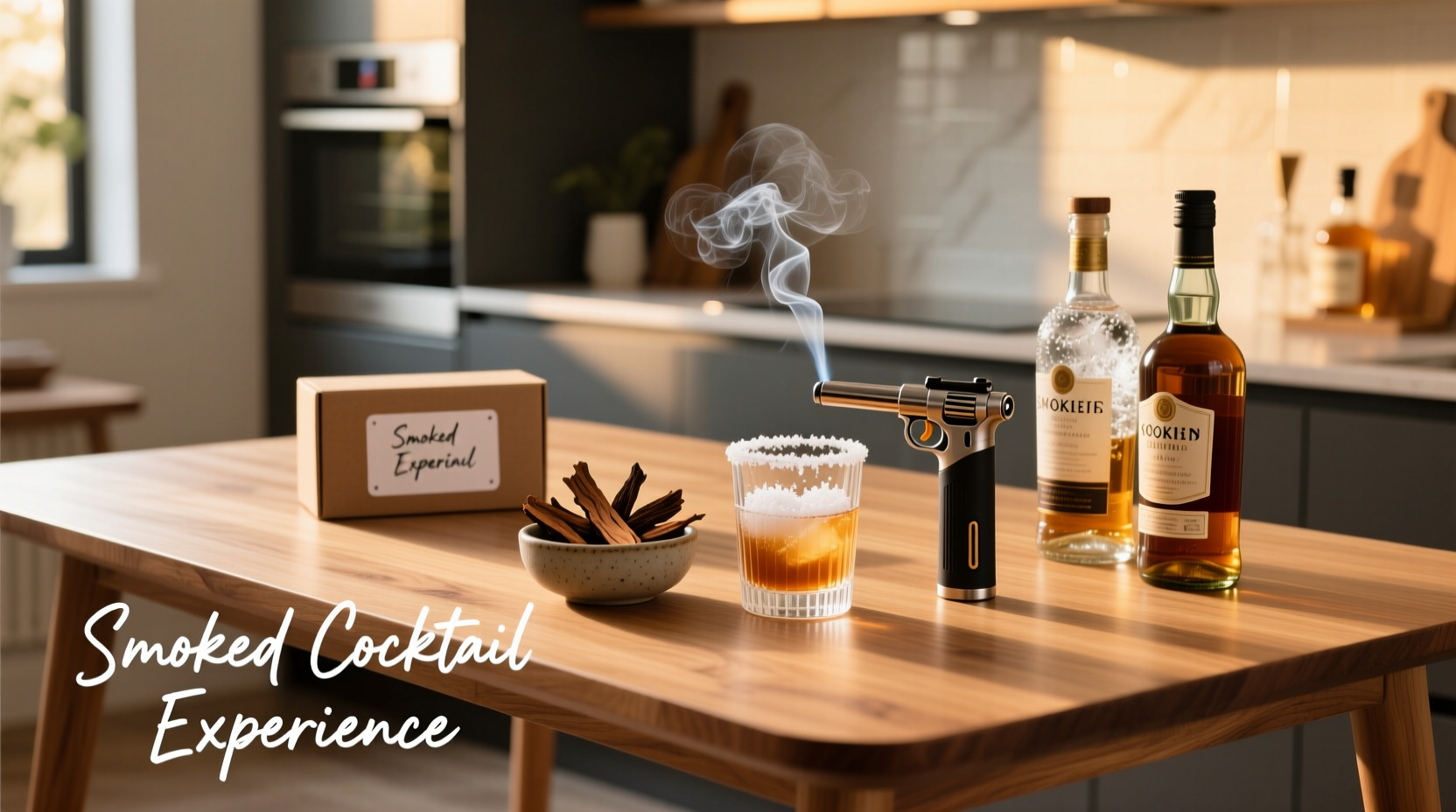
A smoked cocktail DIY kit is a purpose-built system designed to generate, contain, and deliver controlled wood smoke directly into a glass or vessel holding a chilled cocktail. Unlike improvised setups (e.g., lighting a chip in a mason jar), these kits prioritize precision, consistency, and user safety. Most reputable kits include four core components:
- Smoke generator: A handheld or tabletop device—often battery-powered or USB-rechargeable—that heats wood chips or pellets without open flame. Some use nichrome wire elements; others employ ceramic heating plates.
- Smoke chamber or dome: A transparent, heat-resistant acrylic or tempered-glass enclosure (typically 6–10 inches in diameter) that traps smoke above the drink while allowing visual monitoring.
- Wood chip blend: Pre-selected, food-grade hardwoods—commonly apple, cherry, hickory, maple, or oak—often pre-toasted or aged for balanced flavor intensity and minimal bitterness.
- Accessories: Smoke-infused glassware (like a double-walled rocks glass), tongs, cleaning brush, and sometimes a small vacuum pump to accelerate smoke infusion.
Higher-tier kits may add Bluetooth temperature control, programmable smoke duration timers, or modular attachments for smoking garnishes or syrups separately. Importantly, these are not “flavoring kits”—they don’t add liquid smoke or artificial aromas. They produce real, volatile organic compounds from actual wood combustion, replicating the same Maillard-driven complexity found in barrel aging or grilled food.
Tip: Never use pressure-treated lumber, pine, or resinous woods—even in DIY setups. Their combustion releases toxic compounds like creosote and benzene. Stick exclusively to food-grade hardwoods labeled for culinary use.The Real Cost Breakdown: Beyond the Price Tag
A mid-tier smoked cocktail kit retails between $85 and $165. Premium models exceed $250. At first glance, that seems steep—especially when you consider that a bag of food-grade applewood chips costs $12, and a stainless steel smoking gun from a restaurant supply site runs $45. But cost analysis must go deeper than sticker price. Consider this comparative breakdown:
| Component | DIY Setup (Basic) | Mid-Tier Kit ($119) | Premium Kit ($229) |
|---|---|---|---|
| Initial outlay | $45–$75 (gun + dome + chips) | $119 (all-inclusive) | $229 (with smart controls & accessories) |
| Chip longevity per session | 1.5–2g used; inconsistent burn | 1.2–1.6g; precise thermal regulation | 1.0–1.3g; auto-shutoff prevents waste |
| Avg. sessions before replacement part needed | 6–10 (heating element degrades) | 40+ (warranty-backed) | 100+ (modular, serviceable) |
| Time per cocktail (setup → serve) | 4–6 minutes (lighting, waiting, sealing) | 2.5–3.5 minutes (one-button operation) | 1.8–2.2 minutes (auto-timed infusion) |
| Safety risk (burns, smoke leakage) | Moderate (open flame, manual sealing) | Low (no open flame; dome seals magnetically) | Very low (cool-touch housing; leak detection) |
This reveals a crucial insight: the kit’s value isn’t in eliminating cost—it’s in compressing variability. Every extra minute saved, every failed smoke attempt avoided, and every consistent layer of aroma delivered compounds over dozens of uses. For someone who hosts monthly gatherings or enjoys a ritualistic evening cocktail, the breakeven point arrives after 12–15 sessions—not 30 or 40.
Consistency vs. Creativity: Where Kits Excel (and Where They Don’t)
Home bartending thrives on two often-opposing forces: reliability and experimentation. Kits excel at the former. A well-designed system delivers nearly identical smoke density, duration, and wood character batch after batch—critical when serving guests or refining a signature drink. That predictability lets you isolate variables: “How does 15 seconds of cherry smoke change the balance of my Boulevardier?” becomes a testable hypothesis, not a lottery.
But creativity isn’t sacrificed—it’s redirected. Rather than troubleshooting ignition or fighting smoke leaks, you invest mental energy where it matters most: spirit selection, dilution control, garnish pairing, and smoke timing. One bartender in Portland, Maya R., shared her experience after switching from a DIY torch-and-jar method to the Hearth & Vine Pro Kit:
“We were burning through chips, scorching glasses, and still getting uneven results—sometimes acrid, sometimes barely perceptible. After two months with the kit, our smoked Negroni became a repeat guest favorite. More importantly, we started experimenting with dual-smoke layers: 8 seconds of oak on the base spirit, then 4 seconds of rosemary on the orange twist. That level of nuance wasn’t possible before.” — Maya R., Co-owner, Cedar & Ember Tasting Room
That shift—from battling equipment to mastering technique—is where kits pay dividends. They don’t replace skill—they elevate its application. And for home users without commercial-grade ventilation or fire suppression, they also reduce liability. A kit’s contained dome eliminates the risk of triggering smoke alarms during dinner parties—a small but very real advantage.
A Step-by-Step Guide to Getting It Right—Whether You Use a Kit or Not
Smoke is volatile. Too little, and it’s forgettable. Too much, and it overwhelms, turning nuanced complexity into campfire ash. Follow this sequence—optimized for both kit users and DIY practitioners—to achieve balanced, drink-enhancing smoke:
- Chill everything: Glass, spirit, mixer, and ice. Cold surfaces condense smoke particles more effectively, increasing aromatic adherence.
- Pre-dilute your base spirit: Stir or shake your cocktail *before* smoking. Warm spirits volatilize smoke too quickly; cold, diluted liquid holds aroma longer.
- Choose wood by spirit profile: Light spirits (gin, vodka) pair best with delicate woods (apple, alder); bold ones (rye, mezcal, aged rum) handle hickory or oak. Avoid mesquite—it’s too aggressive for cocktails.
- Control duration rigorously: Start with 10 seconds for light smoke, 15 for medium, 20 max for bold profiles. Time it—don’t guess. Set a phone timer.
- Seal and swirl—not stir: Once smoke fills the dome, seal tightly and gently swirl the glass *inside* the chamber for 5 seconds. This coats the surface without agitating the liquid and releasing trapped CO₂ (which carries away aroma).
- Serve immediately: Smoke aroma fades within 90 seconds of exposure to ambient air. Remove the dome, garnish, and serve.
This process works identically whether you’re using a $229 smart kit or a $45 gun—but the kit removes three failure points: inconsistent heat, poor sealing, and inaccurate timing.
FAQ: Addressing Common Concerns Head-On
Can I reuse wood chips in a kit?
No—and attempting to do so compromises flavor and safety. Used chips lose volatile oils, produce less aromatic smoke, and can harbor moisture that encourages mold growth when stored. Always discard chips after one use. Most kits include enough chips for 20–30 sessions; replenishment packs cost $14–$22.
Do smoked cocktails pair well with food?
Yes—but thoughtfully. Smoke enhances umami and fat, making smoked cocktails natural partners for charcuterie, grilled mushrooms, roasted root vegetables, or aged cheeses. Avoid pairing them with delicate seafood or citrus-forward dishes unless the smoke is extremely subtle (e.g., 6 seconds of alder). The key is matching intensity: bold smoke with bold food, light smoke with lighter fare.
Is there a health concern with inhaling cocktail smoke?
The volume of smoke inhaled during normal sipping is negligible—far less than from a single puff of a cigar or cigarette. However, individuals with asthma, COPD, or severe smoke sensitivity should proceed cautiously. If irritation occurs, reduce smoke time or switch to smoked garnishes (e.g., a smoked orange peel expressed over the drink) instead of full-glass infusion.
When a Kit Isn’t the Answer—and What to Do Instead
Kits aren’t universally optimal. They’re overkill for occasional users, impractical for tiny apartments with strict fire codes, and unnecessary if you already own high-quality, compatible gear. Here’s how to decide:
- You host 1–2 cocktail nights per year: Skip the kit. Buy a $35 handheld smoking gun and a $22 glass cloche. Store chips in an airtight container away from light and moisture.
- You live in a dorm, studio, or rental with no ventilation: Avoid all smoke methods. Opt for smoked simple syrups (simmer 1 cup sugar, 1 cup water, and 1 tsp smoked salt or Lapsang Souchong tea for 10 minutes) or house-made smoked bitters instead.
- You’re a serious home distiller or barrel-aging enthusiast: Invest in a kit—but choose one with modularity. Look for systems that let you smoke spirits *before* dilution (e.g., infusing rye whiskey with oak smoke for 48 hours in a sealed vessel), not just finished drinks.
Also, never buy a kit solely for novelty. If you haven’t mastered stirring a proper Old Fashioned or balancing acidity in a Daiquiri, adding smoke will only magnify flaws—not mask them. Smoke is a spotlight, not a filter.
Conclusion: Invest in Experience, Not Just Equipment
Smoked cocktail DIY kits are worth the investment—not because they’re flashy gadgets, but because they solve real, persistent problems in home mixology: inconsistency, inefficiency, and unpredictability. They transform a finicky, borderline-temperamental technique into a repeatable, expressive tool—one that rewards attention to detail and deepens your understanding of aroma, texture, and balance. The $119 kit doesn’t just deliver smoke; it delivers confidence. It delivers time reclaimed. It delivers the quiet satisfaction of watching guests pause mid-sip, eyes closing, then murmuring, “What *is* that note?”
If you’ve been curious about smoke but held back by uncertainty—or if you’ve tried DIY methods and grown frustrated by wasted chips and uneven results—now is the moment to act. Choose a kit with strong thermal control, food-safe materials, and thoughtful ergonomics. Then commit to the craft: taste deliberately, document your timings, and treat smoke as an ingredient—not an effect. Your bar, your guests, and your palate will notice the difference.
💬 Have you made the switch to a smoked cocktail kit—or stuck with DIY? Share your biggest win (or smoke mishap) in the comments below. Let’s build a smarter, smokier home bar—together.