Carrying a large-capacity women’s bag offers undeniable advantages: room for essentials, extras, and even last-minute additions. But without a smart organizational system, that spacious interior can quickly devolve into a chaotic pit of lost receipts, tangled cords, and forgotten snacks. The key to transforming your tote, satchel, or backpack from overwhelming to optimized lies not in reducing what you carry—but in how you arrange it. With thoughtful structure and a few strategic habits, you can turn your everyday bag into a well-oiled personal command center.
1. Start with a Purge and Purpose Audit
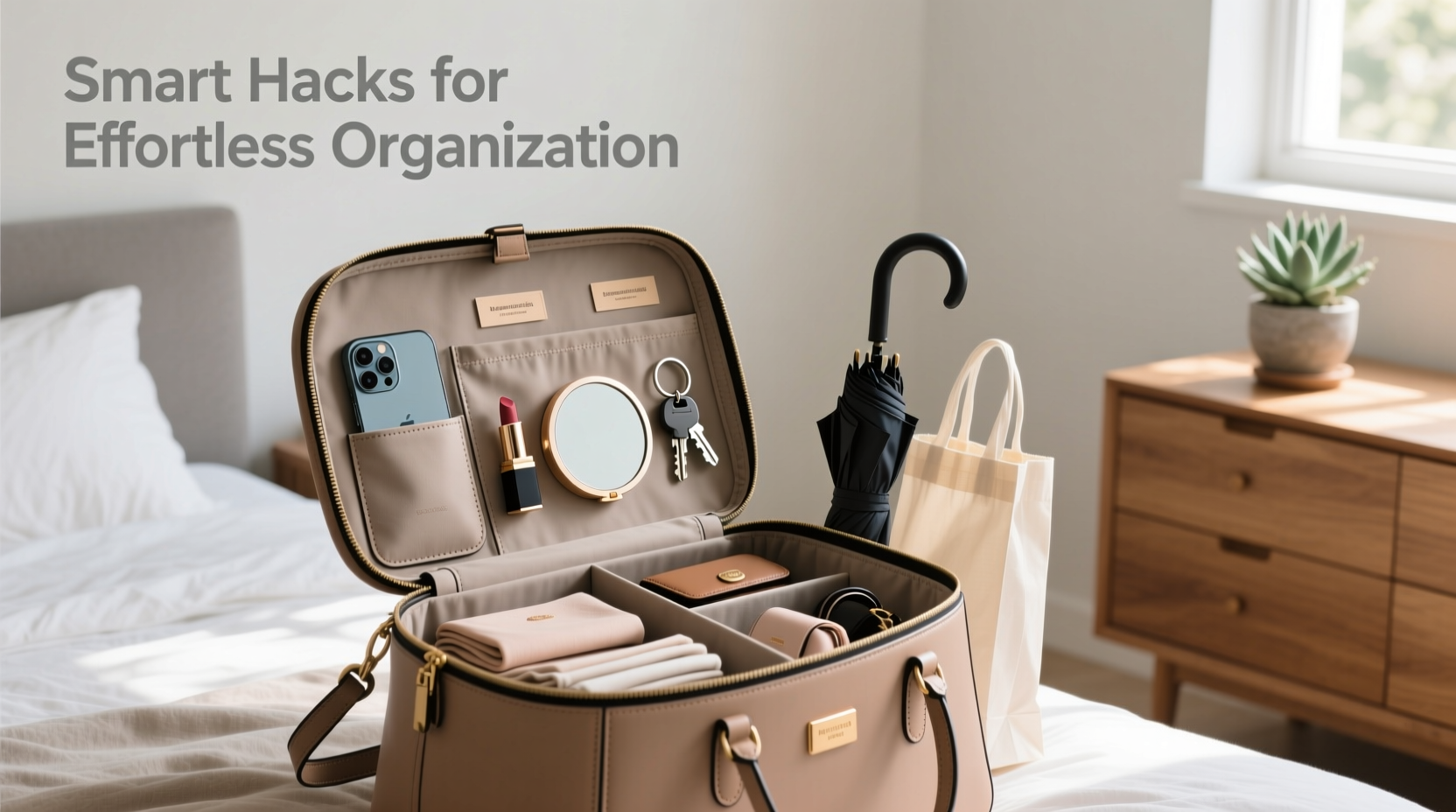
Before organizing, evaluate what’s actually inside your bag. Most people carry at least 30% more than they use daily. Begin by emptying the entire contents onto a clean surface. Categorize each item: essentials (phone, wallet, keys), frequent-use items (lip balm, hand sanitizer, notebook), occasional tools (umbrella, charger), and dead weight (expired coupons, old tissues).
Ask yourself: “Have I used this in the past week?” If not, it likely doesn’t belong in your daily carry. Return non-essentials to home storage or donate what’s no longer needed.
Tip: Perform a weekly purge every Sunday night—just like meal prep—to maintain order.2. Use the Zone System for Effortless Access
Think of your bag as a series of functional zones, much like rooms in a house. Assigning specific areas prevents chaos and speeds up retrieval.
- Top Layer (Quick-Grab Zone): Phone, sunglasses, lip balm, transit card—anything you access multiple times a day.
- Middle Compartment (Daily Essentials): Wallet, keys, small notebook, pens, hand sanitizer.
- Bottom Section (Bulk & Backup): Water bottle, sweater, umbrella, extra mask pack.
- Sides & Pockets (Tech & Security): Power bank, AirPods, passport (if traveling), tampons/pads.
Using this layout, you build muscle memory. Over time, you’ll reach for items without needing to look inside.
“Efficiency isn’t about carrying less—it’s about placing the right things where your hands expect them.” — Lena Torres, Productivity Coach & Lifestyle Organizer
3. Invest in Smart Interior Accessories
No matter how big your bag is, internal organization tools make the difference between controlled capacity and cluttered chaos. Consider these must-have inserts:
| Accessory | Purpose | Recommended Material |
|---|---|---|
| Zippered Pouch | Secures loose items like pills, hair ties, USB drives | Nylon or neoprene (lightweight, wipeable) |
| Structured Insert Liner | Creates fixed compartments; maintains shape | Foam-backed fabric or EVA |
| Mini Tote or Clutch | Holds makeup, tech, or feminine products separately | Vegan leather or water-resistant canvas |
| Key Leash or Clip | Prevents fumbling; attaches to D-ring or strap | Silicone-coated metal chain |
A structured insert liner is especially valuable for soft-sided bags. It prevents items from sinking to the bottom and keeps your bag upright when set down.
4. Step-by-Step: Build Your Daily Loadout in 7 Minutes
Follow this routine every morning to ensure your bag supports—not slows—your day.
- Empty overnight (if needed): Remove anything unnecessary left from yesterday.
- Wipe interior (optional): Use a disinfecting cloth on high-touch surfaces.
- Insert base layers: Place your structured liner or bottom pouch first.
- Add bulk items: Water bottle, sweater, or folder goes in first.
- Place daily essentials: Wallet, phone, keys into their designated zones.
- Load quick-access items: Sunglasses case, lip balm, notebook go on top.
- Double-check checklist: Verify chargers, medications, or appointment materials are included.
This sequence ensures heavier items rest at the bottom for balance, while frequently used objects remain visible and accessible. After a few days, the process becomes automatic.
5. Real-Life Example: How Sarah Regained Control of Her Work Bag
Sarah, a project manager in Chicago, carried a large vegan-leather tote for her hybrid workweek. She often arrived late to meetings because she couldn’t find her stylus or meeting notes. After losing a client contract due to misplaced paperwork, she decided to reorganize.
She began by removing seven unused items, including two expired store loyalty cards and an old portable fan. Then, she purchased a three-compartment nylon organizer and labeled each section: “Work Tech,” “Personal Care,” and “Documents.” She also attached a magnetic key leash to her zipper pull.
Within one week, Sarah reported saving nearly 12 minutes per day. “I’m not just finding things faster—I feel calmer. My bag finally works *with* me instead of against me,” she said.
Tip: Label compartments with washi tape or colored tags if your organizer lacks divisions.Checklist: Your Daily Bag Readiness Routine
Print or save this checklist to ensure consistency:
- ✅ Removed all unnecessary items
- ✅ Wiped down interior surfaces
- ✅ Replaced battery-powered devices (charger, earbuds)
- ✅ Packed today’s essential documents or planner
- ✅ Secured keys with clip or leash
- ✅ Placed phone in designated pocket
- ✅ Added backup items (mask, pain relievers, snack)
- ✅ Verified bag zippers and straps are secure
Run through this list each morning to eliminate last-minute stress and avoid midday scrambles.
Frequently Asked Questions
How do I prevent my bag from becoming too heavy?
Keep total weight under 10% of your body weight to avoid strain. Regularly audit contents—swap hardcover notebooks for digital apps, carry a foldable water bottle, and limit makeup to multitasking products (e.g., tinted lip balm + blush stick).
What’s the best way to organize tech cables?
Use a flat cable wrap or silicone cord organizer. Wrap charging cables tightly and snap them closed. Store in a dedicated zip pouch labeled “Tech” to prevent tangling and damage.
Can I use the same bag for work and weekend outings?
Yes—with adaptability. Keep a lightweight drawstring bag inside your main tote for weekend-only items (beach towel, gym shoes). Swap out work-specific folders or laptops as needed. This modular approach maximizes versatility without constant repacking.
Final Thoughts: Turn Chaos into Confidence
A large-capacity bag shouldn’t mean surrendering to disarray. With intentional design, consistent maintenance, and smart accessories, your bag can become an extension of your routine—one that enhances efficiency rather than hinders it. Organization isn’t about perfection; it’s about creating systems that make your life easier, second by second.
💬 Ready to transform your daily carry? Start tonight: empty your bag, apply one tip from this guide, and notice the difference tomorrow. Share your favorite hack in the comments below—we’re all learning together.








