
Sunglasses are more than just a fashion statement—they’re an investment in eye health and personal style. Whether you own a premium pair of polarized lenses or a lightweight everyday frame, scratches can degrade both performance and appearance. The good news? Most damage is preventable with proper storage habits. Many people toss their sunglasses into bags, car consoles, or pockets without a second thought, only to find scuffed lenses or bent frames later. With a few smart, low-effort strategies, you can protect your sunglasses from daily wear and tear and extend their life significantly.
Why Proper Storage Matters
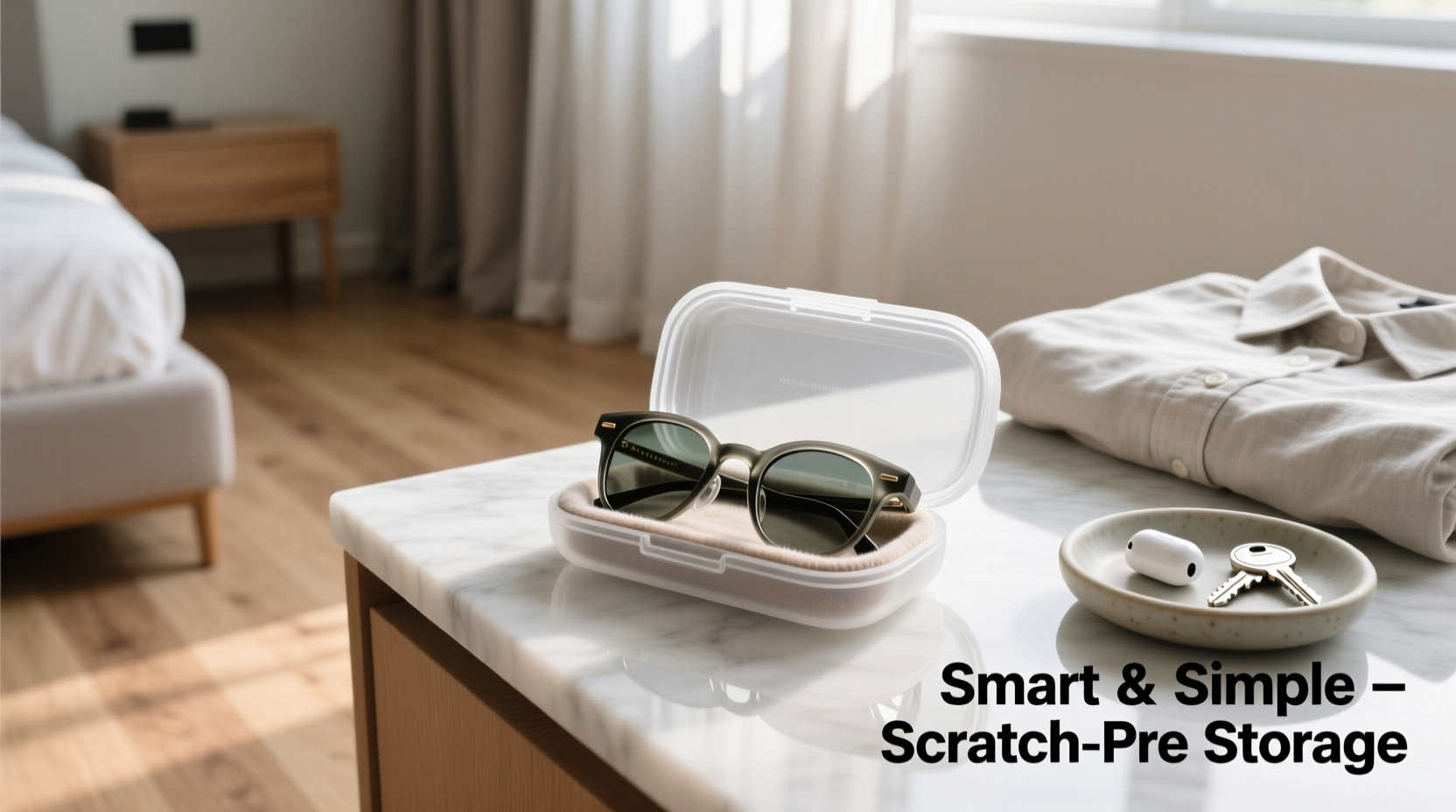
Lenses, especially those with anti-reflective or mirror coatings, are surprisingly delicate. Even microscopic dust particles can cause abrasions when rubbed against the lens surface. Frames made from acetate, metal, or composite materials can warp if stored improperly or exposed to pressure. Heat, humidity, and UV exposure also degrade lens quality over time. Storing your sunglasses correctly isn’t about luxury—it’s about preservation. According to Dr. Lena Torres, an optometry specialist with over 15 years of experience:
“Improper storage is the leading cause of avoidable sunglass damage. A scratched lens doesn’t just look bad—it distorts vision and reduces UV protection efficiency.” — Dr. Lena Torres, Optometry Specialist
The right storage solution keeps lenses clean, frames aligned, and coatings intact—without requiring extra effort.
Choose the Right Case: Your First Line of Defense
The most effective way to prevent scratches is using a hard-shell case. Soft pouches may feel luxurious, but they offer minimal protection against crushing or abrasive contact with keys, phones, or other items in your bag.
| Case Type | Protection Level | Best For | Limitations |
|---|---|---|---|
| Hard-shell case | High | Daily carry, travel, active use | Bulkier than soft options |
| Soft microfiber pouch | Low to medium | Home use, secondary storage | No crush resistance |
| Foldable rigid case | Medium to high | Compact travel, purses | Less durable than full hard cases |
| Magnetic flip case | Medium | Quick access, casual use | May not fully seal |
Smart Storage Solutions for Every Environment
Your lifestyle determines which storage method works best. Here are practical solutions tailored to common scenarios.
At Home: Designate a Sunglass Station
Create a consistent spot near the door, on a dresser, or inside a vanity drawer. Use a small tray or stand to hold your sunglasses upright and visible. This reduces the temptation to leave them lying around where they can be stepped on or knocked over.
- Use a velvet-lined tray to prevent sliding and scratching.
- Store away from windows to avoid prolonged UV exposure.
- Avoid bathrooms due to humidity, which can degrade adhesives and hinges.
In the Car: Avoid the Dashboard Trap
Leaving sunglasses on the dashboard seems convenient, but interior temperatures can exceed 150°F (65°C) on sunny days. Extreme heat warps frames, weakens adhesives, and damages lens coatings.
Tip: Store sunglasses in the glove compartment or center console—cooler and shaded.While Traveling: Pack with Purpose
When flying or commuting, place your sunglasses in a hard case and store them in the top compartment of your carry-on. Never pack them loosely in a backpack or suitcase. Consider a dedicated eyewear case with padding if you carry multiple pairs.
Step-by-Step Guide to Daily Sunglass Care
Proper storage starts the moment you take your sunglasses off. Follow this routine to minimize risk and maintain clarity:
- Clean Before Storing: Wipe lenses with a microfiber cloth. If dirty, rinse under lukewarm water and gently dry. Never store dusty or smudged lenses.
- Inspect the Hinges: Check for looseness or misalignment. Tighten screws gently with a mini screwdriver if needed.
- Place in Case Lens-Up: Set the sunglasses in the case with lenses facing upward to avoid contact with debris at the bottom.
- Close the Case Securely: Ensure the lid clicks shut or snaps into place.
- Store in a Safe Zone: Place the case in a designated spot—never loose in a bag or pocket.
This five-step process takes less than 30 seconds but dramatically reduces long-term wear.
Common Mistakes That Lead to Scratches
Even careful users make these errors:
- Using clothing to wipe lenses: Cotton fibers and fabric weaves are coarser than microfiber and can cause micro-scratches.
- Leaving sunglasses face-down: Placing them on tables lens-first invites direct contact with grit and grime.
- Storing in hot environments: Heat softens lens coatings and plastic frames, making them more prone to scratching.
- Skipping the case “just for a minute”: Quick drops lead to forgotten sunglasses and accidental damage.
“The most expensive sunglasses can be ruined in seconds by poor habits. Consistency beats cost every time.” — Marcus Reed, Eyewear Designer at Vista Optics
Checklist: Daily Sunglass Protection Routine
Use this checklist each time you remove your sunglasses to ensure optimal care:
- ✅ Clean lenses with a microfiber cloth (or rinse and dry if needed)
- ✅ Confirm frames are aligned and hinges are secure
- ✅ Place sunglasses in a hard-shell case, lenses facing up
- ✅ Close the case completely
- ✅ Store in a cool, dry location away from direct sunlight
- ✅ Avoid placing in bags, pockets, or car seats without protection
Real-Life Example: How One Commuter Fixed His Habit
James, a marketing executive in Chicago, used to toss his $220 polarized shades into his laptop bag each day. Within six months, the lenses were heavily scratched, and one arm was bent. After replacing them once, he invested in a slim hard case and attached a reminder note to his office monitor: “Case it before you walk.” He now stores his sunglasses in a padded sleeve within his bag and keeps a backup microfiber cloth inside the case. Over a year later, his new pair looks brand new. “It’s not about being obsessive,” he says. “It’s about making one small habit that saves money and keeps my vision clear.”
Frequently Asked Questions
Can I use regular cleaning wipes on my sunglasses?
No. Most household wipes contain alcohol, ammonia, or abrasive chemicals that damage anti-reflective and hydrophobic coatings. Stick to lens-specific cleaning solutions or mild soapy water with a microfiber cloth.
Is it safe to leave sunglasses in a car overnight?
Occasionally, yes—but not in direct sunlight or on hot surfaces. Prolonged exposure to heat cycles can weaken frame integrity and degrade lens materials. The glove compartment is the safest vehicle storage option.
Do lens coatings really affect scratch resistance?
Some coatings enhance durability, but others—like anti-reflective layers—are softer and more prone to scratching. Coatings don’t replace proper storage; they require even more careful handling.
Final Thoughts: Small Habits, Lasting Results
Protecting your sunglasses doesn’t require expensive gear or complex routines. It comes down to consistent, mindful actions: using a hard case, cleaning properly, and avoiding risky environments. These habits preserve optical clarity, structural integrity, and aesthetic appeal. Whether your sunglasses cost $30 or $300, they deserve thoughtful care. Start today by finding a sturdy case and designating a home for your shades. In a few weeks, it’ll be second nature—and your lenses will stay crystal clear for seasons to come.
💬 What’s your go-to storage trick? Share your favorite tip in the comments and help others keep their sunglasses scratch-free!








