A well-chosen dress can transition seamlessly from a daytime errand run to an evening cocktail party with just a few strategic changes in accessories and layering. Two of the most popular silhouettes in modern wardrobes—the slip dress and the bodycon midi—offer distinct advantages when it comes to adaptability. While both are staples in contemporary fashion, their ease of dressing up or down depends on fabric, cut, structure, and personal style preferences. Understanding the nuances between these two styles helps you make smarter wardrobe decisions based on occasion, comfort, and confidence.
The Anatomy of a Slip Dress
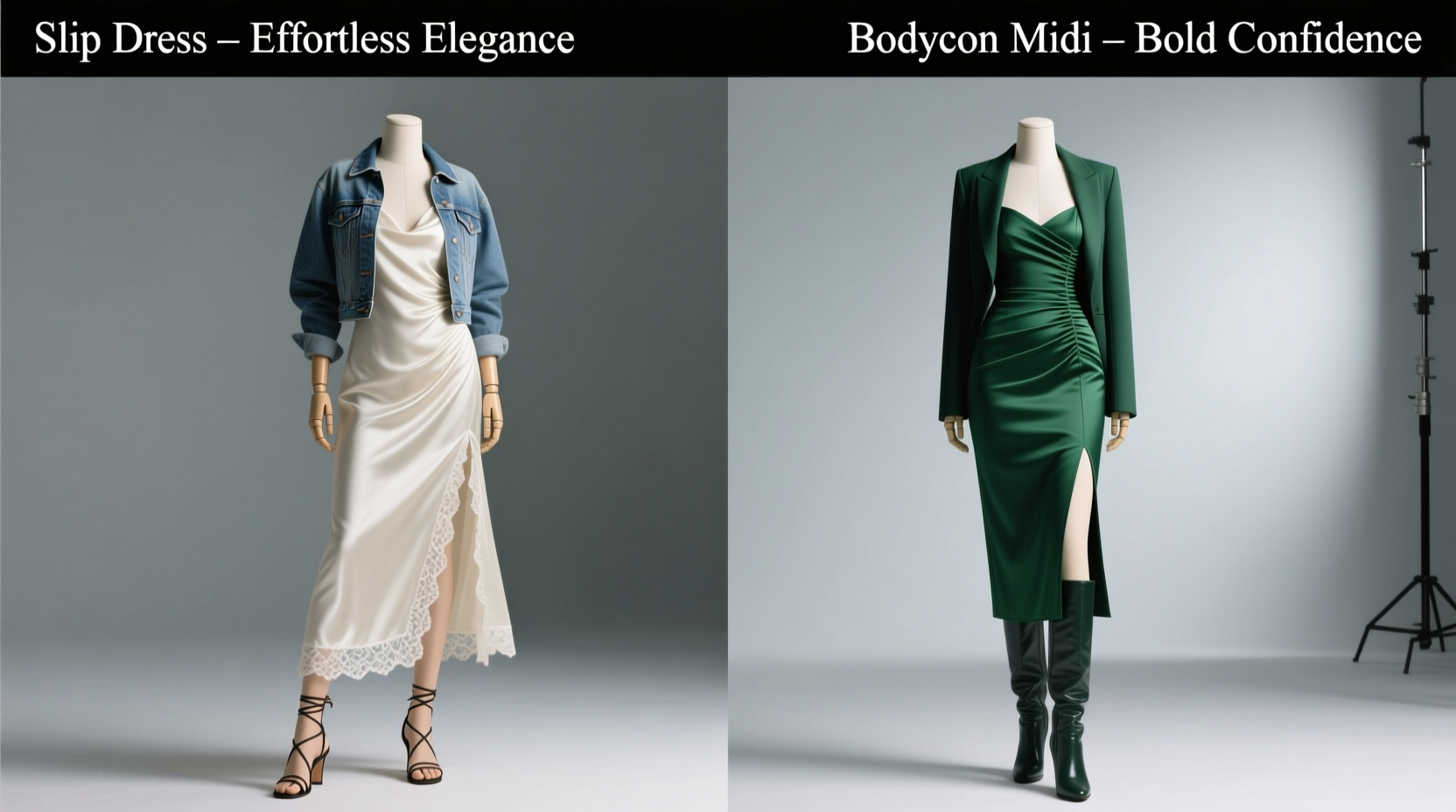
Originating from 1990s minimalist fashion, the slip dress draws its design inspiration from lingerie. Typically made from lightweight fabrics like silk, satin, or soft rayon, it features thin straps, a relaxed drape, and often falls just above or below the knee. The simplicity of its construction is part of its appeal—clean lines, minimal seams, and a fluid silhouette that moves with the body.
Because of its delicate nature, the slip dress walks a fine line between sensual and understated. It’s inherently elegant but requires careful pairing to avoid looking underdressed—or overly revealing—in casual settings. Its strength lies in transformation: layered under chunky knits or paired with boots, it becomes a cool off-duty look; worn alone with heels and jewelry, it elevates instantly into formal wear.
Tip: Choose silk-blend slip dresses for better durability and less sheerness—ideal for versatile wear without constant lining concerns.Understanding the Bodycon Midi
In contrast, the bodycon midi dress is defined by its form-fitting structure and hemline that typically lands between mid-calf and ankle. Made from stretchy materials such as jersey, ponte knit, or spandex blends, this style hugs the body closely, accentuating curves while offering moderate coverage. Unlike the ethereal quality of a slip dress, the bodycon midi exudes confidence and polish, often favored for office events, dinners, or semi-formal gatherings.
The structural integrity of the bodycon midi makes it more self-sufficient. It rarely needs layering to appear complete and holds its shape throughout the day. This built-in support—sometimes including hidden boning or shapewear elements—means it transitions easily across environments without losing its intended aesthetic.
“Bodycon silhouettes command presence through fit and finish. They’re engineered for impact, not reinterpretation.” — Lena Torres, Fashion Stylist & Wardrobe Consultant
Comparative Versatility: Dressing Up and Down
Dressing a garment “up” generally means making it suitable for formal or elevated occasions using refined accessories, footwear, and tailoring. Dressing it “down” involves adapting it for casual, everyday use—often through relaxed outerwear, flat shoes, or simpler finishes.
When comparing slip dresses and bodycon midi styles, the key differentiator isn’t just fabric or fit—it’s flexibility in context.
| Feature | Slip Dress | Bodycon Midi |
|---|---|---|
| Fabric Type | Silk, satin, chiffon (lightweight) | Jersey, ponte, stretch-knit (structured) |
| Natural Formality | Moderate to high (luxe feel) | High (inherently polished) |
| Casual Adaptability | Excellent with layering (cardigans, tees, boots) | Limited—can look stiff if over-layered |
| Formal Readiness | High—minimal additions needed | Already formal—requires little enhancement |
| Comfort Over Time | Good, but may shift or slip | Better hold, though tighter fit |
| Seasonal Flexibility | Best in spring/summer; winter with layers | Year-round due to thicker fabrics |
Why Slip Dresses Excel at Transformation
The slip dress thrives on reinvention. Because it starts from a neutral, almost blank canvas, it invites creative styling. Worn over a crisp white t-shirt with sneakers and an oversized blazer, it reads as fashion-forward streetwear. Swap in strappy heels, remove the tee, add drop earrings, and the same dress becomes red-carpet ready.
This chameleon-like ability gives the slip dress an edge in versatility. It doesn’t come pre-defined by occasion. Instead, it takes cues from what surrounds it—making it ideal for capsule wardrobes where fewer pieces must serve multiple roles.
Where Bodycon Midos Shine in Consistency
The bodycon midi, however, operates differently. It is already dressed up upon arrival. There’s no ambiguity about its purpose. A black ponte midi bodycon dress looks appropriate at a gallery opening, a work presentation, or a dinner date—with only subtle accessory shifts required.
Its limitation lies in how far down it can go. Pairing it with a denim jacket and sandals might soften the look slightly, but it still carries an air of intentionality. You can't truly \"underdress\" a bodycon midi without creating visual tension—like wearing a suit jacket with gym shorts.
Step-by-Step Guide: Transforming Each Style
Dressing Up a Slip Dress
- Select a luxe fabric base – Opt for silk or silk-blend for natural shine and drape.
- Add tailored outerwear – A structured blazer or longline coat adds sophistication.
- Elevate footwear – Switch from flats to stilettos or pointed-toe pumps.
- Layer jewelry thoughtfully – Delicate necklaces or statement earrings enhance elegance.
- Carry a clutch – Replace crossbody bags with sleek evening clutches.
Dressing Down a Slip Dress
- Layer with basics – Wear a fitted crew-neck T-shirt underneath for modesty and edge.
- Swap heels for boots or sneakers – Chunky combat boots or white leather sneakers ground the look.
- Add cozy textures – Drape a cable-knit cardigan or oversized hoodie over the shoulders.
- Use minimal makeup – Keep the face fresh to balance the dress’s inherent glamour.
- Opt for backpacks or tote bags – Functional bags reinforce the casual vibe.
Enhancing a Bodycon Midi (Dressing Up)
- Choose rich colors or textures – Jewel tones or matte metallics elevate instantly.
- Add a dramatic coat – A wool trench or faux fur wrap enhances formality.
- Wear seamless hosiery – For cooler months or conservative venues.
- Pick sharp footwear – Strappy heels or patent pumps complement the sleek line.
- Style hair elegantly – An updo or smooth blowout aligns with the dress’s precision.
Softening a Bodycon Midi (Dressing Down)
- Pair with casual outerwear – A washed leather jacket or slouchy denim shirt works best.
- Go barefoot or wear sandals – Flat mules or slide sandals reduce formality.
- Roll or cuff sleeves (if applicable) – Adds a relaxed touch even if minor.
- Keep accessories minimal – Avoid large earrings or stacked bracelets.
- Carry a canvas tote or crossbody – Reinforces practicality over polish.
Real-Life Example: Weekend to Evening Transition
Consider Maya, a marketing professional living in Chicago. On a Saturday afternoon, she plans to meet friends for coffee, then attend a last-minute birthday dinner. She chooses a champagne-colored silk slip dress. For the daytime, she layers it over a charcoal gray thermal long-sleeve top, adds knee-high boots, and throws on a camel wool coat. Her tote bag and minimal makeup keep the look approachable.
By 6 PM, she removes the thermal layer, swaps boots for silver strappy heels, applies bold lipstick, and switches to a small metallic clutch. With a spritz of perfume and her hair down in soft waves, she arrives at the upscale Italian restaurant looking effortlessly glamorous—same dress, completely transformed.
Had she chosen a navy bodycon midi instead, the transition would have been less flexible. The dress alone was already appropriate for dinner, but too formal for casual coffee. To tone it down earlier, she’d need to rely heavily on outerwear and footwear choices, risking a mismatched appearance. The slip dress offered more stylistic runway; the bodycon midi demanded acceptance of its default tone.
Checklist: Choosing the Right Dress for Your Lifestyle
- ✅ Do you frequently move between casual and formal settings?
- ✅ Do you enjoy experimenting with layering and accessories?
- ✅ Are you comfortable adjusting your outfit during the day?
- ✅ Do you prefer garments that require minimal additional styling?
- ✅ Is comfort during extended wear a priority?
- ✅ Do you live in a climate requiring seasonal adaptability?
If you answered “yes” to the first three, a slip dress likely suits your dynamic lifestyle. If the latter three resonate more, the bodycon midi may be your go-to for reliability and ease.
FAQ: Common Questions About Dress Versatility
Can I wear a slip dress to the office?
Yes, but with caveats. In creative or fashion-adjacent industries, a slip dress layered under a tailored blazer and paired with closed-toe heels can work. Avoid sheer fabrics and ensure modest coverage. In conservative offices, it’s better reserved for after-hours events.
Is a bodycon midi appropriate for weddings?
Absolutely—especially in darker or richer hues. Just ensure the length and neckline align with the wedding’s dress code. Avoid overly tight fits if the event leans traditional, and consider a wrap or shawl for outdoor ceremonies.
Which dress type is more sustainable?
Both can be sustainable depending on material and manufacturing. However, bodycon mids made from durable ponte knit tend to withstand frequent washing and stretching better than delicate silk slips, potentially offering longer wear life with less maintenance.
Final Verdict: Which Is Easier to Dress Up or Down?
The slip dress wins on sheer adaptability. It is fundamentally designed to be reinterpreted. Its lack of structure is not a flaw—it’s a feature. With thoughtful layering and accessory choices, it morphs across contexts with grace and originality.
The bodycon midi, while powerful in its own right, resists dramatic shifts in tone. It excels at consistency and confidence but offers fewer opportunities for reinvention. It's easier to dress up because it starts nearly there—but harder to convincingly dress down without appearing incongruous.
Ultimately, the choice depends on your daily rhythm. If your life demands fluid transitions—a meeting followed by drinks, a weekend brunch turning into a night out—the slip dress provides unmatched versatility. If your schedule revolves around polished appearances where looking put-together is non-negotiable, the bodycon midi delivers dependability.
“The most versatile piece isn’t always the fanciest—it’s the one that listens to your day and adapts accordingly.” — Marcus Lin, Editorial Director at *Urban Style Weekly*
Take Action: Build a Smarter Dress Wardrobe
Start by assessing your weekly activities. How many times do you shift from casual to formal settings? Do you value comfort, or are you willing to sacrifice ease for elegance? Based on your answers, invest in the silhouette that supports your reality—not just your aspirations.
Try this challenge: For one week, wear only one type—a slip dress or a bodycon midi—and document how easily it adapts to each situation. Note where you felt confident, where you hesitated, and what changes you made. That real-world feedback will tell you more than any trend forecast ever could.
💬 Which dress style do you reach for when you need to pivot your look? Share your go-to styling tricks in the comments—we’d love to hear how you make your favorites work for you!