
When it comes to everyday wear, athletic performance, or casual summer style, few clothing decisions seem as small as choosing between a sleeveless tank and a standard short-sleeve tee. But that single design choice—keeping or cutting the sleeves—can influence everything from thermoregulation to confidence in your appearance. While both styles serve functional purposes, their impact diverges significantly depending on context, fabric, activity level, and personal preference.
The debate isn’t just about fashion. It’s rooted in physiology, material science, and behavioral psychology. From gym-goers opting for tanks during intense workouts to commuters choosing breathable tees in humid climates, the sleeve decision carries subtle but measurable consequences. This article examines what actually changes when you remove the sleeves—and whether those changes matter in real-world scenarios.
Thermal Regulation: How Much Cooler Is Sleeveless?
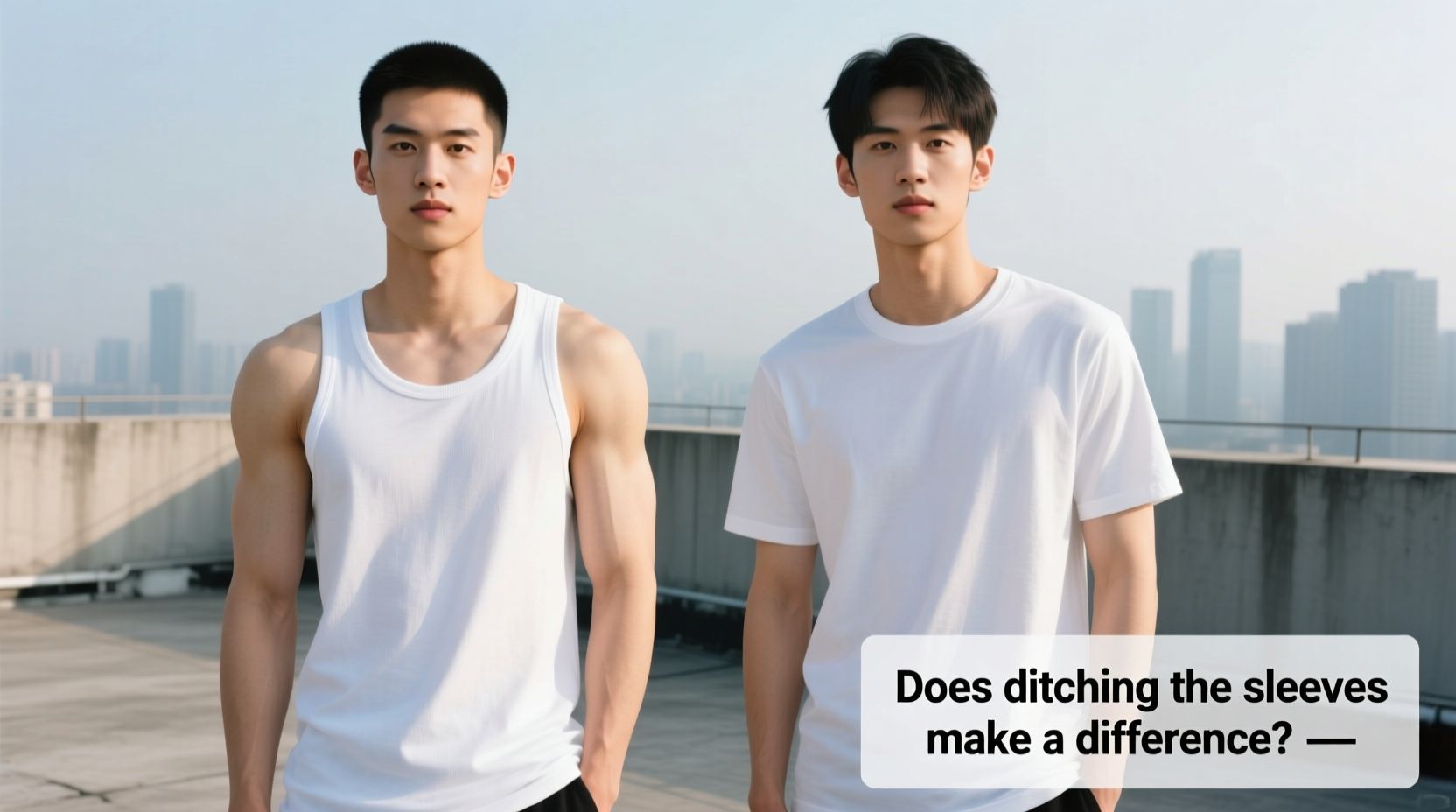
One of the most cited reasons for wearing sleeveless tops is improved cooling. The logic seems sound: more skin exposure equals better airflow and faster sweat evaporation. However, research in sports physiology suggests the reality is more nuanced.
A 2021 study published in the Journal of Thermal Biology found that while sleeveless garments increased heat dissipation by approximately 18% compared to short sleeves during moderate-intensity exercise, this advantage plateaued above certain temperatures (above 35°C / 95°F), where radiant heat from the sun offset evaporative gains. In shaded or air-conditioned environments, the difference was even smaller—around 6–10%.
Still, for activities involving repetitive arm motion—like weightlifting, swimming, or cycling—the absence of fabric around the shoulders and upper arms reduces friction and allows greater freedom of movement, which indirectly supports thermal comfort by minimizing chafing and overheating at key muscle groups.
Tip: For outdoor workouts in direct sunlight, consider UV-protective sleeveless shirts with moisture-wicking fabric—maximizing breathability without sacrificing sun protection.Fabric and Fit: Why Material Matters More Than Sleeve Length
While sleeve length plays a role, fabric composition often has a larger impact on comfort and performance. A polyester-spandex blend in a short-sleeve tee may outperform a cotton tank in high-sweat situations due to superior moisture management. Cotton absorbs sweat but retains it, leading to dampness and potential irritation; synthetic blends pull moisture away from the skin and dry quickly.
Fit also alters the equation. A tight-fitting short-sleeve performance shirt can feel cooler than a loose cotton tank because it maintains consistent contact with the skin, enabling efficient wicking. Conversely, an oversized sleeveless top might allow excessive airflow but trap warm air beneath billowing fabric.
In practical terms, choosing the right material often outweighs the marginal benefit of removing sleeves. For example, runners frequently prefer fitted short sleeves over tanks not only for aerodynamics but also for built-in sweat control and reduced bounce.
“Sleeve length alone won’t make or break your comfort. It’s the synergy between cut, fabric, and environment that determines real-world performance.” — Dr. Lena Torres, Sportswear Biomechanics Researcher, University of Oregon
Comparative Breakdown: Sleeveless vs Short Sleeve Tee
| Feature | Sleeveless Tee | Short Sleeve Tee |
|---|---|---|
| Ventilation | High – maximum underarm and shoulder exposure | Moderate – limited to neckline and lower arm |
| Sun Exposure | High – increases risk of UV damage on shoulders/upper arms | Lower – provides partial UV protection |
| Mobility | Excellent – unrestricted shoulder rotation | Good – slight restriction with tighter sleeves |
| Chafing Risk | Low – no sleeve seams near armpits | Variable – depends on seam placement and fit |
| Style Versatility | Limited – best for casual or athletic settings | High – suitable for office, errands, layering |
| Layering Potential | Poor – difficult to layer under jackets or sweaters | Good – works well under blazers, hoodies, vests |
Real-World Scenario: The Commuter’s Dilemma
Consider Mark, a software developer who bikes 4 miles to work daily in a city with hot summers. He used to wear short-sleeve cotton tees, but found himself drenched in sweat by arrival, especially under his arms. After switching to a moisture-wicking sleeveless top, he noticed immediate improvements—not just in dryness, but in how quickly he could transition into the office environment.
However, within two weeks, he developed mild sunburn on his shoulders. He adjusted by applying sunscreen daily and later upgraded to a UPF-rated sleeveless performance shirt. The combination solved both issues: staying cool without compromising skin health.
Mark’s experience illustrates a common trade-off: enhanced ventilation often comes with increased environmental exposure. Smart adaptation—such as using protective lotions or selecting technical fabrics—can preserve benefits while mitigating downsides.
When to Choose Which: A Practical Checklist
Deciding between sleeveless and short-sleeve options shouldn't be arbitrary. Use this checklist to guide your choice based on specific needs:
- ✅ Choose sleeveless if:
- You’re engaging in high-motion upper-body exercise (e.g., lifting, climbing)
- Airflow is limited (e.g., crowded gyms, stuffy rooms)
- You prioritize minimalism and range of motion
- You’re in a controlled indoor environment (home, gym, studio)
- ✅ Choose short sleeves if:
- You’ll be outdoors for extended periods (especially in strong sunlight)
- You need versatility for transitioning between settings (work, errands, social events)
- You plan to layer clothing later in the day
- You’re sensitive to cold drafts or AC-heavy offices
FAQ: Common Questions About Sleeveless vs Short Sleeve Tees
Does going sleeveless help with sweating less?
No—removing sleeves doesn’t reduce sweat production. Sweat is regulated by body temperature and exertion level. However, sleeveless designs can help sweat evaporate faster due to increased airflow, making you *feel* drier even if you're sweating the same amount.
Are sleeveless shirts appropriate for the office?
It depends on workplace culture. In creative or tech environments, fitted sleeveless polos or performance tops may be acceptable, especially in summer. Traditional offices typically expect sleeves. When in doubt, opt for short sleeves—they offer nearly the same breathability with broader social acceptance.
Can I wear a sleeveless tee under a jacket?
Rarely comfortably. Most jackets are tailored for sleeved layers. Sleeveless shirts can bunch at the shoulders or create visible strap lines. If layering is needed, short-sleeve tees in slim fits are far more practical.
Final Verdict: Does Ditching the Sleeves Make a Difference?
The answer is yes—but not always in the way people assume. Removing sleeves does enhance airflow and mobility, particularly beneficial during physical activity or in hot, stagnant environments. Yet these advantages come with trade-offs: reduced sun protection, limited styling flexibility, and potential social constraints.
Ultimately, the sleeve decision should be context-driven. For peak athletic performance or lounging in sweltering heat, sleeveless wins on function. For all-day wear, mixed environments, or professional settings, short sleeves provide a balanced compromise between comfort and practicality.
Instead of treating one as universally superior, think of sleeve length as a tool. Just as you’d choose different shoes for running versus walking, select your tee based on the demands of your day. The real improvement comes not from eliminating sleeves, but from aligning garment design with purpose.
💬 What’s your go-to summer top—sleeveless or short sleeve? Share your experience and help others decide what works best for their lifestyle.