When winter rolls around and your wardrobe needs a cold-weather upgrade, the choice between a short tweed jacket and a long wool coat isn’t just about aesthetics—it’s a decision that affects warmth, versatility, mobility, and personal expression. While both pieces are staples in classic menswear and timeless womenswear, their differences go far beyond fabric texture or collar style. The real question is whether the length of an outer garment makes a functional or stylistic impact—or if we’re simply following trends without purpose.
The debate isn't new. Fashion editors, tailors, and everyday wearers have long weighed the merits of cropped sophistication against full-length protection. But with shifting climates, evolving urban lifestyles, and more emphasis on sustainable dressing, understanding what each piece offers can help you build a smarter, seasonally adaptable wardrobe.
Functionality: Warmth, Coverage, and Climate Suitability
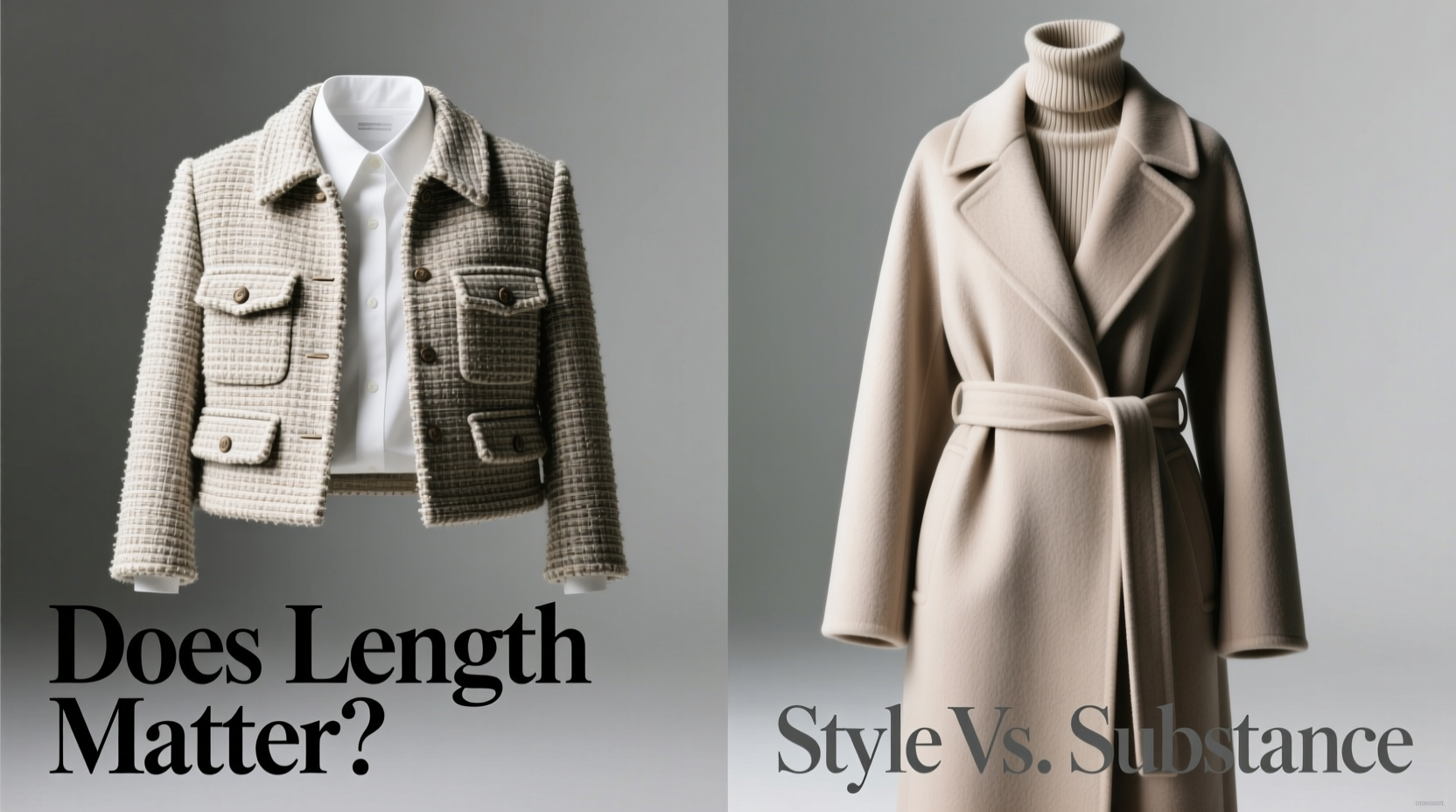
At its core, outerwear exists to protect. A long wool coat—typically falling below the knee or mid-calf—provides significantly more coverage than a short tweed jacket, which usually ends at the hip. This extended length translates into greater insulation, especially in harsher winter conditions where wind and snow target the lower body.
Wool, particularly in heavier weights like melton or boiled varieties, traps heat efficiently. When cut into a long silhouette, it creates a thermal barrier from neck to thigh or beyond. In contrast, tweed—while warm due to its tightly woven structure—is often lighter and designed for breathability, making it better suited for autumn or early winter rather than deep freeze scenarios.
Tip: Pair a short tweed jacket with thermal layers and insulated trousers in colder climates to compensate for reduced coverage.In cities with milder winters, such as London or San Francisco, a well-layered tweed jacket may suffice most days. However, in regions like Chicago or Montreal, a long wool coat becomes non-negotiable during peak winter months. Functionally, length correlates directly with environmental adaptability.
Style and Silhouette: How Length Shapes Your Look
Beyond utility, length dramatically influences visual proportion. A short tweed jacket emphasizes the waist and hips, creating a tailored, structured look ideal for pairing with high-waisted trousers or skirts. It draws attention upward, highlighting accessories like scarves or lapel pins, and works seamlessly under overcoats when extra warmth is needed.
A long wool coat, by contrast, elongates the body. When properly fitted, it adds gravitas and polish—a favorite among professionals and formal dressers. Its vertical line minimizes bulk elsewhere, making it flattering across body types. However, if too oversized or poorly proportioned, it risks overwhelming shorter frames.
“Length alters not just temperature regulation but also presence. A long coat commands space; a short jacket defines shape.” — Julian Hart, Menswear Tailor & Pattern Designer
Fashion psychology supports this: longer garments signal authority and seriousness, while cropped styles suggest approachability and modernity. Choosing between them isn’t merely seasonal—it’s contextual to your lifestyle, profession, and self-presentation goals.
Material Matters: Tweed vs Wool Compared
Though both tweed and wool derive from sheep’s fleece, they serve different roles. Understanding their composition helps clarify why length interacts uniquely with each.
| Feature | Tweed Jacket | Long Wool Coat |
|---|---|---|
| Fabric Type | Woven wool blend (often with cotton, silk, or synthetic fibers) | Pure or high-density wool (melton, gabardine, boiled wool) |
| Weight | Light to medium | Medium to heavy |
| Texture | Rough, nubby, patterned (houndstooth, herringbone) | Smooth, dense, often solid-colored |
| Best Season | Fall, early winter | Late fall through deep winter |
| Mobility | High – easy movement, fits in transit | Moderate – can restrict stride or seating comfort |
Tweed excels in transitional weather and social settings—think countryside walks, casual Fridays, or weekend outings. Wool coats dominate formal, professional, or extreme weather use cases. The material informs the appropriate length: tweed rarely benefits from being made long because it lacks the density for full-body insulation, while wool gains value when extended.
Real-World Use Case: Two Professionals, Two Choices
Consider Sarah, a graphic designer working remotely from Edinburgh. Her daily routine includes walking her dog, grabbing coffee, and occasional client meetings. She owns a camel-colored tweed blazer with leather buttons. At 28 inches long, it hits just below her waist. Paired with a turtleneck and wool-lined jeans, it keeps her comfortable in damp, chilly weather up to -5°C (23°F). On snowy days, she throws a long parka over it. For her, the short jacket wins in flexibility and ease.
Now meet David, a corporate lawyer commuting daily in Toronto. His office is five blocks from the subway, exposed to wind tunnels and sub-zero temperatures. He wears a double-breasted navy wool overcoat reaching mid-calf. At -15°C (5°F), he stays warm thanks to full leg coverage and a high collar. He owns tweed jackets too—but only wears them indoors or during spring/fall. For him, length isn’t optional; it’s essential for survival and professionalism.
Their stories illustrate that the right choice depends less on trend and more on lived experience. One size doesn’t fit all—nor should one length.
When to Choose Which: A Practical Checklist
Choose a Short Tweed Jacket If:- You live in a temperate or mild winter climate
- Your lifestyle involves frequent sitting (office, driving, transit)
- You prioritize layering versatility
- You want a smart-casual aesthetic
- You already own a heavy overcoat for extreme weather
- You face prolonged outdoor exposure in winter
- Your job demands formal attire and polished presentation
- You lack access to layered outerwear systems
- You value maximum wind and moisture resistance
- You prefer fewer seasonal switches in outerwear
Frequently Asked Questions
Can I wear a tweed jacket in heavy snow?
Not ideally. While water-resistant finishes exist, tweed absorbs moisture more readily than tightly felted wool. In wet snow, it can become heavy and slow to dry. Use a shell layer or switch to a treated wool coat for consistent protection.
Is a long coat impractical for driving?
Sometimes. Long coats can bunch up when seated and reduce freedom of movement. If you drive often, consider a three-quarter-length coat (ending above the knee) as a compromise between coverage and comfort.
Do short jackets look unprofessional?
Not inherently. In creative industries or smart-casual environments, a well-cut tweed jacket projects confidence and individuality. Pair it with matching trousers or a structured dress to maintain formality.
Conclusion: Length Is Meaningful—But Not Absolute
The difference between a short tweed jacket and a long wool coat isn’t hype. It’s rooted in physics, design intent, and real-world performance. Length affects warmth retention, visual balance, and situational appropriateness. Yet neither option universally outperforms the other—context determines superiority.
A balanced wardrobe doesn’t rely on one hero piece but integrates multiple layers for varying needs. Owning both a tweed jacket and a wool coat allows you to respond dynamically to weather, occasion, and personal comfort. Rather than choosing sides, think strategically: let your environment, routine, and aesthetic goals guide your investment.
💬 What’s your go-to outerwear piece this season? Share your thoughts and styling tips in the comments—your insight could help others navigate the great length debate.








