Peat is one of the most evocative—and misunderstood—elements in Scotch whisky. For newcomers, the word “peaty” often conjures images of campfires, burning tires, or medicinal bandages—intimidating associations that can deter exploration before the first sip. Yet peat isn’t a monolith. It’s a spectrum: from the whisper of damp earth in a Highland dram to the roaring bonfire of an Islay heavyweight. Understanding peat levels isn’t about memorising numbers—it’s about learning how smoke interacts with barley, stills, casks, and time. More importantly, it’s about matching intensity to personal taste, not perceived expertise. This guide cuts through the mystique with precise definitions, regional context, tasting benchmarks, and actionable recommendations—all grounded in distillery practice and sensory reality.
What “Peat Level” Really Means (and Why PPM Is Misleading)
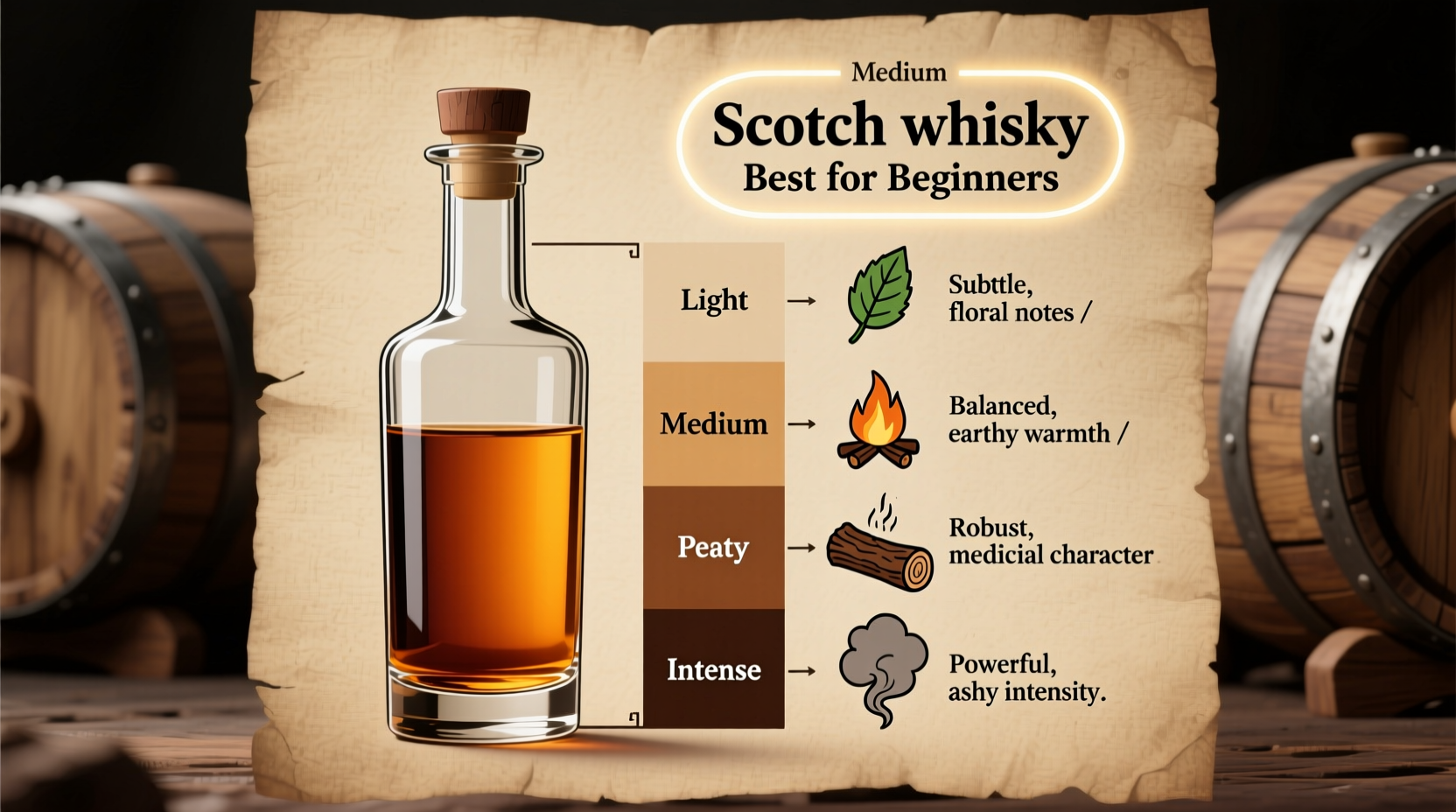
Peat level is commonly expressed in parts per million (ppm) of phenolic compounds—primarily guaiacol and cresol—in the malted barley *before* distillation. A 50-ppm barley doesn’t yield a 50-ppm whisky. In fact, distillation removes roughly 70–90% of those phenols. What remains depends on still shape, reflux, cut points, and cask influence. A 40-ppm malt may produce a whisky testing at just 12–18 ppm phenols in the final spirit; a 20-ppm malt, distilled with long fermentation and tall stills, might deliver a more aromatic, nuanced smoke than its number suggests.
Crucially, ppm measures only *smoke-derived phenols*, not overall flavour impact. A whisky aged in ex-bourbon casks will present peat more cleanly and linearly; the same spirit finished in sherry wood may soften smoke with dried fruit and spice, making it feel less aggressive—even at identical ppm. As Dr. Kirsty McCallum, former Master Blender at Ardbeg and current Director of Whisky Science at the University of Glasgow, explains:
“PPM is a useful starting point for maltsters—but it’s a pre-distillation snapshot, not a tasting promise. The human nose detects phenols differently depending on concentration, matrix, and expectation. A 15-ppm whisky served neat at room temperature can feel more ‘smoky’ than a 30-ppm one diluted with water and served chilled.” — Dr. Kirsty McCallum, Whisky Scientist & Former Master Blender
So while ppm provides a baseline, your palate responds to *perceived smokiness*: a blend of aroma (smouldering hay, iodine, charcoal), texture (oily, ashy, saline), and finish (lingering warmth vs. medicinal dryness). That’s where geography, tradition, and production philosophy matter more than any lab report.
Peat by Region: From Whisper to Roar
Scotland’s whisky regions offer a natural framework for navigating peat—not because rules govern them, but because centuries of local practice created distinct stylistic signatures. These patterns help beginners anticipate what “light,” “medium,” or “heavy” actually tastes like in context.
| Region | Typical Peat Range (ppm in malt) | Sensory Profile | Beginner-Friendly Examples |
|---|---|---|---|
| Lowlands | 0–5 ppm | Clean, grassy, floral; peat rarely detectable unless intentionally added (e.g., Auchentoshan Three Wood Peated) | Auchentoshan Peated, Bladnoch Samsara |
| Speyside | 5–25 ppm | Integrated smoke: often honeyed, orchard fruit, vanilla, with a gentle earthy or charred-oak undercurrent | Benriach Curiositas, Glenfiddich Winter Storm, Tomintoul Peaty Tang |
| Highlands (incl. Islands) | 15–45 ppm | Variably coastal: briny, heathery, with balanced smoke that leans herbal or toasted rather than acrid | Tobermory 12 Year Old, Oban 14 Year Old, Isle of Jura Superstition |
| Islay | 30–55+ ppm | Powerful and elemental: iodine, seaweed, tar, burnt rubber, medicinal notes; often softened by age and oak | Lagavulin 16 Year Old, Caol Ila 12 Year Old, Bunnahabhain Toiteach |
| Orkney (a sub-region) | 30–55 ppm | Dense, sweet smoke layered over rich sherry or bourbon cask influence; less medicinal, more treacle and leather | Highland Park 12 Year Old, Scapa Skiren |
Note the overlap: Caol Ila (Islay, ~35 ppm) feels more approachable than Ardbeg (Islay, ~55 ppm) due to lighter stills and higher cut points. Meanwhile, Highland Park (Orkney, ~35 ppm) delivers smoke wrapped in heather honey and orange zest—making it far gentler on first encounter than its ppm suggests. Regional context transforms numbers into experience.
Beginner-Friendly Peated Malts: A Tasting Roadmap
Starting with heavily peated whisky is like learning French by reading Proust. Begin instead with expressions where smoke plays a supporting role—not the lead actor. Look for these hallmarks:
- Fruit-forward balance: Apples, pears, citrus, or stone fruit counteract ashiness.
- Soft texture: A rounded, oily mouthfeel buffers sharp phenolic edges.
- Age-appropriate maturation: 10–12 years in ex-bourbon or refill hogsheads tames raw smoke without erasing character.
- No overt medicinal notes: Avoid labels highlighting “antiseptic,” “bandage,” or “iodine”—these signal high-impact phenols best appreciated later.
Here’s a curated progression designed for newcomers—each step builds confidence without overwhelming:
- Step One: The Introduction (0–15 ppm)
Try Tomintoul Peaty Tang (12 ppm). Lightly smoked barley meets lemon curd, oat biscuits, and soft oak. Smoke arrives as a distant bonfire on a summer evening—present, but never intrusive. - Step Two: The Integration (15–25 ppm)
Move to Benriach Curiositas (20 ppm). Fermented longer for fruity depth, then matured in bourbon casks. Expect stewed apples, brown sugar, and a gentle thread of pipe tobacco smoke—warming, not biting. - Step Three: The Coastal Shift (25–35 ppm)
Select Tobermory 12 Year Old (30 ppm). Distilled on Mull with sea-salt air influence. Smoked barley meets kelp, green apple, and toasted almond. The smoke is maritime—damp, mineral, and clean—not industrial. - Step Four: The First Islay (35–45 ppm)
Choose Caol Ila 12 Year Old (35 ppm). Distilled in tall stills for elegance, matured in refill casks. Offers lemon rind, white pepper, and a precise, airy smoke—like walking past a beachside kiln at low tide.
This sequence respects neurological adaptation: your olfactory receptors become more sensitive to smoke compounds with repeated, moderate exposure. Jumping straight to Laphroaig Quarter Cask (≈45 ppm, with intense medicinal notes) risks creating a negative association that takes months to unlearn.
Mini Case Study: Sarah’s Peat Journey
Sarah, 32, worked in graphic design and drank gin and tonics exclusively until a friend gifted her a sample set of five peated whiskies. Her first pour was Ardbeg Uigeadail (≈50 ppm). She described it as “licking a wet rock beside a diesel engine”—and set the bottle aside for six months. Then she tried Benriach Curiositas at a whisky bar, drawn by its “apple and smoke” description. She noticed how the sweetness softened the ash, how the finish lingered as warmth, not sting. Over three months, she tasted four more Speyside and Highland peated malts, keeping notes on what “worked”: fruit, texture, absence of bitterness. By month four, she bought a bottle of Caol Ila 12. “It wasn’t about liking smoke,” she told us. “It was about trusting that the smoke had a purpose—to lift the fruit, to add depth, not dominate. Once I stopped waiting for ‘peatability’ and started listening to what the smoke was saying, everything changed.”
Your Practical Peat Starter Kit: Checklist & FAQ
Beginner’s Peat Tasting Checklist
- ✓ Start with a Speyside or Highland expression (15–25 ppm), not Islay.
- ✓ Use a proper nosing glass—not a tumbler—to concentrate aromas.
- ✓ Taste neat first, then add 1–2 drops of water. Compare.
- ✓ Focus on *where* you sense smoke: front of palate (bright, herbal), mid-palate (toasted, nutty), or finish (lingering, medicinal)?
- ✓ Keep a simple log: whisky name, ppm (if known), dominant non-smoke note (e.g., “pear,” “vanilla,” “seaweed”), and one word for smoke quality (“distant,” “creamy,” “charred”).
Frequently Asked Questions
Does higher ppm always mean a more bitter or medicinal taste?
No. Bitterness and medicinal notes arise from specific phenols (e.g., cresols and xylenols) concentrated during heavy peat drying and long fermentation. A well-made 40-ppm whisky with careful cut points and matured in seasoned casks can taste sweeter and rounder than a poorly balanced 25-ppm one. Production choices outweigh ppm alone.
Can I “train” my palate to enjoy heavier peat?
Yes—through gradual, mindful exposure. Neuroscientists confirm that repeated, low-stakes tasting rewires olfactory perception. Start with 15-ppm whiskies twice weekly for four weeks. Note shifts in aroma detection. By week six, many report enhanced ability to distinguish smoke nuances (e.g., “woodsmoke” vs. “barbecue charcoal”) rather than just “smoky/not smoky.” Patience, not persistence, is key.
Are there non-peated whiskies that still offer complexity for beginners?
Absolutely. Lowland malts like Glenkinchie or Auchentoshan (unpeated) deliver elegant grass, citrus, and almond notes. Even some lightly peated Highland whiskies—such as Glengoyne 10 (≈5 ppm, barely perceptible)—offer depth without smoke. Complexity comes from distillation, cask selection, and terroir—not just phenols.
Conclusion: Smoke Is a Story, Not a Score
Peat isn’t a hurdle to overcome—it’s a vocabulary to learn. The most compelling peated whiskies don’t shout; they converse. They speak of bogland and wind, of barley dried over centuries-old fuel, of stills shaped by generations of hands. Your first sip shouldn’t be a test of endurance. It should be an invitation to notice how smoke wraps around ripe fruit, lifts briny minerals, or deepens oak spice. Start low. Listen closely. Trust your own reactions—not the ppm label or the bartender’s bravado. The goal isn’t to “graduate” to Ardbeg or Laphroaig, but to discover where smoke resonates with *your* palate. Whether that’s the whisper of Tomintoul or the confident hum of Caol Ila, the right peated whisky feels like recognition—not revelation.
💬 Found your perfect beginner peat? Share your first “aha!” moment—or your go-to light-peated dram—in the comments. Let’s build a real-world guide, one honest tasting note at a time.