When it comes to affordable automatic watches, Sanda has built a reputation for delivering mechanical reliability at accessible price points. Often compared to Seiko’s iconic 5 series, Sanda watches offer a minimalist aesthetic with clean dials and solid build quality. But when stacked against a traditional chronograph—those timepieces packed with subdials for measuring elapsed time—the question arises: are the extra dials and added complexity actually worth the premium?
This isn’t just about aesthetics or technical flair. It’s a practical evaluation of what you gain—and what you might be overpaying for—in the pursuit of horological sophistication.
The Core Difference: Simplicity vs Functionality
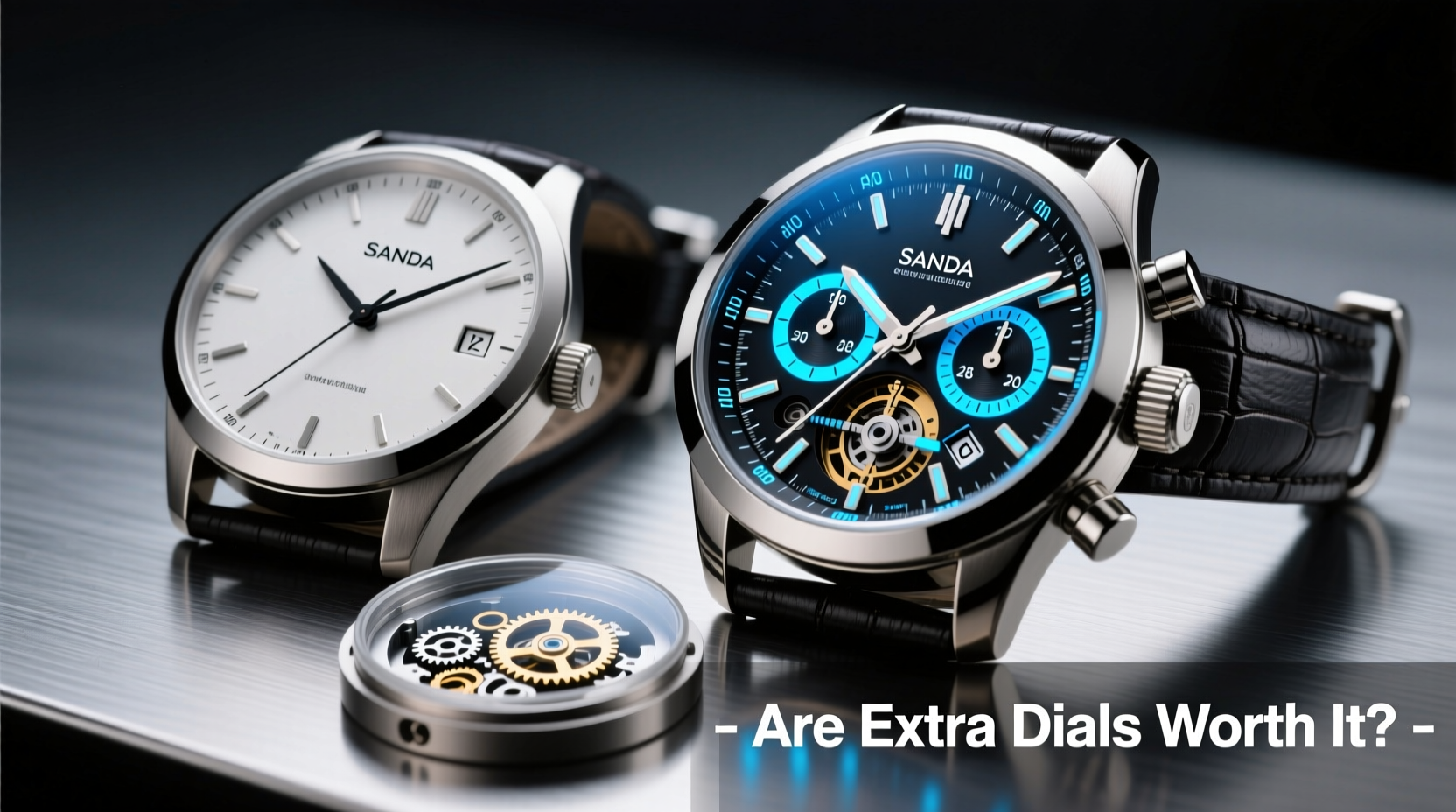
Sanda watches typically focus on the essentials: hours, minutes, seconds, and sometimes a date window. They use reliable, no-frills automatic movements like the NH35 or ST17, which are easy to service and widely available. The design philosophy is rooted in utility—wearable, durable, and unobtrusive.
Chronographs, by contrast, are engineered for timing. With additional pushers on the case and multiple subdials (usually 30-minute, 12-hour, and running seconds), they allow users to measure intervals precisely. This functionality traces back to aviation, racing, and scientific applications where split-second accuracy mattered.
But outside niche uses, how often does the average wearer actually time anything? For most people, the stopwatch function remains dormant—a decorative feature rather than a daily tool.
“Many buyers choose chronographs for their visual complexity, not because they need the function. That’s fine, but they should know they’re paying for design as much as utility.” — Daniel Reyes, Watch Collector & Horology Educator
Price Breakdown: What You're Really Paying For
A typical Sanda diver or field watch retails between $150 and $250. At that price, you’re getting a robust automatic movement, sapphire or mineral crystal, water resistance up to 200 meters, and solid stainless steel construction. These are complete packages for everyday wear.
Compare that to entry-level chronographs, even from reputable brands like Tissot, Hamilton, or Mido. Prices start around $500 and climb quickly past $1,000. Even microbrands offering “affordable” chronos rarely dip below $400—and often use less proven movements like the Ronda 5021 quartz or modified Asian automatics with questionable long-term reliability.
The jump in cost isn’t just due to materials. Chronograph movements are inherently more complex. More parts mean higher manufacturing costs, increased risk of failure, and pricier servicing down the line.
Tip: If you don’t plan to use the stopwatch function weekly, consider whether the visual appeal alone justifies doubling—or tripling—your budget.Comparative Analysis: Sanda vs Chronograph
| Feature | Sanda Watch | Entry-Level Chronograph |
|---|---|---|
| Movement Type | Automatic (NH35, ST17) | Quartz or Basic Automatic (e.g., ETA 251.212) |
| Functions | Time + Date | Time, Chrono, Date, Subdials |
| Typical Price Range | $150–$250 | $400–$1,000+ |
| Water Resistance | 100–200m | 30–100m |
| Service Cost & Availability | Low-cost, widely supported | Higher, specialized labor needed |
| Daily Usability | High – rugged, legible, versatile | Moderate – thicker case, pusher maintenance required |
| Design Complexity | Minimalist, functional | Busy dial, multiple hands, pushers |
Notice one key trade-off: while chronographs add functions, they often sacrifice water resistance and slimness. Their crowns and pushers create more potential leak points, and the added mechanics make cases thicker—sometimes over 14mm, which affects wrist comfort under shirt cuffs.
Real-World Example: Two Buyers, Two Choices
Consider two professionals shopping for a first “serious” watch.
Case 1: Mark, a project manager, buys a Sanda SDE003 diver. He wanted something tough enough for weekend hikes, water-resistant for swimming, and sleek enough for office wear. At $180, he got a 200m WR, sapphire crystal, and a smooth sweeping second hand powered by an NH35. He wears it daily, never thinks about servicing, and appreciates its reliability.
Case 2: Lena, a marketing executive, chooses a $650 Swiss-made chronograph for its “professional” look. She loves the three subdials and the idea of timing meetings. In practice, she uses the chrono twice—once during a presentation, once timing her coffee brew. The watch is 13.8mm thick, doesn’t fit well under blazers, and after 18 months, one pusher sticks. Servicing will cost $180.
Lena got a more visually impressive watch, but at a higher ownership cost and lower daily practicality.
When a Chronograph Makes Sense
There are valid reasons to go for a chronograph—even over a simpler, more durable option like a Sanda.
- You actively time events: Coaches, pilots, surgeons, or hobbyists who track laps, experiments, or workouts benefit from real-time measurement.
- You value heritage and mechanics: The chronograph is one of watchmaking’s most storied complications. Owning one connects you to a legacy of precision engineering.
- You prioritize style diversity: Chronographs offer bolder designs, making them statement pieces for formal or dress-casual settings.
But if your goal is a dependable, low-maintenance, all-around watch that looks good and performs consistently, a Sanda may deliver better value.
Step-by-Step: How to Decide Which Is Right for You
- Assess your daily routine: Do you need water resistance, slimness, or durability? Sanda wins here.
- List your intended functions: Will you use the stopwatch more than once a month? If not, it’s likely decorative.
- Check case dimensions: Measure your wrist and try virtual simulators. Chronographs often exceed 13mm in height.
- Research service history: Look up the movement used. Is it repairable locally? Are parts available?
- Compare total cost of ownership: Include expected servicing every 5–7 years. A $200 Sanda may cost $50 to service; a $700 chronograph could run $150–$300.
- Try before you buy: Visit forums, watch meetups, or retailers to handle both types. See how they feel in real life.
FAQ
Can I use a smartphone instead of a chronograph?
Absolutely. Most people already do. Smartphones offer precise stopwatch functionality with zero maintenance. The appeal of a mechanical chronograph is largely emotional and aesthetic—not practical superiority.
Are Sanda watches as accurate as chronographs?
In terms of timekeeping, yes. Both typically use similar base tolerances (+/- 20 seconds per day). Accuracy depends more on the movement and regulation than the watch type.
Do chronograph watches break easily?
They’re more prone to issues due to complexity. Pushers can leak, seals degrade, and the column wheel or cam mechanisms may wear faster than simple automatics. Proper care extends their life, but they require more attention than a Sanda.
Final Checklist Before Buying
- ✅ Do I need stopwatch functionality regularly?
- ✅ Am I comfortable with a thicker, heavier watch?
- ✅ Does this watch fit within my long-term maintenance budget?
- ✅ Is water resistance sufficient for my lifestyle?
- ✅ Am I buying for function—or just the way it looks?
Conclusion: Value Over Vanity
The allure of extra dials is understandable. Chronographs carry prestige, history, and visual drama. But for most wearers, that complexity comes at a steep cost—financial, practical, and ergonomic—with limited return on actual use.
Sanda watches, meanwhile, represent intelligent design: doing one thing exceptionally well. They tell time reliably, survive daily abuse, and age gracefully—all without demanding premium prices or constant upkeep.
If you’re drawn to horology for its craftsmanship, there’s nothing wrong with owning a chronograph as a passion piece. But if you’re seeking a hardworking, versatile, and honest tool on your wrist, the answer might be simpler than you think.
💬 What’s your take? Have you upgraded from a simple automatic to a chronograph—was it worth it? Share your experience and help others navigate the dial dilemma.