For centuries, sake was served in quiet, wood-paneled izakayas, poured from ceramic tokkuri into delicate ochoko cups beside simmering oden or grilled yakitori. Its pairing logic was rooted in seasonality, regionality, and reverence—junmai with rich, earthy dishes; ginjō with delicate sashimi; namazake chilled to match spring cherry blossoms. But today, you’re just as likely to sip unpasteurized nama ginjō from a paper cup while standing beside a neon-lit Osaka takoyaki stall, or pair a bold, barrel-aged kimoto with Korean-style fried chicken from a Tokyo alleyway food truck. The question isn’t whether sake *can* go with street food—it clearly does. It’s whether the old rules still hold weight when the setting, the pace, the ingredients, and even the drinker’s intent have all shifted.
This isn’t about discarding tradition. It’s about asking what tradition *serves*. Does it exist to preserve authenticity—or to enhance experience? When a 24-year-old bartender in Fukuoka pours sparkling sparkling nigori alongside spicy cod roe mentaiko croquettes, she isn’t breaking rules. She’s translating them into a new dialect—one spoken in the language of immediacy, contrast, accessibility, and joy.
The Evolution of Context: From Ceremony to Communal Bite
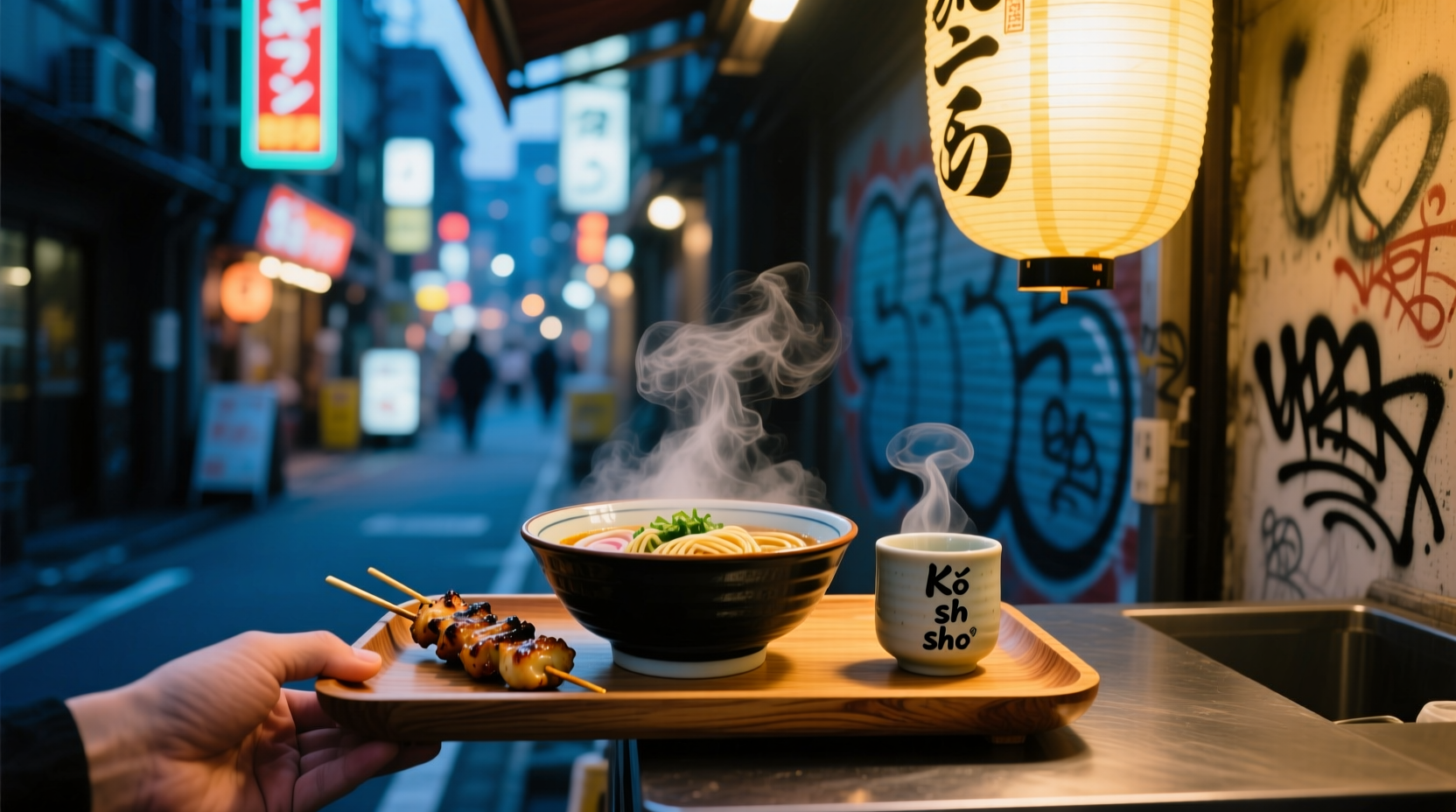
Sake’s traditional pairing framework emerged from a specific ecosystem: multi-course kaiseki meals, seasonal ingredient availability, low-alcohol tolerance expectations, and a cultural emphasis on harmony (wa). In that world, sake played a supporting role—cleansing the palate, amplifying umami, softening richness. Street food operates under entirely different physics. Portions are small but intense. Flavors are amplified—sweet-sour-spicy-salty all at once. Temperatures swing from scorching hot (grilled skewers) to icy cold (shaved ice with yuzu syrup). And consumption is social, mobile, and often spontaneous.
This shift reorients the purpose of pairing. Instead of seeking balance, many modern drinkers prioritize contrast or cut-through. A rich, creamy unfiltered nigori doesn’t “match” the sharp heat of Sichuan-style mapo tofu buns—it cuts the oil, cools the burn, and adds textural relief. Similarly, a dry, high-acid honjōzō doesn’t harmonize with caramelized pork belly bao; it slices through the fat like a citrus wedge through fried fish.
Tip: When pairing sake with street food, ask first: “What’s the dominant sensation?” Heat? Fat? Crunch? Sweetness? Then choose sake that either contrasts it sharply (e.g., acidity vs. fat) or complements it gently (e.g., fruitiness vs. smoke).What Tradition Still Offers—and Where It Falls Short
Traditional sake knowledge remains invaluable—but only when applied intelligently, not dogmatically. Understanding rice polishing ratios (seimai-buai) helps predict body and aroma intensity. Knowing fermentation methods (kimoto, yamahai, sokujo) reveals texture and lactic presence. Recognizing pasteurization status (namazake vs. hiire) signals freshness and temperature sensitivity. These aren’t relics—they’re functional tools.
Where tradition stumbles is in its implicit assumptions: that sake is always served chilled or room temperature (not over ice); that it’s consumed slowly (not in three quick sips between bites); that food is prepared with Japanese techniques and seasonings (not gochujang, harissa, or chipotle); and that the drinker has time to reflect on each nuance. None of these hold true at a Bangkok night market where a vendor flips mango sticky rice on a hot griddle while you juggle plastic chopsticks and a sweating bottle of junmai daiginjō.
As Hiroshi Sakurai, head brewer at Dewazakura Brewery and co-founder of the Tokyo Sake Lab, observes:
“Tradition is not a cage—it’s a foundation. The old rules taught us *why* certain sakes work with certain foods: acidity lifts fat, sweetness balances heat, carbonation refreshes the mouth. Once you understand the ‘why,’ you stop needing the ‘what.’ You start experimenting—not against tradition, but because of it.”
A Practical Pairing Framework for Street Food Realities
Forget rigid categories. Instead, use this five-point framework—designed specifically for street food’s sensory chaos:
- Assess the Heat Level: Mild (soy-glazed), Medium (gochujang), High (bird’s eye chili). Match with sake’s alcohol warmth and residual sugar. Low-ABV, off-dry sakes (nigori, some junmai) tame heat without numbing flavor.
- Identify the Dominant Fat: Animal (pork belly), dairy (cheese-stuffed okonomiyaki), or plant-based (tofu skin, sesame oil). Choose sakes with bright acidity (honjōzō, crisp ginjō) or effervescence to cut through.
- Check for Umami Density: Fermented sauces (fish sauce, doenjang), dried seafood (bonito, shrimp), mushrooms. Earthy, full-bodied sakes (kimoto, aged junmai) deepen umami rather than compete.
- Consider Texture Contrast: Crispy (tempura), chewy (mochi), slippery (noodles). Sparkling sake adds lift; unfiltered sakes add creaminess; dry sakes sharpen crunch.
- Respect the Serving Temperature: If the food is piping hot, avoid ice-cold sake—it shocks the palate. Opt for lightly chilled (10–13°C) or even room-temp robust styles. If food is cold (soba salad, chilled tofu), go colder (5–8°C).
| Street Food Example | Sake Style | Why It Works | Traditional Expectation? |
|---|---|---|---|
| Tokyo-style yakitori (tare-glazed, charred) | Dry, medium-bodied honjōzō (14–15% ABV), lightly chilled | Acidity cuts soy-sugar glaze; alcohol warmth matches grill smoke; clean finish resets palate between skewers | No—traditionally paired with lighter junmai; but honjōzō’s structure handles tare better |
| Osaka takoyaki (octopus, green onion, bonito flakes, tangy sauce) | Unfiltered, slightly sweet nigori (cloudy, 12% ABV), served very cold | Creamy texture mirrors batter; mild sweetness balances tart sauce; chill counters heat of fresh-off-griddle balls | No—traditionally avoided due to perceived “rusticity,” but its texture and temperature are ideal |
| Seoul-style spicy rice cakes (tteokbokki) | Sparkling namazake (unpasteurized, effervescent) | Bubbles scrub spice residue; live yeast notes echo fermented gochujang; low bitterness avoids clashing with chili heat | No—traditional sake rarely carbonated; but effervescence is functionally perfect |
| Kyoto matcha warabi mochi (green tea jelly, roasted soybean flour) | Delicate, floral ginjō (cold, 5°C) | Subtle fruit notes (apple, pear) complement matcha’s vegetal bitterness; light body doesn’t overwhelm delicate starch | Yes—aligns with classic ginjō-dessert pairing principles |
Mini Case Study: The Ramen Cart Revolution in Shibuya
In 2021, chef Kenji Tanaka converted a decommissioned delivery van into “Noodle & Nama,” a mobile ramen stall operating exclusively in Shibuya’s non-traditional alleyways. His signature dish: tonkotsu ramen with black garlic oil, fermented chili paste, and crispy nori. Customers stand shoulder-to-shoulder, slurping steaming bowls in under five minutes. Initially, Tanaka offered only beer and shochu—“Sake felt too formal,” he admits. But after feedback from regulars who brought their own bottles, he collaborated with a local sake brewery to develop a custom 12% ABV, unpasteurized junmai with elevated lactic acidity and a whisper of yuzu zest.
The result? A sake that doesn’t try to “match” the ramen’s richness. Instead, its bright acidity and subtle citrus cut the pork fat, its gentle fizz (from natural secondary fermentation) lifts the heavy broth, and its slight warmth (served at 12°C) harmonizes with the bowl’s heat. Sales of sake now outpace beer by 3:1. More importantly, customers report finishing both bowl and sake faster—and returning more often. “It’s not about replacing tradition,” Tanaka says. “It’s about making sake *work* where people actually eat now—not where we imagine they should.”
FAQ: Real Questions from Real Drinkers
Can I really serve sake warm with spicy street food?
Yes—if it’s the right style. Avoid warming delicate ginjō or namazake (heat destroys nuance and liveliness). But a robust, earthy kimoto or aged junmai (heated to 40–45°C) pairs brilliantly with smoky, spicy dishes like Korean grilled squid or Mexican elote-style corn. Warmth amplifies umami and rounds out chili’s sharp edges.
Is it okay to mix sake with soda or citrus like a cocktail?
Traditionally frowned upon—but increasingly common and effective. A 1:1 mix of dry honjōzō and yuzu soda creates a refreshing, low-ABV option ideal for humid summer markets. Just avoid sugary sodas with premium daiginjō; they mask subtlety. Simpler sakes (futsū-shu, basic honjōzō) thrive in this format.
Do I need special glassware for street food sake?
No. A sturdy, wide-rimmed ceramic cup or even a thick-walled plastic tumbler works better than fragile ochoko when balancing food and drink on a crowded sidewalk. What matters is temperature control and ease of handling—not ceremony. Many Tokyo vendors now serve sake in reusable stainless steel cups precisely for this reason.
Conclusion: Tradition Isn’t Dead—It’s Learning New Dialects
Tradition matters—not as a set of inviolable decrees, but as accumulated wisdom about how sake interacts with human physiology, ingredient chemistry, and cultural context. When that context shifts—as it inevitably does—the wisdom must adapt, not ossify. Sake pairing with street food isn’t a rebellion against tradition. It’s tradition doing what it’s always done: evolving in response to real people eating real food in real places.
The most exciting developments in sake today aren’t happening in centuries-old breweries alone. They’re unfolding at midnight taco stands in Brooklyn, vegan dumpling stalls in Seoul, and currywurst carts in Berlin—where brewers, chefs, and drinkers collaborate to answer one simple question: “What makes this moment taste better?” Sometimes, it’s a chilled, cloudy nigori. Sometimes, it’s a sparkling, funky kimoto. Sometimes, it’s sake poured over ice beside jerk chicken. What unites them isn’t adherence to rulebooks—it’s intention, curiosity, and respect—for the drink, the food, and the person holding both.
💬 Your turn. Next time you grab street food, skip the default beer or soda. Ask the vendor if they serve sake—or bring your own. Try one pairing using the contrast principle (acid vs. fat, sweetness vs. heat). Then share what worked—and what didn’t—in the comments. Let’s build the next chapter of sake culture—together, one bite, one sip, one sidewalk at a time.








