When choosing between rose gold and copper earrings, aesthetics are only part of the story. Durability, skin compatibility, and maintenance matter just as much—especially when it comes to tarnishing. Copper is known for its warm, vintage appeal, while rose gold offers a luxurious sheen that mimics high-end jewelry. But which holds up better over time? And why do copper earrings seem to darken or discolor so quickly compared to their rose gold counterparts? The answer lies in material composition, environmental exposure, and proper care.
The Science Behind Tarnishing: Why Metals React Differently
Tarnishing is a chemical reaction caused by oxidation and exposure to sulfur compounds in the air, moisture, and even skin chemistry. All metals tarnish, but the rate and visibility vary significantly based on purity, alloy mix, and surface treatment.
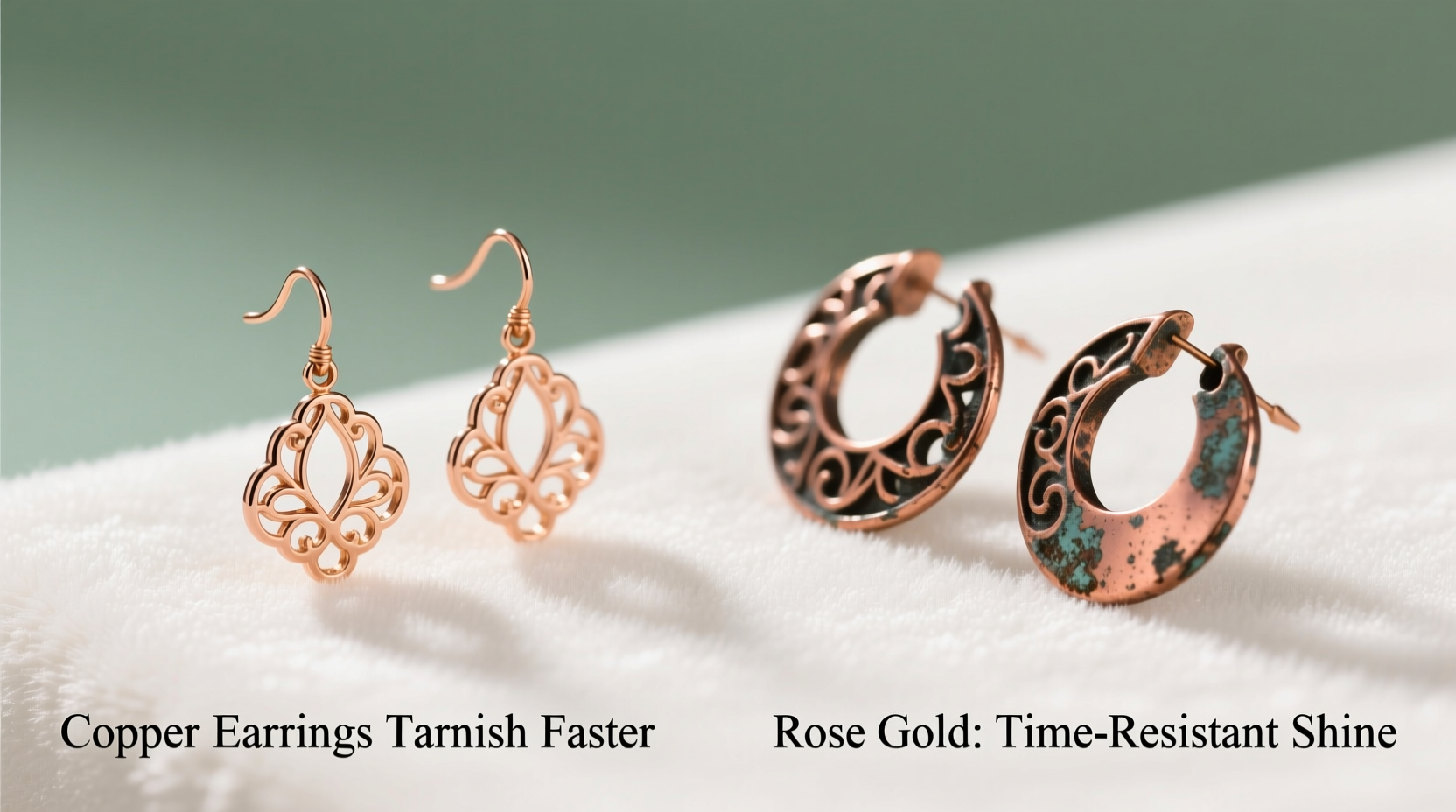
Copper is highly reactive. When exposed to oxygen, it forms copper oxide—a dull brown or black layer. In humid environments or with acidic skin, this process accelerates, sometimes within days. Sweat, lotions, and perfumes can also trigger reactions, leading to greenish residue on the skin—an effect of copper salts forming from contact.
Rose gold, on the other hand, is not pure gold. It’s an alloy typically made of gold, copper, and silver. The gold content (usually 14k or 18k) acts as a protective layer, slowing oxidation. While rose gold does contain copper, the higher gold concentration and often rhodium-plated finish reduce visible tarnishing. This makes rose gold more stable and less prone to rapid discoloration than pure copper.
“Copper’s reactivity is both its charm and its challenge. It develops a patina that some collectors love, but for daily wearers, it demands consistent upkeep.” — Dr. Lena Torres, Materials Scientist at the Jewelry Institute of North America
Comparing Rose Gold and Copper Earrings: A Side-by-Side Breakdown
| Feature | Copper Earrings | Rose Gold Earrings |
|---|---|---|
| Base Metal | Pure copper or copper alloy | Gold (58–75%), copper, silver |
| Tarnish Resistance | Low – tarnishes quickly | Moderate to high – resists tarnish longer |
| Skin Reaction Risk | Higher – may leave green marks | Lower – especially if nickel-free |
| Lifespan (with care) | 3–5 years | 10+ years |
| Cost | Affordable ($10–$40) | Higher ($100–$500+) |
| Maintenance Needs | High – weekly cleaning recommended | Low – occasional polishing |
Do Copper Earrings Tarnish Faster Than Rose Gold? Yes—And Here’s Why
The short answer: yes, copper earrings tarnish faster than rose gold. But context matters. Pure copper has no protective coating, so it begins oxidizing immediately upon exposure to air. In contrast, rose gold’s gold content forms a passive layer that slows down corrosion. Additionally, many rose gold pieces are plated or sealed, adding another barrier against moisture and chemicals.
Real-world example: Sarah, a nurse in Seattle, loves handmade copper hoops. Within two weeks of daily wear—exposed to hand sanitizer, frequent handwashing, and humidity—they darkened noticeably and left faint green marks behind her ears. She switched to 14k rose gold studs and found they stayed bright for months with minimal care, even under similar conditions.
This isn’t just about environment. Skin pH plays a role too. People with more acidic sweat will see faster tarnishing on copper. Some users report their copper jewelry turning black overnight, while others maintain the same pair for years with careful handling.
Tip: If you love copper earrings, apply a thin coat of clear nail polish to the parts that touch your skin. This creates a barrier and reduces tarnish transfer.How to Extend the Life of Both Types of Earrings
Whether you own copper or rose gold, proper care dramatically affects longevity. Here’s a step-by-step guide to maintaining both:
- Remove Before Exposure: Take off earrings before swimming, showering, applying skincare, or exercising.
- Store Separately: Keep each pair in a soft pouch or anti-tarnish bag to prevent scratches and air exposure.
- Clean Weekly (Copper): Mix lemon juice and baking soda into a paste, gently rub onto the surface, rinse, and dry thoroughly.
- Polish Monthly (Rose Gold): Use a microfiber cloth or jewelry polishing pad to restore shine.
- Use Anti-Tarnish Strips: Place these in your jewelry box to absorb moisture and sulfur compounds.
Avoid storing earrings in humid areas like bathrooms. Instead, opt for a bedroom drawer with low light and stable temperature.
Checklist: Choosing the Right Earrings for Your Lifestyle
- ✅ I wash my hands frequently → Lean toward rose gold
- ✅ I live in a humid climate → Avoid untreated copper
- ✅ I want low-maintenance jewelry → Choose rose gold
- ✅ I appreciate vintage aesthetics → Copper can be a great fit with care
- ✅ I have sensitive skin → Check for nickel content in rose gold alloys
- ✅ I’m on a budget → Copper offers style at a lower price point
Frequently Asked Questions
Can I wear copper earrings every day?
Yes, but expect regular tarnishing. Daily wear exposes copper to moisture, oils, and chemicals, speeding up oxidation. If you’re committed to upkeep, copper can last years. Otherwise, reserve them for occasional use.
Why do my rose gold earrings look dull after a few months?
Even rose gold loses luster over time due to microscopic abrasions and buildup from skincare products. This is normal. Regular polishing restores shine. If the color fades unevenly, the plating may be wearing off—common in fashion jewelry with thin gold layers.
Are there hypoallergenic copper alternatives?
Pure copper isn’t hypoallergenic, but some brands coat it with enamel or resin to prevent skin contact. For truly safe options, consider surgical-grade titanium or niobium earrings, which mimic metallic warmth without reactivity.
Making the Right Choice: Beauty vs. Practicality
The decision between rose gold and copper earrings ultimately balances personal taste with practical needs. Copper delivers bold character and artisanal charm, ideal for statement pieces or eco-conscious buyers who value recyclable materials. However, its need for frequent cleaning and potential for skin staining make it less suitable for everyday wear, especially for those with active lifestyles.
Rose gold strikes a middle ground—offering the warmth of copper with the prestige and durability of gold. It’s better suited for long-term investment pieces like studs, sleepers, or heirloom designs. While more expensive upfront, its resistance to tarnish and timeless elegance often justify the cost.
“The best jewelry isn’t just beautiful—it fits your life. If you’re constantly cleaning or avoiding certain pieces, it’s time to reassess what works for you.” — Maya Lin, Sustainable Jewelry Designer
Final Thoughts and Action Steps
Understanding how and why copper tarnishes faster than rose gold empowers smarter jewelry choices. If you adore copper, embrace its evolving patina as part of its story—but commit to maintenance. If convenience and lasting brilliance matter more, rose gold is the superior option.
Start by auditing your current earring collection. Identify which pairs you reach for most and which ones disappoint. Clean your copper pieces using the lemon-baking soda method, and polish your rose gold with a soft cloth. Store everything properly, and notice the difference over the next month.
💬 Have a favorite copper or rose gold pair? Share your care routine or a photo in the comments below—your tip could help someone else keep their earrings shining!








