When it comes to beaded necklaces, two shapes dominate the market: the classic round bead and the increasingly popular rice bead. While both have their loyal followings, the rise of rice-shaped beads in fashion-forward designs has sparked debate. Are they truly superior, or is their appeal purely aesthetic? Understanding the differences between rice bead and round bead necklaces goes beyond visual preference—it involves considerations of comfort, durability, styling versatility, and long-term value.
The answer isn’t always straightforward. What works for one wearer may not suit another, depending on personal taste, lifestyle, and how the piece fits into a broader jewelry collection. This guide breaks down every aspect of both styles, helping you decide whether the rice bead trend lives up to its reputation—or if the timeless round bead still reigns supreme.
Design & Aesthetic Differences
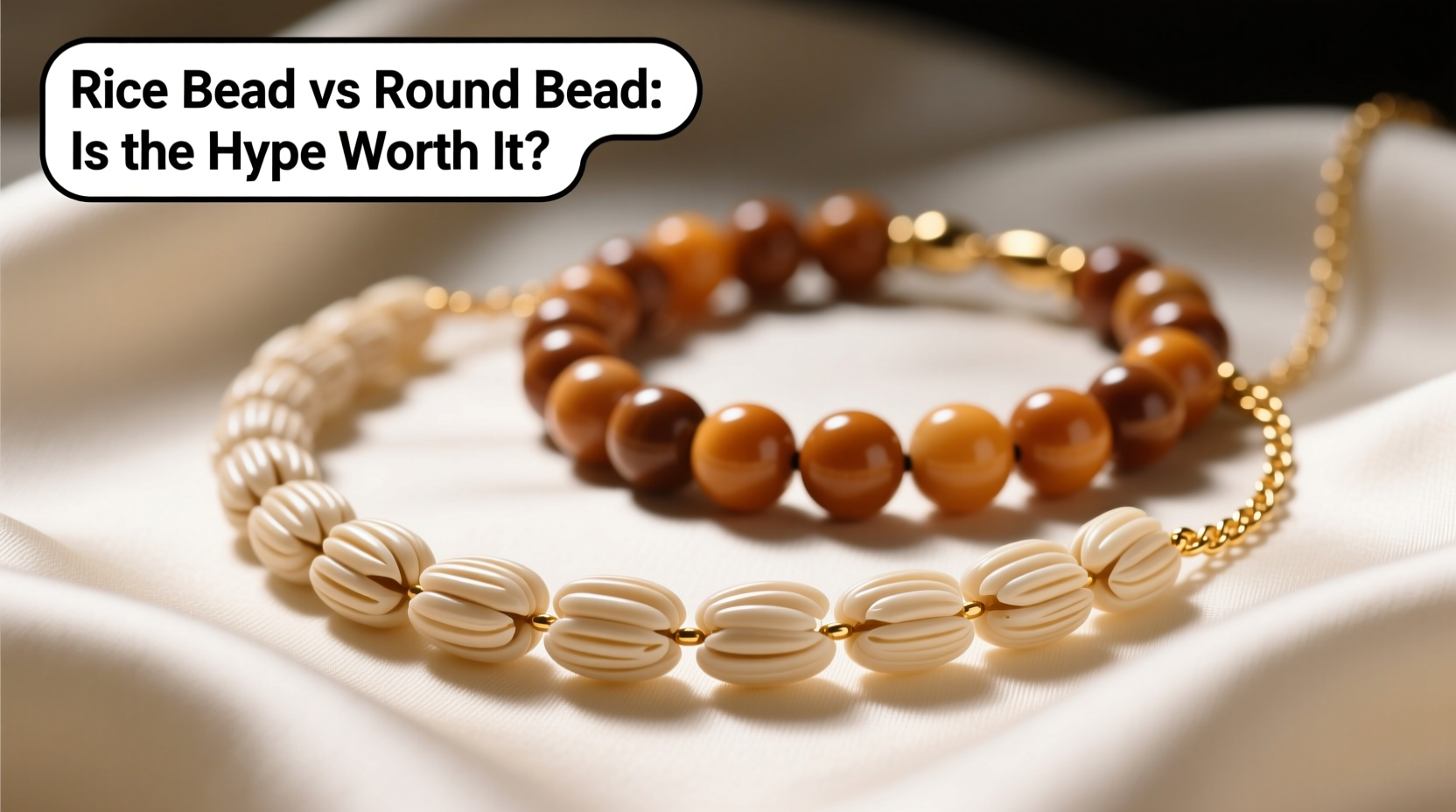
The most immediate distinction between rice beads and round beads lies in their shape. Rice beads are elongated, typically measuring 2–3 times longer than they are wide, resembling actual grains of rice. Round beads, as the name suggests, are spherical and symmetrical.
This fundamental difference influences how light interacts with the surface. Round beads reflect light evenly from all angles, creating a consistent sparkle. Rice beads, due to their flat sides and angular profile, catch light more directionally. When aligned properly, they produce a subtle shimmer that shifts with movement—giving them a dynamic, modern feel.
Rice beads also allow for tighter, more compact stringing. Because of their shape, they can be arranged closely together without gaps, resulting in a sleeker, more continuous line. This makes them ideal for minimalist and contemporary designs where clean lines matter. Round beads, by contrast, naturally leave small spaces between each sphere unless strung tightly on stretch cord or knotted thread.
Tip: For a seamless look in layered necklaces, rice beads provide smoother transitions between pieces due to their uniform alignment.Durability & Wear Resistance
Shape affects longevity. The structural integrity of a bead plays a role in how well it withstands daily wear. Round beads distribute pressure evenly across their surface, making them less prone to chipping at the edges. They’re especially resilient when made from materials like gemstone, glass, or ceramic.
Rice beads, with their sharp ends and narrow profiles, are more vulnerable to impact damage. If knocked against hard surfaces frequently, the tips can chip or crack over time. However, this risk depends heavily on material quality and craftsmanship. High-grade rice beads with polished edges hold up much better than mass-produced versions with rough finishes.
Another factor is stringing tension. Because rice beads are often strung end-to-end, any weakness in the knotting or cord increases the chance of breakage if one bead fails. In contrast, round beads offer more flexibility in stringing methods—such as knotting between each bead—which helps contain damage if a single bead is lost.
“While rice beads offer elegance, their geometry introduces stress points that require stronger cords and expert finishing.” — Lena Torres, Jewelry Designer & Beadwork Specialist
Comfort and Drape
How a necklace feels around the neck is just as important as how it looks. Rice beads tend to lie flatter against the skin due to their elongated form and ability to align side-by-side. This creates a smooth drape that moves naturally with the body, reducing friction and irritation—especially beneficial for sensitive skin or all-day wear.
Round beads, while comfortable in short strands, can feel bumpy or uneven when worn in longer layers. Their spherical shape causes slight rolling and shifting, which some find distracting. However, many appreciate this organic movement as part of the charm, particularly in bohemian or artisanal styles.
In terms of weight distribution, rice beads often feel lighter per inch because less material is used compared to a solid round bead of equivalent length. This makes them a preferred choice for longer necklaces, such as opera or rope lengths, where minimizing bulk is essential.
Styling Versatility: When to Choose Which
Choosing between rice and round beads should align with your wardrobe and styling goals. Each excels in different contexts.
Rice beads shine in professional and minimalist settings. Their streamlined appearance pairs effortlessly with tailored blazers, silk blouses, and monochrome outfits. They add refinement without drawing excessive attention—ideal for power dressing or understated elegance.
Round beads, especially larger ones, make bold statements. Think chunky turquoise strands, colorful African trade bead collars, or vintage pearl chokers. These command presence and work best in casual, creative, or thematic ensembles where jewelry is meant to stand out.
| Feature | Rice Beads | Round Beads |
|---|---|---|
| Best For | Minimalist, modern, office wear | Vintage, boho, statement looks |
| Drape | Smooth, flat, close-fitting | Textured, bouncy, dimensional |
| Layering Ease | Excellent – no gaps or bumps | Good – but may shift |
| Durability | Moderate – ends prone to chipping | High – even pressure distribution |
| Weight (per inch) | Lighter | Heavier |
Care and Maintenance Tips
Both types require regular care, but their needs differ slightly due to shape and construction.
- Storage: Store rice bead necklaces flat or hanging to prevent warping or misalignment.
- Cleaning: Use a soft cloth; avoid soaking rice beads in liquid, as moisture can weaken adhesive or cord near the ends.
- Wearing Order: Put on rice bead necklaces after applying perfume or hairspray to prevent chemical exposure on exposed ends.
- Inspection: Check knots and cord ends monthly, especially for rice beads, since failure at one point can compromise the entire strand.
Mini Case Study: From Office to Evening
Sophie, a marketing executive in Chicago, wanted a versatile necklace she could wear from morning meetings to evening networking events. She owned several round-bead pieces but found them too casual for client presentations. After researching options, she invested in a black onyx rice bead necklace with sterling silver spacers.
The change was immediate. The necklace paired seamlessly with her white button-down and navy suit, adding sophistication without overpowering her look. At night, she layered it with a delicate pendant and received multiple compliments. Over six months, she noticed the piece held up well with daily use, though she did replace the clasp once due to minor wear at the connection point—a reminder that even durable designs need maintenance.
Her experience highlights the real-world advantage of rice beads: adaptability. Unlike her round-bead necklaces, which felt either too dressy or too informal depending on the outfit, the rice bead version struck the perfect balance.
Step-by-Step: Choosing the Right Bead Type for You
- Assess Your Wardrobe: Do you lean toward structured, modern clothing (favor rice) or eclectic, textured styles (favor round)?
- Consider Usage: Will the necklace be worn daily (rice for comfort) or occasionally for special events (round for drama)?
- Evaluate Sensitivity: If you dislike bulky or shifting jewelry, rice beads offer a more stable feel.
- Review Budget: High-quality rice bead necklaces often cost more due to precise cutting and alignment requirements.
- Test Drape: Try both styles on. Observe how they rest on your collarbone and move with your posture.
FAQ
Can rice bead necklaces be repaired easily?
Yes, but repairs require precision. Because the beads are aligned tightly, replacing a single damaged bead may involve restringing an entire segment. Always seek a jeweler experienced with fine beading techniques.
Are rice beads only suitable for formal wear?
No. While they excel in professional settings, rice beads come in casual materials like wood, lava stone, or acrylic. Paired with jeans and a tee, they add subtle polish without feeling overdressed.
Do round beads tangle more than rice beads?
Not necessarily. Tangling depends more on length, cord type, and storage method than bead shape. However, rice beads’ flat alignment can reduce twisting when stored coiled.
Final Verdict: Is the Rice Shape Worth the Hype?
The popularity of rice bead necklaces isn’t just marketing noise—it’s rooted in genuine functional advantages. Their sleek drape, lightweight feel, and modern aesthetic make them a strong contender for anyone building a refined, wearable jewelry collection. That said, they aren’t universally “better” than round beads.
Round beads retain unmatched charm in expressive, artistic, or heritage-inspired designs. Their three-dimensional quality adds texture and warmth that rice beads can’t replicate. Ultimately, the choice isn’t about superiority, but suitability.
If you prioritize comfort, versatility, and clean lines, rice beads are absolutely worth the investment. But if you love bold color, tactile variation, or vintage flair, round beads remain a timeless favorite.
💬 Have a favorite beaded necklace? Share your go-to style and why it works for you! Join the conversation and help others discover what truly matters in a perfect piece.








