
In recent years, retro gaming has evolved from a niche pastime into a full-blown cultural movement. While much of the attention has centered on 8-bit and 16-bit consoles like the NES and SNES, a quieter but equally passionate resurgence is unfolding around the PlayStation Vita. Once dismissed as a commercial failure due to low sales and Sony’s eventual withdrawal of support, the Vita is now experiencing an unexpected revival—driven by collectors, homebrew developers, and a growing appreciation for its technical prowess and unique library. The PS Vita collection revival isn’t just nostalgia; it’s a deliberate reclamation of a handheld that was ahead of its time.
The Vita’s Forgotten Legacy
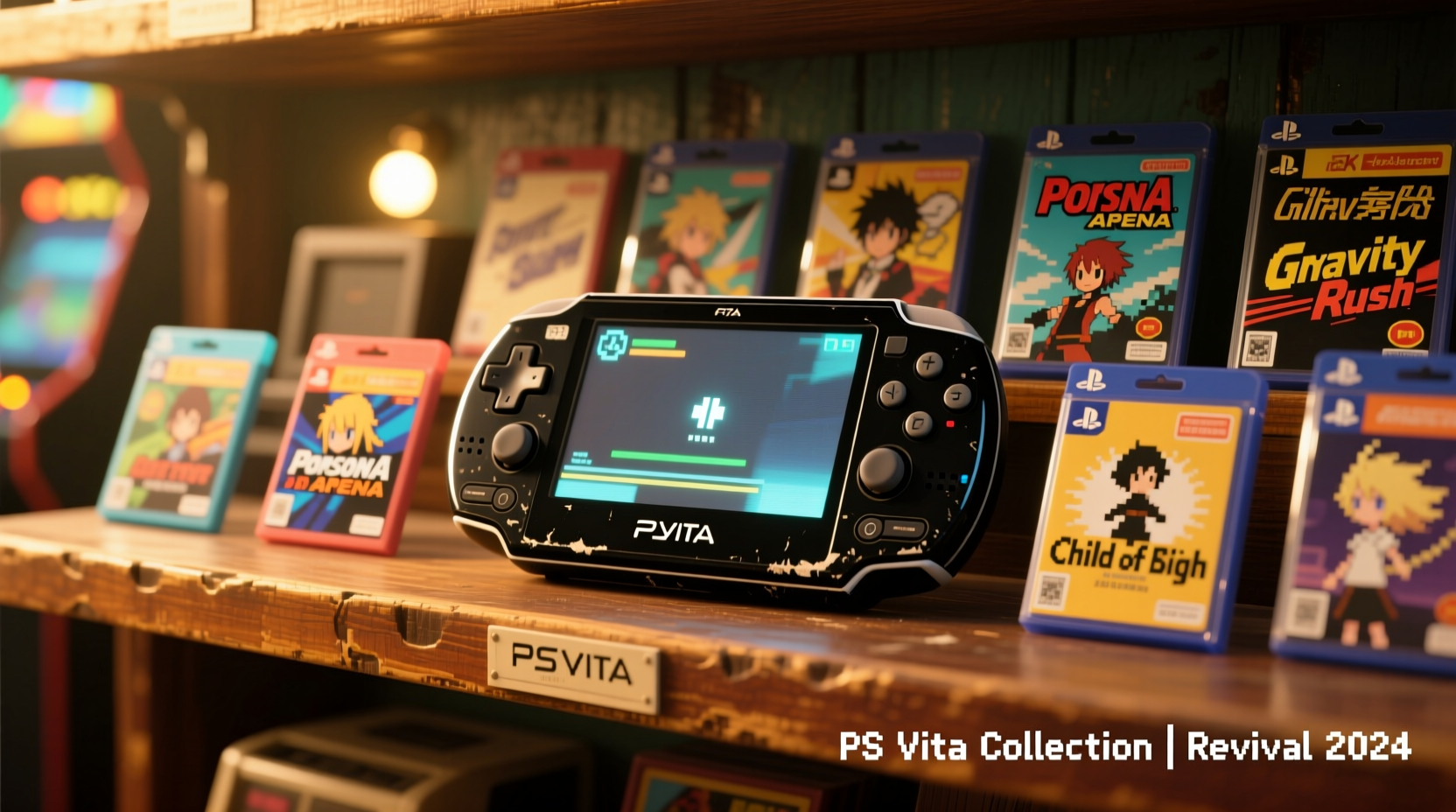
Released in 2011 in Japan and 2012 elsewhere, the PlayStation Vita arrived with high expectations. It featured a powerful quad-core ARM Cortex-A9 processor, dual analog sticks, rear touchpad, front touchscreen, gyroscope, and near-field communication—all wrapped in a sleek, portable design. Its OLED screen (on the original model) remains one of the best displays ever put in a handheld console. Yet despite these innovations, the Vita struggled against the dominance of smartphones and Nintendo’s 3DS.
Sony officially discontinued production in 2019, and digital store closures were announced multiple times before being reversed due to fan backlash. For years, the Vita seemed destined to become a forgotten footnote in gaming history. But something shifted. As retro gaming communities matured and began valuing innovation over mere age, the Vita started gaining recognition not as a failed product, but as a misunderstood gem.
“The Vita wasn’t just another handheld—it was a bridge between console-quality experiences and mobile play. We didn’t appreciate it until it was gone.” — Marcus Tran, Founder of Handheld Historian
Why the Vita Is Perfect for Retro Enthusiasts
Retro gaming isn’t solely about playing games from the '80s or '90s. At its core, retro gaming celebrates preservation, accessibility, and rediscovery. The Vita fits this ethos perfectly:
- Technical Superiority: Compared to contemporaries like the 3DS, the Vita offered richer graphics, faster load times, and more immersive gameplay.
- Unique Game Library: Titles like *Tearaway*, *Gravity Rush*, *Persona 4 Golden*, and *Killzone: Mercenary* pushed creative boundaries and remain unmatched on other platforms.
- Homebrew & Modding Scene: Thanks to exploits like *HENkaku* and *Titanium HENkaku*, users can install custom firmware, enabling backups, emulators, and indie titles.
- Portability Meets Power: Unlike older systems requiring upscaling or emulation to look good today, many Vita games still hold up visually and functionally.
This convergence of hardware capability and software uniqueness makes the Vita not just a candidate for retro status—but a leader in modern retro curation.
Tip: When buying a used Vita, prioritize the original OLED model (PCH-1000) over the later LCD version (PCH-2000) for superior screen quality and battery life.The Role of Collectors in the Revival
Collecting physical media has surged alongside the broader retro trend. Limited-run releases, region-exclusive titles, and special editions have turned Vita cartridges into sought-after items. Games like *Danganronpa V3*, *Yakuza: Portable Hits*, and *Retro City Rampage* command premium prices online, especially when sealed or bundled with art books and soundtracks.
Communities such as r/vitahacks and r/PSVita on Reddit have grown significantly, offering troubleshooting guides, modding tutorials, and trade forums. Collector-focused events like PLAY Expo and local gaming conventions now feature Vita showcases, where enthusiasts display fully customized units with upgraded batteries, SD card mods, and even shell swaps.
A Real Example: From Skeptic to Superfan
Take Sarah Kim, a 28-year-old game designer from Portland. She initially dismissed the Vita as irrelevant when she bought her first PS4 in 2015. But during a visit to a retro arcade pop-up in 2022, she played *Tearaway* on a modded Vita and was stunned by its charm and tactile design.
“I’d never experienced a game that used every sensor so intentionally,” she said. “The way the sun poked through the paper world when I tilted the device—it felt magical.” Inspired, Sarah purchased a Vita online, learned how to safely install custom firmware, and now uses hers daily for both native games and retro emulation via RetroArch. She even streams Vita gameplay under the handle @PaperTrailGamer.
Her story mirrors a broader pattern: people discovering the Vita not through marketing campaigns, but through hands-on experience and community sharing.
Practical Guide to Joining the Vita Revival
Getting started with the PS Vita doesn’t require deep technical knowledge. With the right approach, anyone can build a functional, future-proofed handheld system.
Step-by-Step Setup Process
- Purchase a Vita Unit: Choose the PCH-1000 (OLED) if possible. Check sellers for signs of screen burn-in and ensure the power button functions properly.
- Acquire Storage: Buy a high-endurance microSD card (64GB+ recommended). The Vita only supports cards up to 128GB natively, though some larger cards may work with formatting tools.
- Update Firmware: Connect to Wi-Fi and update to the latest official firmware (3.74 at time of writing) before installing custom tools.
- Install HENkaku: Visit
henkaku.xyzon the Vita browser to install the exploit. This enables homebrew access without permanent modification. - Download Homebrew Apps: Use VitaShell to manage files, Adrenaline to run PSP and PS1 games, and RetroArch for NES, SNES, Genesis, and more.
- Backup & Organize: Rip your UMDs or purchase digital games legally, then transfer them via FTP. Label folders clearly for easy navigation.
- Preserve Longevity: Disable Bluetooth/Wi-Fi when not in use, avoid leaving the device charging overnight, and clean contacts periodically.
| Action | Recommended Tool | Purpose |
|---|---|---|
| File Management | VitaShell | Browse, copy, delete game files and backups |
| Emulation | RetroArch | Play ROMs from classic systems |
| PSP/PS1 Compatibility | Adrenaline | Run legacy PlayStation titles from memory card |
| System Monitoring | PSVSD Utility | Check battery health and storage integrity |
| Game Updates & DLC | NPS Browser Installer | Safely download content from Sony’s servers |
Do’s and Don’ts of Vita Ownership
| Do’s | Don’ts |
|---|---|
| Always backup your memory card regularly | Never install unsigned updates from untrusted sources |
| Use encrypted backups to protect save data | Avoid using cheap microSD cards—they often fail prematurely |
| Keep firmware updated before hacking | Don’t leave the device in direct sunlight or hot cars |
| Join online communities for support | Don’t attempt hardware mods without research |
Frequently Asked Questions
Can I still buy games for the PS Vita?
Yes, although Sony shut down the North American PS Store temporarily in 2021, it was reinstated due to public pressure. You can still purchase and download digital games directly on the device or via a PC using third-party tools like MyVitaLoader. Physical copies are widely available through resellers like eBay, DKOldies, and specialized retro shops.
Is modding the Vita legal and safe?
Modifying your own Vita using exploits like HENkaku is legal under fair use principles, provided you own the games you play. Running backups of games you physically own is generally considered acceptable within the homebrew community. However, downloading copyrighted ROMs you don’t own violates copyright law. Safety-wise, following trusted guides minimizes risk—most softmods are reversible and do not brick the system if done correctly.
Will the Vita increase in value over time?
Already, certain models and games are appreciating. Sealed copies of *Persona 4 Golden* have sold for over $300, and complete-in-box OLED units fetch higher prices each year. Given the limited production run and growing collector demand, the Vita is positioned to become a valuable retro asset—similar to how the TurboGrafx-16 or Neo Geo Pocket gained prestige decades after release.
How the Revival Reflects Broader Trends in Gaming Culture
The PS Vita’s resurgence reflects deeper shifts in how gamers relate to technology. There's a growing disillusionment with always-online services, subscription fatigue, and the homogenization of AAA titles. In contrast, the Vita offers autonomy: once set up, it requires no subscriptions, no internet connection, and no corporate oversight to enjoy hundreds of hours of content.
Moreover, the Vita embodies a philosophy of hybrid creativity—games that experiment with touch, motion, and second-screen interactions (*Little Deviants*, *Escape Plan*) in ways that mainstream consoles abandoned post-Wii U. As developers explore new input methods in VR and AR, revisiting Vita titles provides inspiration for innovative design.
“We’re not just preserving old games—we’re reclaiming lost possibilities.” — Dr. Lena Patel, Digital Media Archivist at UC Irvine
Conclusion: Reclaiming What Was Lost
The phrase “PS Vita collection revival is retro gaming bringing it back” captures more than a trend—it speaks to a cultural correction. The Vita wasn’t a failure; it was a victim of timing, market forces, and corporate impatience. Now, thanks to passionate individuals who value craftsmanship, experimentation, and ownership, the Vita is finding its true audience.
This revival isn’t about clinging to the past. It’s about recognizing excellence when it appears—even if the world wasn’t ready for it. Whether you're building a curated library, diving into emulation, or simply rediscovering a forgotten classic, the Vita offers a rare blend of power, portability, and personality.
🚀 Ready to join the movement? Find a Vita, learn the basics of homebrew, and start exploring one of the most capable—and overlooked—handhelds ever made. Share your journey, preserve the library, and help keep this legacy alive.








