When choosing an engagement ring or fine jewelry piece, the setting is more than just aesthetic—it plays a crucial role in how your diamond performs. Two of the most popular settings—prong and inlaid (also known as flush or gypsy)—offer distinct advantages and trade-offs. But when it comes to sparkle, does the setting actually influence the brilliance of the stone? The answer isn’t just yes—it’s nuanced. Understanding how each setting interacts with light, security, and design can help you make a decision that balances beauty, lifestyle, and long-term wearability.
How Diamond Settings Influence Light Performance
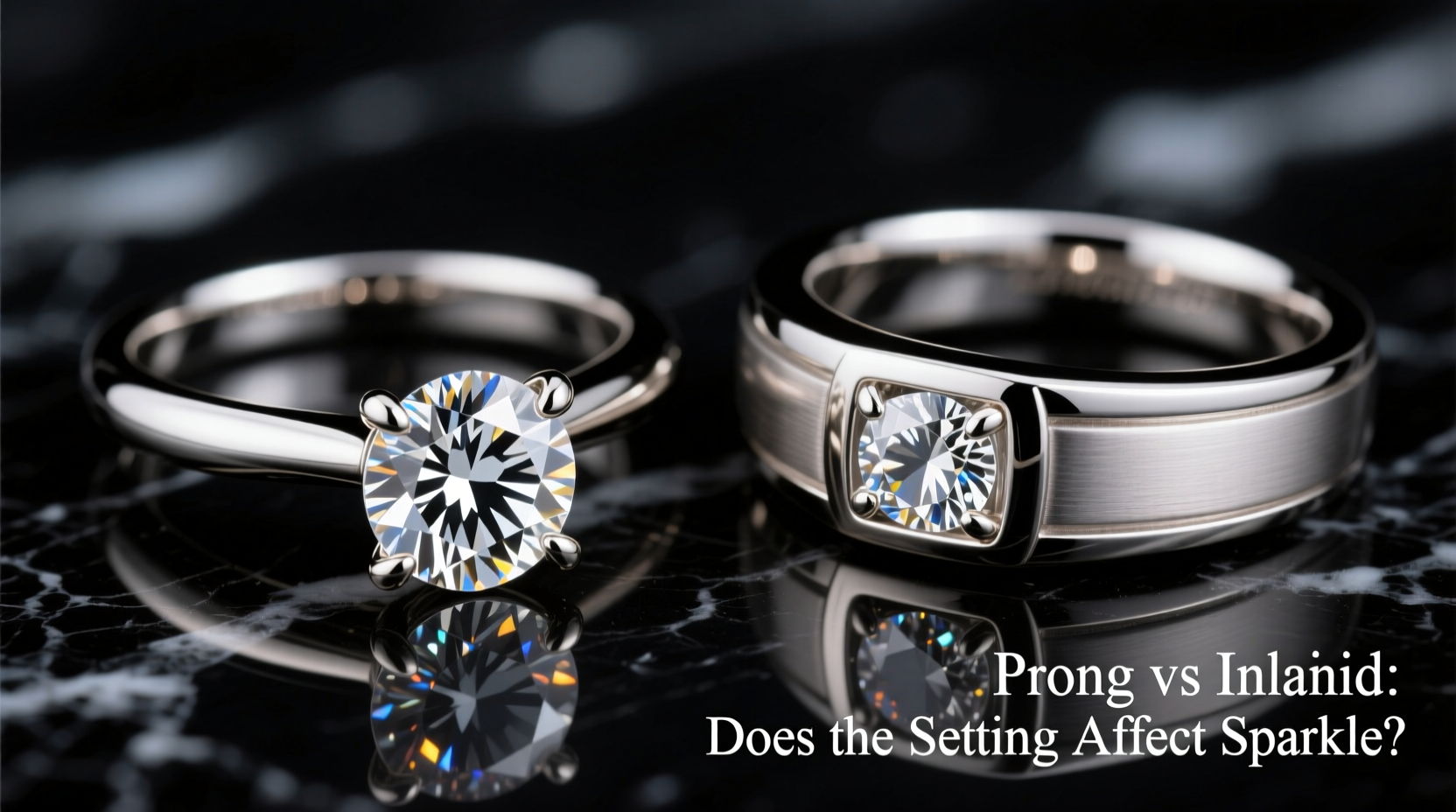
The way a diamond is set determines how much light enters and exits the stone, directly affecting its fire, brilliance, and scintillation. A well-cut diamond will perform best when unobstructed by metal. This is where prong settings shine. By lifting the diamond above the band and minimizing contact with the metal, prongs allow maximum light exposure from all angles.
In contrast, inlaid settings embed the diamond directly into the metal surface. While this creates a smooth, low-profile look, it also limits side exposure to light. Since the stone sits flush, less ambient light can enter through the pavilion (bottom) and crown (top) sides, which may reduce overall sparkle compared to a raised setting.
“Even a perfectly cut diamond won’t reach its full potential if the setting blocks light entry. Prongs offer the least interference, making them ideal for maximizing brilliance.” — Daniel Reeves, Master Gemologist at Lumina Jewelers
Prong Setting: Maximizing Brilliance and Visibility
Prong settings use small metal claws to hold the diamond in place, typically ranging from four to six prongs. This minimalistic approach exposes over 90% of the diamond’s surface, allowing light to interact freely.
Because the stone is elevated, it catches light from multiple directions—even indirect sources like indoor lighting. This contributes to a dynamic sparkle that shifts with movement, often described as “alive” or “fiery.”
Tip: Opt for tapered or split prongs—they enhance light entry while offering better grip than thick, blunt prongs.However, elevation comes with trade-offs. Elevated stones are more vulnerable to snagging on fabric and accidental knocks. For active lifestyles or manual professions, this can be a concern. Regular maintenance is essential; loose prongs can lead to lost stones if not checked every 6–12 months.
Inlaid Setting: Sleek, Secure, but Subtler Sparkle
Inlaid, or flush, settings involve drilling a hole into the metal band and securing the diamond so it sits level with the surface. The result is a sleek, modern profile that’s ideal for those who prefer understated elegance or need a snag-free ring.
Because the diamond is surrounded by metal on all sides, lateral light entry is significantly reduced. While the top facet still reflects light, the lack of depth and elevation diminishes the three-dimensional sparkle effect. Fire and scintillation are present but generally more subdued.
On the plus side, inlaid settings are extremely durable. There’s no risk of prong bending or stone wobbling. They’re excellent for people who work with their hands, travel frequently, or dislike high-maintenance jewelry.
Another advantage: inlaid rings age gracefully. Minor scratches on the band don’t compromise the stone’s security, and the overall look remains consistent over decades.
Comparing Prong and Inlaid Settings: A Detailed Breakdown
| Feature | Prong Setting | Inlaid Setting |
|---|---|---|
| Sparkle Level | High – maximum light exposure | Moderate – limited side light entry |
| Durability | Moderate – prongs can bend or loosen | High – stone protected by metal |
| Comfort & Profile | Elevated – may catch on fabrics | Flush – smooth, snag-free wear |
| Maintenance Needs | Regular checks recommended | Minimal upkeep required |
| Best For | Showcasing center stones, formal wear | Daily wear, active lifestyles |
| Aesthetic Style | Classic, romantic, traditional | Modern, minimalist, architectural |
Real-Life Example: Choosing Based on Lifestyle
Sophia, a graphic designer and avid rock climber, initially fell in love with a solitaire diamond in a six-prong platinum setting. It sparkled brilliantly under studio lights and felt timeless. But after just two months of regular climbing, the prongs began to snag on ropes, and she noticed one was slightly bent during a routine inspection.
She consulted her jeweler, who suggested switching to an inlaid eternity band with smaller diamonds. Though less flashy, the ring survived rigorous use without damage. Over time, she realized she preferred the subtle elegance and peace of mind. She now wears a stack: a delicate prong solitaire for evenings and the inlaid band for daily wear.
Her experience underscores a key insight: sparkle matters, but so does practicality. The “best” setting depends on how—and where—you live your life.
Expert Tips for Maximizing Sparkle Regardless of Setting
Even within the limitations of each setting, smart choices can enhance visual impact:
- Choose excellent cut quality – A well-proportioned diamond will outperform a poorly cut one, even in a less-optimal setting.
- Keep the diamond clean – Oils and debris dull sparkle. Clean weekly with mild soap and water.
- Consider metal color – White metals like platinum or white gold reflect more light back into the diamond than yellow or rose gold.
- Use accent stones strategically – In inlaid rings, pairing with channel-set side stones can amplify overall brilliance.
- Avoid oversized bezels or thick walls – Even in inlaid designs, narrow metal borders preserve more visible surface area.
Frequently Asked Questions
Can I resize a ring with inlaid diamonds?
Resizing an inlaid ring is possible but complex. Adding or removing metal can disrupt the alignment of the stones. It’s best done by a skilled bench jeweler and may require resetting some diamonds. Significant resizing (more than two sizes) often isn't recommended.
Do prong settings make diamonds look bigger?
Yes. Because prong settings elevate the stone and expose its full circumference, the diamond appears larger than a same-carat stone set flush. The illusion is especially noticeable in side profiles and under direct light.
Which setting holds diamonds more securely?
Inlaid settings are inherently more secure against impact and everyday wear. However, modern prong designs with reinforced bases and proper tension can be very safe—especially when paired with routine inspections. Neither is “unsafe,” but inlaid wins in extreme conditions.
Final Considerations: Balancing Beauty and Practicality
The choice between prong and inlaid settings ultimately hinges on priorities. If your goal is to showcase a diamond’s full optical potential—its fire, flash, and brilliance—then prong settings are unmatched. They remain the gold standard for engagement rings where visual impact is paramount.
But if your lifestyle demands resilience, comfort, and low maintenance, inlaid settings offer enduring appeal. Their subtlety doesn’t mean inferiority; it represents a different kind of luxury—one rooted in craftsmanship, durability, and thoughtful design.
Many jewelers now recommend hybrid approaches: a prong-set center stone for maximum sparkle, flanked by inlaid accent diamonds for added security and continuous shimmer. This blend delivers both drama and durability.
Conclusion: Make Your Choice With Confidence
The setting absolutely affects sparkle value—but so do cut, clarity, and care. Rather than seeking a universal “best,” focus on what aligns with your taste, habits, and values. Whether you’re drawn to the radiant lift of prongs or the grounded elegance of inlaid stones, your ring should reflect not just love, but life.
💬 Ready to choose your perfect setting? Share your thoughts or ask questions in the comments—we’ll help you find the balance between brilliance and practicality.