
Every year, millions of smartphones meet an untimely end on concrete sidewalks, tile floors, and bathroom tiles. A cracked screen or shattered back glass isn’t just expensive—it’s avoidable. While cases and screen protectors help absorb impact, they don’t prevent the fall itself. That’s where accessories like phone lanyards and PopSockets come in. Both promise better grip and reduced drop risk, but only one truly stops your phone from flying out of your hand. So, which is more effective at preventing a smash?
The answer isn’t as simple as “one is better.” It depends on how you use your phone, your lifestyle, and what kind of protection you need. Let’s examine both options in depth—how they work, their strengths and weaknesses, and real-world performance when it comes to keeping your phone intact.
How Phone Lanyards Prevent Drops
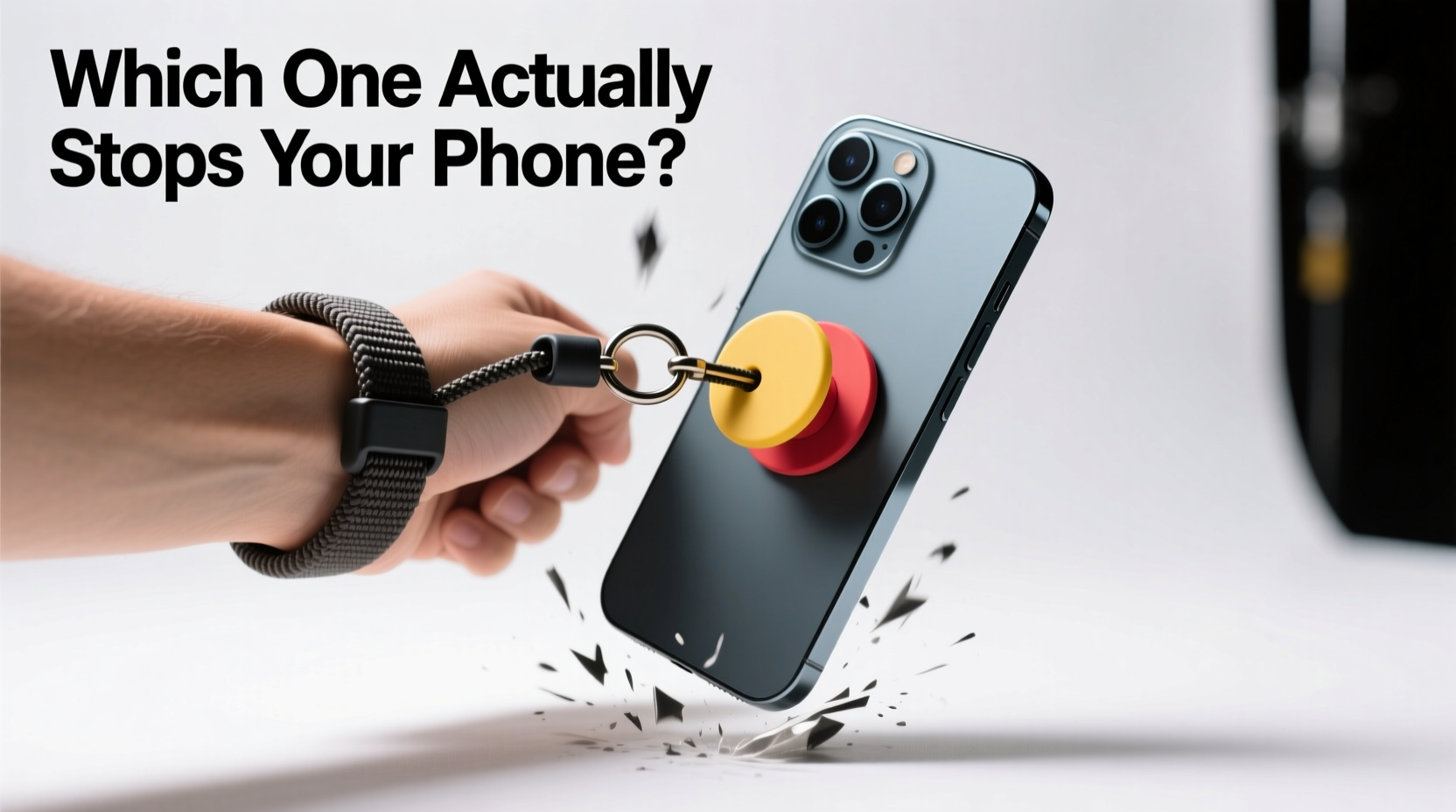
A phone lanyard is a strap that attaches to your device and wraps around your wrist, neck, or shoulder. Unlike grip-enhancing add-ons, lanyards physically tether your phone to your body. If you let go, the phone doesn’t fall to the ground—it hangs safely within reach.
Lanyards come in various styles: woven nylon straps, silicone loops, retractable reels, and even leather bands. Some attach via a case with a built-in loop; others use a metal ring through the charging port or camera mount. The key advantage? Mechanical security. As long as the lanyard holds and is properly fastened, your phone won’t hit the floor.
Tip: Choose a lanyard with a breakaway clasp if wearing it around your neck—safety should never be compromised for convenience.When Lanyards Work Best
- Active use: walking, commuting, traveling through crowds
- High-movement environments: festivals, hiking, public transit
- Working with both hands: cooking, bartending, retail
- Parents juggling kids and devices
In these scenarios, the lanyard acts like a seatbelt for your phone—passive but reliable. You don’t have to think about gripping harder; the system works automatically.
How PopSockets Improve Grip (But Don’t Stop Falls)
A PopSocket is a collapsible grip and stand that adheres to the back of your phone or case. When expanded, it gives your fingers something to wrap around, improving control during scrolling, texting, or taking photos.
It excels in reducing *slips*—those moments when your phone wobbles in your palm due to sweat, greasy fingers, or distraction. However, once the phone leaves your hand completely, the PopSocket offers no protection. There’s nothing stopping it from falling all the way to the floor.
“PopSockets are excellent for ergonomics and comfort, but they’re not safety devices. They reduce micro-slips, not full drops.” — Jordan Lee, Product Safety Analyst at MobileGear Labs
Limitations of PopSockets
- No physical tether—phone still falls if dropped
- Adhesive can weaken over time, especially with frequent removal
- Can interfere with wireless charging or magnetic mounts
- May detach during a hard impact, offering zero protection
While many users report fewer near-drops thanks to improved grip, there’s no data showing PopSockets reduce actual breakage rates. In fact, some repair shops note that phones with PopSockets sometimes suffer *worse* damage—the added bulk changes how the phone lands, increasing the chance of corner or camera module impacts.
Head-to-Head Comparison: Lanyard vs PopSocket
| Feature | Phone Lanyard | PopSocket |
|---|---|---|
| Prevents full drops | ✅ Yes – physically secures phone | ❌ No – improves grip only |
| Reduces hand fatigue | ⚠️ Moderate – weight may strain wrist | ✅ Yes – ergonomic grip support |
| Portability | ⚠️ Can be bulky or inconvenient | ✅ Compact and foldable |
| Durability | ✅ High – straps last years | ⚠️ Medium – adhesive degrades over time |
| Safety risks | ⚠️ Possible strangulation hazard (neck wear) | ✅ Minimal |
| Impact on phone design | ⚠️ Requires attachment point or modified case | ✅ Minimal – sticks directly to back |
| Best for | Active users, travelers, workers | Casual users, media viewers, commuters |
Real-World Case: Nurse Using a Lanyard on Shift
Sarah M., an ER nurse in Seattle, used to crack a new phone every six months. Between rushing between rooms, adjusting gloves, and sanitizing her hands, her phone would often slip from her grip. After switching to a retractable lanyard clipped to her scrubs, she hasn’t had a single drop in 14 months.
“I don’t even think about it anymore,” she says. “Even when I’m holding a patient’s chart and my phone buzzes, I can grab it without fear. Before, I’d set it down and forget it—then someone would bump into it. Now it’s always right there.”
Her experience highlights a critical truth: in high-motion, multitasking environments, passive retention beats active grip. A lanyard doesn’t rely on reflexes or attention—it just works.
Step-by-Step: Choosing the Right Drop Protection
- Evaluate your daily routine: Do you walk a lot? Work with your hands? Carry groceries or kids?
- Assess drop history: How many times have you dropped your phone in the past year?
- Determine primary risk: Is it slipping from your hand, or being set down and knocked over?
- Select your solution:
- If you move constantly → choose a lanyard
- If you mostly browse while seated → a PopSocket may suffice
- If you want both grip and security → combine a case with a lanyard loop and a slim grip accessory
- Test and adjust: Try the accessory for a week. Does it get in the way? Does it feel secure?
Frequently Asked Questions
Can a PopSocket stop my phone from falling?
No. A PopSocket improves grip and reduces the chance of small slips, but once your phone leaves your hand, it will fall to the ground. It does not provide any physical tethering.
Are phone lanyards safe to wear around the neck?
They can be, but caution is advised. Always use a breakaway clasp that releases under pressure. Neck lanyards pose a strangulation risk in certain situations (e.g., children, machinery, sports). Wrist or shoulder carry is safer for most adults.
Can I use both a lanyard and a PopSocket?
Yes—and many users do. The lanyard prevents drops, while the PopSocket enhances grip and doubles as a stand. Just ensure the lanyard attachment doesn’t interfere with the PopSocket’s adhesive placement.
Final Verdict: Which One Actually Stops Smashes?
If your goal is to prevent your phone from hitting the ground, the phone lanyard is the clear winner. It’s the only option that provides mechanical retention. No matter how slippery your hands or how distracted you are, the lanyard keeps your phone suspended.
The PopSocket, while useful, is fundamentally a comfort and usability tool—not a safety device. It helps you hold your phone better, but it won’t save it from a full drop. Think of it as training wheels; helpful, but not foolproof.
For maximum protection, consider combining both: a well-designed case with a lanyard loop for security, and a low-profile grip for comfort. This hybrid approach addresses both grip instability and accidental release.
Take Action Today
Your next phone drop doesn’t have to be inevitable. Thousands of shattered screens happen every day—not because people are careless, but because they rely on hope instead of hardware. A $15 lanyard could save you $300 in repair costs and months of inconvenience.
Don’t wait until you hear that sickening clatter on pavement. Evaluate how you use your phone. If you’re frequently on the move, a lanyard isn’t just practical—it’s essential. Upgrade your protection strategy now and keep your device where it belongs: in your hand, not in pieces on the floor.
💬 Have a drop story or a favorite anti-smash setup? Share your experience in the comments—your tip might save someone’s phone tomorrow.