
In an era where rugged cases, screen protectors, and anti-drop lanyards dominate smartphone culture, choosing to go caseless feels like a quiet rebellion. While most people treat their phones like fragile heirlooms wrapped in silicone armor, a growing minority—including some tech professionals and minimalist enthusiasts—still prefer the bare-metal experience. But is it practical in 2025? Or are you just one drop away from disaster?
The debate isn’t just about protection; it’s about philosophy. Do you prioritize tactile experience, aesthetics, and freedom—or absolute safety at all costs? Let’s break down the realities of using a bare phone versus relying on a lanyard, and whether skipping a case in today’s high-stakes mobile world makes you bold or borderline insane.
The Bare Phone Experience: Why It Still Matters
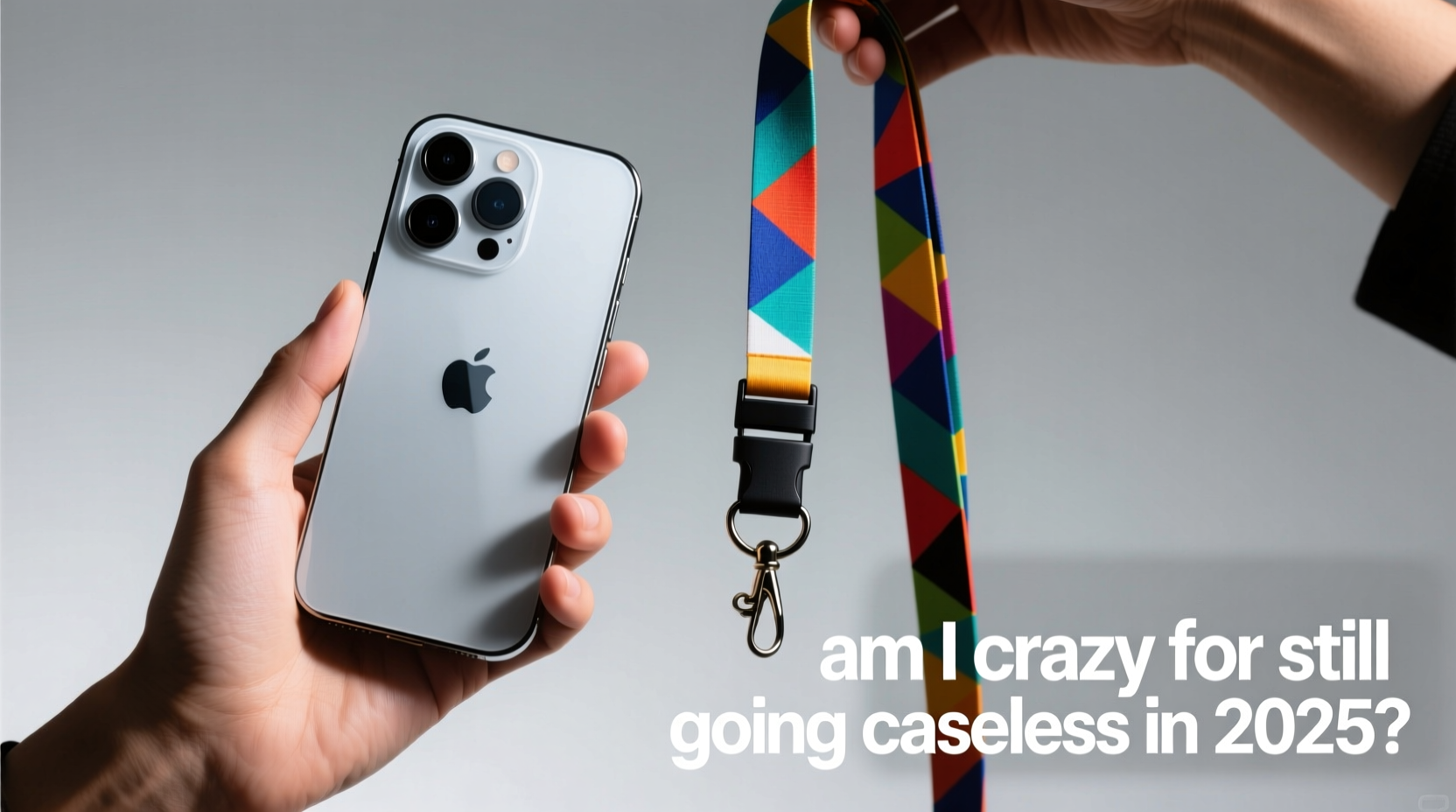
Going caseless offers something no accessory can replicate: authenticity. The precision of machined aluminum edges, the subtle texture of frosted glass, the satisfying weight distribution—all dulled or hidden by even the slimmest case. For many, this sensory feedback is non-negotiable.
Smartphones in 2025 are engineered with premium materials and tight tolerances. Flagship devices now feature Gorilla Glass Victus 3, IP68 water resistance, and aerospace-grade aluminum frames. Manufacturers design them to be held, not buried under rubber shells. When you remove the case, you're not just accessing better ergonomics—you're honoring the original design intent.
Tip: If you go caseless, clean your phone daily with a microfiber cloth to prevent oil buildup and maintain grip.Lanyards: The Safety Net for Caseless Users
A wrist or neck lanyard has become the compromise of choice for those who want freedom without total risk. Unlike bulky cases, lanyards don’t interfere with wireless charging, haptics, or speaker clarity. They also eliminate pocket fumbles and bathroom sink incidents—the two most common causes of phone damage.
Modern lanyards come in sleek, low-profile designs made from ballistic nylon, stainless steel links, or even Kevlar weave. Some attach magnetically or via precision-machined adapters that preserve the phone’s look while adding peace of mind. For frequent travelers, commuters, or parents juggling multiple tasks, a lanyard might be the only thing standing between you and a shattered display.
“Most accidental drops happen during transitions—taking the phone out of a bag, passing it across a table, or answering a call mid-walk. A lanyard disrupts that failure chain.” — Dr. Lena Tran, Human Factors Engineer at Mobile Safety Labs
Comparative Breakdown: Bare Phone vs Lanyard Use
| Factor | Bare Phone (No Case, No Lanyard) | Bare Phone + Lanyard | Traditional Case |
|---|---|---|---|
| Grip & Handling | Excellent – direct contact with material | Very Good – slight tether awareness | Fair – often slippery or bulky |
| Dropping Risk | High – no backup if slipped | Low – lanyard catches fall | Medium – reduces impact but doesn’t prevent drops |
| Aesthetic Integrity | Perfect – device looks as designed | Minimal interference | Compromised – adds bulk and color mismatch |
| Wireless Charging | No interference | No interference | May reduce efficiency depending on thickness |
| Dust/Moisture Protection | None beyond built-in sealing | Same as bare | Slight improvement around ports |
| Repair Frequency (Avg/year) | 0.8–1.2 (screen/glass) | 0.2–0.4 | 0.3–0.6 |
Is It Crazy to Go Caseless in 2025? A Realistic Assessment
The short answer: no, not inherently. But context matters more than ever. Consider these scenarios:
- You work in a lab, kitchen, or construction site? A lanyard or case is non-negotiable. Environmental hazards outweigh aesthetic benefits.
- You’re a desk-based professional or creative? Going caseless with a discreet lanyard could be ideal—maximizing feel and minimizing risk.
- You frequently use your phone outdoors or while moving? Even a lightweight lanyard drastically reduces loss and impact severity.
The real issue isn’t the lack of a case—it’s the absence of a strategy. Blindly tossing a $1,200 phone into your back pocket without safeguards reflects negligence, not minimalism. But thoughtfully managing how and when you use your device? That’s smart personal tech hygiene.
Mini Case Study: Alex, Freelance Photographer, Berlin
Alex switched to a caseless setup in early 2024 after years of using thick OtterBoxes. Frustrated by muffled audio and misaligned camera bumps, he tested going bare with a magnetic lanyard clipped to his belt loop. Over nine months, he dropped his phone four times—twice from waist height onto concrete. Each time, the lanyard arrested the fall within inches of the ground. Minor scuffs appeared on the frame, but the screen remained intact. “I’ve had worse scratches from keys in my pocket,” he says. “Now I feel connected to my device again—and I haven’t paid for repairs once.”
How to Go Caseless Safely: A Step-by-Step Guide
- Assess your lifestyle: Track how often you handle your phone in motion. If it’s more than 10 times a day, consider added security.
- Invest in a quality lanyard: Choose one with reinforced stitching and secure attachment (e.g., MagSafe-compatible or screw-in adapter).
- Use a screen protector (sparingly): If you type heavily or place your phone face-down, a thin tempered glass protector adds negligible bulk.
- Develop muscle memory habits: Always set the phone down screen-up, avoid handing it over edges, and keep it centered on tables.
- Carry a microfiber pouch: For storage in bags or pockets, a soft pouch prevents scratches without compromising daily usability.
Checklist: Are You Ready to Go Caseless?
- ✅ Your phone has IP68 rating or better
- ✅ You’re willing to adopt a lanyard or tether system
- ✅ You don’t work in high-risk environments (wet, oily, dusty)
- ✅ You charge wirelessly and value unobstructed back access
- ✅ You accept minor cosmetic wear as part of ownership
- ✅ You’ve practiced safe handling techniques for at least one week
Frequently Asked Questions
Doesn’t a bare phone pick up scratches easily?
Yes, especially on flat surfaces. However, modern coatings are highly resistant to fine abrasion. Most \"scratches\" are actually grime lodged in micro-grooves and can be cleaned. True surface damage usually requires sand or metal-on-glass contact.
Can a lanyard really stop a fall?
In most everyday scenarios—slipping from hand, sliding off a couch—a lanyard limits fall distance to a few inches. This often reduces impact force below the threshold for glass fracture. High drops (over 4 feet) may still cause damage, but the odds improve dramatically.
Isn’t going caseless just tempting fate?
Only if done carelessly. With intentionality, habit formation, and modest safeguards like a lanyard, going caseless is less risky than assumed. Think of it like driving a convertible: you accept slightly higher exposure for a richer experience—but you still wear a seatbelt.
Final Thoughts: Embrace Intentionality, Not Extremes
Calling someone “crazy” for going caseless in 2025 misses the point. Technology should serve human experience, not dictate fear-based behavior. The rise of durable materials, smarter design, and innovative accessories like compact lanyards means we no longer have to choose between protection and pleasure.
The future of phone use isn’t about maximum armor—it’s about intelligent adaptation. Whether you wrap your device in triple-layer defense or savor its naked elegance, what matters is that your choice aligns with how you live, work, and interact with the world.
If you value tactile precision, hate clutter, and move deliberately through your day, going caseless with a reliable lanyard isn’t reckless. It’s a statement of confidence in both your device and yourself.
💬 Are you team caseless or team armored? Share your story—have you survived a year without a case? What’s your must-have accessory? Join the conversation below.