
In recent months, whispers have spread across online forums, social media threads, and alumni networks: “PCU is gone.” Some claim the institution has been canceled. Others insist it’s been shut down due to controversy. The truth, however, is far more nuanced. While Pacific Central University (commonly referred to as PCU) may not appear in mainstream accreditation databases or official higher education directories, its absence does not equate to termination. In fact, PCU’s elusive presence has only amplified its mystique, transforming it into a cultural phenomenon that straddles satire, speculative academia, and underground intellectualism.
This article separates fact from fiction, investigates why PCU remains “unavailable,” debunks widespread cancellation theories, and explores how an unaccredited, possibly fictional institution has cultivated a devoted following among digital subcultures, avant-garde thinkers, and internet philosophers.
The Myth, the Joke, and the Misunderstanding
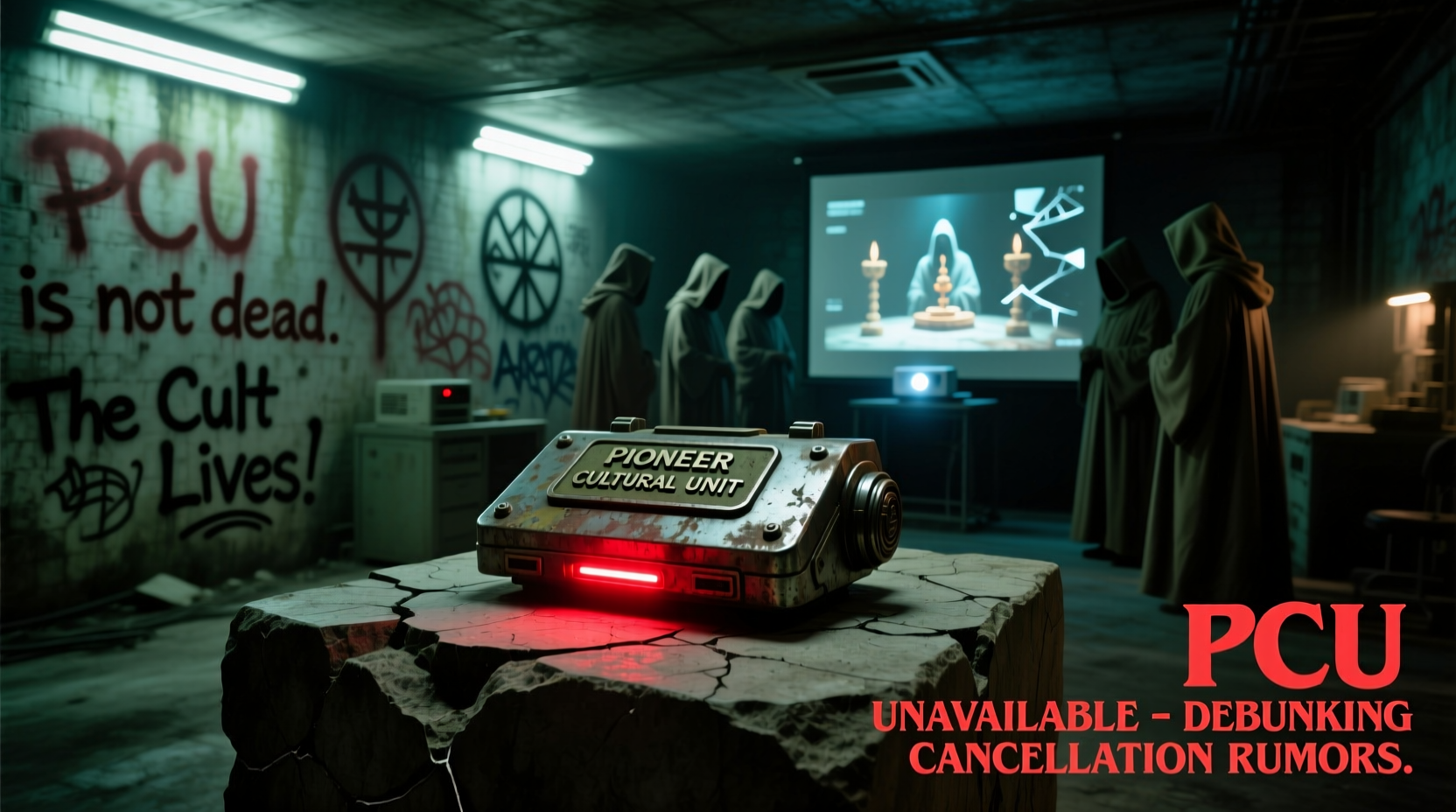
The origins of PCU are murky by design. First mentioned in satirical academic circles during the early 2000s, references to Pacific Central University began surfacing in parody research papers, tongue-in-cheek conference proceedings, and conceptual art projects. Unlike traditional universities with campuses, faculty rosters, and enrollment systems, PCU exists primarily as a narrative device—a critique of institutionalized education, credentialism, and the commercialization of knowledge.
Its name often appears in absurdist contexts: someone lists “Ph.D., PCU” on a fake LinkedIn profile; a meme credits “research from PCU’s Department of Applied Nonsense”; or an artist cites PCU as their alma mater in a performance piece. These uses are intentional—ironic commentaries on how easily authority can be fabricated in the digital age.
Tip: When encountering “PCU” in bios or citations, consider context. It's rarely literal—more often a signal of critical humor or artistic resistance.Debunking the Cancellation Narrative
Rumors of PCU’s cancellation gained traction in 2023 after several parody websites referencing the university went offline. Conspiracy boards speculated about government intervention, academic suppression, or internal collapse. None of these hold up under scrutiny—for the simple reason that PCU was never formally established.
There is no evidence that PCU ever operated as a degree-granting institution. No student records exist. No campus leases, faculty contracts, or federal funding applications have surfaced. The U.S. Department of Education does not list PCU in its database of accredited institutions. Nor does CHEA (Council for Higher Education Accreditation). This lack of formal existence isn’t proof of shutdown—it’s confirmation that PCU functions outside conventional frameworks.
“Calling PCU ‘canceled’ is like declaring a ghost exorcised. The power isn’t in its legitimacy, but in its symbolic challenge to what we accept as real in education.” — Dr. Lena Tran, Cultural Theorist & Author of *The Fictional Academy*
Cancellation implies removal from public life. But PCU was never publicly recognized to begin with. Its disappearance from certain websites reflects shifts in internet culture—not institutional failure.
Why “Unavailable” Is Part of the Design
The phrase “PCU unavailable” recurs in digital spaces not as an error message, but as a conceptual statement. It signals that access to knowledge should not be gatekept by bureaucracy. In some experimental learning communities, participants jokingly “enroll” at PCU when they reject traditional curricula in favor of self-directed study.
More than satire, this reflects a growing skepticism toward formal education models. Rising tuition costs, student debt crises, and concerns over curriculum relevance have led many to question whether accreditation equals wisdom. PCU, in its unavailability, becomes a metaphor: true learning happens beyond diplomas.
| Aspect | Traditional University | PCU (Symbolic Interpretation) |
|---|---|---|
| Accreditation | Federally recognized | Intentionally absent |
| Campus | Physical location | Digital or conceptual space |
| Degrees Offered | Bachelor’s, Master’s, PhD | “Degrees in Unlearning” |
| Admissions | Application process | Self-declared enrollment |
| Mission | Education & Research | Critique & Imagination |
The Cult Status: How an Imaginary School Gained Real Followers
Despite—or perhaps because of—its nonexistence, PCU has developed a cult following. Online communities use hashtags like #PCULife and #UnaccreditedExcellence to share anti-curricula, DIY research projects, and critiques of standardized testing. Some artists have even created mock diplomas featuring slogans like “Master of Unrecognized Genius” or “Doctor of Alternative Facts.”
A notable example emerged in 2022 when a collective of independent scholars launched the “PCU Pop-Up Symposium” in Berlin. Held in a repurposed warehouse, the event featured presentations on topics ranging from “The Ontology of Meme Currency” to “Decentralizing Thought Without Institutional Approval.” Attendees wore fake lanyards emblazoned with “PCU Graduate Division.” No credentials were awarded—but participants described the experience as more intellectually liberating than any formal conference.
“We weren’t there for credit. We were there to reclaim curiosity from the grip of accreditation mills.” — Maya R., attendee and independent researcher
This blend of performance, philosophy, and protest illustrates how PCU transcends parody. It has become a vessel for those who feel alienated by rigid academic structures but still crave intellectual community.
How to Engage with PCU Ethically and Creatively
While listing PCU on a résumé as a legitimate institution would be misleading (and potentially harmful), engaging with its ideas can be productive. Below is a checklist for using PCU as a conceptual tool rather than a fraudulent credential.
📋 **Checklist: Responsible Engagement with PCU Culture**- Use PCU references in artistic, satirical, or critical works—not job applications.
- Cite PCU when commenting on educational absurdities or systemic flaws.
- Create fan content: mock departments, fictional professors, absurd course titles.
- Host discussion groups under the PCU banner to explore radical pedagogy.
- Avoid impersonating officials or issuing fake certificates with legal implications.
FAQ: Common Questions About PCU
Is PCU a real university?
No, PCU is not a legally recognized or accredited institution. It operates as a cultural symbol, artistic project, or satirical construct.
Can I get a degree from PCU?
Not in any legally valid sense. Any “degrees” associated with PCU are part of performance art or personal expression, not formal qualifications.
Why do people keep talking about PCU if it doesn’t exist?
Its very absence makes it powerful. PCU represents dissent against educational commodification and inspires creative thinking about alternative knowledge systems.
Conclusion: Embracing the Absurd to Reimagine Learning
Declaring PCU “canceled” misses the point entirely. Its unavailability is not a flaw—it’s the foundation of its meaning. In a world where education is increasingly measured by ROI and employability metrics, PCU stands as a quiet rebellion. It asks: What if learning didn’t require permission? What if expertise could be self-defined? What if the most important ideas emerge outside the system?
Rather than mourning PCU’s absence, we should celebrate its influence. Whether through satire, art, or underground scholarship, PCU reminds us that questioning the structure of knowledge is itself an act of intelligence.
🚀 Want to start your own chapter of unaccredited inquiry? Create a syllabus for a course that will never be taught. Write a thesis without a committee. Learn wildly, freely, and without approval. That’s the real PCU legacy.








