In the world of professional dressing, first impressions are shaped by subtle details. One of the most debated sartorial choices in modern workwear is whether an oversized blazer or a tailored fit delivers a more polished appearance—especially during job interviews. With fashion trends shifting toward relaxed silhouettes, it’s easy to mistake comfort for confidence. But in high-stakes settings like interviews, where perception influences opportunity, the cut of your jacket can speak louder than words.
The right blazer does more than complete an outfit—it frames your posture, signals attention to detail, and conveys professionalism. While oversized blazers have gained popularity for their effortless, contemporary aesthetic, traditional tailored fits remain the gold standard in corporate environments. So which choice truly enhances your credibility and presence when meeting potential employers?
The Power of Fit in Professional Perception
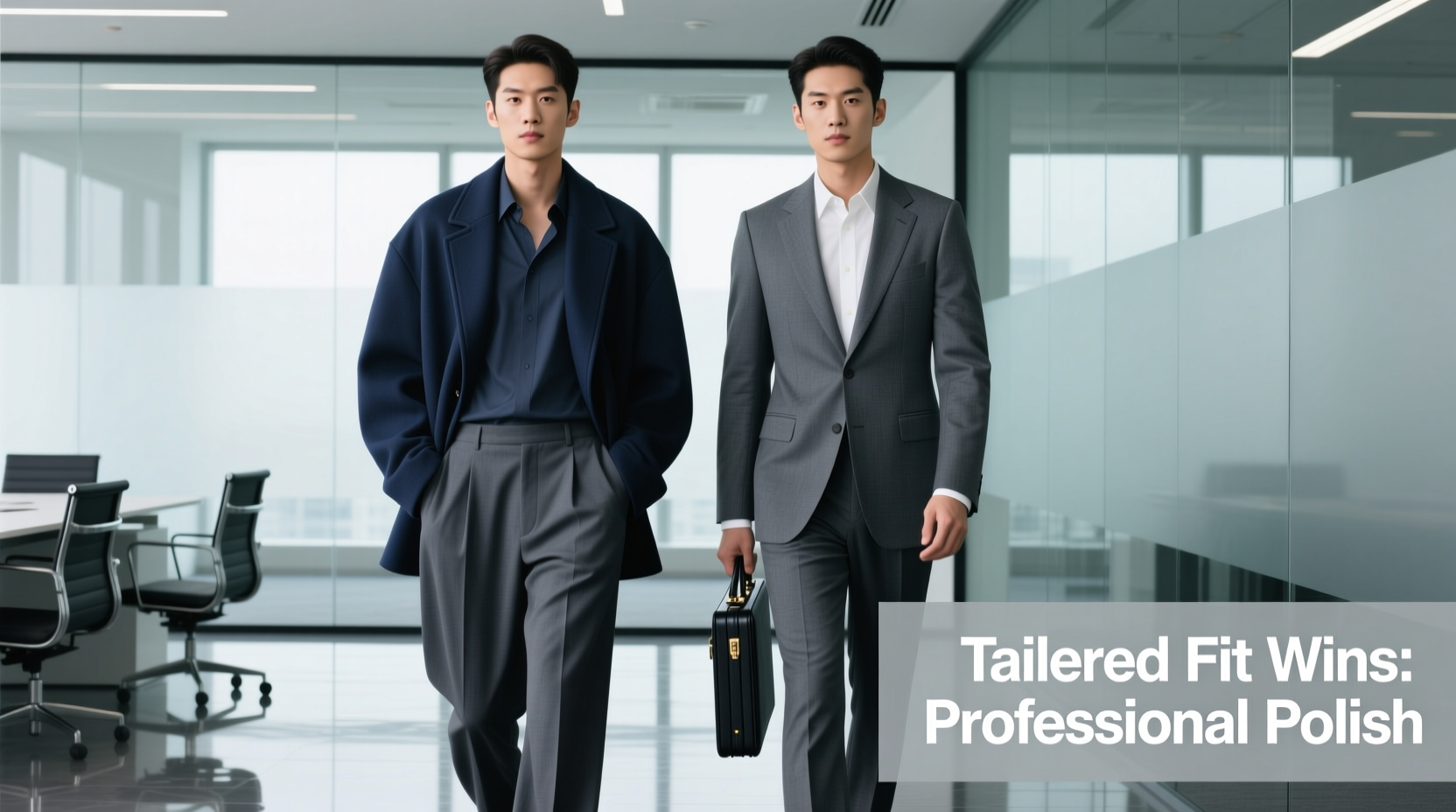
Fit is not merely about aesthetics; it’s a visual language. A well-fitted blazer creates clean lines that draw attention to your silhouette, suggesting discipline, preparation, and self-awareness. On the other hand, an oversized blazer may unintentionally project sloppiness or lack of seriousness, even if worn with intention.
Research from the Journal of Applied Social Psychology shows that clothing significantly affects how individuals are perceived in professional contexts. Participants wearing well-tailored clothing were consistently rated as more competent, confident, and trustworthy than those in looser, less structured attire—even when qualifications were identical.
This doesn’t mean oversized styles are inherently inappropriate. However, context matters. In creative industries such as fashion, media, or tech startups, a slightly oversized blazer might be interpreted as stylish and modern. But in law, finance, consulting, or government roles, precision in tailoring often correlates with expectations of rigor and reliability.
Tip: When in doubt, err on the side of structure. A slightly conservative fit is always safer than one that appears too casual.Tailored Fits: The Benchmark of Professional Polish
A tailored blazer is defined by its precision: shoulders align exactly with yours, sleeves end at the wrist bone, and the waist tapers subtly without constriction. This fit ensures movement is unrestricted while maintaining a sharp profile.
Key indicators of a properly tailored blazer include:
- Shoulder seams sit flush with the edge of your shoulder—no extending beyond or cutting into the arm.
- Sleeve length allows about half an inch of shirt cuff to show.
- Chest and torso lie flat without pulling or gapping when buttoned.
- Hemline covers the seat and ends near the top of the thigh.
Tailored blazers signal respect for formality and attention to grooming standards. They complement both men's and women's professional wardrobes equally, adapting seamlessly to suits, dress pants, or skirts.
According to menswear stylist Daniel Fletcher, “A perfectly fitted blazer acts as armor in a job interview. It doesn’t shout, but it commands silent authority.”
“A well-cut jacket tells the interviewer you understand the unspoken rules of professionalism before you even speak.” — Lydia Chen, Corporate Image Consultant
Oversized Blazers: Style Statement or Interview Risk?
Oversized blazers feature extended shoulders, longer lengths, and boxy cuts designed to create a relaxed, editorial look. Popularized by runway trends and celebrity styling, they offer versatility and comfort—but come with caveats in formal settings.
The appeal lies in their ability to soften rigid business attire, adding a touch of individuality. For example, pairing an oversized navy blazer with tailored trousers and a crisp white shirt can strike a balance between approachable and put-together—ideal for younger candidates in dynamic fields like digital marketing or design.
However, risks emerge when proportions go too far. Excess fabric pooling at the back, sleeves covering the hands, or shoulders drooping past the natural joint all undermine the impression of preparedness. In conservative industries, these cues can be misinterpreted as carelessness—or worse, a disregard for norms.
Consider this real-world scenario:
Mini Case Study: Maya’s Marketing Interview
Maya, a 27-year-old candidate applying for a senior brand strategist role at a traditional financial institution, wore an intentionally oversized charcoal blazer over a silk camisole and cigarette pants. She believed the look was sophisticated and fashion-forward. However, two interviewers later commented that she appeared “underprepared” and “more suited to a fashion magazine than a boardroom.” Despite strong qualifications, she wasn’t selected.
In contrast, when she interviewed at a tech startup known for creative culture, the same blazer received compliments. She got the offer.
The takeaway? Context dictates appropriateness. An oversized blazer isn’t universally unprofessional—but it carries higher interpretive risk in formal hiring environments.
Comparing Key Elements: Tailored vs Oversized
| Feature | Tailored Fit | Oversized Blazer |
|---|---|---|
| Shoulder Line | Precisely aligned with natural shoulder | Extended or dropped shoulders |
| Silhouette | Structured, tapered waist | Boxy, relaxed shape |
| Movement | Comfortable with clean drape | Loose, flowing fabric |
| Professional Perception | High – associated with competence | Variable – depends on industry |
| Versatility | Excellent across sectors | Limited to creative or casual workplaces |
| Risk Level in Interviews | Low | Moderate to High |
This comparison underscores why tailored fits dominate professional recommendations. Their consistency in conveying readiness and polish makes them a reliable choice regardless of company size or sector.
How to Choose the Right Blazer for Your Interview
Selecting the appropriate blazer involves assessing three factors: industry norms, company culture, and personal fit. Follow this step-by-step guide to make an informed decision:
- Research the Company Culture
Visit the company website, LinkedIn page, or employee photos. Are team members wearing classic suits or more relaxed business-casual attire? A bank will likely expect sharper tailoring than a design agency. - Evaluate the Role’s Formality
Client-facing, executive, or compliance-heavy roles demand higher levels of formality. If you're unsure, assume a conservative standard applies. - Try On Before Committing
Never rely solely on labels. Try the blazer on with the shirt or blouse you plan to wear. Move around—sit, gesture, reach—to test comfort and drape. - Avoid Trend Extremes
Even if oversized blazers are trending, avoid exaggerated proportions. If the shoulder extends more than ½ inch past your natural line, it’s too large. - Invest in Alterations if Needed
A slightly loose blazer can be taken in for a few hundred dollars. The cost pales in comparison to the long-term value of a versatile, interview-ready piece.
Actionable Checklist: Preparing Your Interview Blazer
Use this checklist to ensure your blazer supports—not sabotages—your candidacy:
- ✅ Shoulder seams match the edge of your shoulders
- ✅ Jacket buttons comfortably without strain
- ✅ Sleeve length reveals ½ inch of shirt cuff
- ✅ Back lies flat with no excess fabric gathering
- ✅ Hem covers belt line and top of buttocks
- ✅ Fabric is wrinkle-free and clean
- ✅ Color complements skin tone and pairs easily (navy, gray, black preferred)
- ✅ Style aligns with industry expectations (tailored > oversized unless specified otherwise)
Frequently Asked Questions
Can I wear an oversized blazer if it’s part of my personal brand?
You can—but consider timing and audience. During a job interview, your primary goal is to build trust and reduce uncertainty. Wearing a signature oversized blazer may reinforce authenticity, but only if the culture welcomes individuality. In uncertain cases, opt for a tailored version and save bolder statements for after you’ve secured the role.
Is there a middle ground between oversized and tailored?
Yes. The “soft tailoring” trend offers a compromise: structured enough to feel intentional, yet slightly relaxed for comfort. Look for blazers with minimal padding, natural shoulders, and a slight ease in the chest. These maintain professionalism while avoiding stiffness—ideal for hybrid environments.
What if I only own an oversized blazer?
If alterations aren’t possible, style it strategically. Wear it open over a sharply tailored shirt and slim trousers. Keep accessories minimal and footwear polished. Avoid bulky layers underneath. The goal is to minimize volume and emphasize intentionality through the rest of your ensemble.
Final Verdict: What Looks More Polished?
The evidence overwhelmingly favors tailored fits as the more polished option for job interviews. While oversized blazers reflect current fashion currents, they carry interpretive ambiguity that can work against you in evaluative settings.
Polish isn’t just about looking neat—it’s about projecting reliability. A tailored blazer communicates control, precision, and alignment with workplace expectations. It minimizes distractions and keeps focus on your qualifications and demeanor.
That said, fashion evolves. As remote work and hybrid cultures normalize more flexible dress codes, the definition of \"professional\" continues to expand. But until industry standards shift broadly, the safest—and smartest—choice remains the tailored blazer.
“In twenty years of executive coaching, I’ve never seen someone penalized for being too well-dressed. But I’ve seen many underestimated because their clothes didn’t match their ambition.” — Rajiv Mehta, Leadership Development Advisor
Conclusion: Dress for the Job You Want—With Intention
Your blazer is more than a layer—it’s a statement of how seriously you take the opportunity. In the nuanced arena of job interviews, every element counts. Choosing a tailored fit doesn’t mean sacrificing style; it means elevating substance.
Whether you’re entering finance, healthcare, education, or tech, presenting yourself with clarity and care sets the foundation for success. Don’t let fleeting trends overshadow enduring principles of professionalism.
🚀 Ready to nail your next interview? Reassess your wardrobe with this guide in mind. Swap the oversized for the impeccably fitted, and walk into your next meeting knowing you look every bit as capable as you are.