When choosing sunglasses, most people focus on frame style or brand—but the real magic happens in the lens. Among the most debated options are orange and brown tinted lenses, both praised for enhancing visual experience under sunlight. Yet they serve different purposes, respond uniquely to light conditions, and affect depth perception and color accuracy in distinct ways. Understanding the science and practical application behind each tint helps you make an informed decision based on your lifestyle, environment, and visual needs.
How Lens Tints Affect Vision and Performance
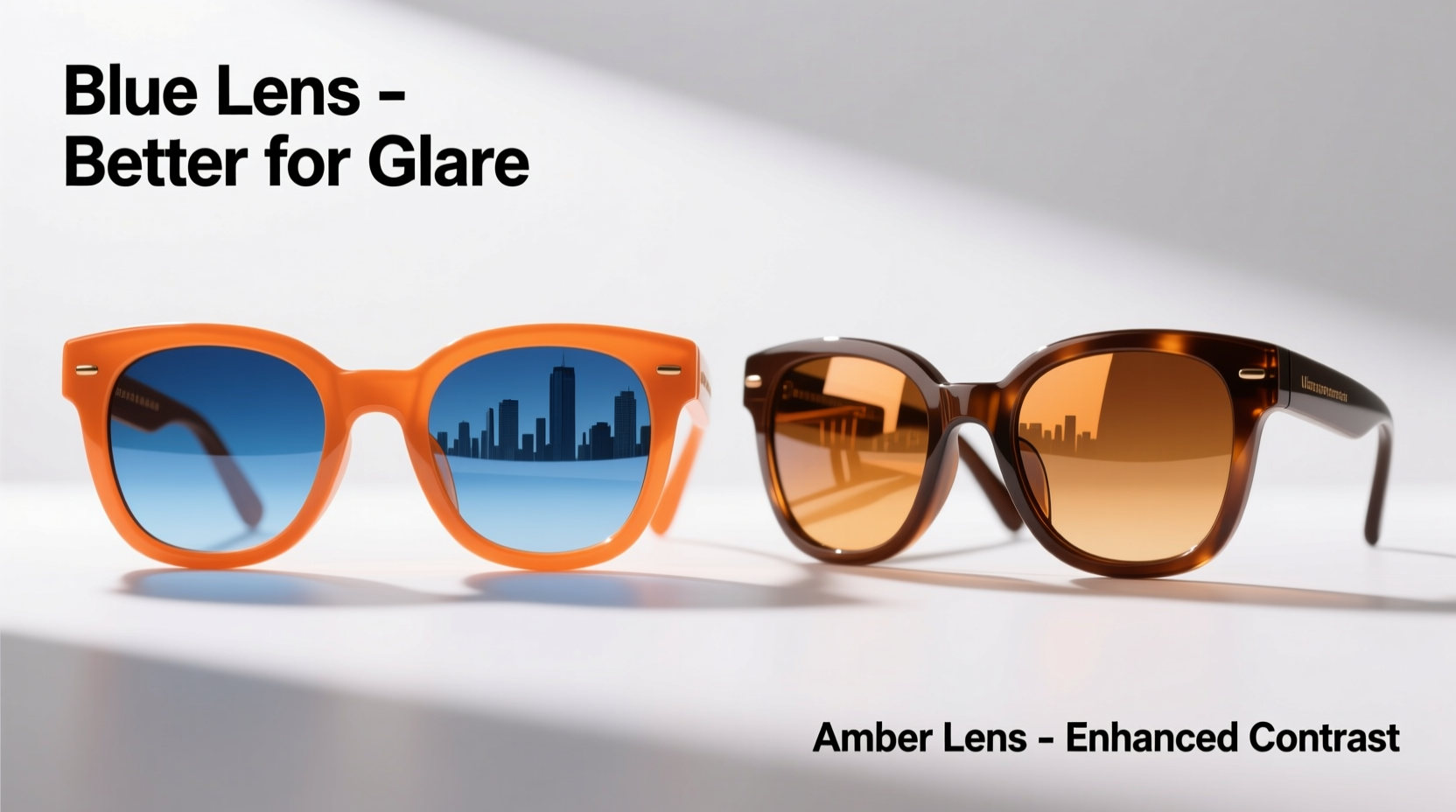
Lens color isn’t just cosmetic—it plays a functional role in how your eyes process light, contrast, and motion. Different tints filter specific wavelengths of visible light, altering brightness, depth perception, and visual clarity. The human eye perceives light across a spectrum from violet (shorter wavelengths) to red (longer wavelengths). Tinted lenses selectively absorb parts of this spectrum to reduce glare, improve contrast, and protect against harmful UV rays.
Brown and orange lenses fall within the warmer end of the tint spectrum, making them ideal for bright but variable lighting. However, their effects diverge significantly depending on activity and environment. Brown lenses have long been a favorite among drivers and outdoor enthusiasts due to their balanced filtering properties. Orange lenses, while less common, are gaining traction among athletes and low-light performers for their ability to amplify contrast in flat or overcast conditions.
“Lens tint choice should align with environmental demands, not just personal preference. Even subtle differences can impact reaction time and visual fatigue.” — Dr. Lena Torres, Optometric Vision Scientist
Benefits and Drawbacks of Brown Lenses
Brown-tinted lenses are one of the most popular choices for everyday sunglasses, and for good reason. They provide a natural enhancement of contrast by filtering out blue light—the shortest and most scattered wavelength—which often causes haze and reduces visual sharpness.
- Enhanced contrast: Brown lenses boost definition between objects and backgrounds, especially useful on sunny days with reflective surfaces like water or pavement.
- Natural color perception: Unlike some colored tints that distort hues, brown maintains relatively accurate color balance, making it easier to distinguish traffic signals or terrain changes.
- Glare reduction: Effective at cutting through horizontal glare, particularly beneficial when driving or near bodies of water.
- Moderate light transmission: Typically allows 10–20% VLT (Visible Light Transmission), suitable for bright daylight without being overly dark.
However, brown lenses aren't universally ideal. In low-light or overcast conditions, they may dim vision too much, reducing detail visibility. They also offer less edge enhancement than high-contrast tints like amber or orange, which can be critical in fast-paced sports.
Tip: Choose brown lenses with polarized coating if you spend time driving or near water—this combination drastically reduces reflected glare.Advantages and Limitations of Orange Lenses
Orange lenses sit closer to amber on the tint spectrum but deliver more pronounced contrast enhancement. They block even more blue light than brown lenses and increase the perceived brightness of mid-range wavelengths, effectively \"warming up\" the visual field.
This makes orange lenses particularly effective in suboptimal lighting—cloudy days, dawn, dusk, or shaded environments—where visual depth tends to flatten. Skiers, mountain bikers, and target shooters often prefer orange lenses because they help detect subtle changes in surface texture, shadows, and movement.
Key benefits include:
- Superior contrast sensitivity: Enhances object separation in low-contrast scenes, improving reaction time.
- Improved depth perception: Especially helpful in dynamic outdoor activities where terrain varies rapidly.
- Reduced eye strain in variable light: Helps maintain visual focus when moving between sun and shade.
The trade-off is color distortion. Orange tints exaggerate warm tones and suppress cooler ones, making blues and greens appear duller. This can be disorienting during prolonged wear or in situations requiring precise color recognition, such as reading maps or identifying trail markers.
Comparative Analysis: Orange vs Brown Lenses
| Feature | Brown Lenses | Orange Lenses |
|---|---|---|
| Best Conditions | Bright, sunny days | Cloudy, hazy, or low-light conditions |
| Contrast Enhancement | Moderate to high | Very high |
| Color Accuracy | High – minimal distortion | Low – significant warm bias |
| Glare Reduction | Excellent (especially with polarization) | Good, but less effective on reflective surfaces |
| Recommended For | Driving, beach outings, general daily wear | Sports, skiing, cycling, shooting |
| UV Protection | Depends on coating – always verify 100% UVA/UVB | Same – independent of tint color |
Note: UV protection is not determined by lens darkness or color. Always ensure any sunglass—regardless of tint—provides full-spectrum UV blocking.
Real-World Use Case: Trail Running in Variable Weather
Jamal, an experienced trail runner in Colorado, struggled with visibility during early morning runs through forested areas. On sunny stretches, his gray-tinted sunglasses worked well, but under tree cover, details blurred and roots became hard to spot. After switching to orange-lensed sports sunglasses, he noticed immediate improvement in terrain definition. “It’s like the trail ‘popped’ into view,” he said. “I could see every rock and root before I stepped on it.”
However, during midday runs on open roads, the same glasses made colors feel unnatural and increased visual fatigue. He now rotates between orange lenses for shaded trails and brown polarized lenses for exposed routes—a practical example of matching lens tint to environmental demand.
Choosing the Right Lens: A Step-by-Step Guide
- Assess your primary activity: Are you driving, hiking, cycling, fishing, or just walking outdoors?
- Evaluate typical lighting: Do you mostly face direct sun, mixed shade, or overcast skies?
- Prioritize visual goals: Is glare reduction more important than contrast? Do you need true color representation?
- Test in real conditions: If possible, try demo pairs in your usual environment before buying.
- Consider lens coatings: Add polarization for water or road glare, anti-reflective backing to reduce internal bounce.
- Check UV rating: Confirm the lenses block 100% of UVA and UVB rays—this is non-negotiable.
Expert Tips for Maximizing Lens Performance
Tip: Don’t rely on one pair for all conditions. Having two sets—one with brown and one with orange lenses—can optimize visual performance year-round. Tip: Clean lenses with microfiber cloth only. Abrasive materials scratch coatings and degrade optical clarity over time.Frequently Asked Questions
Can orange lenses be worn in full sunlight?
Yes, but cautiously. While they perform well in mixed lighting, bright midday sun may make orange lenses feel too intense or cause color overload. Look for versions with moderate VLT (15–20%) if using in strong sun.
Do brown lenses work for night driving?
No. Any tinted lens reduces available light and impairs night vision. Clear or lightly yellow-tinted lenses are acceptable for night use, but avoid brown, orange, or gray sunglasses after dark.
Are these tints safe for long-term wear?
Absolutely—as long as they provide full UV protection. The tint itself doesn’t harm the eyes; in fact, proper filtering reduces strain. However, wearing overly dark or poorly balanced tints for hours may contribute to eye fatigue.
Final Recommendation: Match Lens to Lifestyle
If you're looking for versatile, everyday performance with natural visuals and solid glare control, brown lenses are likely your best bet. They’re proven, widely available, and ideal for driving, walking, and casual outdoor use.
For specialized applications—particularly sports or activities in changing light—orange lenses offer unmatched contrast and depth enhancement. Their ability to reveal hidden details makes them invaluable in performance settings, though they sacrifice color fidelity.
Ultimately, neither tint is objectively “better.” The right choice depends on what you do, where you go, and what your eyes need most: stability and comfort (brown), or heightened awareness and precision (orange).
💬 Ready to upgrade your sunglasses game? Evaluate your daily routine and consider adding a second pair with a complementary tint. Your eyes—and your performance—will thank you.