Choosing an engagement or statement ring often comes down to balancing aesthetics, budget, and longevity. Two popular options—moissanite and sterling silver rings—represent very different ends of the spectrum. One dazzles with fire and brilliance; the other offers affordability and classic charm. But when comparing moissanite center stones set in silver bands to full silver rings, the real question emerges: Is the dramatic sparkle of moissanite worth the higher price tag over a traditional silver ring?
The answer depends on what you value most—immediate visual impact, long-term durability, or financial practicality. Let’s break down the differences in clarity, cost, maintenance, and emotional significance to help you make an informed decision.
Understanding Moissanite: The Science Behind the Sparkle
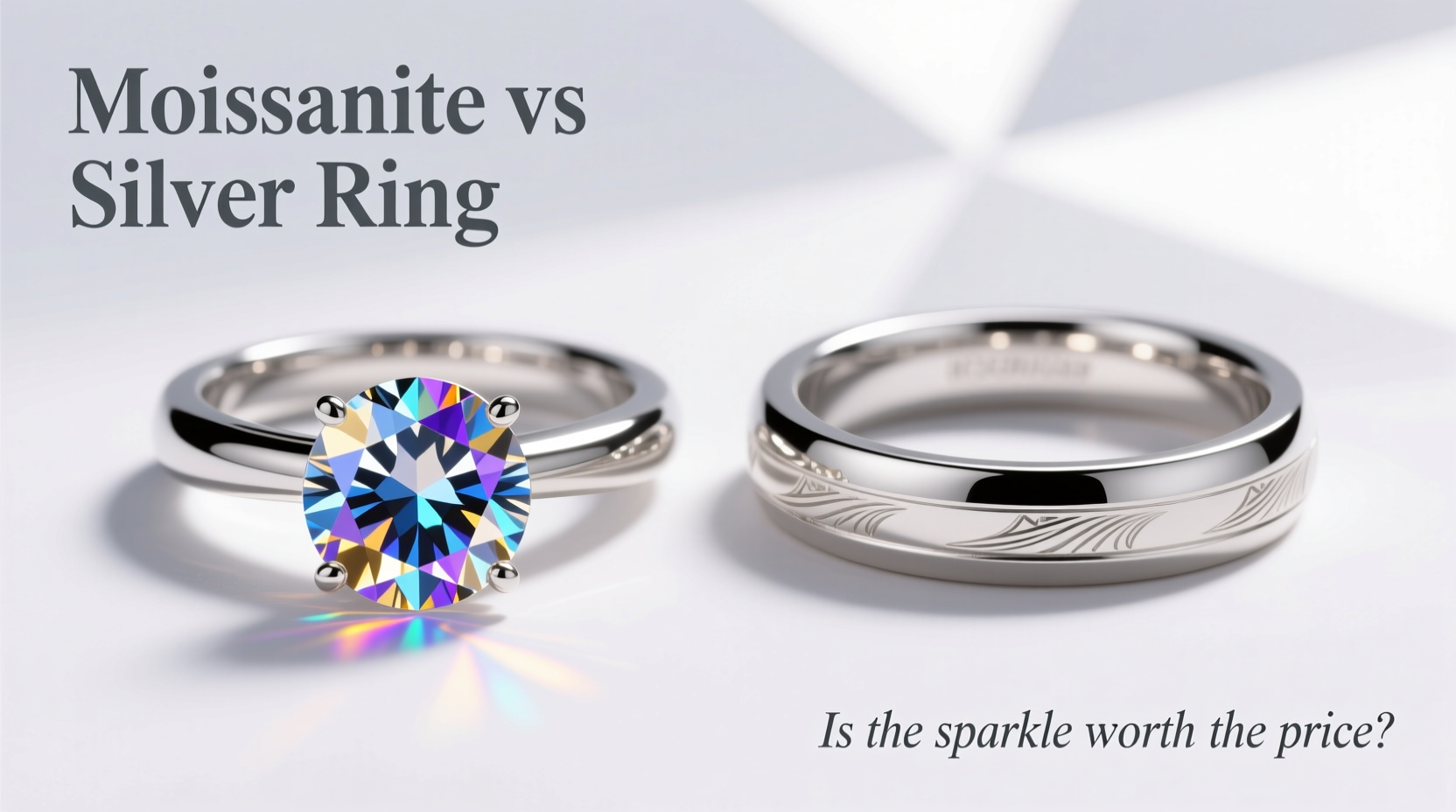
Moissanite is a lab-created gemstone composed of silicon carbide. First discovered in meteorites by French chemist Henri Moissan in 1893, today’s moissanite is grown in controlled environments, making it both ethical and sustainable. It ranks 9.25 on the Mohs scale of hardness—second only to diamond—making it highly resistant to scratches and daily wear.
What sets moissanite apart is its optical performance. It has a higher refractive index (2.65–2.69) than diamond (2.42), meaning it bends light more dramatically. This results in exceptional brilliance and dispersion—the “fire” that makes a stone appear to throw off colorful flashes under light.
“Moissanite outperforms many natural gems in terms of sparkle and durability, especially for those seeking an affordable yet stunning alternative.” — Dr. Lena Patel, Gemologist and Materials Scientist
Most moissanite rings are set in precious metal bands like white gold or platinum, but increasingly, jewelers offer moissanite center stones in sterling silver settings to lower the overall cost. This hybrid approach raises questions about balance: Can a high-performance gem thrive in a softer metal?
Sterling Silver Rings: Classic Appeal with Practical Limits
Sterling silver consists of 92.5% pure silver and 7.5% alloy (usually copper), giving it strength while maintaining malleability. It’s been a staple in jewelry for centuries due to its bright luster, affordability, and timeless elegance.
However, silver ranks only 2.5–3 on the Mohs scale, making it prone to scratching, tarnishing, and deformation over time—especially in ring form, where it's exposed to constant friction and moisture. Regular polishing and careful storage are necessary to maintain its shine.
A plain sterling silver ring may cost as little as $20–$50, depending on design. In contrast, a moissanite solitaire set in silver typically starts around $150–$300, with prices rising based on carat size and craftsmanship.
Tip: To slow tarnishing, store your silver ring in an airtight bag with anti-tarnish strips and avoid wearing it during household chores.Direct Comparison: Moissanite vs Silver Ring Performance
| Feature | Moissanite in Silver Band | Solid Sterling Silver Ring |
|---|---|---|
| Brilliance & Fire | Exceptional – high refractive index creates dazzling sparkle | None – no gemstone, relies on metal polish |
| Durability (Wear Resistance) | Gem: Excellent | Band: Moderate (silver softens over time) | Poor – easily scratched, dented, or bent |
| Tarnish Resistance | Moderate – silver band requires maintenance | Moderate – all silver tarnishes without care |
| Cost (Average) | $150–$400 | $20–$80 |
| Lifespan (with care) | 10+ years (gem lasts indefinitely; band may need repair) | 5–7 years (prone to deformation and thinning) |
| Hypoallergenic | Usually yes (if nickel-free alloy used) | Often no – copper content can cause reactions |
When Moissanite Makes Sense: A Real-Life Example
Consider Sarah, a graphic designer on a tight budget who wanted an engagement ring that looked luxurious without costing thousands. She opted for a 6.5mm round moissanite (approximately 1 carat equivalent) set in a sterling silver band with rhodium plating for added scratch resistance. Total cost: $220.
After two years of daily wear, the stone remains flawless—no clouding or chipping. The band shows minor wear near the base but still holds its shape thanks to occasional professional polishing. Friends consistently mistake it for a diamond, and Sarah feels confident in her choice.
Had she chosen a simple silver band instead, she would have saved money upfront—but gained none of the symbolic weight or visual impact. For her, the extra cost was justified by emotional satisfaction and perceived value.
Step-by-Step Guide: Choosing the Right Option for You
- Define your priorities: Are you looking for symbolism, beauty, durability, or minimal spending?
- Assess your lifestyle: Do you work with your hands? Exercise frequently? If so, even moissanite in silver may require protective settings or removal during activity.
- Set a realistic budget: Determine how much you’re willing to spend and whether you plan to upgrade later.
- Compare quality tiers: Not all moissanite or silver is equal. Look for colorless grades (D–F) in moissanite and .925 stamped silver.
- Factor in maintenance: Will you remember to clean and store it properly? Silver demands regular upkeep.
- Try before you buy: Visit stores or order from retailers with return policies to test comfort and appearance.
Frequently Asked Questions
Can I wear a moissanite-in-silver ring every day?
Yes, but with caution. The moissanite itself is extremely durable, but the silver band can bend or scratch over time. Avoid wearing it during heavy labor, swimming, or exercise to extend its life.
Does moissanite lose its sparkle over time?
No. Unlike cubic zirconia, moissanite does not cloud or fade. Its brilliance remains consistent for decades. However, dirt and oils can dull its surface temporarily—clean it monthly with mild soap and water.
Is sterling silver a good metal for engagement rings?
It’s affordable and beautiful initially, but not ideal for lifelong wear due to softness and tarnishing. If sentimental value outweighs durability concerns, it can work—especially if worn occasionally rather than daily.
Final Verdict: Is the Sparkle Worth the Price Difference?
The $100–$250 premium for a moissanite ring over a basic silver band buys far more than just sparkle—it delivers lasting visual appeal, symbolic significance, and superior resilience. While a plain silver ring may suffice for fashion use or temporary wear, moissanite offers emotional and aesthetic returns that justify the investment for most people.
That said, pairing a hard, brilliant gem with a soft metal creates a mismatch in longevity. For optimal performance, consider upgrading to a moissanite stone in a palladium, titanium, or gold setting when your budget allows. But even in silver, moissanite elevates the experience beyond what a solid silver ring can offer.
In the end, the sparkle isn’t just about light refraction—it’s about feeling seen, celebrated, and intentional in your choices. If that resonance matters to you, then yes, the sparkle is absolutely worth the price difference.
💬 Have you chosen moissanite or silver for your ring? Share your story or advice in the comments—your experience could guide someone else’s big decision.