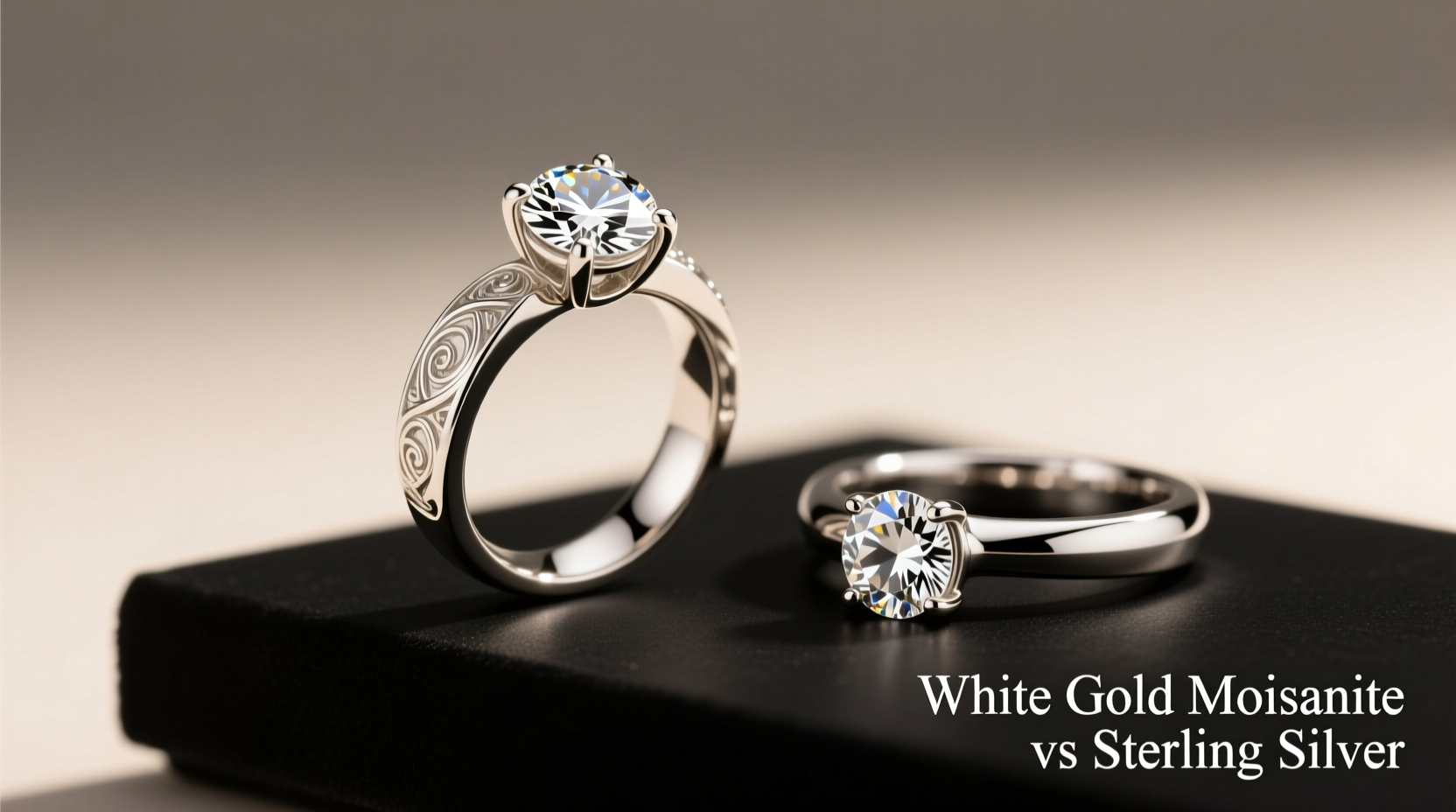
Choosing the right setting for a moissanite engagement ring involves more than just aesthetics—it’s a decision that affects longevity, maintenance, and long-term value. While both white gold and sterling silver offer a bright, modern look that complements moissanite’s brilliance, they differ significantly in composition, durability, and cost. For many shoppers, the question isn’t whether either metal looks good, but whether the higher price of white gold justifies its benefits over sterling silver.
This guide breaks down the real differences between white gold and sterling silver when used as settings for moissanite rings. We’ll explore wearability, maintenance, appearance over time, and overall value so you can decide which option aligns best with your lifestyle and budget.
Understanding the Metals: White Gold vs. Sterling Silver
Before comparing costs, it's essential to understand what each metal actually is—and why those differences matter.
White gold is an alloy made by combining yellow gold with white metals like palladium, nickel, or manganese. It’s then plated with rhodium, a rare metal from the platinum family, to enhance its brightness and scratch resistance. This plating gives white gold its signature lustrous, silvery-white finish. Depending on purity, white gold is typically marked as 14K or 18K, meaning it contains 58.3% or 75% pure gold, respectively.
Sterling silver, on the other hand, is 92.5% pure silver mixed with 7.5% copper or another alloy to increase strength. Pure silver is too soft for jewelry, so this blend improves durability while maintaining affordability. Sterling silver is often polished to a high shine and may be treated with protective coatings to slow tarnishing.
The fundamental difference lies in their purpose: white gold is designed for heirloom-quality jewelry meant to last decades, while sterling silver is more accessible and fashion-forward but less durable under daily wear.
Cost Comparison: Upfront Price vs. Long-Term Value
| Metal Type | Average Ring Cost (with Moissanite) | Lifespan (with Regular Wear) | Resale Value | Tarnish/Scratch Resistance |
|---|---|---|---|---|
| White Gold | $600–$1,500+ | 30+ years | Moderate to High | High (with rhodium plating) |
| Sterling Silver | $150–$400 | 5–10 years | Low | Low (tarnishes easily, scratches) |
At first glance, sterling silver appears to be the clear winner in terms of affordability. A complete moissanite ring in sterling silver can cost one-third—or even less—than a comparable design in white gold. However, this savings comes at the expense of longevity and resilience.
White gold’s higher initial cost reflects not only the value of gold content but also its structural integrity. Over time, the need to replace or repair a frequently worn sterling silver ring may erase any perceived savings. Additionally, white gold retains some resale value due to its precious metal content, whereas sterling silver has minimal scrap return.
Tip: If you're on a tight budget but want greater durability, consider recycled or vintage white gold settings—they often cost less than new ones without sacrificing quality.Durability and Daily Wear: Which Metal Holds Up?
Moissanite is nearly as hard as diamond (9.25 on the Mohs scale), making it ideal for everyday wear. But the stone’s performance depends heavily on the security and stability of its setting.
White gold is significantly harder than sterling silver, offering better resistance to dents, warping, and prong wear. This makes it far more suitable for active lifestyles, manual work, or anyone who tends to knock their hands against surfaces regularly. The rhodium plating further enhances surface hardness and maintains a mirror-like finish for years—though it does require re-plating every 1–3 years depending on use.
In contrast, sterling silver is softer and more prone to scratching, bending, and tarnishing. Even with proper care, a silver ring will show signs of wear within months of regular use. Tarnish—a dark layer caused by oxidation—is inevitable and requires frequent polishing. For engagement rings worn 24/7, this level of maintenance can become burdensome.
“While both metals can hold moissanite securely, white gold provides a much more stable foundation for lifelong wear. Silver works well for occasional pieces, but not for heirlooms.” — Daniel Reeves, GIA-Certified Jewelry Appraiser
Appearance and Maintenance: Keeping Your Ring Looking New
One of the most common concerns with sterling silver is discoloration. Over time, exposure to air, moisture, lotions, and perfumes causes silver to oxidize, turning yellowish or black. While this can be cleaned off, repeated polishing wears down the metal, thinning the band and weakening prongs.
White gold doesn’t tarnish, but its rhodium plating does wear off eventually, revealing a slightly warmer undertone beneath. Most jewelers recommend re-dipping the ring in rhodium every 12–18 months to restore its bright white luster. This service typically costs $40–$80 and is a small investment compared to potential repairs needed on degraded silver settings.
In terms of visual appeal, both metals start out looking very similar—bright, reflective, and modern. But after six months of daily wear, the differences become apparent: a white gold ring maintains its crisp lines and shine, while a silver ring may appear dull, scratched, or uneven in color.
Step-by-Step Care Guide for Each Metal
- For White Gold Rings:
- Clean monthly with mild soap and warm water using a soft brush.
- Have rhodium plating checked annually; re-plate if surface appears dull.
- Inspect prongs every 6 months for looseness or wear.
- Remove during heavy activity or chemical exposure (e.g., cleaning).
- For Sterling Silver Rings:
- Polish weekly with a silver-specific cloth to prevent tarnish buildup.
- Store in an airtight bag with anti-tarnish strips when not worn.
- Avoid contact with chlorine, sulfur, and cosmetics.
- Deep clean quarterly using a non-abrasive silver cleaner.
Real-Life Example: Two Buyers, Two Choices
Sophia and Mia both wanted beautiful moissanite engagement rings but had different priorities. Sophia chose a 1-carat cushion-cut moissanite in a 14K white gold solitaire setting for $1,100. She works in healthcare and wanted something she could wear every day without worry.
Mia opted for a similar design in sterling silver at $275. She loved the immediate savings and planned to upgrade later. After two years, however, her silver ring had visibly tarnished, the band had warped slightly from daily wear, and one prong became loose. She ended up spending $180 on resizing, replating, and prong tightening—nearly two-thirds of her original cost—and still felt uneasy about the ring’s reliability.
Sophia’s ring required one rhodium re-plating at $60 and routine cleanings. Despite working with her hands constantly, her ring looked nearly new after three years. In hindsight, Mia admitted she would have preferred investing in white gold from the start.
Frequently Asked Questions
Can I resize a sterling silver moissanite ring?
Yes, but frequent resizing weakens the metal due to silver’s softness. Each time it’s heated and reshaped, the structure degrades slightly. White gold handles resizing much better and can be adjusted multiple times safely.
Does moissanite look better in white gold or silver?
Moissanite’s icy sparkle looks excellent in both metals initially. However, because white gold stays brighter and whiter longer, the stone continues to reflect light optimally over time. A tarnished silver setting can mute the gem’s fire and brilliance.
Is there a middle-ground option?
Yes—consider platinum or palladium for maximum durability, or look for silver rings with protective rhodium plating. Alternatively, lab-grown diamonds or moissanite in recycled white gold offer ethical and cost-effective premium options.
Final Verdict: Is White Gold Worth the Extra Cost?
For an engagement ring or any piece intended for daily, lifelong wear, white gold is absolutely worth the additional investment. While sterling silver offers undeniable short-term savings, its limitations in strength, longevity, and maintenance make it a poor match for securing a valuable stone like moissanite over decades.
The extra cost of white gold pays for peace of mind—knowing your ring can withstand life’s bumps, retain its beauty, and potentially be passed down. When you factor in replacement costs, repairs, and emotional value, the math often favors white gold despite the higher sticker price.
💬 Ready to choose with confidence? Evaluate your lifestyle, budget, and long-term goals. If you plan to wear your moissanite ring every day for years to come, choosing white gold isn’t an indulgence—it’s a smart, lasting decision.