When it comes to choosing elegant, eye-catching jewelry like cross earrings, two of the most popular diamond alternatives stand out: moissanite and cubic zirconia. Both offer dazzling sparkle at a fraction of the cost of diamonds, but they differ significantly in durability, brilliance, and long-term value. For shoppers weighing aesthetics against practicality, understanding these differences is essential. Is the higher price of moissanite justified? Or does cubic zirconia deliver enough beauty to make the savings worthwhile?
Understanding the Basics: What Are Moissanite and Cubic Zirconia?
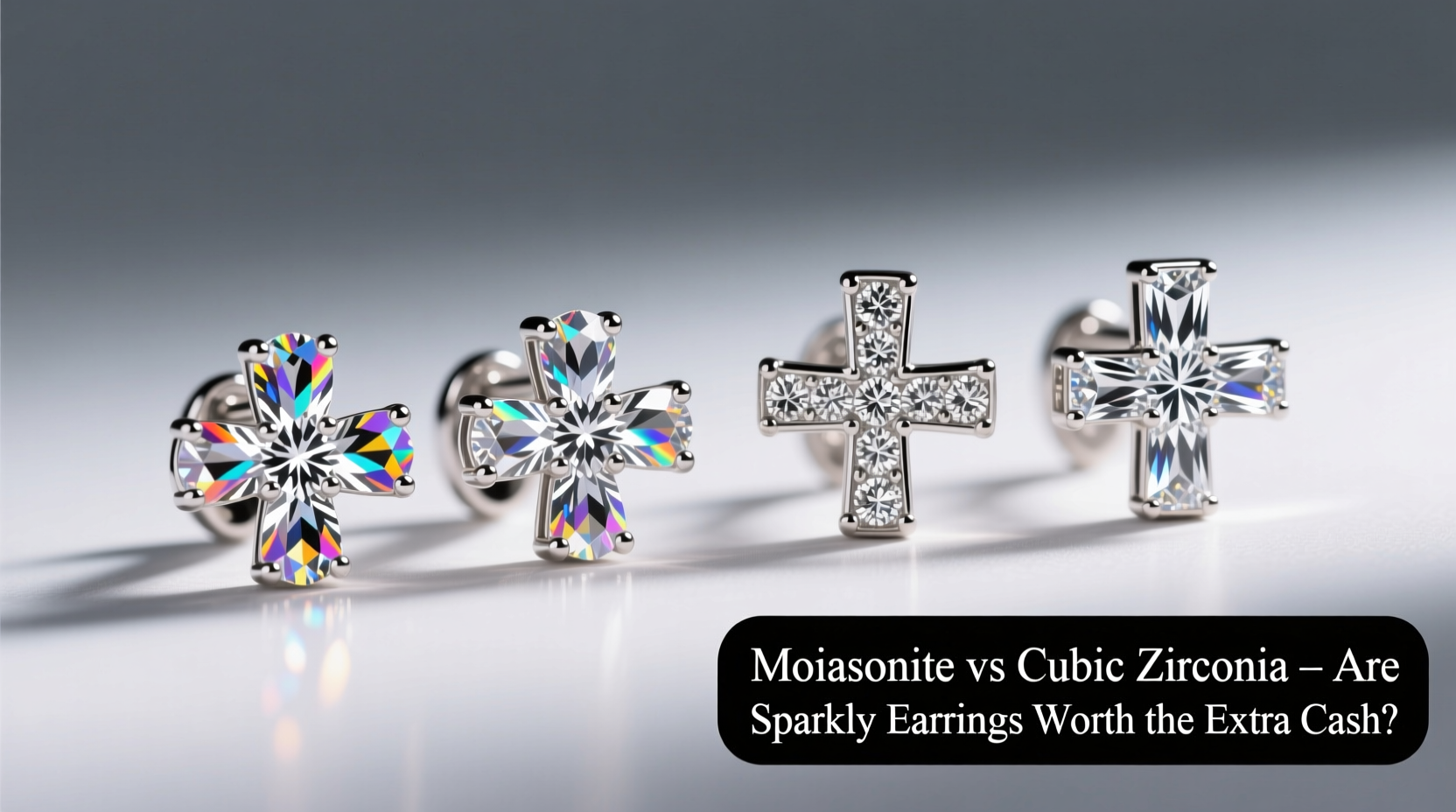
Moissanite is a naturally occurring mineral—silicon carbide—that was first discovered in a meteor crater by French scientist Henri Moissan in 1893. Today’s moissanite jewelry uses lab-created stones that replicate this rare gem’s optical properties. Known for its exceptional fire and brilliance, moissanite ranks 9.25 on the Mohs scale of hardness, making it one of the hardest known substances, second only to diamond.
Cubic zirconia (CZ), on the other hand, is a synthetic crystalline form of zirconium dioxide. First developed in the 1970s, CZ quickly became a mainstream diamond simulant due to its affordability and visual similarity to diamonds. It scores between 8 and 8.5 on the Mohs scale, making it reasonably durable—but notably softer than moissanite.
“Moissanite isn’t just a substitute—it’s a legitimate gemstone with unique optical properties that often outshine even high-quality diamonds in terms of fire and brilliance.” — Dr. Lena Peterson, Gemologist & Materials Scientist
Optical Performance: Which Stone Truly Sparkles More?
Brilliance—the reflection of white light—and fire—the dispersion of light into rainbow colors—are key factors in how “sparkly” a stone appears. Moissanite has a refractive index of 2.65–2.69, compared to cubic zirconia’s 2.15–2.18 and diamond’s 2.42. This means moissanite bends more light, resulting in greater brilliance.
More dramatically, moissanite exhibits double refraction, a property that splits light into two rays as it passes through the stone. While subtle, this effect can enhance depth and scintillation under certain lighting conditions. In contrast, CZ tends to have a glassy, overly uniform shine that some describe as “plastic-like” under bright lights.
Tip: View both stones under natural daylight and indoor lighting to see how their sparkle changes—moissanite often shines brightest in sunlight.Durability and Longevity: Will Your Earrings Last?
Jewelry worn daily, especially earrings, must withstand constant exposure to skin oils, lotions, and minor impacts. Here, moissanite holds a clear advantage. Its near-diamond hardness makes it highly resistant to scratches, abrasion, and chipping. With proper care, moissanite cross earrings can retain their luster for decades without clouding or dulling.
Cubic zirconia, while initially brilliant, is more prone to surface wear. Over time, microscopic scratches accumulate, causing the stone to lose its polish and appear hazy. Exposure to chemicals found in household cleaners or cosmetics can accelerate this degradation. Many CZ pieces begin to look tired within 1–3 years of regular use.
For religious or sentimental jewelry like cross earrings—often worn close to the heart and intended as lifelong keepsakes—longevity matters. A piece meant to symbolize enduring faith deserves a stone that won’t fade with time.
Cost Comparison: Breaking Down Value Beyond Price Tags
At first glance, cubic zirconia wins on price. A pair of CZ cross earrings can cost as little as $20–$50, while comparable moissanite designs range from $150–$400 depending on carat size and metal quality. However, evaluating value requires looking beyond initial cost.
Consider this: if CZ earrings need replacing every two years due to wear, over ten years you might spend $250 on multiple pairs. Meanwhile, a single investment in moissanite could last a lifetime. Additionally, moissanite retains some resale value, particularly in higher carat sizes, whereas CZ has virtually none.
| Feature | Moissanite | Cubic Zirconia |
|---|---|---|
| Hardness (Mohs) | 9.25 | 8–8.5 |
| Refractive Index | 2.65–2.69 | 2.15–2.18 |
| Lifespan (with daily wear) | Decades | 1–3 years (before noticeable wear) |
| Average Price (6mm stone, sterling silver) | $150–$250 | $20–$50 |
| Resistance to Clouding | High | Low (prone to buildup and scratching) |
| Eco-Footprint (Lab Production) | Low environmental impact | Minimal impact, but shorter product life increases waste |
Real-Life Example: Choosing for Meaning and Memory
Sarah, a nurse from Austin, wanted meaningful cross earrings for her baptism anniversary. She considered CZ for its low cost but ultimately chose moissanite after trying both in-store. “The CZ looked nice under the store lights, but when I stepped outside, it dimmed,” she recalled. “The moissanite kept sparkling, even in the shade. I realized I wanted something that felt substantial—not just pretty for a moment.”
Three years later, Sarah still wears her moissanite earrings weekly. “They’ve survived hospital shifts, beach trips, and even being dropped once. Still look brand new. I’d never go back to CZ for anything I truly care about.”
Step-by-Step Guide: How to Choose the Right Sparkle for You
- Define your purpose: Are these everyday earrings or occasional pieces? Daily wear demands durability.
- Set a realistic budget: Consider long-term costs, not just upfront price.
- Compare in person: Visit a jeweler to see both stones under different lighting.
- Inspect craftsmanship: Look for secure prong settings, quality metal (e.g., 14k gold or platinum-grade silver), and symmetry.
- Ask about warranties: Reputable moissanite brands often offer lifetime guarantees against clouding or damage.
- Think sentimentally: If the piece carries emotional weight, invest in a material that reflects its importance.
Frequently Asked Questions
Can you tell moissanite apart from a diamond?
To the untrained eye, no—especially in smaller sizes. However, moissanite has more fire (rainbow flashes) than a diamond. Under magnification, double refraction may be visible, which diamonds do not exhibit.
Do cubic zirconia earrings tarnish or turn skin green?
The stone itself won’t tarnish, but low-quality base metals (like brass or copper alloys) used in cheap settings can react with skin acids, causing discoloration. Always opt for hypoallergenic metals like sterling silver or gold-plated surgical steel.
Are moissanite earrings ethical?
Yes. Lab-created moissanite avoids the environmental and human rights concerns associated with some mined gemstones. Most manufacturers use sustainable energy and traceable supply chains.
Final Verdict: Is the Extra Cash Worth It?
For occasional wear or fashion-forward looks you plan to rotate frequently, cubic zirconia remains a smart, budget-friendly option. But when it comes to jewelry with emotional significance—like cross earrings that represent faith, milestones, or personal identity—moissanite delivers superior value.
The extra cost buys more than sparkle; it buys permanence. It buys confidence that your earrings will remain radiant through life’s daily rhythms. It buys a piece of jewelry that doesn’t need constant replacement, reducing waste and long-term spending.
💬 Ready to invest in jewelry that lasts? Re-evaluate what “value” means to you—not just the price tag, but the meaning, durability, and joy each piece brings. Share your thoughts or experiences with gemstone choices below.