Commuting is more than just moving from point A to B—it’s about efficiency, comfort, and minimizing daily friction. One of the most overlooked factors in that equation is your bag. MKF, known for minimalist design and durable materials, offers two popular options: the shoulder bag and the tote. On paper, both seem capable. But when you're rushing through subway turnstiles, balancing coffee in one hand and your phone in another, which one truly simplifies your day?
The answer isn’t universal. It depends on how you move, what you carry, and what kind of strain you’re willing to tolerate over time. Let’s break down the real-world differences between the MKF shoulder bag and tote, based on ergonomics, organization, durability, and lifestyle fit.
Ergonomics: Weight Distribution and Comfort
How a bag carries weight matters more than most people realize—especially during long commutes or when walking several blocks. Poor weight distribution leads to shoulder strain, back pain, and fatigue by midday.
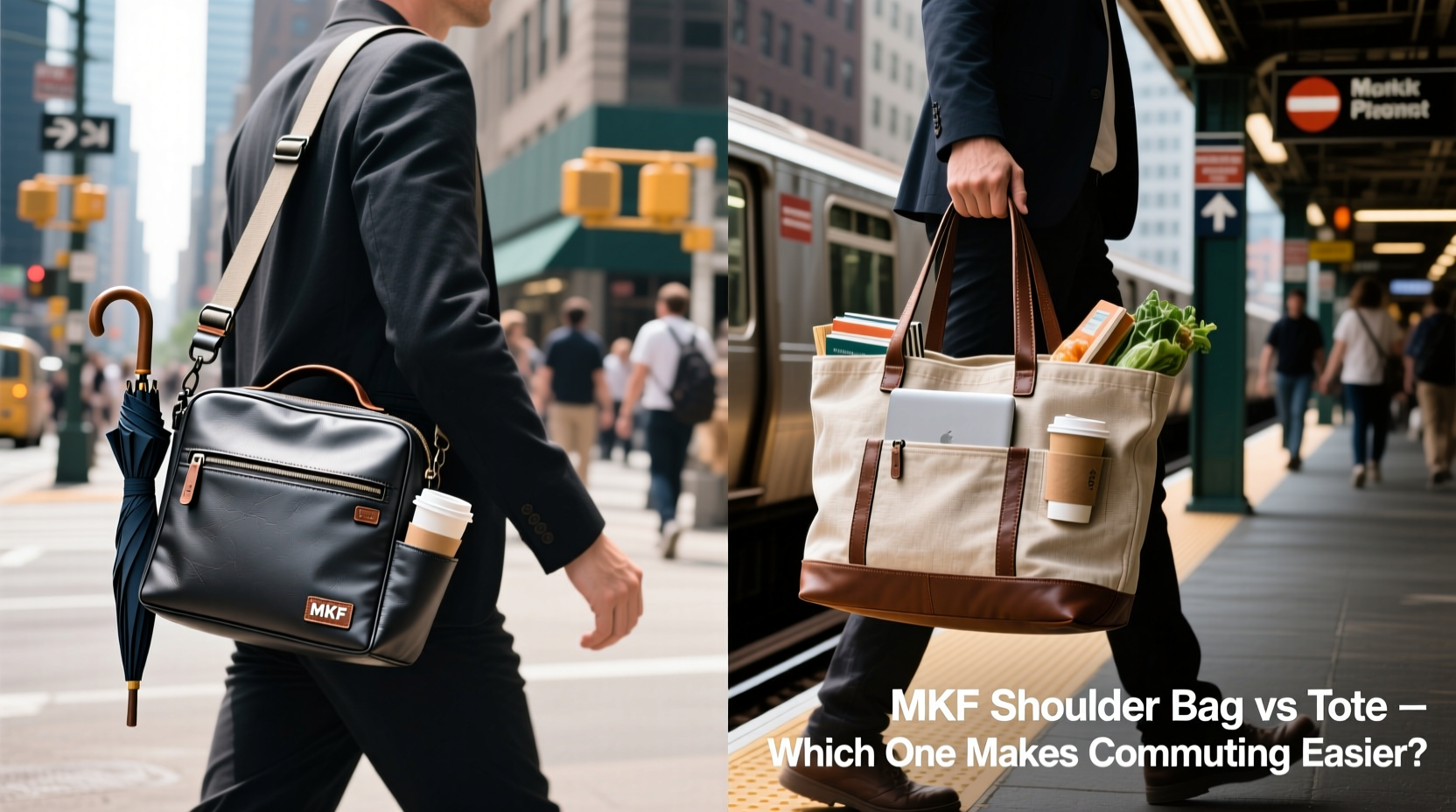
The MKF shoulder bag features a single strap designed to rest diagonally across the body or over one shoulder. This allows for better balance, especially when worn crossbody. The weight is distributed across the torso rather than concentrated on one side, reducing asymmetrical strain.
In contrast, the MKF tote relies on dual top handles and is typically carried in the hand or draped over one shoulder. While this looks polished, it places all the load on a single shoulder or grip, leading to muscle fatigue. Even with padded handles, prolonged use can cause discomfort, particularly if you're carrying 5–7 pounds of gear.
Tip: If you regularly carry a laptop, notebook, and water bottle, opt for a crossbody-style shoulder bag to reduce neck and shoulder tension.Capacity and Organization: What Fits (and What Doesn’t)
Both bags are built with urban professionals in mind, but their internal layouts serve different needs.
The MKF shoulder bag typically includes multiple compartments: a main zippered section, interior slip pockets, and often a dedicated padded sleeve for laptops up to 13 inches. Its compact size encourages minimalism—you can fit essentials like a wallet, keys, phone, small umbrella, and a slim tablet or e-reader. However, stuffing in extra layers (like a sweater) may stretch the seams or make zipping difficult.
The MKF tote, on the other hand, prioritizes volume. With an open-top or magnetic closure and a spacious main cavity, it easily accommodates a 15-inch laptop, gym clothes, a lunch container, and still leaves room for a book or two. Some models include interior zip pockets, but organization is generally less structured. This makes it easy to lose smaller items at the bottom.
“Totes are great for flexibility, but they sacrifice security and quick access. Shoulder bags win when you need to grab things on the go.” — Jordan Lee, Urban Mobility Consultant
Comparison Table: Key Features at a Glance
| Feature | MKF Shoulder Bag | MKF Tote |
|---|---|---|
| Weight (approx.) | 1.2 lbs | 1.8 lbs |
| Laptop Support | Up to 13\" | Up to 15\" |
| Carry Style | Shoulder or crossbody | Top handle or shoulder drape |
| Security | High (zippered closure) | Moderate (open or magnetic flap) |
| Daily Essentials Fit | Excellent | Overqualified |
| Best For | Shorter commutes, minimalists, cyclists | Office workers, hybrid days, bulk carriers |
Real-World Example: A Week in Two Bags
Sophia, a graphic designer in Chicago, tested both bags during her weekday commute—20 minutes by train, 10-minute walk each way, and occasional bike rides. She carried a 13-inch laptop, sketchbook, portable charger, water bottle, and jacket.
With the **MKF tote**, she appreciated the ease of throwing everything in. However, the lack of structure made accessing her transit card awkward while standing. The open top also caused her to misplace her stylus twice. Carrying it by hand led to hand numbness; draping it over her shoulder pulled her posture off-balance.
Switching to the **MKF shoulder bag**, she had to downsize—leaving the water bottle behind or using a sling bottle holder. But the crossbody wear kept her hands free, and the front pocket gave instant access to her card. She arrived at work less fatigued and felt more in control during rush hour.
Her verdict? “The tote wins on storage, but the shoulder bag wins on sanity.”
Durability and Weather Resistance
MKF uses water-resistant nylon and reinforced stitching in both designs, but real-world exposure tells a different story.
The shoulder bag’s lower profile and zippered closure protect contents better in rain. Its compact shape resists wind snags and fits under café tables without tipping over. The strap attachment points are double-stitched and undergo torsion testing, making them resilient to daily stress.
The tote, while sturdy, has larger exposed surfaces. Water can pool on the fabric, and heavy loads may strain the handle attachments over time. The open top increases vulnerability to spills and sudden downpours. Users report mildew development when damp clothes are stored inside without ventilation.
Tip: After rainy commutes, wipe down your bag and air it out overnight. Never store it damp.Actionable Checklist: Choosing Your Commute Companion
Use this checklist to decide which MKF bag aligns with your routine:
- ✅ Do you walk or bike more than 15 minutes each way? → Lean toward shoulder bag
- ✅ Do you carry a 15-inch laptop or gym gear daily? → Tote is likely necessary
- ✅ Do you value quick access to phone, wallet, or transit pass? → Shoulder bag excels
- ✅ Do you frequently switch between office and remote work? → Tote offers more flexibility
- ✅ Are you prone to shoulder or back pain? → Avoid tote carry unless using a shoulder pad
Frequently Asked Questions
Can I convert the MKF tote into a shoulder-friendly carry?
Some third-party accessories add adjustable straps to MKF totes, turning them into makeshift shoulder bags. However, these aren’t officially supported and may void warranty. DIY modifications risk damaging the bag’s integrity.
Is the MKF shoulder bag secure enough for crowded transit?
Yes. When worn crossbody, the zipper faces your body, making it difficult for pickpockets to access. The snug fit against your torso adds an extra layer of theft resistance compared to open totes.
Which bag lasts longer under daily use?
Both are built for longevity, but the shoulder bag sees less structural stress due to balanced weight distribution. User reports suggest shoulder bags maintain shape and function beyond 3 years with regular use, while totes show handle wear earlier—especially when consistently overloaded.
Final Verdict: Which One Actually Makes Life Easier?
If your goal is simplicity, reduced physical strain, and seamless daily movement, the **MKF shoulder bag** is the clear winner for most commuters. It enforces minimalism, enhances mobility, and integrates naturally into fast-paced urban life. You’ll spend less time adjusting straps, digging for items, or nursing sore shoulders.
The **MKF tote** shines when volume is non-negotiable—think hybrid workweeks, parent commuters, or those who pack lunch, shoes, and extras daily. But its convenience comes at the cost of ergonomics and situational awareness.
Ultimately, “easier” depends on your definition. Is it about carrying more? The tote. Is it about moving faster, feeling lighter, and staying organized? The shoulder bag.
“The right bag doesn’t just hold your things—it supports your rhythm.” — Lena Torres, Productivity Coach
Take Action Today
Reevaluate what you *actually* need every day, not just what you *might* need. Try a week with only essentials in the MKF shoulder bag. Track your energy levels, comfort, and efficiency. You might find that less really is more—and that the easiest commute starts with the right bag on your shoulder.
💬 Which MKF bag do you rely on for your commute? Share your experience and help others choose smarter.