In the modern workplace, subtle details often carry significant weight. Among them, wristwatch choice quietly influences first impressions, perceived competence, and even credibility. While both minimalist watches and oversized dials have carved out loyal followings, their appropriateness in a professional setting varies widely depending on context, industry norms, and personal presence. The question isn't just about aesthetics—it's about alignment with professionalism, discretion, and attention to detail.
A watch is no longer merely a timekeeping tool; it’s a statement of values. Is precision and restraint more aligned with your role, or does boldness and visibility serve you better? Understanding how each style performs under the scrutiny of boardrooms, client meetings, and hybrid office environments is essential for anyone aiming to project confidence without distraction.
The Case for Minimalist Watches in Professional Settings
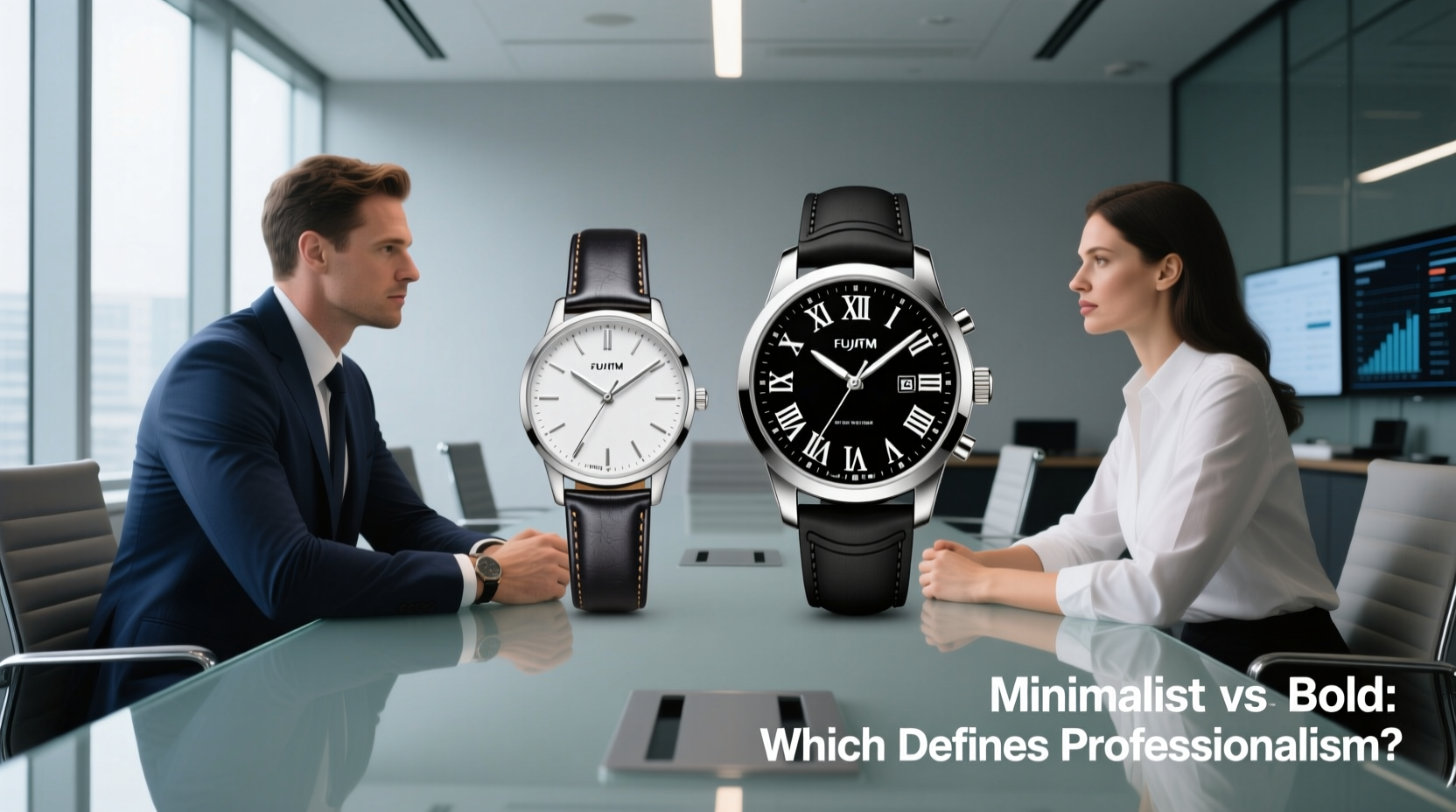
Minimalist watches—characterized by clean dials, thin cases, neutral colors, and understated branding—are often lauded for their elegance and versatility. Their design philosophy emphasizes function over form, subtly reinforcing traits like discipline, clarity, and focus. In conservative industries such as law, finance, academia, and corporate management, this aesthetic resonates deeply.
These timepieces typically feature:
- Slim profiles that slide neatly under shirt cuffs
- Neutral tones (black, white, silver, navy) that complement formal attire
- Simple indices or Roman numerals instead of flashy markers
- Leather or mesh straps that avoid visual clutter
Because they don’t draw attention, minimalist watches allow the wearer’s competence—not their accessories—to take center stage. This discretion aligns with long-standing sartorial codes where subtlety signals maturity and self-assurance.
Tip: When selecting a minimalist watch, ensure the case diameter stays between 36mm and 40mm for optimal proportion with formal wear.Oversized Dials: Bold Statements in Modern Workplaces
Oversized watches—generally defined as those exceeding 42mm in diameter—have gained popularity over the past two decades, particularly in tech, creative fields, and entrepreneurial circles. These models often feature large numerals, prominent bezels, and robust metal bracelets, projecting an image of assertiveness and modernity.
While some argue that larger dials enhance readability and reflect contemporary fashion trends, others criticize them for appearing ostentatious or distracting during handshakes and video calls. In high-pressure negotiations or leadership roles, an oversized watch can either convey authority or be interpreted as compensatory—depending on cultural context and audience perception.
Certain professions embrace bolder accessories. For example:
- Tech founders may wear large dive-style watches to signal innovation and rugged individualism.
- Architects and designers might pair oversized pieces with avant-garde outfits to reflect creative confidence.
- Film producers or media executives often use distinctive watches as conversation starters.
However, these exceptions underscore a rule: oversized dials are context-dependent. What reads as powerful charisma in Silicon Valley could appear gauche in Zurich banking offices.
“Professionalism isn’t about what you wear—it’s about whether your choices support your message, not distract from it.” — Marcus Lang, Executive Image Consultant
Comparative Analysis: Key Factors in Workplace Suitability
To determine which style serves professionals best, consider several measurable dimensions. Below is a comparison table outlining critical differences between minimalist and oversized watches in work environments.
| Factor | Minimalist Watch | Oversized Dial |
|---|---|---|
| Visual Discretion | High – blends seamlessly with formalwear | Low – draws immediate attention |
| Fit Under Cuff | Easily slips under dress shirt sleeves | Often protrudes, disrupting tailoring lines |
| Industry Acceptance | Broadly accepted across legal, financial, medical sectors | Limited acceptance; favored in creative/tech fields |
| Durability & Functionality | Varies, but generally focused on elegance over utility | Often built for sport/resilience, less refined finish |
| Perceived Confidence Level | Quiet confidence, self-assured restraint | Boldness, sometimes perceived as insecurity |
| Maintenance Visibility | Scratches and wear show easily; demands care | More forgiving due to bulkier construction |
This breakdown illustrates that while neither option is universally superior, minimalist watches consistently score higher in traditional measures of workplace appropriateness. They prioritize harmony with professional dress codes rather than competing with them.
Real-World Example: Two Executives, Two Choices
Consider two senior managers attending the same investor meeting:
Case A: Sarah wears a 38mm matte-black minimalist watch with a slim leather strap. Her suit is tailored, her gestures measured. During presentations, clients notice her punctuality and poise—but never her wrist. One attendee later remarks, “She had everything under control,” associating her calm demeanor with reliability.
Case B: James sports a 45mm chronograph with a brushed steel bracelet. The watch catches light every time he gestures. While his expertise is undeniable, multiple participants later comment on the “loud” accessory. One whispers, “He must really want us to know he has a fancy watch.”
Neither was unprofessional, but Sarah’s choice reinforced neutrality and focus, while James’s inadvertently shifted attention toward personal branding. In settings where objectivity and trust are paramount, such nuances matter.
Guidelines for Choosing Based on Industry and Role
Professionals should tailor their accessory choices to their environment. Here’s a practical checklist to help evaluate the right fit:
Checklist: Selecting the Right Watch for Your Workplace- Assess your company culture: Is it conservative, progressive, or mixed?
- Observe senior leaders: What do they wear on their wrists?
- Evaluate client interaction frequency: Do you meet external stakeholders regularly?
- Consider video presence: Will your watch be visible during Zoom calls?
- Match your attire: Can the watch integrate with your typical outfit?
- Ask: Does this accessory highlight me, or support my message?
For instance, in investment banking or law firms, deviation from classic minimalism risks being seen as immature or attention-seeking. Conversely, startup founders in digital health or AI ventures may benefit from a slightly bolder aesthetic that reflects innovation and energy.
Common Misconceptions About Watch Size and Status
A persistent myth suggests that bigger watches equate to higher status. This idea emerged in the early 2000s when luxury brands marketed larger models as “executive” editions. However, true executive style has historically leaned toward restraint.
Take legacy figures like Warren Buffett, who famously wears a simple Seiko, or Angela Merkel, known for her modest timepiece. Their influence stems from substance, not spectacle. Similarly, many Swiss bankers and diplomats opt for vintage Jaeger-LeCoultre or Patek Philippe Calatravas—models celebrated for refinement, not size.
Another misconception is that younger professionals should adopt trendy oversized designs to appear current. Yet research in organizational psychology shows that employees perceived as “mature” and “dependable” advance faster, regardless of age. Clothing and accessories play a key role in shaping those perceptions.
Step-by-Step: Transitioning to a More Professional Watch Style
If you’re reconsidering your current watch choice, follow this timeline to make a thoughtful shift:
- Week 1–2: Observe colleagues and industry leaders. Take note of common patterns in watch size, color, and placement.
- Week 3: Audit your wardrobe. Identify which outfits dominate your weekly schedule (e.g., suits, business casual).
- Week 4: Research three minimalist models within your budget. Focus on diameter (ideally 36–40mm), strap material, and dial simplicity.
- Month 2: Purchase one versatile piece and wear it exclusively for two weeks. Gather feedback (direct or indirect) from peers.
- Ongoing: Rotate only with similarly styled watches. Avoid mixing minimalist and oversized styles in the same week to maintain consistency.
This gradual approach prevents stylistic whiplash and allows others to adjust to your evolving image naturally.
Frequently Asked Questions
Can I wear an oversized watch if I have large wrists?
Proportion matters, but professionalism transcends anatomy. Even with larger wrists, a 42mm+ watch may still appear excessive in formal settings. Instead, consider a well-proportioned 40–41mm model with a slightly broader lug design to balance your frame without sacrificing elegance.
Are smartwatches acceptable in place of traditional ones?
In most professional environments, standard smartwatches (like Apple Watch) are increasingly normalized—especially when paired with minimalist bands. However, they should be used discreetly. Turn off notifications during meetings, and avoid animated watch faces. For maximum professionalism, switch to a classic analog appearance mode during work hours.
Is gold plating appropriate for either style?
Minimalist watches in rose or yellow gold accents can work if kept subtle—thin cases, small logos, and muted finishes. Oversized gold watches, however, tend to evoke flashiness unless worn in specific luxury or entertainment industries. When in doubt, stick to stainless steel or two-tone combinations with restrained gold elements.
Final Thoughts: Aligning Accessories with Intent
The debate between minimalist watches and oversized dials ultimately centers on intent. Are you dressing to command attention, or to command respect? In most professional arenas, the latter prevails.
Minimalist watches excel because they embody principles long associated with excellence: precision, humility, and intentionality. They don’t shout—they listen. And in environments where judgment is constant and impressions form quickly, that quiet assurance often speaks loudest.
Oversized dials have their place, particularly in dynamic, visually driven fields. But even there, moderation tends to win. A single bold piece reserved for presentations or networking events can be effective. Wearing it daily risks diminishing its impact—and your credibility.
💬 Ready to refine your professional image? Reassess your wristwatch not as an afterthought, but as a deliberate extension of your work ethic. Choose clarity over volume, and let your actions—not your accessories—define your success.