When it comes to choosing a dress that flatters your figure, the length plays a crucial role—especially if you're concerned about how certain areas appear. Cellulite is a natural part of many bodies, affecting up to 90% of women at some point in their lives. Rather than focusing on elimination, many seek strategic ways to feel confident in their clothing. Among the most common questions: does a mini dress or a midi dress better minimize the visibility of cellulite? The answer isn’t just about length—it’s about proportion, fabric, cut, and silhouette.
Understanding Cellulite and Fashion Perception
Cellulite occurs when fat deposits push through the connective tissue beneath the skin, typically appearing on thighs, hips, and buttocks. It's influenced by genetics, hormones, and lifestyle, but its presence doesn't reflect health or fitness. Despite being entirely normal, many people prefer to style around it for personal comfort.
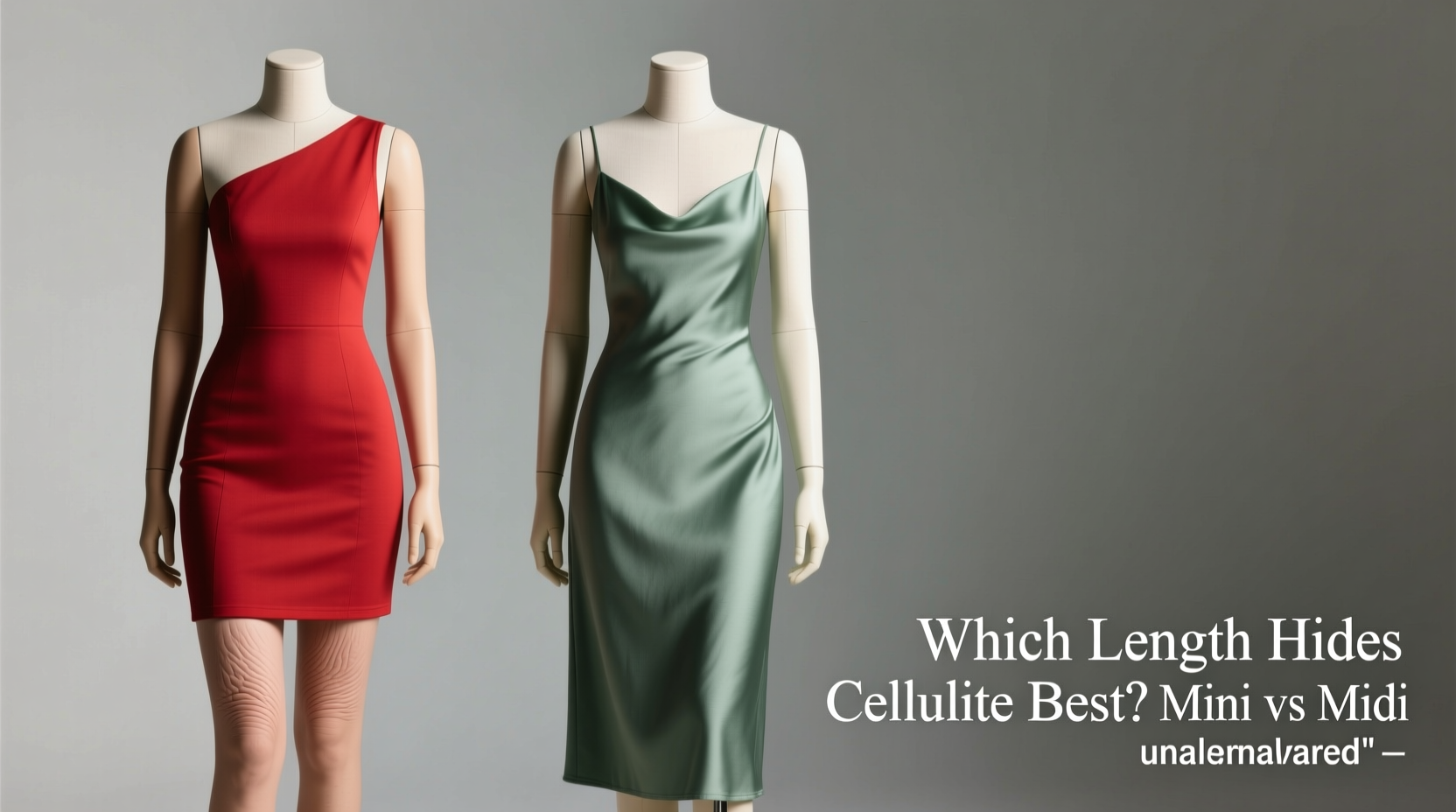
Fashion doesn’t need to hide your body—it can celebrate it while offering subtle shaping effects. The key is understanding how different dress lengths interact with body proportions. A shorter hemline might emphasize the upper thigh, where cellulite is often most visible, while a longer cut could drape over problem areas more effectively.
“Clothing should enhance confidence, not mask the body. The right dress length works with your shape, not against it.” — Lena Torres, Inclusive Stylist & Body Image Advocate
Mini Dresses: Pros and Cons for Cellulite Concealment
Mini dresses typically end 4–7 inches above the knee. While they’re undeniably stylish and youthful, their impact on cellulite visibility depends heavily on fit and design.
Pros:
- Draws attention upward to the legs’ slimmest part—the lower thigh and calves.
- Creates a longer leg illusion, shifting focus away from texture concerns.
- Versatile for pairing with opaque tights or boots, which can smooth appearance.
Cons:
- Often ends at the widest part of the thigh, potentially accentuating dimpling.
- Tight or clingy fabrics (like jersey or spandex blends) may highlight rather than conceal.
- Limited coverage makes skin texture more noticeable under bright lighting or photos.
Midi Dresses: Why They Often Work Better
Midi dresses fall between the knee and ankle, typically hitting mid-calf. This range offers a sweet spot for minimizing cellulite visibility without sacrificing style.
The mid-calf length avoids the upper thigh—where cellulite is most concentrated—and instead covers the area with flowing fabric. When designed with movement in mind, such as tiered skirts or slight flares, midi dresses naturally skim over curves rather than hugging them.
Fabrics like cotton voile, rayon blends, or structured crepe provide gentle structure without clinging. Wrap styles and empire waists further enhance the effect by drawing eyes toward the narrowest part of the torso.
Real-Life Example: Sarah’s Summer Wedding Dilemma
Sarah, 34, was invited to a garden wedding and wanted to wear a dress she felt confident in. She loved the idea of a mini dress but noticed in photos that her upper thighs appeared lumpier than expected. After trying several options, she chose a navy midi wrap dress with a ruched bodice and soft pleated skirt. The length hit just below her knee, and the fabric flowed loosely over her legs. At the event, she received multiple compliments and later said, “I didn’t think about my legs once—which is rare for me.”
Key Factors Beyond Length
Length alone doesn’t determine how well a dress conceals cellulite. Other elements are equally—if not more—important.
| Factor | Mini Dress Impact | Midi Dress Impact |
|---|---|---|
| Fabric Type | Clingy materials emphasize texture; stretch knits can dig in. | Flowing fabrics drape smoothly, reducing shadow and definition. |
| Silhouette | Fitted styles may highlight contours; A-line is more forgiving. | A-line, shirt-dress, or tiered cuts create visual flow. |
| Waist Placement | High waist can elongate legs; low waist may shorten proportions. | Empire or natural waist enhances balance and draws eyes up. |
| Pattern & Color | Dark solids reduce attention; large prints can distort shape. | Vertical lines or small prints add length without emphasis. |
Step-by-Step Guide to Choosing the Most Flattering Dress
- Assess your comfort zones. Identify which areas you’d like to downplay and which you love showing off (e.g., shoulders, ankles).
- Try both lengths in natural light. Artificial lighting in stores can be misleading. Move around to see how fabric drapes when walking or sitting.
- Prioritize fabric drape. Hold the dress away from your body and let it fall. Does it cling or flow?
- Check the side profile. Turn to the side in the mirror. Does the hem hit at a flattering point on the leg?
- Add strategic layers. Consider sheer tights, cardigans, or shoes that elongate (like pointed-toe flats or block heels).
- Take a photo. Snap a picture from multiple angles. This reveals how the dress reads in real-world conditions.
Styling Checklist for Minimizing Cellulite Appearance
- ✅ Choose midi-length dresses with A-line or tiered skirts
- ✅ Opt for matte, non-reflective fabrics (avoid shiny satins)
- ✅ Select darker colors or vertical patterns for slimming effect
- ✅ Wear seamless underwear or shapewear if desired
- ✅ Pair with closed-toe shoes or ankle straps to elongate legs
- ✅ Avoid tight bands at the hem that can create bulges
Frequently Asked Questions
Does a longer dress always hide cellulite better?
Not necessarily. Maxi dresses can sometimes cling to thighs when walking, especially in thin fabrics. The midi length often provides the ideal balance—covering the upper leg while allowing airflow and movement.
Can I wear a mini dress if I have cellulite?
Absolutely. Confidence matters more than any physical trait. If you love a mini dress, wear it. For extra ease, choose styles with pockets, front pleats, or paired with textured tights to diffuse attention.
Are there specific brands known for flattering cellulite-prone areas?
Yes. Brands like Universal Standard, Eileen Fisher, and Reformation focus on inclusive sizing and thoughtful silhouettes. Look for collections emphasizing drape, adjustable fits, and high-quality knits.
Final Thoughts: Confidence Begins with Choice
The question of whether a mini or midi dress hides cellulite more effectively ultimately leads to a broader truth: clothing should serve the wearer, not the other way around. While midi dresses generally offer more coverage and a smoother visual line over the upper thigh, the best choice depends on your body, preferences, and the occasion.
Rather than aiming to hide parts of yourself, consider dressing to highlight what you love. A well-chosen midi dress in a flowing print can make you feel elegant and put-together. A bold mini paired with boots can radiate energy and confidence. Both are valid. Both are beautiful.
💬 Your turn: What dress length makes you feel most like yourself? Share your go-to style in the comments and inspire others to embrace their unique elegance.