In an age where notifications buzz on wrists and health metrics pulse through screens, the traditional wristwatch might seem like a relic. Yet millions still choose analog timepieces—not for what they do, but for how they make a statement. Among accessible luxury options, Megir has carved a niche with minimalist designs and Swiss-inspired craftsmanship at affordable prices. But when placed beside feature-rich smartwatches from Apple, Samsung, or Fitbit, the question arises: Are smart capabilities truly worth abandoning the classic aesthetic?
This isn’t just about telling time—it’s about identity, utility, and lifestyle alignment. Whether you're drawn to the quiet precision of a Megir or the dynamic connectivity of a smartwatch, understanding the trade-offs is essential.
The Allure of the Classic: What Makes Megir Stand Out
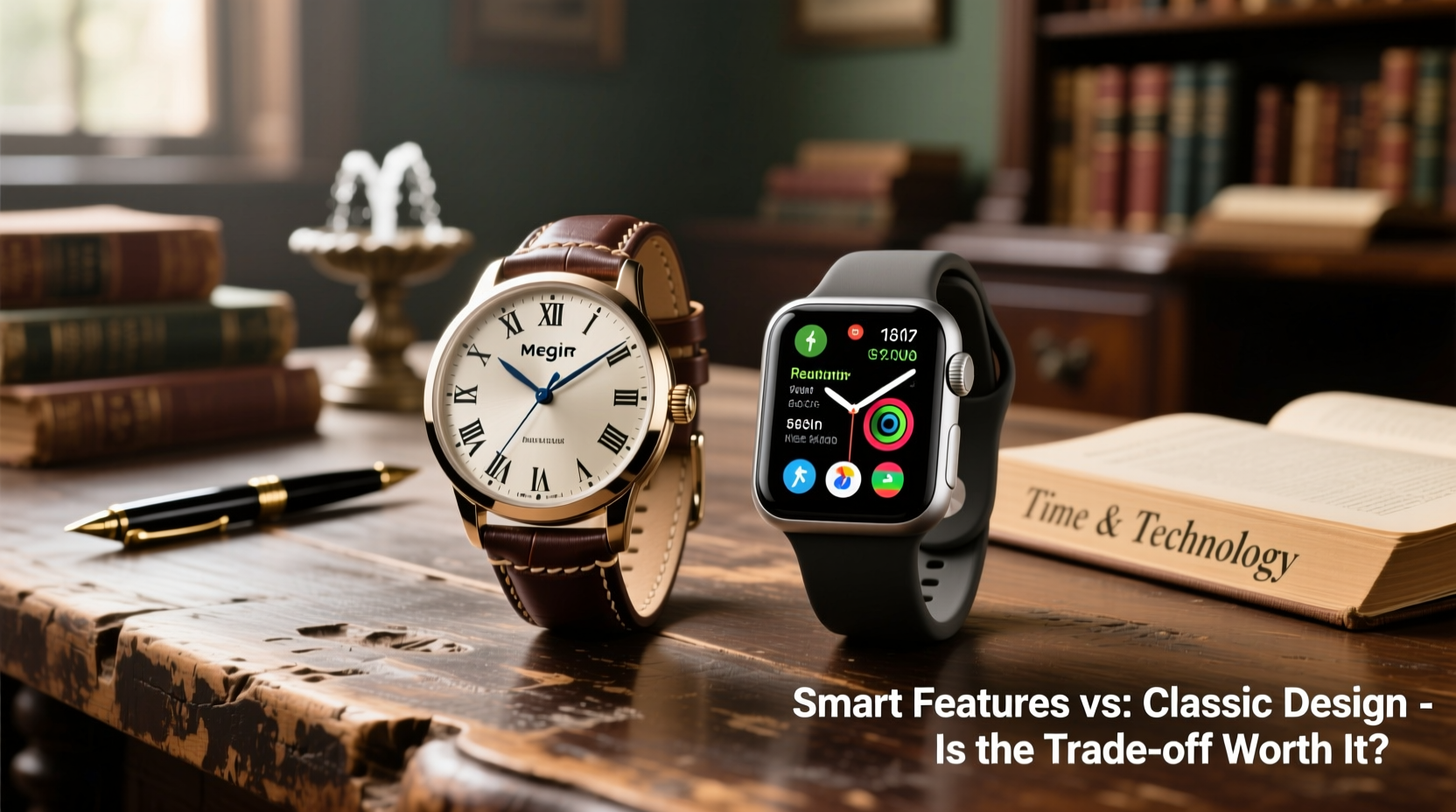
Megir watches occupy a sweet spot between affordability and sophistication. With clean dials, slim profiles, and materials that mimic high-end finishes, they offer the visual language of luxury without the five-figure price tag. Their mechanical or quartz movements emphasize reliability over digital complexity. More than function, these watches serve as accessories—complements to formal wear, complements to personal style.
Unlike smartwatches, which often prioritize screen real estate and sensor integration, Megir models focus on balance, proportion, and legibility. A well-designed Megir can transition seamlessly from boardroom to dinner date, unburdened by charging cycles or software updates.
Tip: Choose a Megir with a stainless steel case and sapphire crystal if longevity and scratch resistance are priorities.Smartwatches: Power, Productivity, and Personalization
Modern smartwatches deliver far more than timekeeping. They monitor heart rate, track sleep, log workouts, send alerts, control smart home devices, and even allow calls—all from your wrist. For fitness enthusiasts, professionals managing busy schedules, or those deeply embedded in digital ecosystems, this level of integration offers undeniable convenience.
However, this functionality comes with compromises. Smartwatches typically require daily or every-other-day charging. Their interfaces demand attention, potentially encouraging distraction rather than presence. And while design has improved dramatically, most still lean toward utilitarian aesthetics rather than timeless elegance.
The constant glow of the screen, frequent vibrations, and reliance on companion apps shift the relationship between user and device—from passive accessory to active participant.
Comparative Breakdown: Megir vs Smartwatch
| Feature | Megir Watch | Smartwatch |
|---|---|---|
| Battery Life | Months (quartz), years (mechanical) | 1–7 days |
| Design Aesthetic | Classic, minimalist, elegant | Modern, tech-forward, functional |
| Primary Function | Timekeeping, style | Health tracking, notifications, apps |
| Maintenance | Occasional battery replacement | Daily charging, software updates |
| Lifespan | Decades with care | 3–5 years (tech obsolescence) |
| Price Range | $30–$120 | $150–$800+ |
| Social Perception | Understated elegance | Tech-savviness, productivity |
“Wearing a classic watch isn’t nostalgia—it’s intentionality. It signals that you value simplicity and permanence in a world of fleeting updates.” — Daniel Reeves, Horology Journalist
When Simplicity Wins: Real-Life Contexts
Consider James, a corporate lawyer based in London. He owns both a Megir M3067 and an Apple Watch Series 9. During work hours, he wears the Apple Watch to stay on top of meetings, track steps between court appearances, and receive discreet call alerts. But every Friday evening, without fail, he swaps it for his silver-dial Megir.
“It’s not about rejecting technology,” he explains. “It’s about reclaiming moments. When I’m with my family or at a dinner, I don’t want red dots on my wrist reminding me of unread emails. The Megir doesn’t distract. It just exists—quietly, confidently.”
This scenario reflects a growing trend: hybrid usage. Many users aren’t choosing one over the other—they’re using each for its strengths. The smartwatch becomes a tool during active hours; the classic watch, a symbol of presence and poise during downtime.
Choosing Based on Lifestyle: A Practical Checklist
Ask yourself the following before deciding:
- Do I need real-time health monitoring (e.g., ECG, blood oxygen)? → Smartwatch
- Do I value long-term durability and minimal maintenance? → Megir
- Is my wardrobe dominated by formal or minimalist styles? → Megir enhances cohesion
- Am I frequently outdoors or traveling with limited access to power? → Megir wins on battery life
- Do I use voice assistants or mobile payments regularly from my wrist? → Smartwatch advantage
- Do I want a piece that could be passed down? → Megir has heirloom potential
Can You Have Both? The Rise of Hybrid Watches
For those unwilling to compromise, hybrid smartwatches offer a middle ground. Models like the Withings ScanWatch or Garmin Vivomove blend analog hands with subtle smart features—step counting, sleep tracking, and silent alarms—without sacrificing elegance. These run for weeks on a single charge and maintain the appearance of a traditional timepiece.
However, they lack full touchscreens, app ecosystems, and advanced fitness algorithms. They’re best suited for users who want light connectivity without the digital overload.
FAQ: Common Questions About Megir vs Smartwatches
Can a Megir watch compete with a smartwatch in accuracy?
Absolutely. Most Megir watches use precision quartz movements accurate within ±20 seconds per month—far more reliable than many early smartwatches. Timekeeping accuracy is not a weakness of analog watches.
Are Megir watches durable enough for daily wear?
Yes. With water resistance up to 5ATM (suitable for rain and handwashing) and sturdy mineral or sapphire crystals, Megir watches withstand regular use. Avoid submerging them, but everyday knocks won’t damage them if handled reasonably.
Will a smartwatch become obsolete faster than a Megir?
Almost certainly. Smartwatches face rapid tech turnover—new models annually, software support ending after 3–5 years. In contrast, a Megir requires no updates and remains functional indefinitely with basic servicing.
Final Verdict: Value Beyond Features
The debate isn't really about features versus fashion—it's about values. A smartwatch optimizes for data, efficiency, and connectivity. A Megir watch embodies restraint, tradition, and aesthetic harmony. Neither is objectively better; each serves a different philosophy of living.
If your priority is maximizing productivity and health insights, the smartwatch earns its place. But if you seek a quieter, more intentional relationship with time—if you appreciate design that endures rather than evolves—the Megir offers something irreplaceable.
And remember: elegance doesn’t require sacrifice. Many find fulfillment in owning both. Use the smartwatch to navigate the chaos of modern life. Then, when it’s time to pause, reflect, or connect, slip on a classic Megir. Let it remind you that some things—like style, silence, and simplicity—are worth preserving.
💬 Your turn: Do you wear a classic watch, a smartwatch, or both? Share your experience and help others decide what works best for their life.