Efficient breathing is the cornerstone of strong freestyle swimming. While stroke mechanics and kick technique are often emphasized, many swimmers overlook how profoundly their breathing patterns affect performance. Poor breathing disrupts rhythm, increases drag, and leads to early fatigue. Mastering freestyle breathing isn’t just about getting air—it’s about integrating breath seamlessly into your stroke to enhance propulsion, streamline body position, and extend endurance. This guide breaks down the biomechanics, common mistakes, and proven techniques to help you breathe smarter and swim stronger.
The Role of Breathing in Freestyle Efficiency
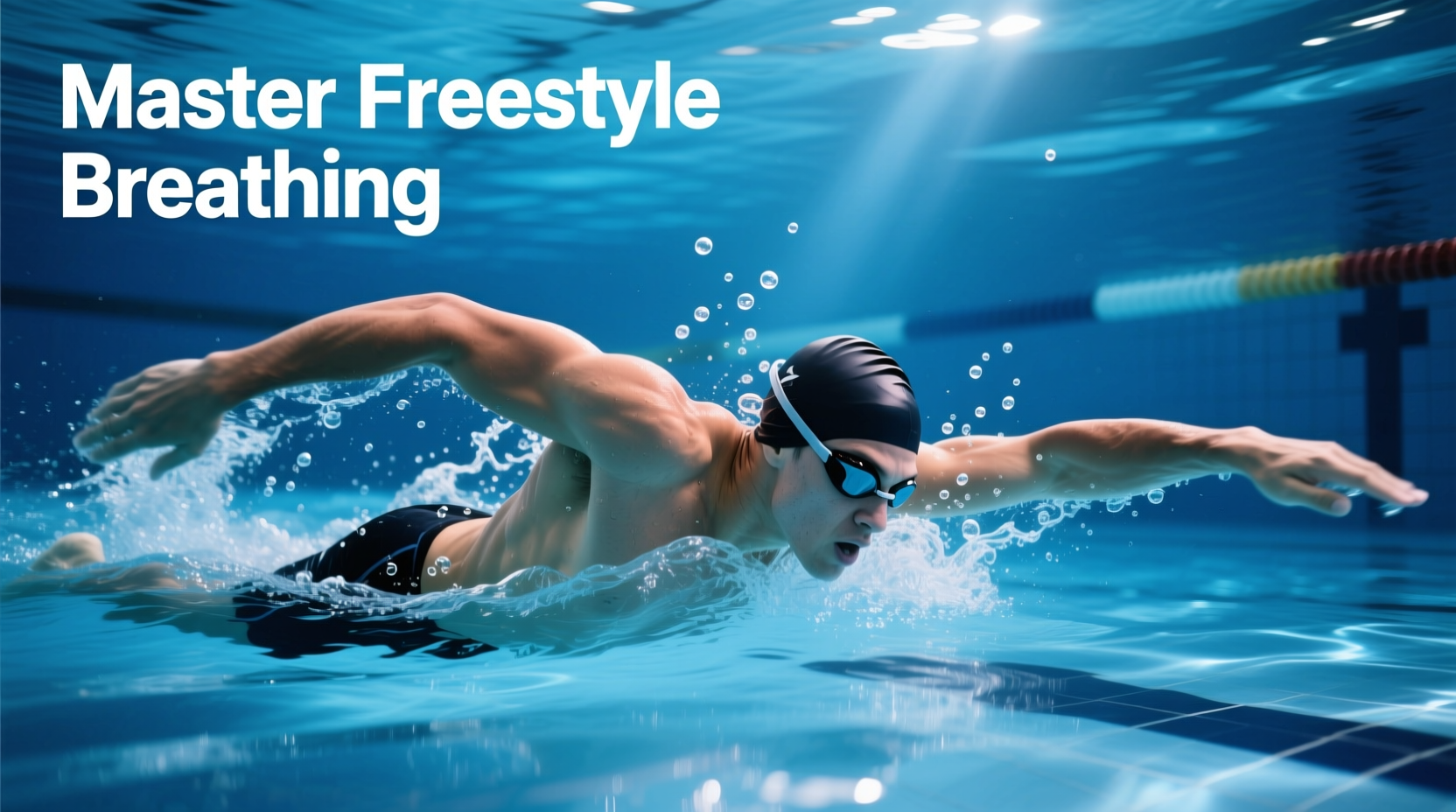
In freestyle, breathing must be synchronized with body rotation and arm movement. Unlike land-based sports, where breathing is largely automatic, swimming forces athletes to consciously time each inhale and exhale. When done correctly, breathing supports a balanced, streamlined stroke. When poorly executed, it causes head lifting, hip drop, and lateral wobble—each robbing speed and increasing effort.
A key principle is bilateral breathing—alternating sides every three strokes. This promotes symmetry, reduces muscle imbalances, and improves stroke consistency. However, even unilateral breathing can be efficient if integrated properly. The real issue lies not in frequency but in timing and coordination.
Tip: Exhale continuously underwater to prevent CO₂ buildup and make inhalation faster and smoother at the surface.Common Breathing Mistakes and Their Impact
- Lifting the head forward – Causes hips and legs to sink, increasing drag and resistance.
- Holding your breath – Leads to tension in the shoulders and neck, reducing stroke fluidity.
- Turning too late or too early – Disrupts hand entry and catch mechanics.
- Over-rotating the body – Wastes energy and destabilizes the stroke line.
- Inhaling only on one side – Encourages asymmetrical swimming and overuse injuries.
These errors compound over distance, turning manageable swims into exhausting efforts. Correcting them starts with awareness and deliberate practice.
Step-by-Step Guide to Optimal Freestyle Breathing
- Start with exhalation: As your face enters the water after a breath, begin exhaling steadily through your nose and mouth. Aim for a slow, continuous release—don’t wait until you need air.
- Initiate turn with shoulder roll: Let your body rotation (driven by hips and core) bring your mouth toward the air. Your head should move as an extension of your spine, not independently.
- Keep one goggle in the water: During the breath, only half of your face should clear the surface. If both goggles come out, you’re likely lifting your head.
- Breathe into the \"trough\": As your arm pulls beneath you, a natural wave forms alongside your head. Turn into this trough to minimize water entry and maximize air access.
- Inhale quickly and smoothly: Use a short, sharp inhale through the side of your mouth. Avoid gasping—think of sipping air rather than gulping it.
- Return head to neutral: As your recovering arm enters the water, rotate your head back down, re-establishing a streamlined position before the next pull.
Drill: Fingertip-to-Face Bilateral Breathing
To reinforce proper timing, try this drill: Swim freestyle using a catch-up stroke (bringing one hand forward and meeting it with the other under your chest). Breathe every third stroke, alternating sides. As your entering hand passes your chin, initiate the breath. This synchronizes breath with hand entry and emphasizes rhythm. Perform 4 x 50 meters focusing solely on coordination.
Do’s and Don’ts of Freestyle Breathing
| Do | Don’t |
|---|---|
| Exhale steadily underwater | Hold your breath between breaths |
| Rotate your body to breathe, not just your head | Lift your head forward like a turtle emerging from water |
| Breathe every 2–3 strokes depending on effort | Force yourself to breathe every 2 strokes if it disrupts rhythm |
| Practice bilateral breathing regularly | Always breathe to the same side out of habit |
| Use fins during drills to maintain body position | Add stress by drilling breathing without support when fatigued |
Expert Insight: What Coaches Emphasize
“Swimmers who master breathing don’t just get more oxygen—they swim with less resistance. The best freestylers make breathing look invisible because it’s fully integrated into their stroke.” — Coach Rafael Silva, USA Swimming Level 5 Certified Instructor
Coach Silva emphasizes that elite swimmers spend minimal time with their mouths above water—often less than 0.3 seconds per breath. This efficiency comes not from lung capacity, but from precise timing and relaxation. Tension in the neck or jaw signals inefficient breathing, regardless of how much air is taken in.
Mini Case Study: From Gasping to Gliding
Samantha, a triathlete training for her first Ironman, struggled with fatigue by the 1,200-meter mark of her 3,800m swim. Her coach observed her lifting her head high to breathe, causing her legs to drop and creating excessive splash. After two weeks of focused breathing drills—including vertical kicking with controlled breaths and single-arm freestyle with a snorkel—Samantha reduced her perceived effort by 30%. She now swims 200 meters farther before needing to rest, all without increasing fitness. The change? She exhales fully underwater and rotates her torso instead of jerking her head.
Breathing for Endurance: Strategies Beyond Technique
Technique alone won’t maximize endurance. How you manage respiration under sustained effort matters just as much. Consider these physiological strategies:
- Controlled breathing intervals: During steady-state swims, use a consistent pattern (e.g., 3-stroke bilateral breathing) to stabilize oxygen intake and prevent hyperventilation.
- Adapt breathing for pace: In sprints, switch to every-2-stroke breathing; during recovery, extend to every-6-strokes to deepen exhalation and reset CO₂ levels.
- Train CO₂ tolerance: Practice longer underwater phases during push-offs or use breath-hold drills (e.g., 3 kicks + 1 breath) to build comfort with elevated CO₂—a major trigger for breathlessness.
Frequently Asked Questions
How often should I breathe during freestyle?
For moderate-effort swimming, breathing every 3 strokes (bilateral) is ideal for balance and efficiency. During high-intensity efforts, switch to every 2 strokes to meet oxygen demands. Avoid rigid adherence—adjust based on workout intensity and comfort.
I keep swallowing water when I breathe. What am I doing wrong?
This usually happens when you turn too early or open your mouth before your face clears the water. Wait until your shoulder has rolled up and the \"trough\" beside your head is visible. Inhale through the side of your mouth, not the top. Practicing with a snorkel first can help isolate the issue.
Can poor breathing cause shoulder pain?
Yes. Over-rotating to breathe or lifting the head can strain the rotator cuff by altering arm path during the catch. Efficient breathing maintains alignment, reducing mechanical stress on the shoulder joint.
Conclusion: Breathe Better, Swim Stronger
Freestyle breathing is not a separate skill—it’s woven into the fabric of your stroke. When mastered, it becomes invisible, effortless, and empowering. By refining your exhalation, syncing breath with rotation, and practicing deliberately, you unlock greater efficiency, delay fatigue, and swim with more confidence. These techniques aren’t reserved for elites; they’re accessible to any swimmer willing to pay attention to the rhythm of breath and movement.
🚀 Ready to transform your swim? Dedicate 10 minutes of your next three workouts to breathing drills. Track how your stroke feels—and share your progress in the comments below.