
In the fast-paced world of NCAA Football 25, success often hinges on split-second decisions and seamless communication between quarterback and receiver. One of the most critical yet underappreciated skills for wide receivers is mastering the art of ball calling. While it may seem like a minor mechanic, effective ball calling ensures clean receptions, reduces turnovers, and maximizes offensive efficiency. This guide breaks down the nuances of ball calling in NCAA 25, offering actionable strategies to help wide receivers dominate the field through better communication, positioning, and awareness.
Understanding Ball Calling in NCAA 25
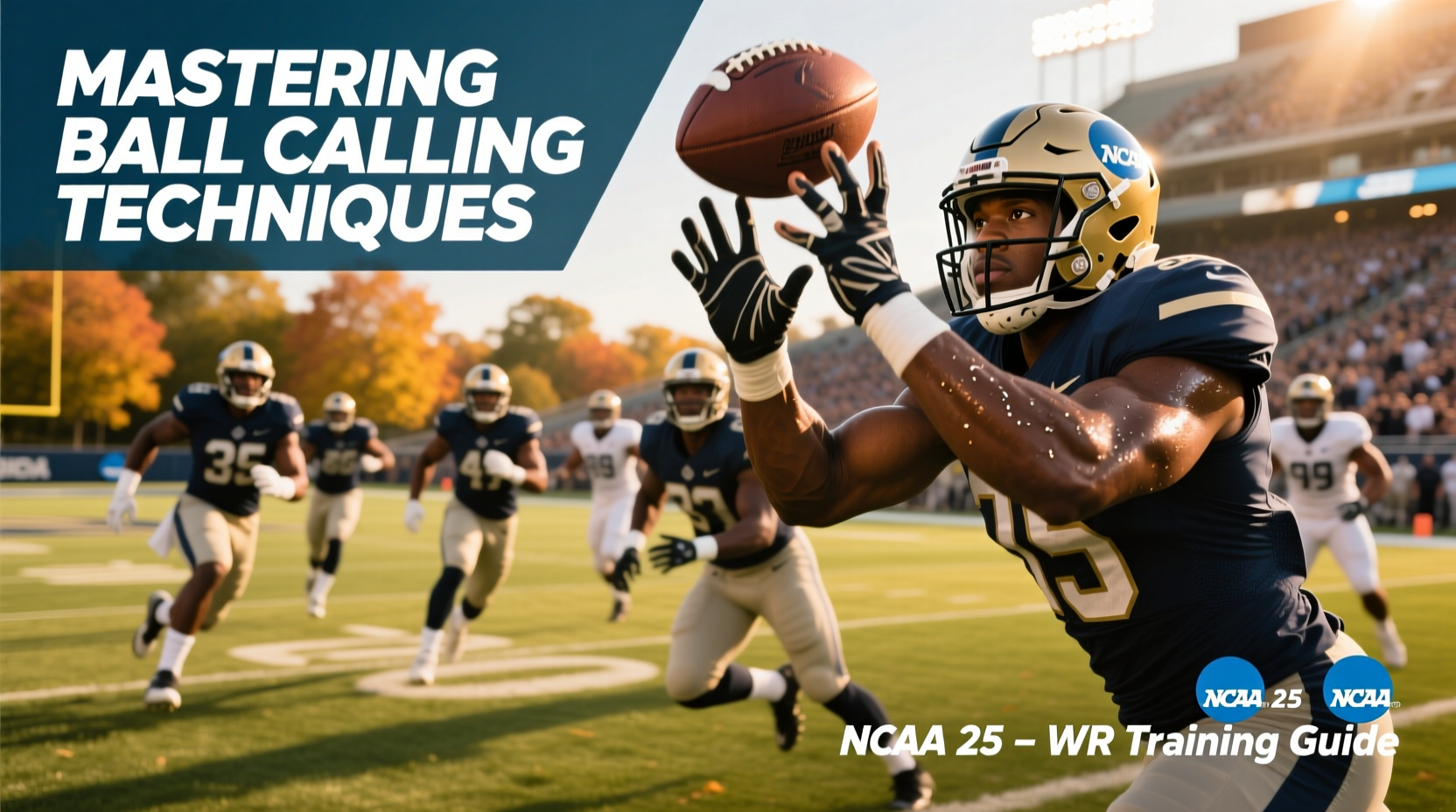
Ball calling refers to the in-game mechanic where a receiver signals intent to catch an incoming pass, typically when multiple players are in contention for the ball. In NCAA 25, this feature simulates real-life football dynamics where players communicate mid-play to avoid collisions and contested catches. When executed correctly, ball calling allows the designated receiver to gain priority control over the ball, improving catching mechanics and reducing the likelihood of drops or interceptions.
The system uses contextual awareness—based on route timing, proximity to the ball, and player momentum—to determine who should be in control. However, manual input from the player can override these defaults. Pressing the designated ball call button (typically L1/LB on consoles) alerts your quarterback and nearby AI teammates that you’re taking ownership of the catch. This is especially crucial during jump balls, sideline fades, and crossing routes with traffic.
Tip: Use the ball call command early—about 1–2 seconds before ball arrival—to give your QB time to recognize your intent.Key Techniques for Effective Ball Calling
Success isn’t just about pressing a button at the right time. It’s about integrating ball calling into your overall receiving strategy. Here are four foundational techniques every wideout should master:
- Route-Specific Timing: On deep post or corner routes, initiate the call as you break into open space. For slants or quick outs, only call if you see the QB looking your way and defenders converging.
- Spatial Awareness: Always assess where other receivers are. If a slot WR is cutting across your path on a fly route, delay your call until you’ve cleared them to avoid confusion.
- Body Positioning: After calling the ball, adjust your angle to shield defenders. Even in single-player mode, proper body control increases catch success rate.
- Quarterback Chemistry Recognition: Some QBs in NCAA 25 have higher “trust” ratings with certain receivers. The more you connect successfully, the more likely your calls will be honored instinctively by the AI.
When Not to Call the Ball
Overusing the ball call can backfire. If you're running a shallow drag while the tight end is breaking open on a seam route, asserting control could disrupt a higher-percentage play. Knowing when *not* to call is as important as knowing when to do so.
| Situation | Call the Ball? | Reason |
|---|---|---|
| 1v1 on an out route with no safety help | Yes | Low risk, high reward; you’re the primary read |
| Double move with slot receiver crossing behind | No | Risk of miscommunication; let the AI decide |
| Jump ball near goal line | Yes (early) | Establish priority before contact |
| Screen pass with linemen releasing | No | Timing is preset; calling interferes with blocking lanes |
Step-by-Step Guide to Perfecting Ball Calls
Follow this sequence during gameplay to build consistent, reliable ball calling habits:
- Pre-Snap Scan: Identify coverage type. Man? Zone? This determines how aggressively you’ll need to assert possession.
- Release and Read Defender: After the snap, judge your defender’s leverage. If they’re playing off, prepare for a deeper ball call.
- Mid-Route Adjustment: As you approach 10–15 yards downfield, check secondary support. If a safety is rotating over, anticipate a contested catch scenario.
- Initiate Call: Press L1/LB when the QB begins his throwing motion and you’re within optimal catching range.
- Track and Secure: Once the ball is in the air, focus on tracking it visually and adjusting your hands early. A called ball gives you enhanced catch-box control.
“Elite receivers don’t just run routes—they direct traffic. In NCAA 25, the best users treat ball calling like verbal audibles: precise, timely, and situationally aware.” — Coach Marcus Tran, Collegiate Esports Analyst
Common Mistakes and How to Fix Them
Even experienced players fall into predictable traps. Avoid these common pitfalls:
- Calling Too Late: Waiting until the ball is airborne reduces effectiveness. The system needs processing time to shift control.
- Ignoring Teammate Cues: If another receiver flashes a subtle animation indicating they’re breaking toward the ball, respect it—even in solo play, the AI reacts to hierarchy.
- Overreliance on Auto-Call: While NCAA 25 has improved AI prediction, manual input yields better results in tight windows.
- Calling on RPOs or Screens: These plays often have predetermined targets. Interfering can disrupt timing and lead to dropped passes.
Real-Game Scenario: The Fourth-Down Fade
Consider this situation: 4th quarter, 4th and 7 at the opponent’s 32-yard line. Your team lines up in 11 personnel, with you as the X-receiver lined up left. The defense shows Cover 2 man, but the boundary corner is playing press. You run a stutter-go, selling the curl before accelerating vertically.
The QB takes the snap, drops back, and begins to wind up as you reach the 15-yard line. The corner stays tight, but a safety begins rotating over the top. At this moment, you press L1—signaling clear intent. The game highlights your character with a brief glow effect, indicating successful ball claim. As the ball descends near the goal line, you leap, securing full catching mechanics priority. Despite contact, you complete the catch because your early call gave the engine time to assign control.
This wasn’t luck—it was execution rooted in disciplined technique.
Checklist: Optimal Ball Calling Routine
Use this checklist each time you line up as a WR to ensure consistency:
- ✅ Assess defensive alignment pre-snap
- ✅ Identify potential conflict zones (e.g., crossers, double moves)
- ✅ Time your release to create separation
- ✅ Watch QB’s eyes and throwing motion
- ✅ Initiate ball call 1–2 seconds before catch point
- ✅ Adjust body position to shield defender after call
- ✅ Focus on tracking the ball from release to hands
Frequently Asked Questions
Does ball calling work against human opponents?
Yes. While human-controlled defenders won’t yield, the ball calling mechanic still grants you enhanced catch-box authority and improved hand-placement physics, increasing your chance of securing contested catches.
Can I call the ball if I’m not the primary target?
You can, but success depends on context. If the QB is clearly targeting another receiver, your call may be ignored. However, in scramble or broken-play situations, initiating a call can redirect AI behavior and create opportunities.
Is there a cooldown or penalty for failed calls?
No explicit cooldown exists, but repeated misuse (e.g., calling on every play) can desensitize the AI response over time. Use it selectively to maintain credibility within the game’s logic.
Conclusion: Take Control of Every Catch
Mastery of ball calling in NCAA 25 separates good wide receivers from elite ones. It’s not merely a button press—it’s an extension of your decision-making, spatial intelligence, and chemistry with your virtual quarterback. By integrating deliberate ball calls into your route-running rhythm, you gain a tangible edge in contested situations, red-zone efficiency, and overall reliability.
Great receivers aren’t just fast or agile—they’re communicators. Start treating every route as a conversation. Signal with precision, act with confidence, and own every targetable throw. The difference between a dropped pass and a highlight-reel grab often comes down to one well-timed command.
🚀 Ready to dominate the receiving corps? Fire up NCAA 25, load up Practice Mode, and drill ball calls on every route type. Share your best tip in the comments below—what’s your go-to move when the ball’s in the air?








