When the temperature climbs and humidity settles in, choosing the right fabric for your summer wardrobe becomes more than a matter of style—it’s about comfort, practicality, and maintaining a polished appearance throughout the day. Two popular contenders for warm-weather shirts are linen and cotton poplin. Both offer breathability and lightness, but they differ significantly in how they respond to movement, heat, and washing. One of the most pressing concerns for professionals, travelers, and fashion-conscious individuals alike is: which fabric holds up better against wrinkles when worn all day in summer conditions?
This question isn’t just aesthetic. Wrinkles can affect confidence, influence first impressions, and dictate how often you need to change or press clothing. To make an informed decision, it’s essential to understand the structural properties of each fabric, their performance under real-world conditions, and how care routines impact their behavior over time.
The Science Behind Fabric Wrinkling
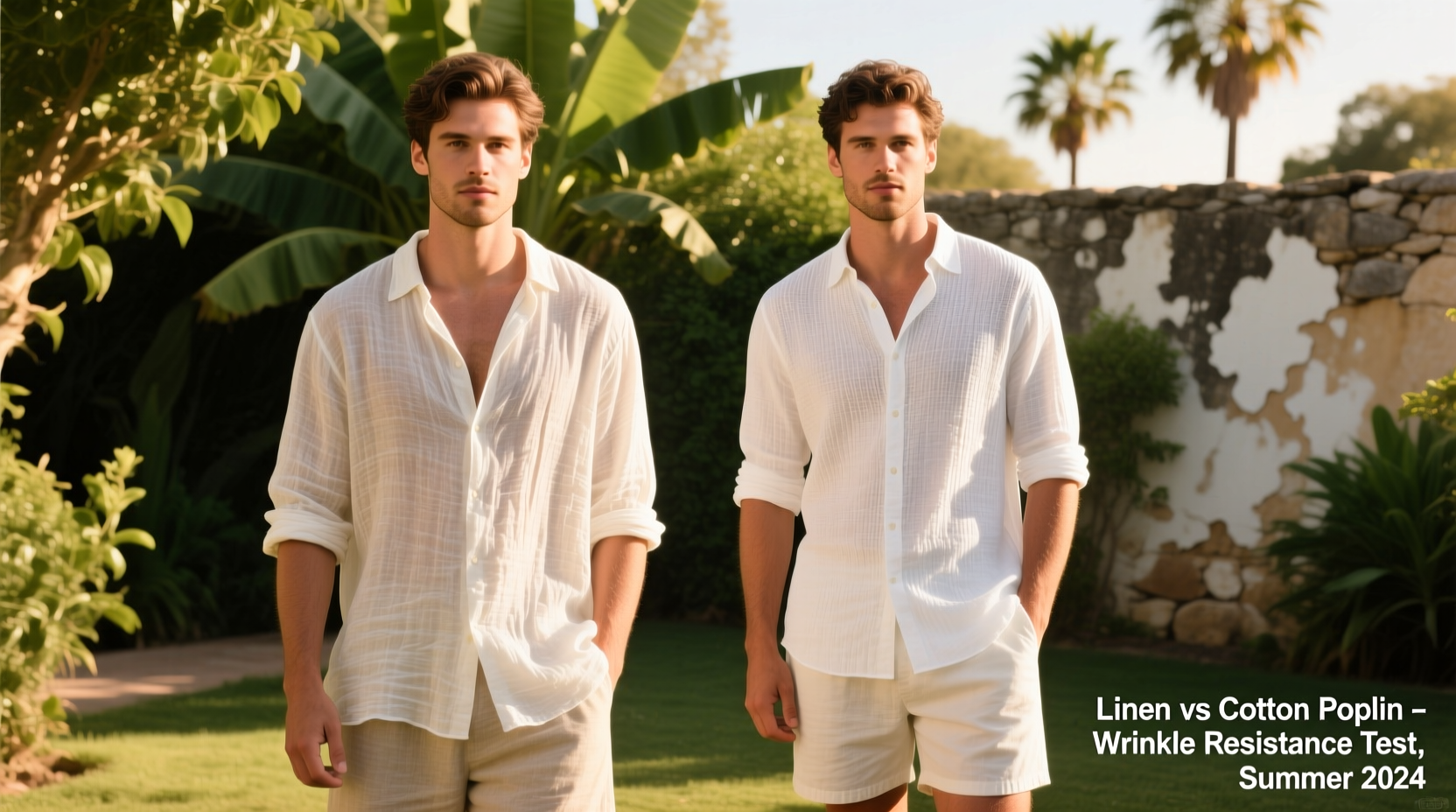
Wrinkling occurs when fibers in a fabric lose their original alignment due to stress—such as folding, sitting, or moisture exposure. The tendency to crease depends on several factors: fiber composition, weave structure, thread count, and finishing treatments.
Natural fibers like cotton and flax (used in linen) are prone to wrinkling because of their cellulose-based structure. Unlike synthetic fibers such as polyester, which have high elasticity and memory retention, natural fibers lack the ability to spring back into shape after deformation. However, not all natural fabrics behave the same way.
Linen is made from the bast fibers of the flax plant. These fibers are long, strong, and highly absorbent, making linen exceptionally breathable. But its rigidity means that once bent, the fibers resist returning to their original position—hence the characteristic crumpled look many associate with linen.
Cotton poplin, on the other hand, uses tightly woven, fine cotton yarns in a plain weave pattern—typically one weft thread over one warp thread. This tight construction increases resistance to wrinkling compared to looser weaves. Poplin also benefits from higher thread counts and sometimes includes mercerization, a chemical treatment that strengthens fibers and enhances luster and smoothness.
Tip: Fabrics with tighter weaves generally resist wrinkles better than loose, open weaves—even among natural fibers.Comparative Analysis: Linen vs Cotton Poplin
To determine which fabric wrinkles less during summer days, let’s examine them across key performance categories.
| Fabric Property | Linen | Cotton Poplin |
|---|---|---|
| Weave Type | Plain, often loose or medium | Tight plain weave (poplin) |
| Fiber Strength | Very high (strongest natural fiber) | Moderate to high |
| Breathability | Excellent (high moisture wicking) | Good (less porous than linen) |
| Wrinkle Resistance | Poor (prone to deep creases) | Good (resists minor folds) |
| Drying Speed | Fast (dries quickly after sweating) | Moderate (slower than linen) |
| Formal Appearance | Casual/rustic aesthetic | Clean, crisp, office-appropriate |
| Weight & Drape | Light to medium, slightly stiff drape | Lightweight, smooth drape |
From this comparison, it’s clear that cotton poplin outperforms linen in wrinkle resistance. Its tight weave and smoother fiber surface allow it to maintain shape longer under daily movement. While linen excels in cooling efficiency and sustainability, it sacrifices structural stability.
“Cotton poplin strikes a balance between comfort and professionalism. It’s one of the few natural fabrics that can survive a full workday without looking disheveled.” — Daniel Reeves, Menswear Textile Consultant
Real-World Performance: A Summer Commute Case Study
Consider Mark, a marketing executive based in Miami, where summer temperatures regularly exceed 90°F (32°C) with 70%+ humidity. He wears both linen and cotton poplin shirts regularly and tracks their condition from morning to evening.
On a typical Tuesday, Mark puts on a light beige linen button-down at 7:00 AM. By 8:30 AM, after commuting via bike and sitting through a conference call, the shirt already shows visible creases across the back and shoulders. After lunch, slight sweat marks appear under the arms, and the collar begins to droop. By 5:00 PM, the shirt has a relaxed, lived-in look—charming for a beach bar, less so for a client dinner.
On Thursday, he switches to a white cotton poplin shirt. Despite similar activity levels—including two hours of outdoor meetings—the shirt remains relatively smooth. Minor shoulder creasing appears, but no deep folds develop. The collar stays upright, and there are no noticeable sweat stains. At the end of the day, the shirt still looks presentable enough for a last-minute video call.
This scenario illustrates a consistent trend: while linen feels cooler initially, it loses its structured appearance faster. Cotton poplin may feel slightly warmer in direct sun, but it maintains a cleaner silhouette throughout extended wear.
How Care and Construction Influence Wrinkle Behavior
Fabric performance isn’t fixed—it evolves based on how garments are made and maintained. Several variables influence wrinkle resistance beyond raw material type.
Weave Density and Thread Count
Higher thread count poplin (e.g., 120–140 threads per inch) resists wrinkling better than lower-count versions. Similarly, some premium linens use tighter weaves to reduce creasing, though this can compromise airflow.
Blends and Finishes
Many modern poplin shirts include a small percentage of synthetic fibers (like 2–5% elastane or polyester) to enhance recovery and reduce wrinkling. Some undergo permanent press treatments that chemically alter the fibers to resist creases. Linen, especially in pure form, rarely receives such treatments due to concerns about compromising breathability and texture.
Washing and Drying Methods
Linen should ideally be air-dried flat to prevent distortion. Tumble drying can increase stiffness and deepen existing creases. Cotton poplin fares better in machines but benefits from low-heat drying and immediate removal to minimize wrinkles.
Tip: Remove cotton poplin shirts from the dryer while slightly damp and hang immediately to reduce ironing needs.Action Plan: Choosing and Caring for Low-Wrinkle Summer Shirts
If minimizing wrinkles is your priority, follow this step-by-step guide to select and maintain effective summer shirts.
- Evaluate Your Daily Routine: If your job involves constant movement, driving, or prolonged sitting, prioritize wrinkle-resistant fabrics like cotton poplin.
- Check the Label: Look for “100% cotton” or “cotton poplin.” Avoid pure linen if you need a crisp look all day. Consider cotton-linen blends (e.g., 60/40 cotton-linen), which offer improved drape and reduced wrinkling.
- Assess the Weave: Hold the fabric up to light. Tighter weaves with less transparency indicate better wrinkle resistance.
- Test Recovery: Gently scrunch a section of the shirt in your hand. If it springs back quickly, it will likely resist wrinkles. If it holds the crumple, expect more maintenance.
- Iron or Steam Before Wearing: Even wrinkle-resistant shirts benefit from light steaming. For linen, always use steam rather than dry ironing to avoid shine marks.
- Hang Properly: Use padded hangers to preserve shoulder shape. Never fold dress shirts long-term; hanging reduces crease formation.
- Carry a Travel Steamer: For post-commute refreshment, a compact steamer can revive both fabrics in under two minutes.
Checklist: Picking a Low-Wrinkle Summer Shirt
- ✅ Fabric: 100% cotton or cotton-rich blend
- ✅ Weave: Poplin, twill, or pinpoint oxford
- ✅ Finish: Wrinkle-resistant or easy-care treatment
- ❌ Avoid: 100% linen unless styling allows for casual rumpling
- ✅ Fit: Slight ease in cut to prevent tension-induced creasing
- ✅ Color: Light colors reflect heat but show sweat; mid-tones offer balance
Frequently Asked Questions
Does linen get less wrinkly after multiple washes?
Yes, linen softens and develops a more relaxed drape after repeated washing, which some perceive as \"breaking in.\" However, this doesn’t reduce wrinkling—it often makes the fabric more prone to holding creases due to increased fiber flexibility.
Can I wear linen to a business meeting in summer?
You can, but choose structured styles like unlined linen blazers or shirts with collar stays. Opt for darker shades (navy, charcoal) which hide wrinkles better than white or beige. Pair with well-fitted trousers to maintain professionalism despite the fabric’s casual nature.
Is cotton poplin suitable for tropical climates?
Absolutely. While not as breathable as linen, cotton poplin is lightweight, durable, and wicks moisture effectively. In humid environments where frequent laundering is needed, its resilience to wear and easier maintenance make it a smarter long-term choice.
Final Recommendation: Prioritize Function Without Sacrificing Style
For most people navigating long summer days—whether in offices, on travel, or at outdoor events—cotton poplin is the superior choice when wrinkle resistance matters. It combines the natural comfort of cotton with a refined, resilient structure that holds up under real-world demands.
Linen remains unmatched in ventilation and eco-friendly appeal, ideal for weekend outings, seaside vacations, or settings where a casually elegant aesthetic is welcomed. But expecting it to stay crisp from dawn to dusk sets unrealistic expectations.
The smart approach is strategic layering: keep linen for leisure, and rely on cotton poplin when presentation counts. Alternatively, explore hybrid options like cotton-linen blends treated for wrinkle resistance, which offer a middle ground between coolness and cleanliness.
“The best summer shirt isn’t necessarily the coolest or the crispest—it’s the one that aligns with your lifestyle and lets you move through the day with confidence.” — Lena Patel, Sustainable Fashion Stylist🚀 Ready to upgrade your summer rotation? Audit your current wardrobe, identify high-wrinkle items, and invest in one high-quality cotton poplin shirt this season. Share your experience or ask questions in the comments—let’s build a smarter, cooler summer together.