The modern woman’s wardrobe has evolved beyond traditional silhouettes, embracing power dressing with a twist. Among the most debated pieces in recent years is the rise of the boyfriend blazer—oversized, slouchy, and borrowed from menswear aesthetics. But as textured fabrics enter the spotlight, bringing depth and sophistication to tailored wear, a new question emerges: Is the boyfriend blazer trend losing its edge? Or is it time for a more refined alternative?
While the boyfriend blazer once symbolized effortless cool, today’s fashion-forward consumers are reevaluating its practicality and versatility. Enter the ladies’ textured blazer—a structured yet feminine option that balances elegance with edge. This article explores both styles in depth, comparing their design, wearability, styling potential, and staying power in contemporary wardrobes.
The Evolution of the Blazer in Women’s Fashion
The blazer has long been a staple of professional and transitional dressing. Originally derived from military and nautical uniforms, it entered women’s fashion during the 20th century as a symbol of authority and liberation. From Yves Saint Laurent’s iconic Le Smoking tuxedo to the shoulder-padded power suits of the 1980s, the blazer has continually adapted to cultural shifts.
In the past decade, the “boyfriend” aesthetic gained popularity—garments designed to appear borrowed from a partner’s closet, emphasizing nonchalance over precision. The boyfriend blazer became a go-to for influencers and street-style stars, prized for its relaxed drape and androgynous appeal. However, as fashion cycles accelerate, so does consumer scrutiny. Many now ask whether this oversized silhouette still serves function or if it’s become a one-note trend.
Simultaneously, designers have begun experimenting with texture—herringbone wool, bouclé yarns, corduroy weaves, and jacquard finishes—elevating the blazer beyond basic suiting. These tactile elements add visual interest without sacrificing structure, offering a compelling counterpoint to the shapeless boyfriend cut.
Design & Fit: Structure vs. Slouch
At the heart of the debate lies the fundamental difference in construction:
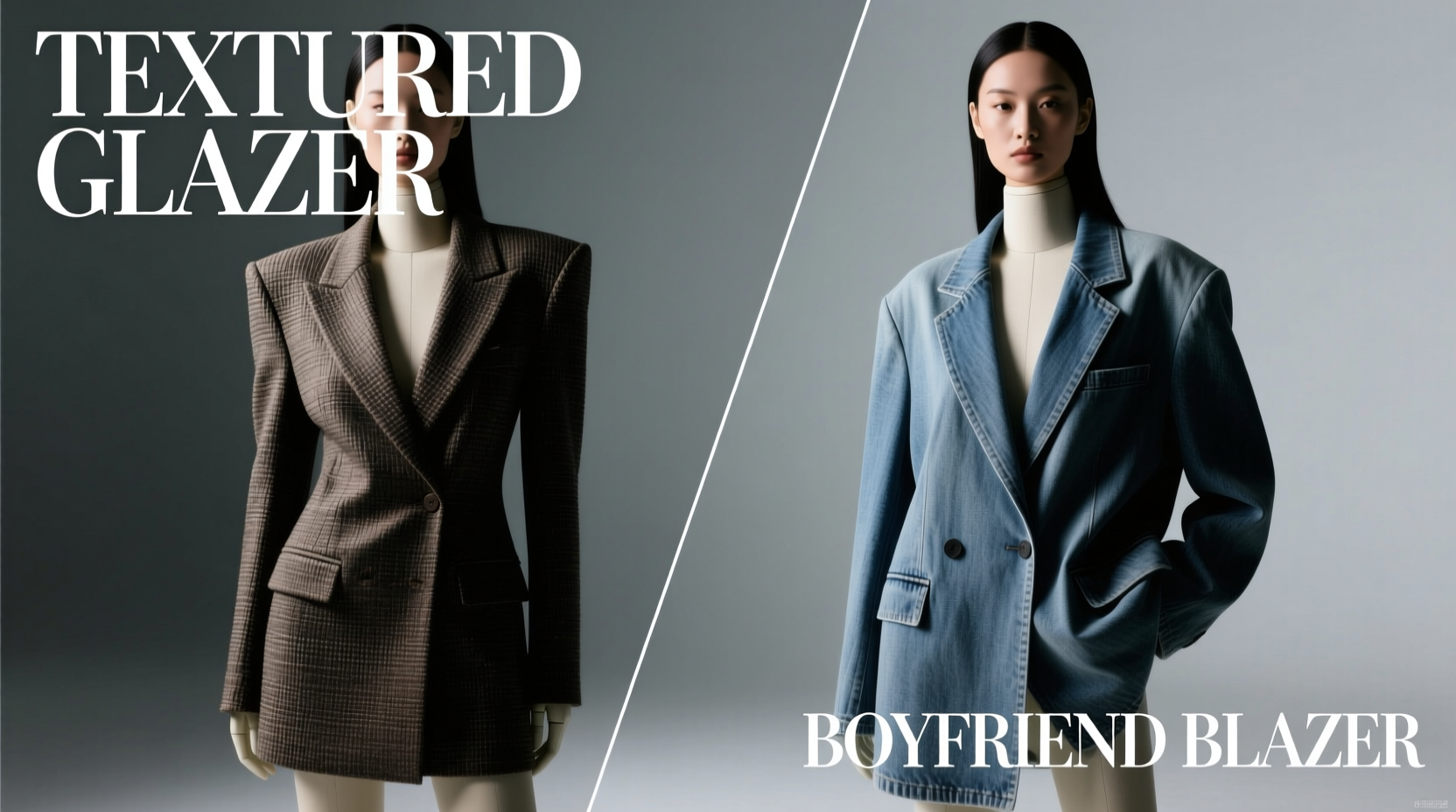
- Boyfriend blazer: Typically cut larger than standard sizing, with dropped shoulders, extended sleeve lengths, and minimal waist shaping. Designed for an intentionally unstructured, draped appearance.
- Ladies textured blazer: Tailored to the female form with defined shoulders, tapered waists, and intentional hemlines. Fabric texture enhances dimension without compromising fit.
While the boyfriend style promotes ease, it often sacrifices proportion. Petite frames can be overwhelmed; taller figures may lose definition at the waist. In contrast, the textured blazer uses material nuance—like ribbed tweed or 3D knits—to draw attention to craftsmanship rather than volume.
Tip: If you're between sizes or unsure about fit, opt for a slightly cropped textured blazer—it elongates the torso and pairs well with high-waisted bottoms.Comparative Breakdown: Key Differences
| Feature | Boyfriend Blazer | Ladies Textured Blazer |
|---|---|---|
| Silhouette | Oversized, boxy, slouchy | Fitted, tailored, waist-conscious |
| Fabric Focus | Usually smooth (cotton, polyester blends) | Textured (tweed, bouclé, corduroy, wool blends) |
| Styling Flexibility | Casual-cool only; hard to dress up formally | Transitions from office to evening seamlessly |
| Durability | Moderate; loose weave prone to stretching | High; dense weaves resist wear and maintain shape |
| Body Type Suitability | Better on taller, broader builds | Adaptable across sizes with proper tailoring |
Real-World Wearability: A Mini Case Study
Sophie, a 32-year-old marketing strategist based in Toronto, owned two key blazers: a navy boyfriend-cut piece from a fast-fashion brand and a camel wool-blend textured blazer from a boutique designer. Over six months, she tracked her usage patterns, comfort level, and compliments received.
The boyfriend blazer was worn three times—twice with jeans and once layered over a dress. She noted discomfort after prolonged sitting due to excess fabric pooling at the back. Colleagues described it as “casual Friday,” but never “polished.”
In contrast, the textured blazer was worn nine times across meetings, client dinners, and weekend brunches. It held its shape, required no adjustments, and consistently drew positive feedback. “It makes me feel put-together without trying too hard,” Sophie said. “The texture catches light differently throughout the day—it feels alive.”
This reflects a broader shift: professionals seeking garments that balance personality with professionalism.
“Texture adds emotional depth to clothing. A well-crafted textured blazer doesn’t just cover the body—it communicates intention.” — Lena Moretti, Fashion Stylist & Consultant
Why the Boyfriend Look Might Be Overrated
The boyfriend blazer rose alongside athleisure and logomania trends—eras where irony and attitude outweighed precision. But as post-pandemic fashion leans toward considered consumption and individuality, the limitations of the boyfriend cut become clearer.
- Lack of Versatility: Difficult to pair with formal attire or structured skirts.
- Fit Challenges: Often requires alterations to avoid looking sloppy.
- Short Lifespan: Trend-driven designs fade quickly from relevance.
- Environmental Cost: Mass-produced versions contribute to throwaway culture.
Meanwhile, textured blazers—often made from natural fibers and artisanal weaves—align better with slow fashion values. They age gracefully, develop character over time, and resist obsolescence because they rely less on trendiness and more on material excellence.
How to Choose the Right Blazer for Your Lifestyle
Selecting between these styles shouldn't be dictated by trends, but by personal needs. Follow this step-by-step guide:
- Assess Your Daily Activities: Do you need a piece for presentations and networking (favor textured), or mostly weekend outings (boyfriend may suffice)?
- Evaluate Your Body Proportions: Shorter torsos benefit from cropped, fitted cuts. Longer frames can carry oversized styles—but only with balanced proportions.
- Touch the Fabric: Run your fingers over samples. Does the texture invite engagement? Is the boyfriend version stiff or flimsy?
- Try Layering: Wear each over a silk camisole and under a turtleneck. Which allows movement without bulk?
- Ask: Will I Wear This in Two Years? Trends expire. Craftsmanship endures.
FAQ
Can I wear a boyfriend blazer to work?
You can, but choose carefully. Opt for luxe fabrics like wool blend or structured cotton, and ensure the shoulders aren’t excessively dropped. Pair with slim trousers and heels to offset the volume.
Are textured blazers harder to care for?
Not necessarily. Most textured fabrics like tweed or bouclé are inherently durable. Follow garment labels—many can be steamed gently or spot-cleaned. Avoid machine washing unless specified.
Is the boyfriend blazer completely outdated?
No—but its dominance has waned. It works best when styled intentionally, not default. Think of it as one tool in your wardrobe, not the centerpiece.
Final Verdict: Elevate Beyond the Borrowed Look
The boyfriend blazer served a purpose: it challenged rigid norms and introduced soft rebellion into women’s suiting. But fashion evolves. Today’s informed consumer seeks authenticity, longevity, and self-expression—not just imitation.
The ladies’ textured blazer represents a maturation of that journey. It honors tailoring heritage while embracing innovation in fabric and form. It flatters diverse bodies, transitions across occasions, and stands apart through subtlety rather than size.
So yes—the boyfriend look may indeed be overrated, not because it lacks charm, but because it no longer meets the multifaceted demands of modern dressing. The future belongs to garments that do more than make a statement—they serve, adapt, and endure.
💬 What’s your take? Have you swapped your boyfriend blazer for something more structured? Share your experience and help shape the next chapter of women’s tailoring.