
When the temperature drops, few garments are as reliable as a well-made knitted sweater. But when choosing between a cardigan and a pullover, many people wonder: which one actually keeps you warmer? And more importantly—does that difference in warmth truly impact how you should dress for cold weather? The answer isn't always straightforward. While both styles are made from similar materials and knitting techniques, their design, coverage, and wearability create distinct thermal profiles. Understanding these differences helps not just in selecting the right layer for winter but also in building a smarter, more functional wardrobe.
The Anatomy of Warmth in Knitwear
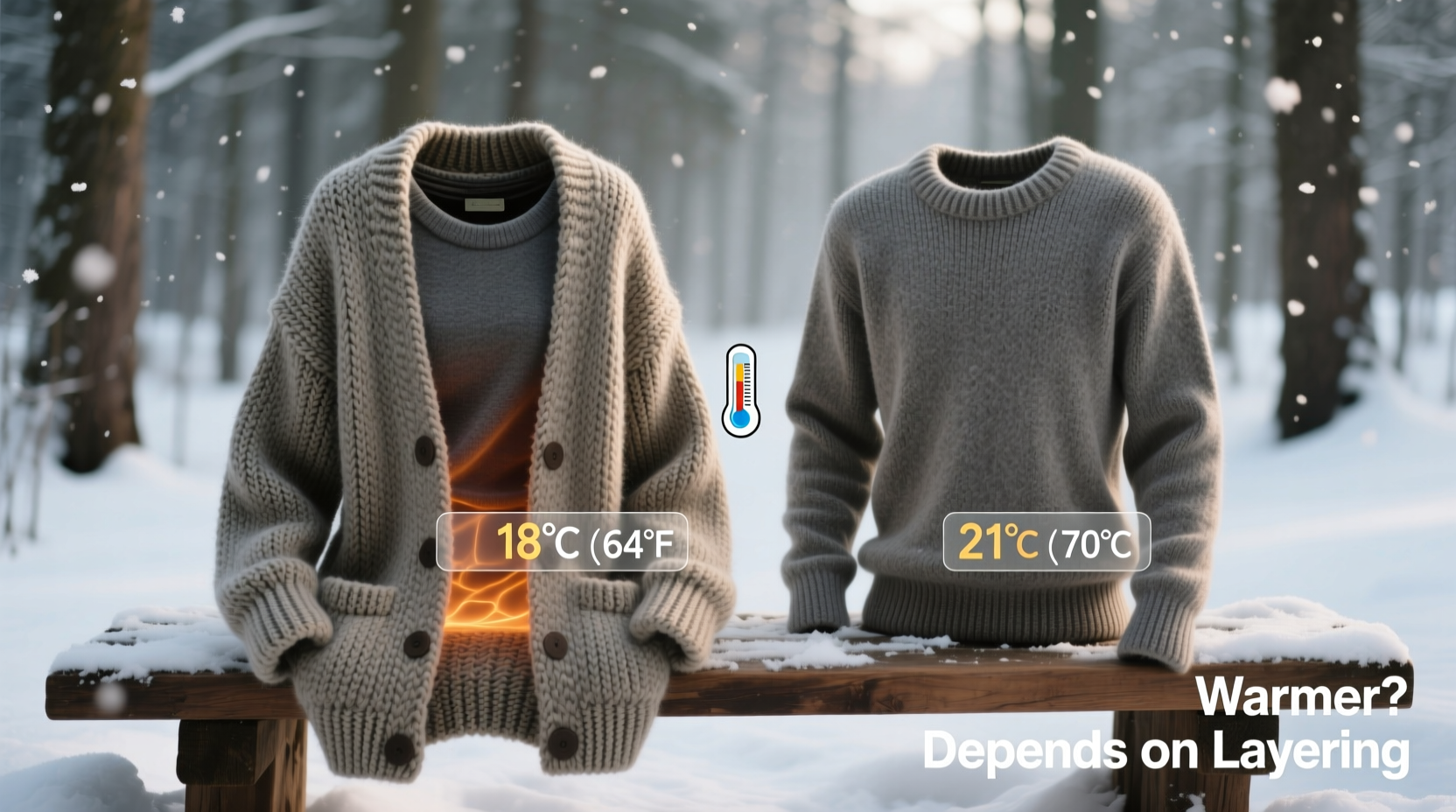
Warmth in clothing depends on three primary factors: material, construction, and coverage. Wool, cashmere, alpaca, and synthetic blends all offer varying levels of insulation. How tightly or loosely the yarn is knitted affects breathability and heat retention. But perhaps the most overlooked element is coverage—the extent to which fabric wraps around the body without gaps.
A pullover sweater is typically a closed garment with no front opening. It covers the torso completely, sealing in warmth around the neck, chest, and back. In contrast, a cardigan opens at the front, allowing for easier layering but creating potential gaps where cold air can enter. This structural difference is the root of the warmth debate.
“From a thermodynamic standpoint, any break in fabric continuity reduces passive insulation. That’s why full-coverage garments like pullovers generally outperform open-front designs in static cold environments.” — Dr. Lena Torres, Textile Scientist & Apparel Innovation Researcher
Material and Knit Density: Do They Level the Playing Field?
Not all sweaters are created equal. A tightly knit merino wool cardigan may retain more heat than a loosely woven cotton pullover. So while cut matters, fiber content and stitch tightness play equally important roles.
Wool-based fabrics naturally trap air in their fibers, creating insulating pockets that resist heat loss. Thicker weaves like cable knit or fisherman patterns add volume and further enhance this effect. Lightweight yarns such as fine-gauge cashmere or acrylic blends may look luxurious but offer less inherent warmth unless layered.
In practice, if two garments use identical yarn and stitch density, the pullover will still have a thermal edge due to its continuous structure. However, a heavy wool cardigan worn buttoned (or belted) can come close—especially when layered over a long-sleeve shirt or vest.
Tip: For maximum warmth in a cardigan, opt for full-button closure styles and wear them fastened. Consider adding a thin thermal layer underneath to minimize airflow.Functional Comparison: When Each Style Excels
Warmth isn’t only about staying warm—it’s also about adaptability. Pullovers provide consistent insulation but are less practical in fluctuating temperatures. Removing a pullover often means taking it off entirely, which isn’t ideal in offices, restaurants, or transit hubs where indoor heating varies.
Cardigans shine in transitional settings. You can leave it open for ventilation or button it up when a draft hits. This makes them ideal for layering systems, especially in urban environments where you move between heated interiors and cold exteriors throughout the day.
| Feature | Cardigan | Pullover |
|---|---|---|
| Front Coverage | Open or partially sealed | Full, continuous |
| Layering Ease | Excellent – easy on/off | Moderate – requires overhead removal |
| Thermal Efficiency | Good (when closed) | Superior (sealed design) |
| Versatility | High – works casually or formally | Moderate – best for consistent temps |
| Fashion Flexibility | High – pairs with shirts, dresses, collars | Limited – necklines restrict layering options |
Real-World Scenario: A Winter Commute in New York City
Consider Sarah, a marketing professional commuting daily from Brooklyn to Midtown Manhattan. Her route includes walking to the subway, waiting on an unheated platform, riding a warm train, and entering a climate-controlled office. She wears a lightweight turtleneck under her outer layer.
On Monday, she chooses a chunky shawl-collar cardigan. During her walk, she buttons it fully and feels adequately warm. On the platform, she zips up an overcoat over the cardigan. Once indoors, she unbuttons the cardigan instead of removing it—maintaining comfort without overheating.
On Tuesday, she wears a thick crewneck pullover. It keeps her very warm outside, but once inside, she becomes too hot. To cool down, she has to remove the entire sweater—a social inconvenience and impractical in shared workspaces.
In terms of raw warmth, the pullover won. But in terms of usability and microclimate control, the cardigan proved more effective. This illustrates that “warmer” doesn’t always mean “better.” Context determines value.
Expert Tips for Maximizing Warmth in Either Style
Whether you prefer cardigans or pullovers, small adjustments can significantly improve thermal performance. These strategies apply regardless of your preferred silhouette.
- Choose high-loft fibers: Merino wool, Shetland wool, and yak blends offer excellent warmth-to-weight ratios.
- Opt for full-zip or double-button cardigans: These minimize front gaps better than single-breasted styles.
- Add a waist belt: Cinching a long cardigan traps warm air around the core.
- Wear a gilet or vest underneath: Adds insulation without bulk, especially useful under open cardigans.
- Ensure proper fit: Oversized sweaters create air pockets that cool down; too-tight ones restrict circulation. Aim for tailored but not restrictive.
Checklist: Choosing the Right Sweater for Cold Weather
- ✅ Assess your daily environment: constant cold vs. variable temperatures?
- ✅ Prioritize natural fibers with high insulation ratings (e.g., wool > cotton).
- ✅ Check stitch density—tighter knits retain more heat.
- ✅ Decide whether ease of layering matters more than maximum warmth.
- ✅ Try both styles with your common base layers to test real-world comfort.
Does It Even Matter Which Is Warmer?
In controlled, static conditions—like sitting by a fireplace or hiking in steady sub-zero weather—a pullover will almost always keep you warmer. Its uninterrupted fabric forms a superior thermal barrier. But modern life rarely fits that mold. Most people navigate shifting climates: heated homes, cold commutes, warm offices. In these scenarios, adaptability trumps peak insulation.
Moreover, fashion and function intersect. Cardigans allow visibility of collared shirts, dresses, or jewelry—making them more socially versatile. They’re also easier to slip on during sudden chills without disrupting hairstyle or makeup, a subtle but real benefit.
So yes, pullovers are technically warmer. But whether that matters depends entirely on your lifestyle. If you prioritize comfort across changing environments, the cardigan’s flexibility may outweigh its slight thermal deficit.
Frequently Asked Questions
Is a cardigan as warm as a sweater?
Generally, no—due to its open front, a cardigan allows more air exchange. However, when made from dense wool and worn buttoned with a base layer, it can approach the warmth of a lightweight pullover.
Can I wear a cardigan in freezing weather?
Yes, but not alone. Pair it with a thermal base layer and a windproof coat. Opt for long, fully buttoned styles and consider belting it to reduce heat loss.
Why do some people prefer pullovers despite the hassle?
Pullovers offer a cleaner aesthetic, better neck coverage, and uninterrupted insulation. Many find them cozier for home wear, outdoor activities, or minimalist wardrobes focused on function.
Final Thoughts: Warmth Is Just One Thread in the Fabric
The question of whether a knitted cardigan or pullover sweater is warmer reveals a deeper truth: clothing choices are never just about temperature. They reflect lifestyle, personal expression, and practical needs. While science favors the pullover for pure thermal efficiency, real-world utility often tilts the balance toward the adaptable cardigan.
Rather than seeking a universal winner, build a rotation that includes both. Use pullovers for days spent mostly outdoors or in consistently cold spaces. Reach for cardigans when navigating mixed environments or when style and layering matter. By understanding the strengths of each, you gain not just warmth—but confidence in every season.
🚀 Ready to upgrade your cold-weather wardrobe? Reassess your go-to sweaters based on actual usage—not just warmth claims. Try wearing each style for a week in different contexts and see which truly serves you best. Share your experience in the comments!