
When temperatures drop and your wardrobe shifts toward cozy layers, two standout options emerge: the knit sweater dress and the jersey dress. Both are versatile, stylish, and widely worn across seasons. But when it comes to pairing them with tights—a staple of winter dressing—one performs more effectively than the other in terms of comfort, silhouette, warmth, and overall wearability. Understanding the structural and material differences between these two styles is essential for making smart seasonal choices that balance fashion and function.
The decision isn’t just about aesthetics. It’s about how the fabric behaves under compression, how it drapes over tights, and whether it supports or undermines your layering strategy. Whether you're dressing for work, a weekend outing, or a holiday event, knowing which dress works best with tights can elevate your look and keep you comfortable all day.
Material & Construction: The Core Differences
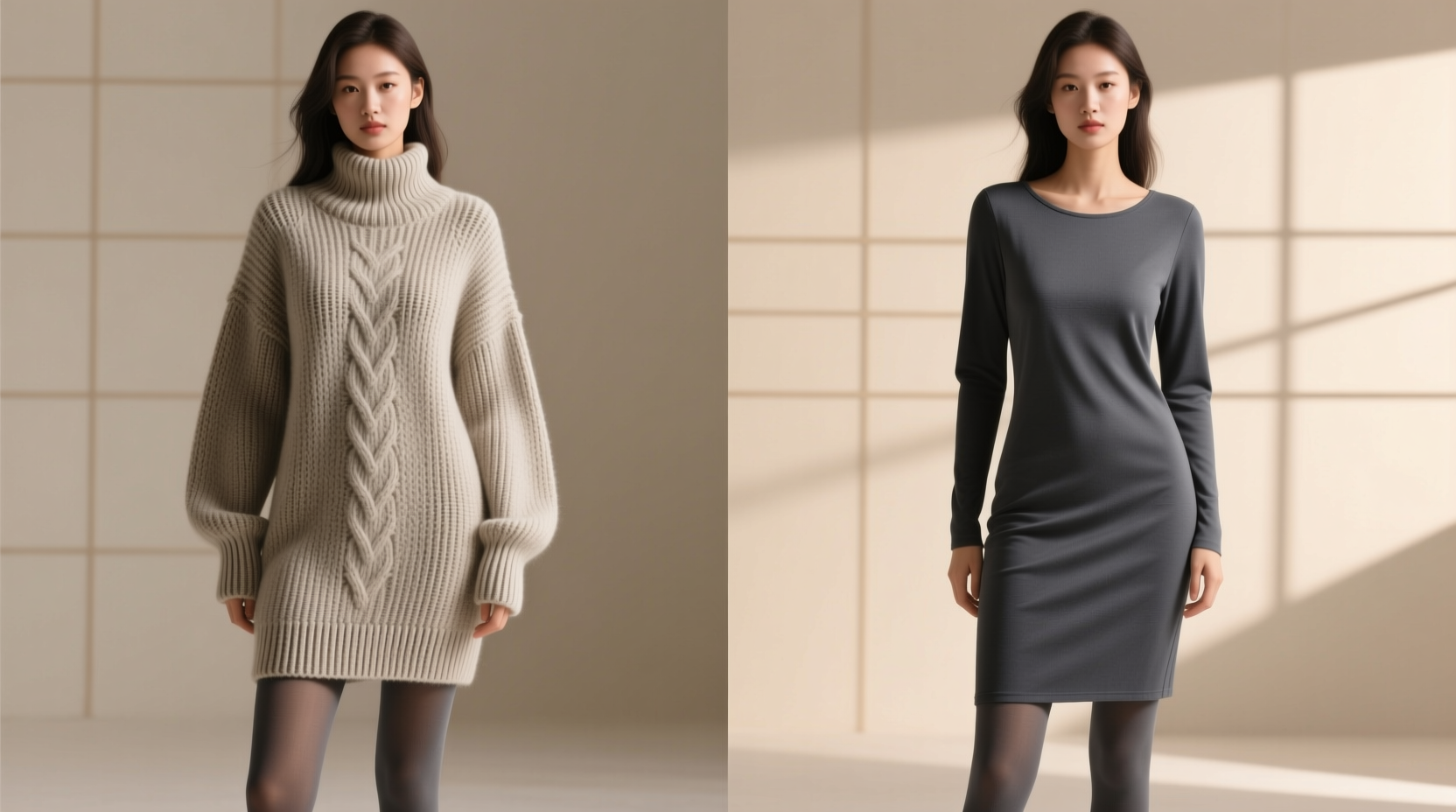
The most fundamental distinction between a knit sweater dress and a jersey dress lies in their fabric composition and construction techniques.
Knit Sweater Dress: Typically made from wool, cotton, acrylic, or blended yarns, this dress is constructed using knitting methods similar to those used in sweaters—either by hand or machine. The result is a thicker, textured fabric with natural elasticity. These dresses often feature ribbing at the cuffs, hem, or neckline and are designed for insulation. Their weight varies depending on the yarn gauge but generally falls into the medium-to-heavy range.
Jersey Dress: Made from a finely knitted cotton, rayon, viscose, or synthetic blend, jersey fabric is lightweight, soft, and stretchy. Originally developed for athletic wear, modern jersey has evolved into a popular choice for bodycon and slip-style dresses due to its fluid drape and comfort. It's thinner than sweater knit and lacks the same level of insulation.
These foundational differences influence everything from warmth retention to how each dress interacts with tights.
Tip: Always check the fiber content label before purchasing—wool-blend sweater dresses offer superior warmth, while modal-rayon jersey blends provide a silkier feel against tights.Layering Performance: How Each Dress Works with Tights
Layering with tights isn't just about adding warmth—it's about maintaining proportion, avoiding bulk, and ensuring smooth movement. Let’s break down how each dress type performs in key areas:
1. Fit and Silhouette Over Tights
A dress should complement—not fight—your tights. Jersey dresses, with their sleek, form-fitting nature, glide smoothly over opaque or sheer tights without creating lumps or pulling. The thin, flexible fabric moves with the body, minimizing friction and preserving the leg line.
In contrast, heavier knit sweater dresses can sometimes distort the shape of tights, especially if they have a tight waistband or narrow skirt. Thicker knits may also compress thigh-highs or pantyhose, leading to visible ridges or discomfort after prolonged wear.
2. Warmth and Insulation
While jersey fabric offers minimal thermal protection on its own, it excels as a base layer. When paired with warm tights—especially fleece-lined or thermal varieties—it becomes part of an effective layering system. However, the total warmth depends heavily on what’s underneath.
Knit sweater dresses, on the other hand, are inherently warmer. Their dense weave traps heat, reducing reliance on ultra-thick tights. This makes them ideal for very cold days when you want to avoid bulky combinations that restrict mobility.
3. Texture and Friction
Texture plays a crucial role in long-term comfort. Rougher knits—especially wool or bouclé styles—can cause micro-abrasions on delicate tights, increasing the risk of snags and runs. Smooth, tightly woven jersey fabric poses almost no such threat.
If you frequently wear fine-denier tights (15–30 denier), jersey dresses are far gentler. For durability-focused wardrobes, this means fewer replacements and lower maintenance costs over time.
4. Movement and Flexibility
Jersey fabric stretches easily in all directions, accommodating sitting, walking, and bending without strain. This flexibility ensures tights remain evenly distributed and don’t roll down or bunch at the knees.
Sweater knits do stretch, but less uniformly. Depending on the stitch pattern (e.g., cable knit vs. stockinette), some areas may resist expansion, creating pressure points over tights. This can be particularly noticeable around hips and thighs.
“Layering success hinges on compatibility between fabrics. A smooth base like jersey reduces friction and enhances both comfort and longevity of hosiery.” — Lena Patel, Textile Stylist & Wardrobe Consultant
Comparison Table: Knit Sweater Dress vs Jersey Dress with Tights
| Factor | Knit Sweater Dress | Jersey Dress |
|---|---|---|
| Warmth | High – provides inherent insulation | Low – relies on tights/underlayers for warmth |
| Fabric Weight | Medium to heavy | Light to medium |
| Stretch | Moderate – varies by knit type | High – four-way stretch common |
| Tights Compatibility | Good with thicker tights; risk of snagging on rough textures | Excellent – smooth surface prevents damage |
| Silhouette Preservation | Potential for bulk at hips/thighs | Clean, streamlined look |
| Best Tights Type | Fleece-lined, opaque (40+ denier) | Sheer to medium opacity (15–40 denier) |
| Seasonal Suitability | Fall, winter, early spring | Spring, fall, mild winters (with layering) |
Real-World Example: Office Wear Through Winter Months
Consider Sarah, a marketing professional in Chicago, where winters are harsh and indoor heating creates dry air. Her weekday wardrobe includes several knit sweater dresses and a few jersey sheaths. She noticed that her favorite navy cable-knit dress, while warm, consistently caused her tights to ladder within hours of putting them on. After replacing three pairs in one month, she switched to a black modal-jersey dress for midweek wear.
With the jersey dress, she layered it successfully with 40-denier brushed tights. The combination stayed smooth throughout the day, even during commutes and long meetings. On colder Fridays, she returned to her heaviest sweater dress—but only when wearing reinforced, thick tights designed for rugged use.
Her experience illustrates a practical hybrid approach: use jersey dresses for daily wear with standard tights, and reserve knit sweater dresses for extreme cold or statement occasions where maximum warmth outweighs convenience.
Tip: Rotate your tights regularly and avoid wearing the same pair two days in a row—this extends their life, especially when used with textured garments.Step-by-Step Guide: Choosing the Right Dress-Tights Combo
Follow this sequence to determine the optimal pairing based on weather, occasion, and personal comfort:
- Assess the temperature: Below 40°F (4°C)? Prioritize warmth—opt for a knit sweater dress with thermal tights. Between 40–60°F (4–15°C)? A jersey dress with mid-weight tights may suffice.
- Evaluate your activity level: Will you be sitting most of the day? Choose jersey for reduced friction. Walking or standing frequently? Ensure your sweater dress isn’t too constrictive over tights.
- Check fabric texture: Run your hand over the inner lining or skirt area. If it feels coarse or has prominent stitches, go with thicker tights or consider a slip liner.
- Select tights accordingly: Match denier and construction to the dress. Use sheer tights only with smooth jersey; reserve opaque or reinforced tights for knits.
- Test the full outfit: Before committing, walk, sit, and bend in front of a mirror. Look for pulling, rolling, or visible seams that disrupt the line.
- Add outer layers: A tailored coat or wool blazer can compensate for a lighter jersey dress, allowing you to stay warm without compromising elegance.
Do’s and Don’ts Checklist
- ✅ Do pair jersey dresses with sheer or semi-opaque tights for polished office looks.
- ✅ Do choose fleece-lined tights with sweater dresses in sub-40°F weather.
- ✅ Do use a fabric shaver to remove pilling from repeated tights contact.
- ❌ Don’t wear delicate, low-denier tights under chunky cable-knit dresses.
- ❌ Don’t skip a petticoat or slip if your sweater dress tends to cling unevenly.
- ❌ Don’t assume all “stretch” knits behave like jersey—always test movement beforehand.
Frequently Asked Questions
Can I wear sheer tights with a knit sweater dress?
Generally not recommended. Sheer tights (below 30 denier) are prone to snagging on textured knits and offer little warmth. They also tend to show every lump and irregularity beneath. If you must wear sheer, choose a fine-gauge merino or cotton-blend sweater dress with a smooth finish, and apply a silicone-based hosiery protector spray.
Which dress type is better for tall women?
Taller individuals often benefit from the vertical lines and snug drape of jersey dresses, which accentuate height without adding visual bulk. However, longer-length sweater dresses in structured knits can also flatter—especially when belted at the waist. The key is proportion: avoid overly boxy knits that shorten the torso.
How do I prevent my tights from rolling down under a jersey dress?
Rolling usually occurs due to static or poor elastic quality. Choose tights with a silicone grip band at the top. Alternatively, opt for control-top styles that anchor better against the body. Avoid powdering your legs before wearing tights, as this reduces grip. If needed, a small dab of double-sided fashion tape can secure the waistband discreetly.
Final Verdict: Which Layers Better?
For consistent, reliable layering with tights, the **jersey dress** wins in versatility, comfort, and longevity of hosiery. Its smooth, lightweight fabric creates a seamless interface with tights of various weights, preserves leg lines, and minimizes wear-and-tear. It’s the smarter choice for daily wear, especially in transitional seasons or climate-controlled environments.
However, the **knit sweater dress** excels in raw warmth and wintertime resilience. When properly matched with durable, thick tights, it forms a robust cold-weather ensemble. It’s ideal for weekends, travel, or days when outdoor exposure is high. Just be mindful of texture and fit to avoid compromising your tights or comfort.
The truth is, you don’t have to choose one over the other. A balanced capsule wardrobe includes both: jersey dresses for effortless elegance and easy layering, and knit sweater dresses for maximum insulation on frigid days. The key is understanding their strengths and deploying them strategically.
💬 Have a favorite dress-tights combo? Share your go-to winter outfit in the comments and help others build smarter, cozier wardrobes!








