When winter bites with sub-zero winds and icy gusts, every layer counts. Among the most essential cold-weather accessories is the scarf—but not all scarves are created equal. Two of the most popular options—knit scarves and pashminas—are often mistaken as interchangeable. In reality, their warmth, construction, and effectiveness in extreme cold vary significantly. Choosing the wrong one could mean the difference between cozy comfort and shivering through your morning commute.
This guide dives deep into the thermal performance of knit scarves versus pashminas, examining fiber composition, weave density, coverage, and real-world usability in freezing temperatures. Whether you're braving a city winter or hiking in alpine conditions, understanding these differences helps you make an informed decision that prioritizes warmth without sacrificing style.
Fiber Composition: The Foundation of Warmth
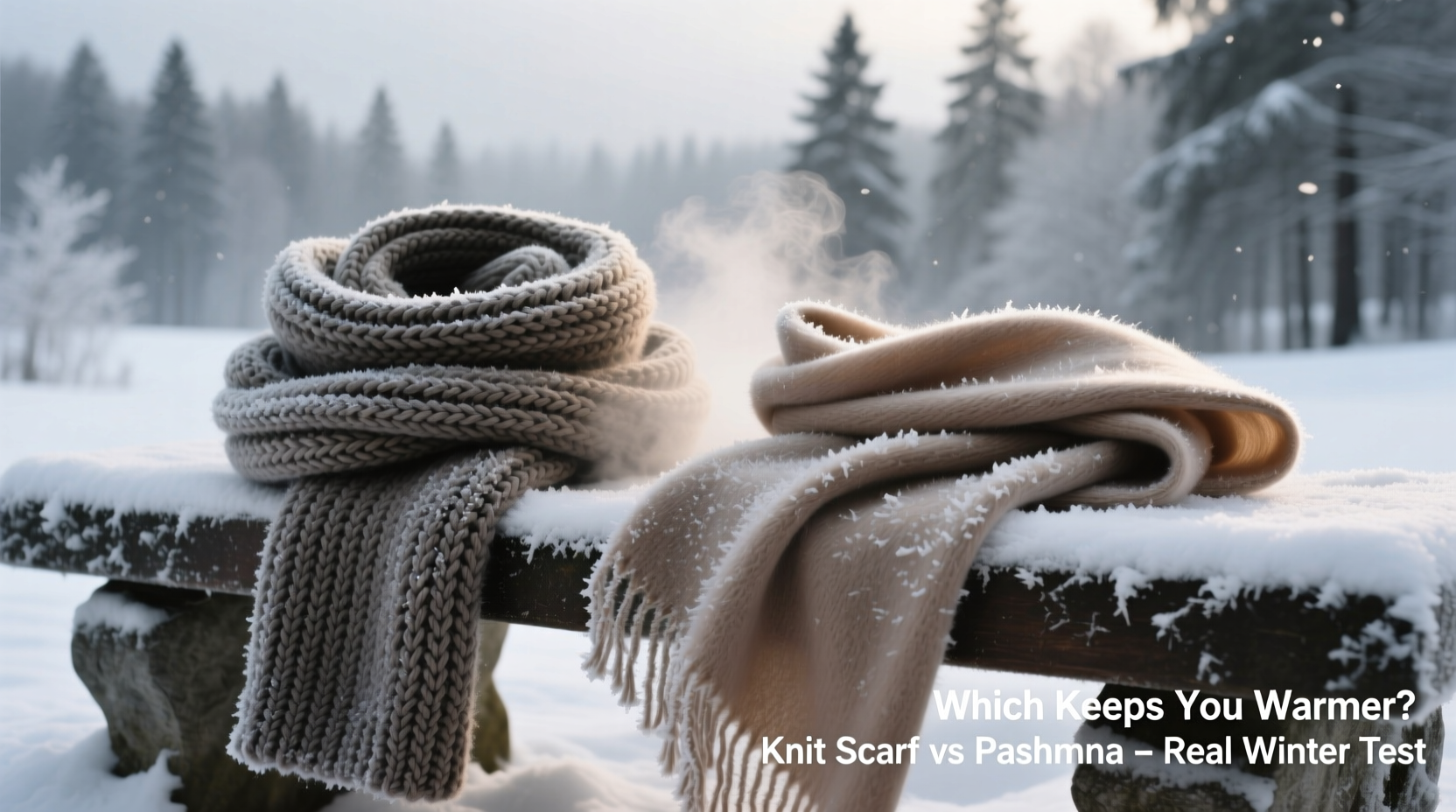
The material a scarf is made from directly influences its ability to trap heat. Both knit scarves and pashminas can be crafted from wool, cashmere, acrylic, or blends, but traditional expectations differ for each type.
A classic knit scarf is typically made from thicker yarns—often wool, acrylic, or wool-acrylic blends. These fibers are chosen for durability and bulk, allowing the scarf to form dense, insulating layers. Wool, especially merino or Icelandic varieties, has natural crimp and lanolin content that enhances its heat retention and moisture-wicking properties.
Pashminas, on the other hand, originate from the Himalayan region and are traditionally woven from the fine undercoat of Changthangi goats. Authentic pashmina is 100% cashmere, known for being luxuriously soft and lightweight. While cashmere offers excellent warmth-to-weight ratio, it is less dense than bulky knits and may not provide the same wind resistance in extreme cold.
Tip: Always check the label. Many \"pashminas\" sold today are synthetic blends that offer minimal insulation compared to genuine cashmere.While cashmere is warmer per ounce than sheep’s wool, a thick wool knit scarf often provides more total insulation due to its volume and air-trapping structure. Think of it like comparing a down jacket to a wool coat—the former is lighter, but the latter may feel warmer in wet, windy conditions due to its density.
Weave and Construction: How Structure Affects Heat Retention
The way a scarf is constructed plays a crucial role in how well it retains heat. Knit scarves are usually crocheted or hand-knitted with loose or tight stitches, creating air pockets that act as insulators. The thicker the knit and the tighter the weave, the more effectively it resists cold air penetration.
Common stitch patterns—like cable knit, ribbing, or basketweave—not only add aesthetic appeal but also increase surface texture, which traps warm air close to the neck and chest. Some heavy-duty winter scarves even incorporate double-layer knitting for added thermal protection.
Pashminas, by contrast, are traditionally woven rather than knitted. Their weave is fine and flat, designed for elegance and drape rather than bulk. While tightly woven pashminas can still provide decent insulation, they lack the three-dimensional loft of a chunky knit. This means fewer trapped air pockets and less buffer against wind chill.
In freezing temperatures, wind is often the biggest enemy. A loosely draped pashmina may flutter open, exposing the neck, while a snugly wrapped knit scarf maintains consistent coverage. The structural integrity of a knit scarf under harsh conditions gives it a functional edge.
“Thermal efficiency isn’t just about material—it’s about how the fabric is engineered. Volume and texture matter as much as fiber content.” — Dr. Lena Torres, Textile Scientist at Nordic Cold Climate Research Lab
Warmth Comparison: Real-World Performance in Sub-Zero Conditions
To understand which accessory performs better in freezing weather, consider a side-by-side comparison based on key factors:
| Feature | Knit Scarf | Pashmina |
|---|---|---|
| Material Density | High – thick yarns create dense insulation | Moderate to Low – fine fibers, lighter weight |
| Air Trapping Capacity | Excellent – textured knit holds warm air | Fair – flat weave limits air pockets |
| Wind Resistance | Good to Excellent – bulk reduces airflow | Fair – lightweight fabric flutters easily |
| Coverage & Fit | Adjustable – can wrap multiple times | Limited – long but thin; slips easily |
| Moisture Wicking | High (especially wool) | Moderate (cashmere wicks but absorbs moisture) |
| Durability in Snow/Ice | High – resistant to dampness and abrasion | Low – delicate fibers degrade when wet |
The data shows that while pashminas excel in mild winters or indoor settings, they fall short in extreme cold. Their elegance suits transitional seasons or urban environments where heating is available, but they lack the rugged functionality needed for prolonged outdoor exposure below freezing.
Mini Case Study: Winter Commuter in Minneapolis
Sophie, a teacher in Minneapolis, tested both a thick merino wool knit scarf and a 100% cashmere pashmina during a two-week polar vortex event where temperatures averaged -15°F (-26°C) with wind chill. She wore identical coats and layered similarly underneath.
On days she used the knit scarf, she reported feeling warm around her neck and chest, even during her 10-minute walk to the bus stop. The scarf stayed in place, allowed for double wrapping, and didn’t let wind seep through.
With the pashmina, despite folding it multiple times, she felt cold air penetrating the thin layers within minutes. The smooth fabric slipped from her collar, and by mid-morning, her throat felt raw. After four days, she switched exclusively to the knit scarf.
Her experience underscores a key point: in extreme cold, practicality outweighs luxury. A pashmina might look elegant in a café, but it won’t protect you when nature turns hostile.
When a Pashmina Might Be Warmer: Specific Scenarios
It’s important to note that “warmer” depends on context. Under certain conditions, a high-quality pashmina can outperform a poorly made knit scarf.
- Indoor-Outdoor Transitions: In heated buildings with brief outdoor exposure, a pashmina offers sufficient warmth without overheating.
- Dry, Still Air: In calm, dry cold (e.g., mountain evenings), cashmere’s superior warmth-to-weight ratio shines.
- Layering Over Coats: A pashmina can be tucked under a coat collar to add a soft, insulating layer without bulk.
Additionally, some modern pashminas are blended with wool or silk to improve durability and warmth. A 70% cashmere, 30% wool blend, for example, combines softness with enhanced insulation and wind resistance. However, these hybrids still generally lack the sheer mass of a true winter knit.
Tip: If you love the feel of a pashmina, use it as a mid-layer under a heavier outer scarf or turtleneck for maximum warmth.Step-by-Step Guide: Maximizing Scarf Warmth in Freezing Weather
Regardless of your choice, how you wear and care for your scarf affects its performance. Follow this sequence to stay warm:
- Choose the Right Material: Opt for wool, alpaca, or thick acrylic for knit scarves. For pashminas, select at least 80% cashmere with a tight weave.
- Pre-Warm Before Going Out: Hang your scarf near a heater (not directly on it) for 5–10 minutes before wearing. Starting warm reduces initial heat loss.
- Wrap Strategically: For knit scarves, wrap twice around the neck, ensuring full coverage from jawline to upper chest. Tuck ends inside your coat to block drafts.
- Combine Layers: Wear a turtleneck first, then add the scarf. This creates a sealed barrier against cold air.
- Protect From Moisture: Avoid letting your scarf get wet. Wet fibers lose insulation rapidly. If damp, dry flat away from direct heat.
- Store Properly Off-Season: Clean before storing. Use breathable cotton bags and include cedar blocks to deter moths, especially for wool and cashmere.
Frequently Asked Questions
Can a pashmina be as warm as a wool scarf?
Only in ideal conditions. While high-grade cashmere is warmer per gram than wool, most pashminas are too thin and light to match the total insulation of a thick wool knit. In freezing, windy weather, wool scarves consistently perform better.
Are acrylic knit scarves good for extreme cold?
Yes, especially if they mimic wool’s texture. Acrylic doesn’t absorb moisture like natural fibers, making it effective in damp cold. Look for heavyweight, tightly knitted versions labeled as “winter” or “thermal” grade.
How do I know if my pashmina is authentic?
Genuine pashmina feels incredibly soft, slightly fuzzy, and may have minor natural imperfections. It should pass the “ring test”—a true pashmina can be pulled through a wedding ring due to its fineness. Be wary of low prices; authentic cashmere is expensive to produce.
Checklist: Choosing the Right Scarf for Freezing Temperatures
- ✅ Prioritize thickness and weight over drape
- ✅ Choose wool, alpaca, or thermal acrylic for knit scarves
- ✅ Avoid overly loose weaves or sheer fabrics
- ✅ Ensure the scarf is long enough to wrap at least twice
- ✅ Test wind resistance by holding it up to a fan—if you see movement, it’s likely not dense enough
- ✅ For pashminas, opt for wool-cashmere blends if warmth is critical
- ✅ Layer with a turtleneck for maximum protection
Final Verdict: Which Keeps You Warmer?
In freezing temperatures, a well-made knit scarf—particularly one crafted from wool or alpaca with a tight, textured weave—will almost always keep you warmer than a traditional pashmina. Its superior bulk, wind resistance, and ability to trap warm air make it the practical choice for harsh winter conditions.
Pashminas remain valuable accessories, but their role is best suited to milder climates, fashion-forward layering, or indoor use. They offer comfort and elegance, not survival-level warmth. Confusing status with function can leave you exposed when it matters most.
That said, owning both types allows flexibility. Rotate based on conditions: reserve the pashmina for office days or late-fall outings, and rely on the knit scarf when the thermometer plunges.
“The right scarf isn’t the one that looks best in photos—it’s the one that lets you forget you’re outside in a blizzard.” — Marcus Reed, Outdoor Gear Tester, Arctic Expeditions Inc.
Take Action This Winter
Don’t wait for the next cold snap to discover your scarf isn’t up to the task. Evaluate your current collection using the criteria above. Replace or supplement with a high-quality knit scarf designed for extreme cold. If you love your pashmina, keep it—but treat it as a complement, not a replacement, for real winter protection.
💬 Have a favorite winter scarf that kept you warm in brutal conditions? Share your experience in the comments and help others gear up smarter this season.