Zircon has long been a favored gemstone in fine and fashion jewelry for its brilliance, fire, and affordability compared to diamonds. When set into earrings, high-quality zircon can offer exceptional sparkle and elegance. However, not all zircon is created equal. With a growing market flooded with synthetic imitations, low-grade stones, and misleading labeling, buyers must know how to distinguish authentic, premium zircon from inferior or fake alternatives. Understanding what to look for ensures you invest in pieces that are beautiful, durable, and worth their price.
Understanding Zircon: Natural vs. Cubic Zirconia
One of the most common misconceptions is confusing natural zircon with cubic zirconia (CZ). Despite similar names, they are entirely different materials. Natural zircon is a zirconium silicate mineral found in the earth, prized for its natural luster and historical significance. It occurs in colors like blue, white, yellow, and red, with colorless varieties often used as diamond simulants.
Cubic zirconia, on the other hand, is a lab-created stone made from zirconium dioxide. While CZ is more commonly used in affordable jewelry due to its perfect clarity and uniformity, it lacks the depth and complexity of natural zircon. High-quality zircon earrings feature genuine natural zircon stones—not CZ—and this distinction is critical when evaluating authenticity and value.
“Natural zircon has a unique vibrancy that lab-grown stones often fail to replicate. Its refractive index and dispersion give it a fiery brilliance that’s unmistakable under light.” — Dr. Lena Moreau, Gemologist at the International Institute of Gemology
Key Visual Indicators of High-Quality Zircon
The first step in identifying premium zircon earrings is visual inspection. While tools help, your eyes can reveal much if you know what to look for.
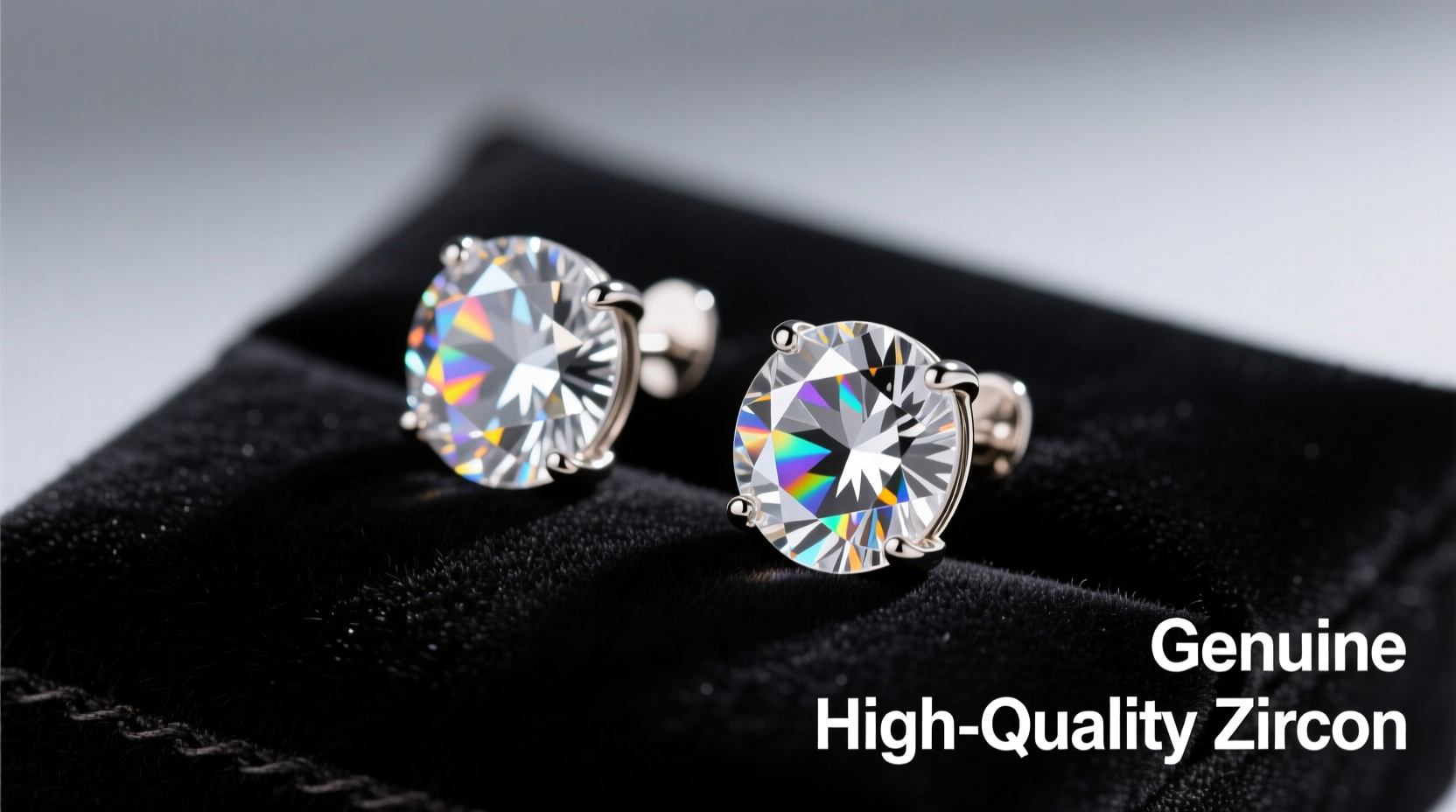
- Brilliance and Fire: Genuine high-quality zircon exhibits strong brilliance (white light reflection) and vivid fire (rainbow-colored flashes). Unlike glass imitations, which appear dull, zircon sparkles intensely even in low light.
- Color Consistency: Natural zircon may have slight color variations, but high-grade stones are evenly saturated. Be cautious of overly bright or unnaturally consistent hues—these may indicate dyeing or poor-quality material.
- Clarity: Look closely for inclusions. While completely flawless zircon is rare, high-quality stones have minimal visible flaws under 10x magnification. Excessive cloudiness or black spots suggest lower grade or treatment.
- Cut Precision: Well-cut zircon maximizes light return. Check for symmetrical facets, sharp edges, and balanced proportions. Poorly cut stones appear lifeless or misshapen.
Material and Craftsmanship Evaluation
Beyond the stone itself, the metal setting and overall construction play a vital role in determining quality. Even the finest zircon loses value if mounted in subpar metal or poorly assembled settings.
| Feature | High-Quality Indicator | Red Flag |
|---|---|---|
| Metal Type | Sterling silver, 14K gold, or platinum | Unmarked metal, magnetic response |
| Setting Security | Firm prongs, no wobble in stone | Loose stones, bent prongs |
| Finish Quality | Smooth polish, even surface | Rough edges, uneven plating |
| Hallmarks | Stamped purity mark (e.g., “925”, “14K”) | No markings or vague symbols |
Always inspect the back of the earring posts and clasps for hallmarks. Reputable jewelers stamp their metals to certify purity. If there’s no marking—or worse, a magnetic reaction when tested with a small magnet—the piece likely uses base metal alloys unsuitable for long-term wear.
Step-by-Step Guide to Verifying Authenticity
To confidently assess zircon earrings before purchase, follow this practical verification process:
- Examine Under Magnification: Use a jeweler’s loupe (10x) to inspect the stone for natural inclusions and facet precision. Lab-grown or glass substitutes often show bubbles or swirl marks.
- Test Thermal Conductivity: While not as efficient as with diamonds, zircon conducts heat better than glass or plastic. A quick breath test (fogging briefly) can help—zircon clears faster than fakes.
- Check Weight and Density: Zircon is relatively dense. Compared to similarly sized glass or CZ, genuine zircon feels heavier in hand.
- Assess Light Performance: Move the earring under a lamp. Watch for consistent fire and brilliance. Dullness or flat reflections indicate poor cut or imitation.
- Verify Seller Credentials: Purchase from certified jewelers or stores with return policies and gemological reports. Avoid vendors who refuse detailed descriptions or provenance.
Mini Case Study: Sarah’s Smart Purchase
Sarah was shopping for anniversary earrings and found two nearly identical pairs online—one priced at $45, the other at $180. The cheaper pair claimed “natural zircon” but had no metal stamp and blurry photos. The pricier option came from a GIA-recognized vendor, included a certificate of authenticity, and showed crisp facet lines in close-up images. She requested a third-party appraisal after purchase. The lab confirmed the expensive pair featured AAA-grade natural zircon in sterling silver, while the budget option used dyed glass in alloy metal. Sarah saved money in the long run by avoiding a counterfeit.
Common Myths and Misleading Marketing Tactics
The jewelry market is rife with deceptive language. Phrases like “diamond-like zircon,” “premium crystal,” or “luxury simulated gem” are often code for non-zircon materials. Be wary of:
- \"Russian Zircon\": This is not a geological term—it’s marketing jargon sometimes used to imply superior quality, but it usually refers to CZ, not natural zircon.
- \"Lab-Created Zircon\": True natural zircon cannot be synthetically replicated at scale. Any “lab-created zircon” is likely CZ or another simulant.
- Overstated Durability Claims: While zircon ranks 6.5–7.5 on the Mohs hardness scale, it can chip along cleavage planes. Claims of “scratch-proof” or “indestructible” are false.
Essential Buying Checklist
Before finalizing your purchase, confirm the following:
- ✅ Stone is labeled as natural zircon (not CZ or glass)
- ✅ Metal is hallmarked with purity stamp (e.g., 925, 14K)
- ✅ Earrings exhibit strong fire and brilliance under multiple light sources
- ✅ No visible inclusions or cloudiness without magnification
- ✅ Secure setting with no loose stones or bent prongs
- ✅ Seller provides return policy and authenticity documentation
Frequently Asked Questions
Can zircon earrings cause allergic reactions?
Natural zircon itself is hypoallergenic. However, the metal setting may trigger sensitivities. Opt for nickel-free metals like sterling silver, platinum, or 14K gold if you have sensitive skin.
How do I clean and care for zircon earrings?
Use warm water, mild dish soap, and a soft brush to clean. Avoid ultrasonic cleaners for older or heavily included stones, as vibrations may cause fractures. Store separately to prevent scratching.
Are blue zircon earrings more valuable?
Yes, especially naturally colored blue zircon. Heat-treated blue zircon is more common and less expensive. Naturally vibrant blue stones are rarer and command higher prices, particularly in larger carat weights.
Final Thoughts: Invest Wisely in Lasting Beauty
Recognizing genuine high-quality zircon earrings isn’t about memorizing technical terms—it’s about developing a discerning eye and asking the right questions. From evaluating fire and cut to verifying metal stamps and seller credibility, each detail contributes to the piece’s true value. Whether you’re buying for yourself or as a gift, taking the time to authenticate ensures you receive not just beauty, but integrity in craftsmanship.
💬 Have you ever unknowingly bought fake zircon earrings? Share your experience or tips in the comments—your insight could help others avoid costly mistakes.








