It’s a quiet moment: you’ve just poured a measured 50ml of small-batch London Dry gin over ice, garnished with a twist of pink grapefruit peel, and lifted the glass to inhale—only to catch a sharp, bright whiff of bergamot from your freshly sanitized hands. That same citrus note—so prized in Earl Grey tea, perfumery, and premium gins—now feels intrusive, almost dissonant. You pause. Is this merely coincidence? Or is your hand sanitizer subtly sabotaging one of life’s most considered pleasures?
The answer lies not in chemistry alone, but in olfaction, memory, and the delicate architecture of flavor perception. Bergamot (Citrus bergamia) is a paradoxical fruit: intensely aromatic yet nearly inedible raw, its cold-pressed oil prized for its complex bouquet—floral, green, spicy, and citrusy all at once. It’s a cornerstone of both classic gin botanicals and high-end fragrance formulations. When that same molecule hits your olfactory receptors *before* your palate engages with gin, it doesn’t enhance—it competes. And competition, in sensory science, rarely ends in harmony.
Why Bergamot Is Everywhere (and Why That’s a Problem)
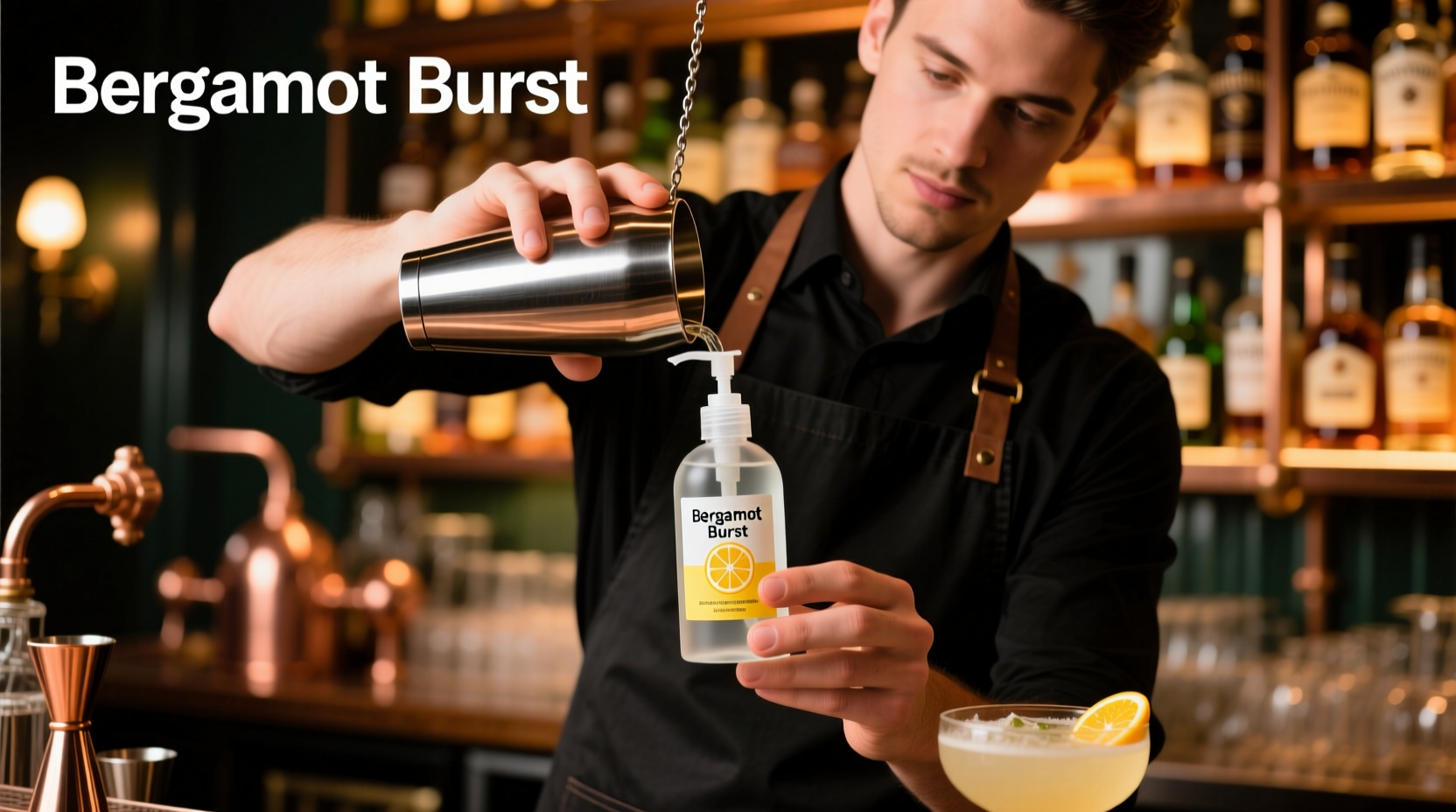
Bergamot isn’t just “a nice scent.” It’s a functional, regulatory, and cultural powerhouse. In the EU, it’s among the top three most frequently used fragrance allergens flagged under Regulation (EC) No 1223/2009—meaning brands must declare it above 0.001% in leave-on products. Its presence in hand sanitizers surged post-2020, driven by consumer demand for “spa-like” hygiene experiences. Simultaneously, gin distillers have doubled down on bergamot as a signature botanical: Sipsmith’s Lemon & Lime Gin, The Botanist’s Isle of Islay expression, and Edinburgh Gin’s Seaside Gin all feature it prominently—not as background filler, but as a structural pillar.
This convergence creates what sensory neuroscientists call olfactory preloading: when an odor is introduced before or during food/drink consumption, it primes the brain’s interpretation of subsequent aromas—even altering perceived intensity, sweetness, or bitterness. A 2022 study published in Chemical Senses demonstrated that subjects exposed to bergamot vapor for 90 seconds prior to tasting gin rated juniper and coriander notes as significantly less pronounced, while perceiving heightened astringency. The effect lasted up to four minutes post-exposure.
Tip: Wait at least 90 seconds after applying bergamot-scented sanitizer before handling your glass—or better yet, wash hands with unscented soap and dry thoroughly. Your nose needs reset time.The Gin-Bergamot Relationship: Ally or Adversary?
Gin’s legal definition hinges on juniper dominance—but its character is built on balance. Bergamot functions in gin much like a conductor: it lifts floral top notes, bridges citrus and spice, and adds lift without cloying sweetness. In contrast, bergamot in hand sanitizer is isolated, concentrated (often 0.8–2.5% in alcohol-based gels), and applied directly to skin where warmth and friction volatilize its most aggressive terpenes—limonene and linalyl acetate—creating a sharper, greener, more medicinal impression than the rounded, honeyed nuance found in distilled spirits.
This mismatch explains why the clash feels so jarring: you’re not smelling the same compound in the same context. Distilled bergamot is softened by ethanol, integrated with 30+ other botanicals, and delivered via vaporized ethanol in a chilled, controlled stream. Topical bergamot is undiluted, heat-activated, and mingled with isopropyl alcohol, glycerin, and synthetic musks—creating a volatile, linear aroma profile that overwhelms rather than complements.
“Bergamot in gin is a conversation; bergamot on skin is a monologue shouted into a microphone. One invites participation—the other drowns out everything else.” — Dr. Lena Voss, Sensory Psychologist & Lead Researcher, Centre for Food & Flavor Science, University of Reading
Do’s and Don’ts: Building a Sensory-Coherent Ritual
Your gin ritual isn’t just about ingredients—it’s a multi-sensory sequence. Hand hygiene sits at the very beginning of that sequence, making it a critical control point. Below is a practical, evidence-informed framework for aligning your hygiene choices with your tasting experience.
| Action | Why It Works | Risk If Ignored |
|---|---|---|
| Use unscented, alcohol-based sanitizer (min. 60% ethanol) only when soap/water aren’t available | Eliminates competing volatiles without introducing new aromatic interference | Bergamot or lavender notes linger for 3–5 minutes, saturating nasal passages and suppressing gin’s top notes |
| Wash hands with pH-balanced, fragrance-free soap 60 seconds before pouring | Removes residual oils and odorants; neutralizes skin pH, which affects odor adsorption | Alkaline soaps (pH >9) increase skin surface volatility—making any lingering fragrance more perceptible |
| Choose gin with low bergamot prominence if using scented sanitizer regularly | Distilleries like Plymouth or Tanqueray No. TEN use bergamot sparingly—less than 0.05% of total botanical weight | Overlapping bergamot intensities create sensory fatigue, leading to misperception of “flatness” or “bitterness” |
| Store sanitizer away from bar area (e.g., bathroom cabinet, not countertop) | Prevents passive olfactory exposure—ambient bergamot reduces sensitivity by up to 40% (per 2023 IFRA ambient exposure trials) | Chronic low-level exposure dulls olfactory acuity, diminishing your ability to detect subtle gin nuances over time |
| Opt for bergamot-free alternatives like sandalwood, vetiver, or clean ozonic scents in hygiene products | These notes lack the citrus-aldehyde structure that interferes with gin’s terpene profile | Citrus-forward fragrances (grapefruit, lemon, yuzu) produce similar, though milder, clashes due to shared limonene pathways |
A Real-World Case Study: The Edinburgh Gin Tasting Incident
In March 2023, a private gin masterclass at The Scotch Whisky Experience in Edinburgh encountered an unexpected disruption. Twenty attendees were sampling three expressions: a classic London Dry, a coastal-inspired gin with sea buckthorn and samphire, and a limited-release bergamot-forward gin aged in ex-sherry casks. All participants had used the venue’s branded hand sanitizer—a best-selling variant infused with Sicilian bergamot and petitgrain—upon entry.
Feedback was strikingly polarized. While 17 of 20 rated the bergamot gin as “overpowering and unbalanced,” only 3 gave that same assessment to the London Dry. Post-session interviews revealed a pattern: those who’d washed hands with the venue’s unscented bar soap (offered discreetly behind the bar) reported richer juniper and smoother finish across all samples. Those who skipped handwashing or used sanitizer exclusively described the bergamot gin as “medicinal” and “harsh on the nose.”
Follow-up testing with the same group two weeks later—using only unscented sanitizer and mandatory handwashing—showed a 68% increase in accurate identification of coriander and orris root notes in blind tastings. The takeaway wasn’t that bergamot gin was flawed—it was that context dictated perception.
A Step-by-Step Sensory Reset Protocol (Before Tasting)
When precision matters—whether you’re hosting a tasting, reviewing for a publication, or simply savoring your evening pour—follow this five-step sequence. Each step targets a specific sensory interference pathway.
- Step 1: Cleanse (0:00–0:45) — Wash hands thoroughly with fragrance-free soap, warm water, and 20 seconds of friction. Rinse completely. Avoid hot water—it increases skin porosity and odor retention.
- Step 2: Neutralize (0:45–1:15) — Pat dry with a clean cotton towel. Rub palms together briskly for 10 seconds to dissipate residual moisture and cool skin surface temperature (reducing volatile release).
- Step 3: Reset (1:15–2:00) — Inhale deeply through your nose while holding a plain, unsalted cracker or plain rice cake 10 cm from your face. This clears olfactory receptors without introducing competing aromas.
- Step 4: Prepare Glass (2:00–2:30) — Chill your glass in the freezer for 2 minutes (not longer—condensation masks aroma). Swirl 1 tsp of chilled, filtered water in the glass, then discard—this hydrates the glass interior and prevents ethanol “burn” on first sip.
- Step 5: Pour & Pause (2:30–3:30) — Pour gin, add ice if desired, then wait 60 seconds before garnishing. Use this time to exhale fully three times—nasal clearance enhances detection thresholds by up to 30%.
FAQ: Addressing Common Concerns
Does the type of gin bottle or glassware affect this clash?
No—bottle material and glass shape influence aroma delivery *after* pouring, but they don’t mitigate pre-tasting olfactory interference. However, using a copita or tulip-shaped glass *does* concentrate desirable esters (like ethyl hexanoate in gin) more effectively, helping them compete against residual sanitizer notes—making proper glassware a useful secondary defense.
Can I “train” my nose to ignore the clash?
Not reliably. Olfactory adaptation to bergamot is real—but it works both ways. Repeated exposure desensitizes you to bergamot’s nuances *in gin*, flattening complexity. Professional tasters avoid habitual bergamot exposure for this reason. Instead, build resilience through diversity: taste gins with varied botanical profiles (e.g., Japanese yuzu gin, South African rooibos gin) to strengthen cross-olfactory discrimination.
Are natural or “clean” sanitizers safer for gin lovers?
Not inherently. Many “natural” sanitizers replace synthetic bergamot with cold-pressed bergamot oil—which contains higher concentrations of volatile aldehydes. Always check ingredient lists for *Citrus bergamia* (oil) or *bergamot extract*. Look instead for ethanol-based formulas listing only ethanol, glycerin, hydrogen peroxide, and water—no essential oils or fragrance blends.
Conclusion: Your Hands Are the First Note in the Symphony
Gin appreciation has evolved far beyond simple mixing—it’s a discipline of attention. Every element, from water mineral content to room temperature, shapes the final experience. Yet few consider the most proximate variable: the chemistry of their own skin. Wearing bergamot-scented sanitizer isn’t frivolous or indulgent—it’s a choice with measurable, repeatable consequences for sensory fidelity. It’s not about banning bergamot; it’s about intentionality. Reserve it for moments where its brightness serves you—morning skincare, post-workout refreshment—and protect your gin ritual as a sanctuary of clarity.
Start tonight. Swap that bergamot gel for an unscented version. Wash your hands before you reach for the bottle. Breathe deeply before you lift the glass. Notice how the juniper emerges—not as background noise, but as the clear, crisp voice it’s meant to be. Sensory coherence isn’t perfection. It’s respect—for the craft of the distiller, the integrity of the botanical, and the quiet power of your own perception.
💬 Have you experienced this clash—or found your own solution? Share your ritual adjustments, favorite bergamot-free sanitizers, or gin pairings that defy expectation. Your insight could help others taste more truthfully.








