
Long-haul air travel often comes with a familiar set of discomforts: cramped seats, dry cabin air, disrupted sleep cycles, and that persistent swelling in the legs and feet. Many travelers turn to compression socks as a solution, but are they genuinely helpful, or do they simply add another layer of tightness to an already restrictive experience? The answer isn’t as simple as yes or no—it depends on individual health, flight duration, and how well the socks are chosen and used.
Compression socks have gained popularity among frequent flyers, athletes, and medical patients alike. Designed to apply gentle pressure from ankle to calf, they aim to improve circulation and reduce the risk of deep vein thrombosis (DVT), a potentially life-threatening condition caused by blood clots forming in deep veins. But despite their growing presence in carry-ons, misconceptions remain about their effectiveness and comfort.
This article examines the science behind compression therapy during air travel, evaluates user experiences, and provides practical guidance for those considering them on their next long flight.
The Science Behind Compression Socks and Circulation
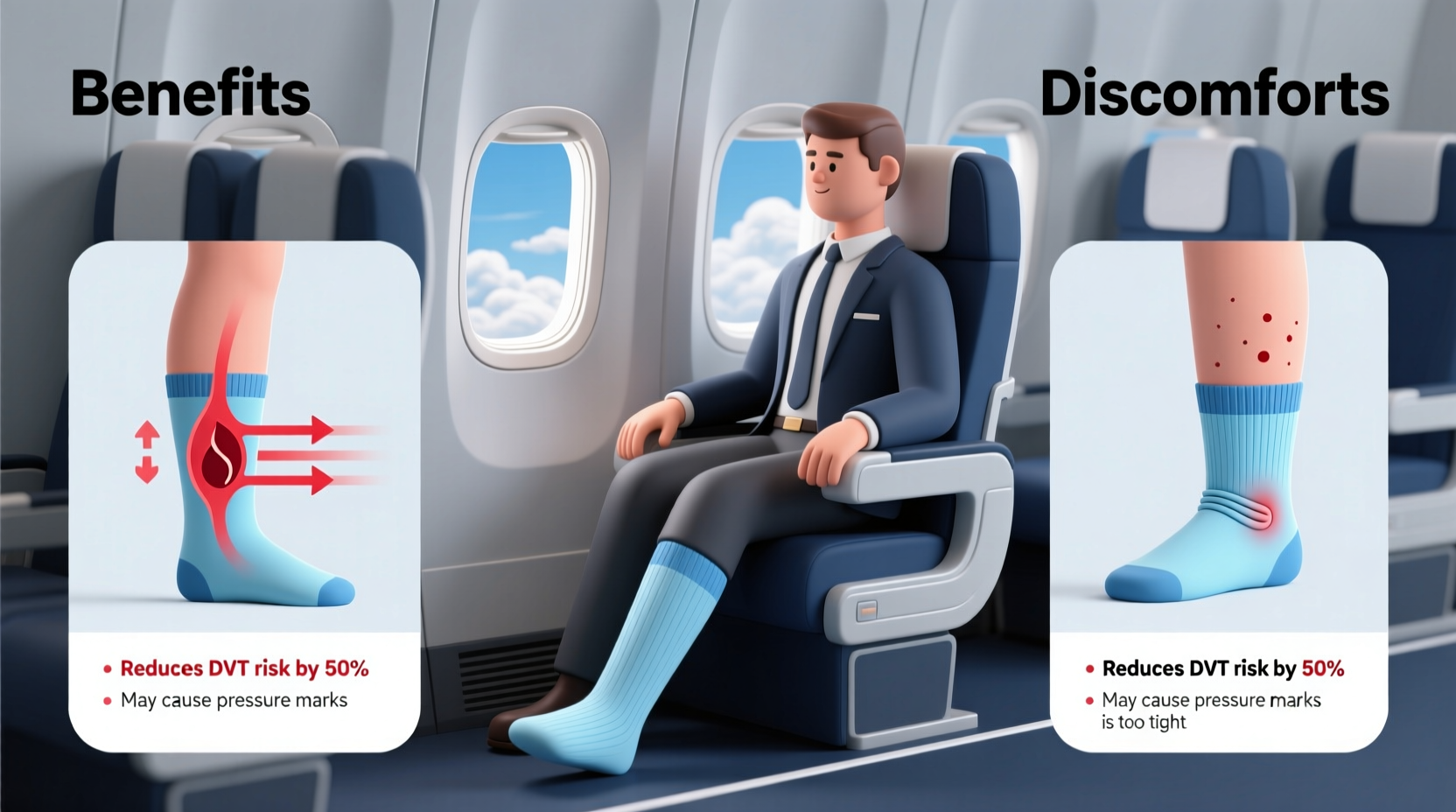
During extended periods of sitting—especially in the confined space of an airplane seat—blood flow in the lower limbs slows down significantly. This stasis increases the risk of venous pooling, where blood accumulates in the veins of the legs. Over time, this can lead to swelling (edema), discomfort, and in rare cases, DVT.
Compression socks work by exerting graduated pressure: strongest at the ankle and gradually decreasing up the calf. This gradient helps push blood upward toward the heart, counteracting gravity and improving venous return. Studies have shown that properly fitted medical-grade compression can reduce leg swelling by up to 50% during flights longer than four hours.
A 2021 meta-analysis published in the *Journal of Travel Medicine* reviewed data from over 3,000 passengers across 14 clinical trials. It concluded that compression stockings significantly reduced both symptomatic and asymptomatic DVT in long-distance travelers, particularly those with additional risk factors such as obesity, recent surgery, or a history of clotting disorders.
“Graduated compression socks are one of the most effective non-invasive tools to prevent travel-related venous issues.” — Dr. Lena Patel, Vascular Health Specialist, Mayo Clinic
It's important to note that not all compression socks are created equal. Over-the-counter varieties may offer mild support, but only medical-grade compression (typically 15–20 mmHg or higher) has been clinically proven to deliver measurable circulatory benefits during prolonged immobility.
Comfort vs. Discomfort: What Real Travelers Experience
Despite the medical backing, many people avoid compression socks because they associate them with tightness, heat, or a hospital-like aesthetic. However, modern designs have evolved significantly, offering breathable fabrics, stylish patterns, and improved fit.
To understand the real-world experience, consider the case of Mark T., a software consultant who logs over 100,000 miles annually:
Mini Case Study: Mark flew from San Francisco to Singapore—a 17-hour journey—with and without compression socks on separate trips. Without them, he reported noticeable foot swelling, stiffness upon landing, and difficulty walking comfortably for the first few hours. On his return flight, wearing 20 mmHg graduated compression socks, he noticed less swelling, reduced fatigue, and quicker recovery post-flight. “They felt snug at first,” he said, “but after an hour, I barely noticed them. The difference in how my legs felt was undeniable.”Still, comfort is subjective. Some users report overheating, especially on tropical routes, or find certain brands too constrictive around the arch or calf. The key lies in proper sizing and material selection. Nylon-spandex blends tend to be more breathable than older cotton-based models, and seamless toes reduce friction and irritation.
Who Benefits Most—and Who Might Not Need Them
While generally safe for healthy adults, compression socks aren't universally necessary. Their value depends heavily on individual risk profiles and travel conditions.
| Traveler Profile | Benefit Level | Recommended? |
|---|---|---|
| Frequent flyers (10+ hours/month) | High | Yes – reduces cumulative strain |
| Pregnant individuals | High | Yes – increased clotting risk and swelling |
| Over age 60 | Moderate to High | Yes – age-related circulation decline |
| History of DVT or varicose veins | Very High | Strongly recommended |
| Healthy under age 40, short flights (<4 hrs) | Low | No – minimal added benefit |
| Diabetic with neuropathy | Risky | Only with doctor approval – improper fit can cause injury |
For low-risk individuals on short-haul flights, the marginal benefit may not justify the cost or perceived discomfort. However, for anyone spending more than five consecutive hours seated—especially across multiple connecting flights—the physiological advantages become increasingly relevant.
How to Choose and Use Compression Socks Effectively
Selecting the right pair is crucial. Poorly fitting socks can either fail to provide adequate pressure or, worse, restrict blood flow. Follow these steps to ensure optimal performance and comfort.
- Determine the correct compression level: For most travelers, 15–20 mmHg (Class I) is ideal. Higher pressures (20–30 mmHg) should only be used under medical supervision.
- Measure your legs accurately: Use a tape measure at the narrowest part of your ankle, widest part of your calf, and calf height. Refer to brand-specific sizing charts—never guess.
- Choose moisture-wicking, breathable fabric: Look for blends containing merino wool, bamboo, or technical synthetics designed for temperature regulation.
- Put them on first thing in the morning: Legs are least swollen upon waking, making it easier to slide them on smoothly.
- Wear them throughout the flight: Remove only when sleeping overnight if absolutely necessary, but reapply before standing.
Common Myths and Misconceptions
Despite increasing awareness, several myths persist about compression wear:
- Myth: They’re only for older people. Truth: Young athletes and pregnant women also benefit due to hormonal changes and physical stress.
- Myth: All tight socks are compression socks. Truth: Regular athletic or dress socks don’t provide graduated pressure and lack therapeutic effect.
- Myth: They cure circulation problems. Truth: They help manage symptoms and reduce risks but are not a treatment for underlying vascular disease.
- Myth: You’ll feel immediate energy boost. Truth: Benefits are subtle—less swelling, fewer cramps—not a stimulant-like sensation.
Another common confusion involves \"anti-embolism\" versus \"travel\" compression socks. Anti-embolism stockings are typically prescribed for bedridden patients and provide different pressure distribution. Travelers should opt for ambulatory (mobile) compression designed for upright activity.
Practical Checklist Before Your Next Flight
Before packing your suitcase, run through this checklist to decide whether compression socks are right for your trip:
- ✅ Flight duration exceeds 4 hours?
- ✅ History of leg swelling after flying?
- ✅ Personal or family history of blood clots?
- ✅ Pregnant or recently postpartum?
- ✅ Over 60 years old or managing chronic illness?
- ✅ Able to obtain properly sized socks (not one-size-fits-all)?
- ✅ Willing to wear them consistently during travel?
If you answered “yes” to two or more of the above, compression socks are likely a smart addition to your travel routine.
Frequently Asked Questions
Can I wear compression socks if I have diabetes?
Only if approved by your healthcare provider. Diabetics with peripheral neuropathy may lack sensation in their feet, increasing the risk of skin damage from improperly fitted socks. Always consult a physician before use.
Do I need a prescription to buy compression socks?
No, many 15–20 mmHg socks are available over the counter. However, prescriptions are often required for insurance coverage and for higher compression levels (20–30 mmHg or more).
Are there alternatives to compression socks for long flights?
Yes. Regular movement is critical: walk the aisle every 60–90 minutes, perform seated ankle pumps, stay hydrated, and avoid alcohol and caffeine. These habits complement—but don’t replace—compression therapy for high-risk individuals.
Final Thoughts: Worth the Squeeze?
Compression socks are not a magic solution, nor are they essential for every traveler. But for those facing long flights, limited mobility, or elevated health risks, they offer a simple, evidence-based way to protect vascular health and enhance comfort.
The initial tightness fades within minutes for most users, and the payoff—reduced swelling, fewer leg cramps, and peace of mind—is significant. When paired with good hydration, movement, and smart clothing choices, they form part of a holistic strategy for healthier air travel.
Don’t let outdated perceptions or a single bad experience deter you. With the right fit, fabric, and expectations, compression socks can transform your in-flight experience from tolerable to manageable—even comfortable.
💬 Have you tried compression socks on a long flight? Share your story, tips, or questions in the comments below—your experience could help another traveler make a smarter choice.