In an era where social media fuels constant reinvention, fashion trends often burn bright and fast. Minimalist fashion—once hailed as the antidote to fast fashion excess—has long been associated with timeless silhouettes, neutral palettes, and intentional consumption. But as we move deeper into 2025, questions arise: Is minimalist fashion still relevant? Has it evolved beyond a trend into a lifestyle? Or is it quietly being replaced by bolder, more expressive aesthetics?
The answer isn’t binary. Minimalism hasn’t disappeared—it’s transforming. What was once defined by stark simplicity has now merged with sustainability, functionality, and quiet luxury, allowing it to remain influential without dominating headlines. To understand its current status, we must examine cultural shifts, consumer behavior, and how designers are reinterpreting minimalism for today’s world.
The Evolution of Minimalist Fashion
Minimalist fashion first gained prominence in the 1990s, championed by designers like Jil Sander, Helmut Lang, and Calvin Klein. It emphasized clean lines, monochromatic tones, and high-quality fabrics over embellishment. The movement resurged in the late 2010s amid growing concerns about overconsumption and environmental impact. Influencers promoted capsule wardrobes, “quiet dressing,” and “buy less, buy better” philosophies.
By 2025, that ethos persists—but not in the same form. Today’s minimalism is less about austerity and more about intentionality. It’s no longer just a visual style; it’s a mindset rooted in mindful consumption and personal expression. While maximalist trends like Y2K revivals, bold logos, and theatrical silhouettes dominate runways and TikTok, minimalist design continues to thrive in niche markets and among consumers prioritizing longevity over virality.
Tip: Focus on fabric quality and construction when evaluating minimalist pieces—these factors determine longevity more than color or cut.Why Minimalism Still Matters in 2025
Despite shifting trends, minimalist fashion retains strong cultural and practical relevance. Several key factors contribute to its staying power:
- Sustainability demands: As climate awareness grows, consumers seek durable, low-impact clothing. Minimalist wardrobes align naturally with slow fashion principles.
- Cost-per-wear mentality: With rising living costs, people are investing in versatile staples rather than fleeting trends.
- Workplace evolution: Hybrid work models have normalized elevated casualwear—a space where minimalist design excels.
- Digital fatigue: After years of algorithm-driven content overload, many crave visual and lifestyle simplicity.
Brands like COS, Arket, Toteme, and A.P.C. continue to report steady growth, signaling sustained demand for understated elegance. Even luxury houses such as The Row and Lemaire—built on refined minimalism—are expanding their reach, particularly among affluent millennials and Gen Z consumers who value discretion over display.
“Minimalism isn’t dead—it’s matured. It’s no longer about what you don’t wear, but how thoughtfully you choose what you do.” — Lena Moretti, Senior Editor at *Vogue Living*
How Minimalism Has Changed Since 2020
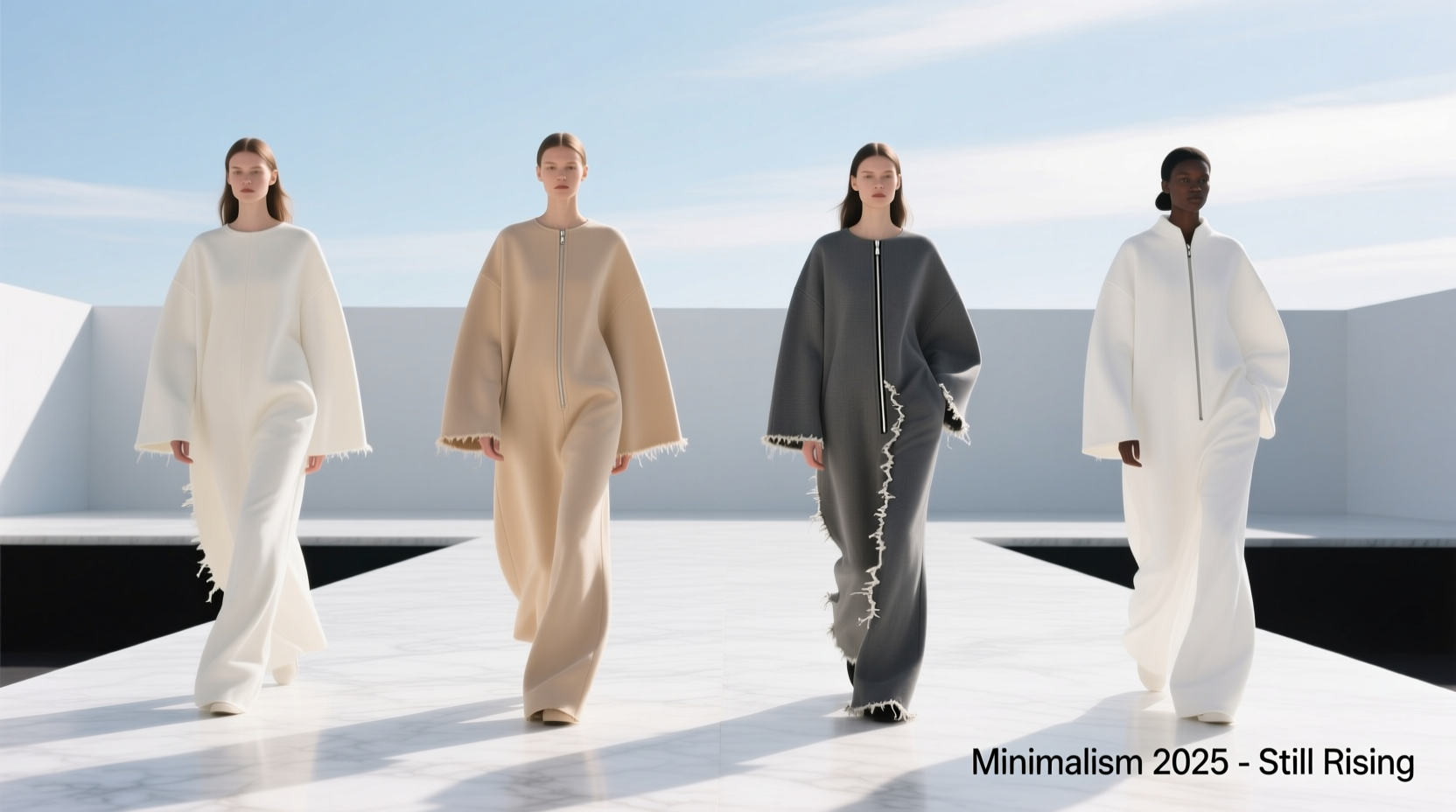
Gone are the days when minimalist fashion meant only black turtlenecks and white sneakers. In 2025, the aesthetic has adapted to include subtle textures, organic shapes, and gender-fluid designs. Here’s how it’s evolved:
| Aspect | Pre-2020 Minimalism | Minimalism in 2025 |
|---|---|---|
| Color Palette | Nearly exclusive neutrals (black, white, gray) | Expanded earth tones, soft pastels, and tonal layering |
| Fabrics | Crisp cotton, wool, basic synthetics | Organic linen, TENCEL™, recycled blends, biodegradable fibers |
| Silhouettes | Straight cuts, boxy fits, uniform tailoring | Soft draping, asymmetry, adjustable elements |
| Functionality | Aesthetic purity over utility | Multifunctional pieces (reversible, convertible, packable) |
| Brand Values | Design-first, image-driven | Transparency, ethical labor, carbon footprint reporting |
This evolution reflects a broader shift from minimalism as a look to minimalism as a value system. Consumers aren’t just buying fewer items—they’re asking where those items come from, how they’re made, and how long they’ll last.
Real-World Example: Emma’s Wardrobe Reset
Emma, a 32-year-old UX designer in Berlin, used to refresh her wardrobe seasonally, chasing micro-trends on Instagram. By 2023, she felt overwhelmed—her closet was full, yet she had nothing to wear. After attending a sustainable fashion workshop, she decided to rebuild her wardrobe around minimalist principles.
She began by auditing her existing clothes, keeping only pieces that fit well, were ethically made, and could be worn in at least three different ways. Over six months, she invested in seven core items: a tailored oatmeal blazer, wide-leg organic cotton trousers, a ribbed merino sweater, and a pair of minimalist leather boots—all in complementary shades.
Today, Emma estimates she wears 90% of her wardrobe regularly. Her monthly clothing spending has dropped by 70%, and she feels more confident in her daily choices. “I’m not trying to disappear into neutral tones,” she says. “I’m choosing to express myself through consistency, not clutter.”
Tip: When building a minimalist wardrobe, prioritize versatility. A single piece should transition from work to weekend with simple accessory changes.Step-by-Step: Building a 2025-Ready Minimalist Wardrobe
If you're considering adopting or refreshing a minimalist approach, follow this five-step process grounded in modern best practices:
- Declutter with purpose: Remove everything from your closet. Sort into “keep,” “donate,” and “reassess.” Ask: Does it fit? Is it comfortable? Have I worn it in the last year?
- Define your personal palette: Choose 3–5 base colors that complement your skin tone and lifestyle. Add one accent shade if desired. Stick to natural dyes where possible.
- Invest in foundational pieces: Select timeless items like a trench coat, straight-leg jeans, a silk blouse, and a structured bag. Opt for brands with repair programs or take-back initiatives.
- Add texture, not clutter: Introduce variety through fabric differences—matte vs. shiny, smooth vs. nubby—rather than patterns or logos.
- Maintain with care: Follow garment labels, rotate wear to extend life, and store properly. A well-maintained minimalist wardrobe can last a decade or more.
This method isn’t about deprivation—it’s about curation. The goal is not to own ten identical white shirts, but to own one exceptional shirt that you love wearing every time.
Checklist: Is Your Minimalist Style Still Relevant in 2025?
Use this checklist to evaluate whether your minimalist approach aligns with current standards of sustainability and style:
- ✅ My clothes are made from eco-certified or recycled materials
- ✅ I know where most of my garments were produced
- ✅ I repair or alter items instead of replacing them
- ✅ My wardrobe supports multiple seasons and occasions
- ✅ I feel emotionally satisfied with my style—not restricted by it
- ✅ I avoid impulse buys, even if they’re “minimalist-looking”
If you checked most of these, your minimalist practice is likely both stylish and sustainable. If not, consider small upgrades rather than a full overhaul.
Challenges to Minimalism’s Dominance
Despite its strengths, minimalist fashion faces real challenges in 2025. Critics argue it can feel exclusionary—its association with wealth (“quiet luxury”), lack of cultural expression, and limited size inclusivity in many minimalist brands. Additionally, younger audiences often see it as “boring” compared to the playful energy of streetwear or vintage eclecticism.
Moreover, the rise of AI-generated fashion and digital-only clothing encourages experimentation, which runs counter to minimalism’s restraint. Platforms like Instagram and TikTok reward novelty, making it harder for subdued styles to gain visibility.
Yet, minimalism’s resilience lies in its adaptability. Rather than competing for attention, it appeals to those seeking stability, authenticity, and long-term value in a chaotic world.
FAQ: Your Questions About Minimalist Fashion in 2025
Is minimalist fashion only for wealthy consumers?
No, though some high-end minimalist brands carry premium price tags, the philosophy itself is accessible. Thrift stores, clothing swaps, and rental platforms offer affordable entry points. The key is prioritizing quality over quantity, regardless of budget.
Can I mix minimalist pieces with trendy items?
Absolutely. Many fashion-forward individuals use minimalist basics as a canvas for statement accessories, seasonal shoes, or one bold garment per outfit. This “minimal base + maximal accent” strategy balances timelessness with self-expression.
Does minimalist fashion support body diversity?
Progress is ongoing. While historically criticized for favoring slim, androgynous silhouettes, newer minimalist brands like Universal Standard, Naadam, and Reformation are expanding size ranges and inclusive marketing. Seek out labels committed to diverse representation.
Conclusion: Minimalism Isn’t Trending—It’s Enduring
Asking whether minimalist fashion is “still trending” misses the point. Trends come and go; minimalism has transcended trend status. In 2025, it functions less as a viral moment and more as a quiet undercurrent shaping how people relate to clothing.
It’s no longer about fitting into a specific mold of what minimalism looks like. Instead, it’s about making conscious choices—choosing durability over disposability, clarity over noise, and meaning over mass production. Whether expressed through a perfectly tailored coat or a repaired pair of jeans, minimalist values are embedded in the future of responsible fashion.
So yes, minimalist fashion is still here. It’s not shouting from billboards or flooding your For You Page. But it’s present—in thoughtful purchases, in slow-growing wardrobes, in the growing refusal to equate self-worth with consumption. And for those who value substance over spectacle, that’s more powerful than any trend cycle.
🚀 Ready to refine your style with intention? Audit one drawer this week. Keep what serves you. Let go of the rest. Start building a wardrobe that lasts—not just a season, but a lifetime.








