Mixing metal jewelry tones used to be a fashion taboo. For decades, the unwritten rule was simple: match your metals. Gold with gold, silver with silver, rose gold only with its blush-toned peers. But fashion evolves, and so do personal style choices. Today, mixing metals isn’t just acceptable—it can be a bold, intentional expression of individuality. The real question isn’t whether you *can* mix metals, but how to do it without looking disorganized or unintentional.
The line between eclectic elegance and accidental chaos comes down to intentionality, balance, and context. When done well, mixed-metal jewelry adds depth, dimension, and visual interest to an outfit. When done poorly, it can appear haphazard. Understanding the principles behind successful metal mixing empowers you to break old rules with confidence—while avoiding common pitfalls.
The Evolution of Jewelry Rules
Traditional fashion etiquette dictated strict adherence to metal matching. This rule likely originated from a desire for polish and uniformity—especially in formal settings where consistency signaled attention to detail. In the mid-20th century, women were expected to coordinate their accessories precisely: a gold watch required gold earrings and a matching necklace.
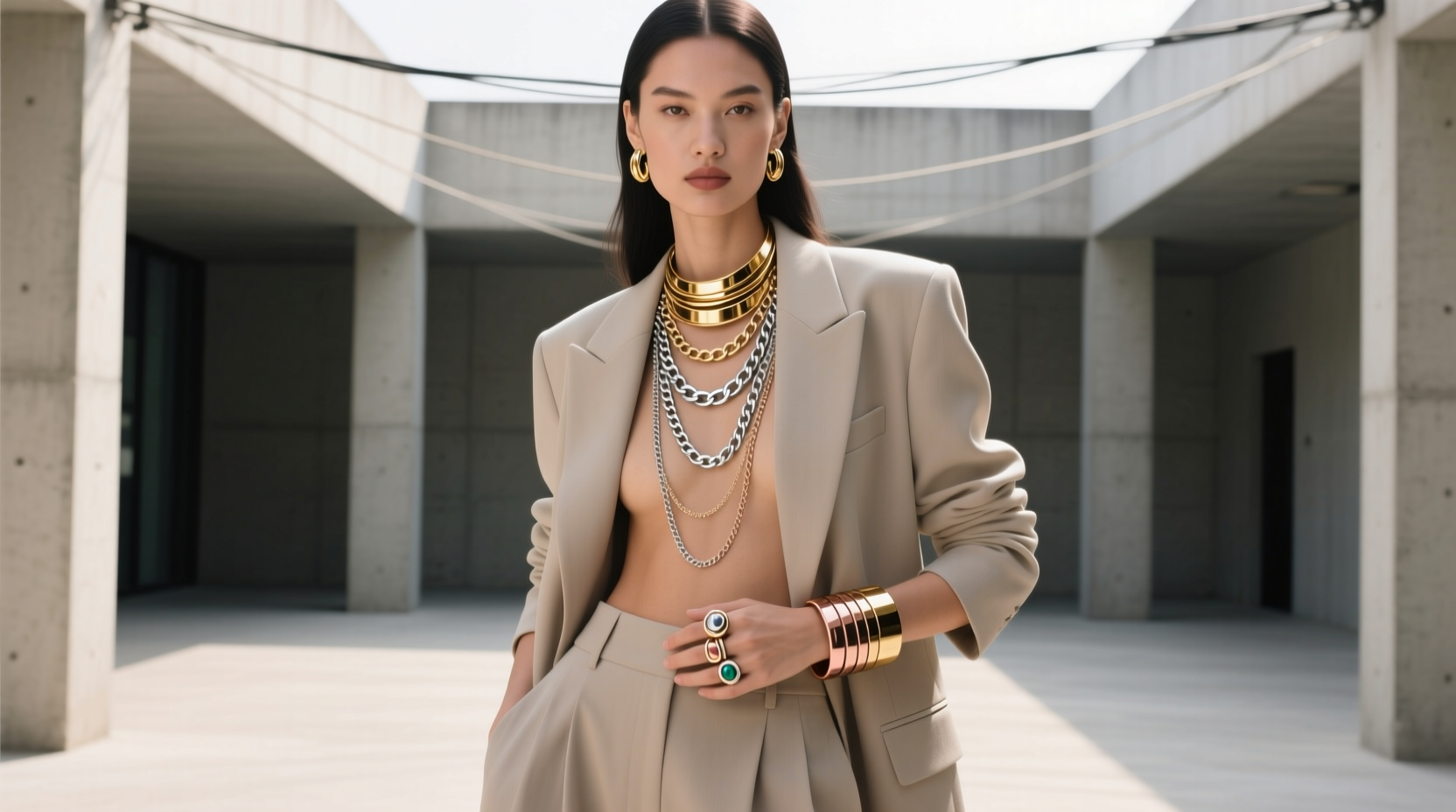
But as fashion has become more inclusive and expressive, rigid rules have softened. Designers like Gucci, Saint Laurent, and Balenciaga have embraced mixed metals on runways, pairing oxidized silver with brushed gold cuffs or stacking delicate rose gold rings alongside chunky silver bands. Celebrities such as Rihanna, Zendaya, and Harry Styles regularly mix metals in both casual and red-carpet looks, normalizing—and even elevating—the trend.
Interior design also influenced this shift. Just as homes now blend brass, chrome, and black iron fixtures for layered aesthetics, fashion has adopted a similar philosophy: harmony through contrast.
When Mixing Metals Works: Principles of Stylish Layering
Mixing metals doesn’t mean throwing on every piece you own regardless of tone. It requires thoughtful curation. Here are key principles that separate a polished mixed-metal look from a cluttered one:
- Intentionality: Each piece should feel purposeful, not random. Ask yourself: Does this addition enhance the overall aesthetic?
- Balance: Distribute metals evenly across your look. Avoid clustering all silver on one side and gold on another.
- Proportion: Use dominant and accent metals. One tone should lead; others support.
- Texture & Finish: Matte, polished, hammered, or brushed finishes can differentiate pieces even within the same metal family.
Creating Visual Harmony with Contrast
Contrast isn’t the enemy of cohesion—it’s often its ally. Consider how black and white, though opposites, create striking combinations in fashion and design. Similarly, warm-toned gold and cool-toned silver can complement each other when balanced correctly.
For example, wearing a warm camel coat with cool silver earrings might feel jarring. But adding a gold pendant necklace bridges the gap, creating a transition between skin tone, clothing, and accessories. This technique is known as “color temperature anchoring.”
“Mixing metals is no longer about breaking rules—it’s about rewriting them with confidence. The most compelling styles come from deliberate contrast.” — Lena Moretti, Fashion Stylist & Creative Director at Studio Lume
A Step-by-Step Guide to Mixing Metal Jewelry
If you're new to combining different metal tones, follow this five-step process to build confidence and achieve a cohesive look:
- Choose a Dominant Metal: Decide which metal will anchor your look. If you’re wearing a gold watch or engagement ring, let gold take the lead.
- Select Accent Metals: Introduce one secondary metal (e.g., silver or rose gold) in smaller quantities—perhaps in earrings or a delicate bracelet.
- Layer Strategically: On necklaces, place the dominant metal closest to the face. Use varying chain lengths to avoid tangling and maintain visual separation.
- Consider Skin Tone: Warm undertones often glow with yellow or rose gold; cool undertones may favor silver or platinum. But don’t let this limit you—contrast can be powerful.
- Edit Ruthlessly: Step back and assess. Remove any piece that feels out of sync. Less is often more when blending metals.
Real Example: A Day-to-Night Transition Look
Sophie, a graphic designer in Portland, wears a navy blazer over a white silk camisole for a client meeting. She pairs it with her everyday gold hoop earrings and a thin gold chain. After work, she heads to a gallery opening and wants to elevate her look without changing clothes.
She adds a chunky oxidized silver cuff bracelet and swaps her simple chain for a layered necklace featuring both matte silver and brushed gold pendants. The result? A dynamic, artistic vibe that reflects her creative profession. The navy base neutralizes the contrast, allowing the metals to shine without clashing.
This scenario illustrates how context and purpose guide effective metal mixing. Her office look was polished and unified; her evening transformation was expressive and intentional.
Do’s and Don’ts of Mixing Metal Tones
| Do’s | Don’ts |
|---|---|
| Do use a neutral base (black, white, beige, navy) to let metals stand out. | Don’t mix more than three metal tones unless you’re highly experienced. |
| Do repeat a metal in at least two places (e.g., earrings and ring) to create rhythm. | Don’t pair highly contrasting finishes (e.g., shiny gold and antique silver) without transitional elements. |
| Do consider the occasion—mixed metals suit casual, creative, or artistic settings best. | Don’t wear mismatched metals in ultra-formal environments unless the look is intentionally avant-garde. |
| Do clean and polish your jewelry regularly so all pieces look cared for, regardless of tone. | Don’t assume all “silver” items are the same—white gold, platinum, and sterling silver vary subtly in hue. |
Checklist: Is Your Mixed-Metal Look Pulling Together?
Before stepping out, run through this checklist to ensure your mixed-metal ensemble works:
- ✅ One metal dominates the look
- ✅ Metals are repeated across at least two points (e.g., earrings and bracelet)
- ✅ Necklaces are layered at different lengths
- ✅ The outfit’s color palette supports contrast (neutrals work best)
- ✅ No single piece overwhelms or distracts
- ✅ Jewelry is clean and free of tarnish
- ✅ The overall vibe matches the occasion (e.g., edgy for a concert, refined for dinner)
When to Stick to One Metal Tone
While mixing metals is increasingly accepted, there are moments when uniformity sends a stronger message. These include:
- Formal Events: Weddings, galas, or black-tie affairs often call for elegance through simplicity. A full gold or silver set reads as more cohesive and traditional.
- Professional Settings: Conservative workplaces may interpret mixed metals as unpolished. Stick to one tone unless your industry values creative expression.
- Delicate Pieces: Fine chains or minimalist studs benefit from tonal consistency. Mixing too many dainty metals can look scattered.
In these cases, restraint enhances sophistication. That said, even in formal contexts, subtle mixing can work—a platinum engagement ring with a white gold band, for instance, is technically a mix but visually seamless due to similar undertones.
Frequently Asked Questions
Can I mix gold and silver in a professional work environment?
Yes, but with caution. Opt for subtle combinations—like a silver watch with gold-hooped earrings—only if your workplace culture embraces individuality. In conservative offices, it's safer to stick to one metal. When in doubt, observe colleagues or consult your company’s dress code.
Does skin tone matter when mixing metals?
It can influence what looks most flattering, but it shouldn’t dictate your choices. Cool skin tones often harmonize with silver and white gold, while warm tones glow with yellow and rose gold. However, contrast can be striking—many people look excellent in metals opposite their undertone. Focus on how you feel in the jewelry, not just textbook rules.
How do I store mixed-metal jewelry to prevent damage?
Store each piece separately in soft pouches or lined compartments to prevent scratching. Even if you wear them together, keep them apart when not in use. Avoid storing different metals in direct contact, especially in humid environments, as chemical reactions can accelerate tarnishing.
Conclusion: Confidence is the Best Accessory
Mixing metal jewelry tones isn’t inherently sloppy—it’s a stylistic choice that, when executed with care, demonstrates confidence and creativity. The outdated rule of “never mix metals” has given way to a more nuanced understanding of personal expression. What once looked like a mistake now reads as intentional eclecticism.
The key lies not in following rigid guidelines, but in cultivating awareness: of proportion, finish, context, and self-presentation. Whether you lean toward monochromatic elegance or curated contrast, your jewelry should reflect who you are—not just what rules you’ve followed.
💬 Have a favorite mixed-metal look? Share your go-to combination in the comments and inspire others to experiment with confidence!